Axios Latino


Hi again! 👋🏽
Thanks for joining us.
- We're back with two more stories about the Uvalde, Texas, shooting. Missed the others? They're here.
- 👀Puede leer este boletín en español aquí.
This newsletter, edited by Astrid Galván and Laurin-Whitney Gottbrath, is 1,325 words, a 5-minute read.
1 big thing: Uvalde's botched response, a year later
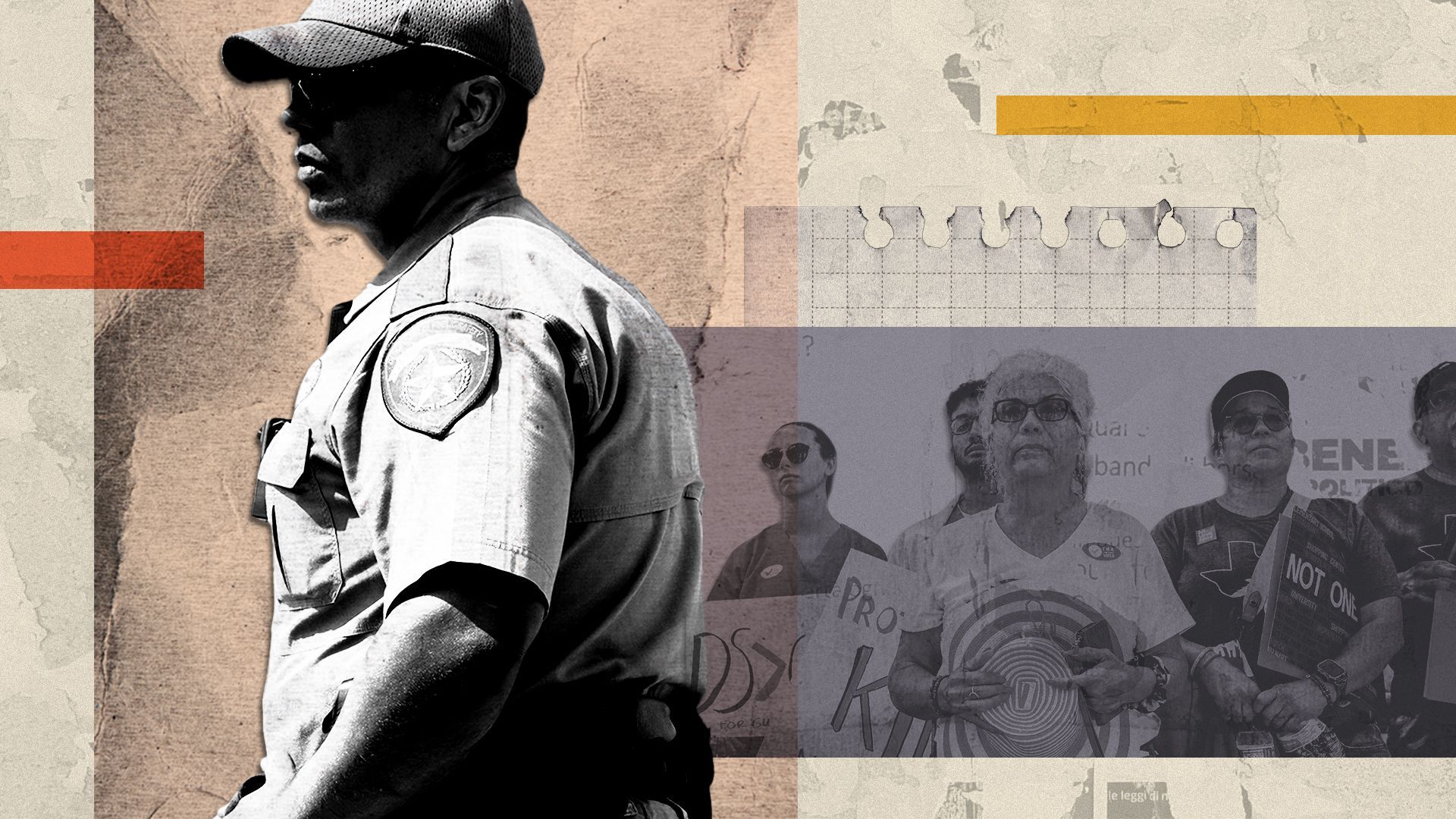
Photo illustration: Allie Carl/Axios. Photo: Brandon Bell, Xinhua News Agency/Getty Images
Texas police are becoming better equipped to face active shooters after the "abject failure" of the response to last year's Uvalde school shooting, a leading expert says — but critics are skeptical, insisting not enough is being done to hold police accountable.
The big picture: The May 24, 2022, shooting at Robb Elementary School that left 19 fourth graders and two teachers dead is among the deadliest in U.S. history, Axios' Keldy Ortiz writes.
- Nearly 400 law enforcement officers from local, state, and federal agencies responded. Those inside the school spent more than an hour before shooting the gunman dead, prompting investigations and demands for accountability from victims' families.
- A Texas legislative committee found that police on the scene lacked clear leadership and communication, as well as urgency to stop the gunman.
- The Uvalde school board fired the school district's police chief, but nearly all other law enforcement agents involved remain employed, according to a Washington Post investigation.
Since the shooting, the Advanced Law Enforcement Rapid Response Training Center (ALERRT), the organization that has provided active shooter training in Texas and around the country for 20 years, has received more funding, and a new law will further bolster its work, says executive director Pete Blair.
- "I think that this is a good step toward ensuring that officers have proficiency in responding to these events," Blair says. "I think we're in a better place."
- The Texas law, which takes effect Sept. 1, requires all officers to complete 16 hours of active shooter training and to repeat the training every other year. Until the law goes into effect, not all police are required to take active shooter courses. Some of the law enforcement officers who responded to Uvalde had not received the training, investigators found.
- Blair says his organization, which is part of Texas State University, has already started providing extra training to police.
Yes, but: Democratic lawmakers tell Axios most measures to hold police accountable have largely been ignored, and that bills to end police immunity and to require police to carry individual liability insurance to compensate victims never got full hearings.
2. Texas lawmakers aim to fortify schools after Uvalde
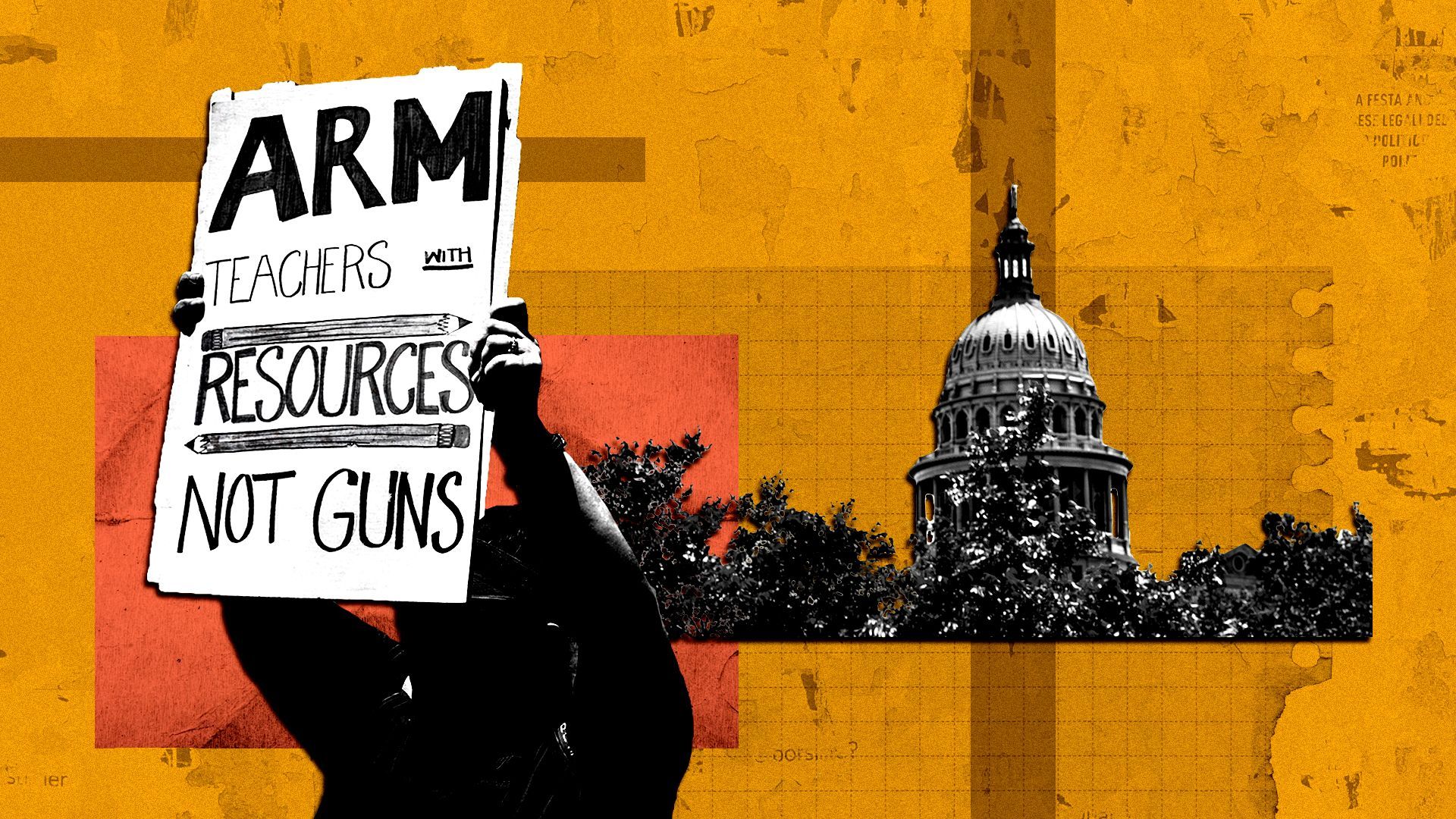
Photo illustration: Brendan Lynch/Axios. Photos: Jordan Vonderhaar/Bloomberg via Getty Images
One year after the Uvalde mass shooting, Texas lawmakers are poised to pass measures that they say will make schools safer, even as they haven't seriously entertained any gun control bills, Axios' Asher Price writes.
Driving the news: The measures would provide incentives to school employees to arm themselves on campus, require school safety inspections, and mandate mental health training for teachers.
- They already sent to Gov. Greg Abbott a bill that would require school districts to install silent panic buttons in every classroom.
The big picture: As they did after the 2018 Santa Fe High School shooting, GOP lawmakers who control the Capitol have opted to further fortify schools rather than restrict the purchase of guns and ammunition.
- In 2019, the Legislature created a $100 million grant program to pay for security upgrades.
- The Texas Legislature falls in line with how many GOP-controlled states are addressing mass shootings. An Axios analysis of bills introduced nationwide since the Uvalde school shooting found more measures to loosen restrictions have been enacted than those addressing gun safety.
What they're doing: The Texas House and Senate have passed versions of a sweeping school safety measure. Among other things, the measure would:
- Require regular safety inspections of school buildings — the Uvalde shooter entered Robb Elementary through an unlocked door.
- Offer grants to students who want to attend another school district if their current one is not complying with safety standards.
3. Education leader on students' biggest challenge

Illustration: Natalie Peeples/Axios
Raquel Martinez, who this year became the first Latina elected president of the National Association of Secondary School Principals, tells Marina the most pressing issue facing Latino students is mental health.
State of play: Youth who identify as multiracial or Hispanic had especially high levels of distress and suicidal ideation in 2021, according to the most recently released data from the CDC.
- Martinez, a middle school principal in Pasco, Washington — where 55% of the population is Hispanic — says kids in her school are experiencing high levels of stress, and some kids are too depressed to even leave their rooms. She adds that faculty and families are feeling overwhelmed.
- The COVID-19 pandemic exacerbated some of these existing issues, adds Martinez.
Between the lines: The increase in reports of mental health issues among students is partly from a lack of "school connectedness," which the CDC qualifies as feeling close to other students or supported by school administrators and faculty.
- The U.S. surgeon general issued a warning this week about social media use and its mental health impact on kids.
- Studies have found that Latinos, including teens, are less likely to get treatment for mental health issues, possibly because of a cultural stigma around seeking care.
What to watch: Some startups that provide wellness tools specifically for students and educators could help.
- Martinez says students at her school use Hazel Health, a telehealth therapy service that is paid for by the school district.
- Sanarai is an online mental health platform with Spanish-language therapists.
4. Mexico passport hailed as win for LGBTQ+ rights
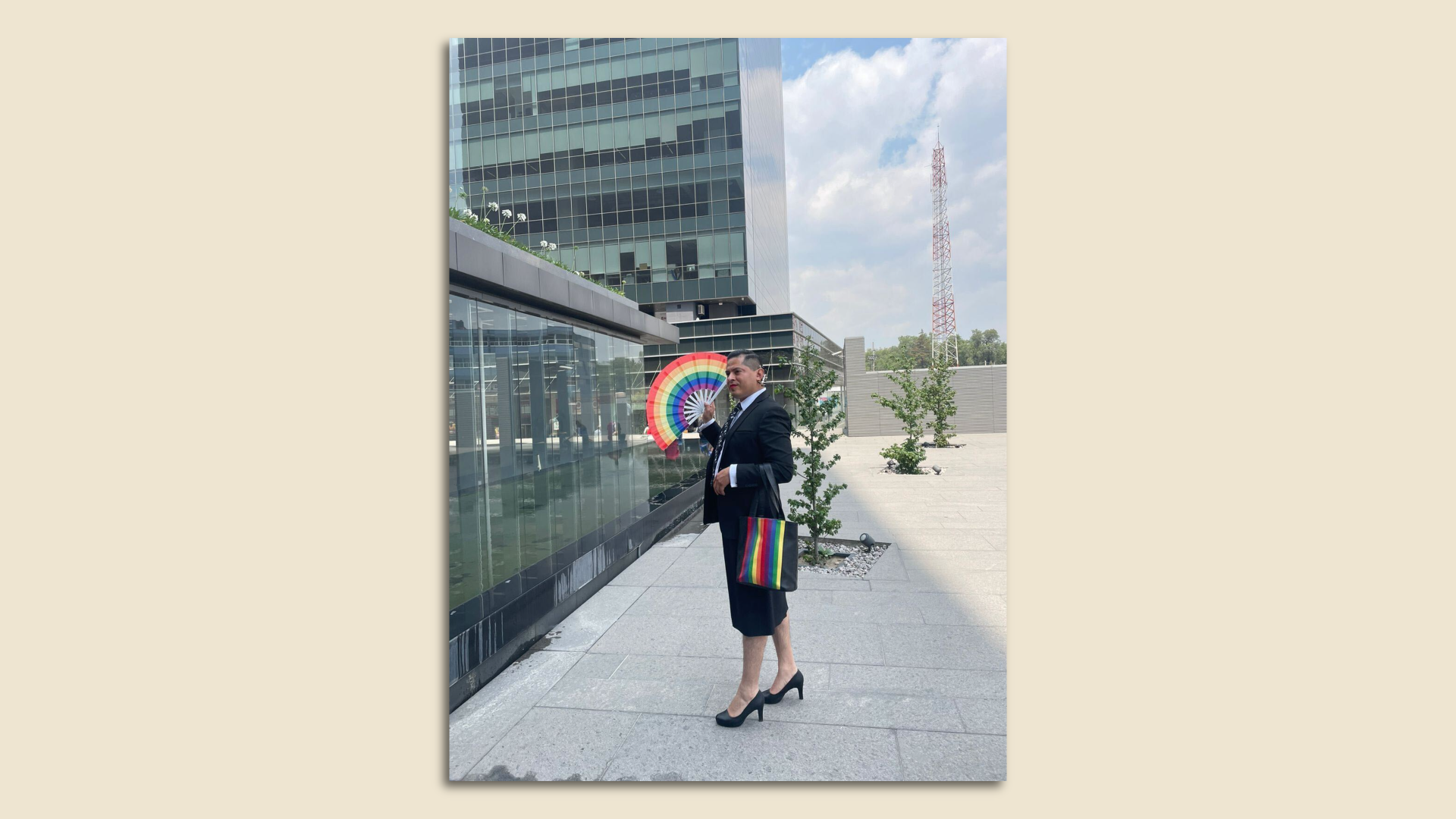
Ociel Baena at the Foreign Affairs Ministry on May 17, before getting their nonbinary passport. Courtesy of Ociel Baena
Mexico last week issued its first passports with a gender nonbinary designation in a move hailed as a victory for LGBTQ+ rights in the country, Marina writes.
Driving the news: The passports, with an "X" instead of "M" or "F" in the biological sex field, were granted on the same day to Ociel Baena in Mexico City and to Erik Olmos and Miguel Orozco in Mexico's Houston consulate.
- For Baena, getting the document felt like a major step forward, they tell Axios Latino.
- "This is historic for the LGBTQ+ community in Mexico, but even more so for those of us who are nonbinary… because a passport is internationally recognized," they say.
- In March, Baena was also the first Mexican to receive a nonbinary INE, the country's voting card that is the most-required government ID.
Yes, but: Baena highlights that being the first to get those IDs shows how much remains to be done.
- "Few people still have access to most of these necessary documents," they tell Axios Latino. In nearly all Mexican states, for example, a birth certificate with a nonbinary option can only be obtained by going to court.
The big picture: Acceptance of LGBTQ+ individuals and respect for their rights have been growing in Latin America.
- Mexico is the fourth nation in the Americas — and at least the 17th country worldwide — to begin issuing nonbinary or gender-neutral options on passports. Argentina did so in 2021, and Colombia and the U.S. followed last year.
- Chile recognized in March 2022 equal marriage and adoption rights for same-sex couples.
- But the region remains incredibly dangerous for LGBTQ+ individuals, who were victims of 377 homicides — more than one per day — in 2021, according to the latest available data from the Regional Information Network on LGBT Violence coalition.
5. Stories we're watching

Illustration: Natalie Peeples/Axios
1. Former Panamanian President Ricardo Martinelli went on trial this week on money laundering charges.
- Martinelli, who denies any wrongdoing, was extradited from the U.S. in mid-2018 to face the charges and another trial on spying that wrapped up with his exoneration in 2019.
2. Brazil is preparing to host a South American leadership summit next Tuesday as part of President Luiz Inácio Lula da Silva's goal of fostering regional integration.
- The summit is meant to find common ground among all South American leaders regardless of their political leanings, the Brazilian Foreign Ministry said.
6.🪅Pachanga: Charlene Aguilera

Photo Illustration: Axios Visuals. Photo Courtesy of Desiree Kennedy
Felicidades are in order for Charlene Aguilera, a policy aide for the Congressional Hispanic Caucus and for U.S. Rep. Nanette Barragán, who just graduated from the Elliot School of International Affairs at George Washington University with her master’s degree in International Affairs.
- Charlene, 23, hopes to one day work for the State Department analyzing policy to support U.S. diplomatic relations around the world.
We're excited for the great things you'll achieve, Charlene!
Have you recently accomplished something you're proud of? Let us know by replying to this email!
Thanks so much for reading and thanks to Patricia Guadalupe for the copy edits.
Sign up for Axios Latino

Keep tabs on the stories that most affect the U.S. Latino community on both sides of the border, a collaboration with Noticias Telemundo.