Axios Latino

December 05, 2024


🪩You've made it through almost a whole post-holiday week, pat yourself on the back!
👀 En español 👀
This newsletter, edited by Astrid Galván, is 1,408 words, a 5.5-minute read.
1 big thing: The truth about who ICE arrests
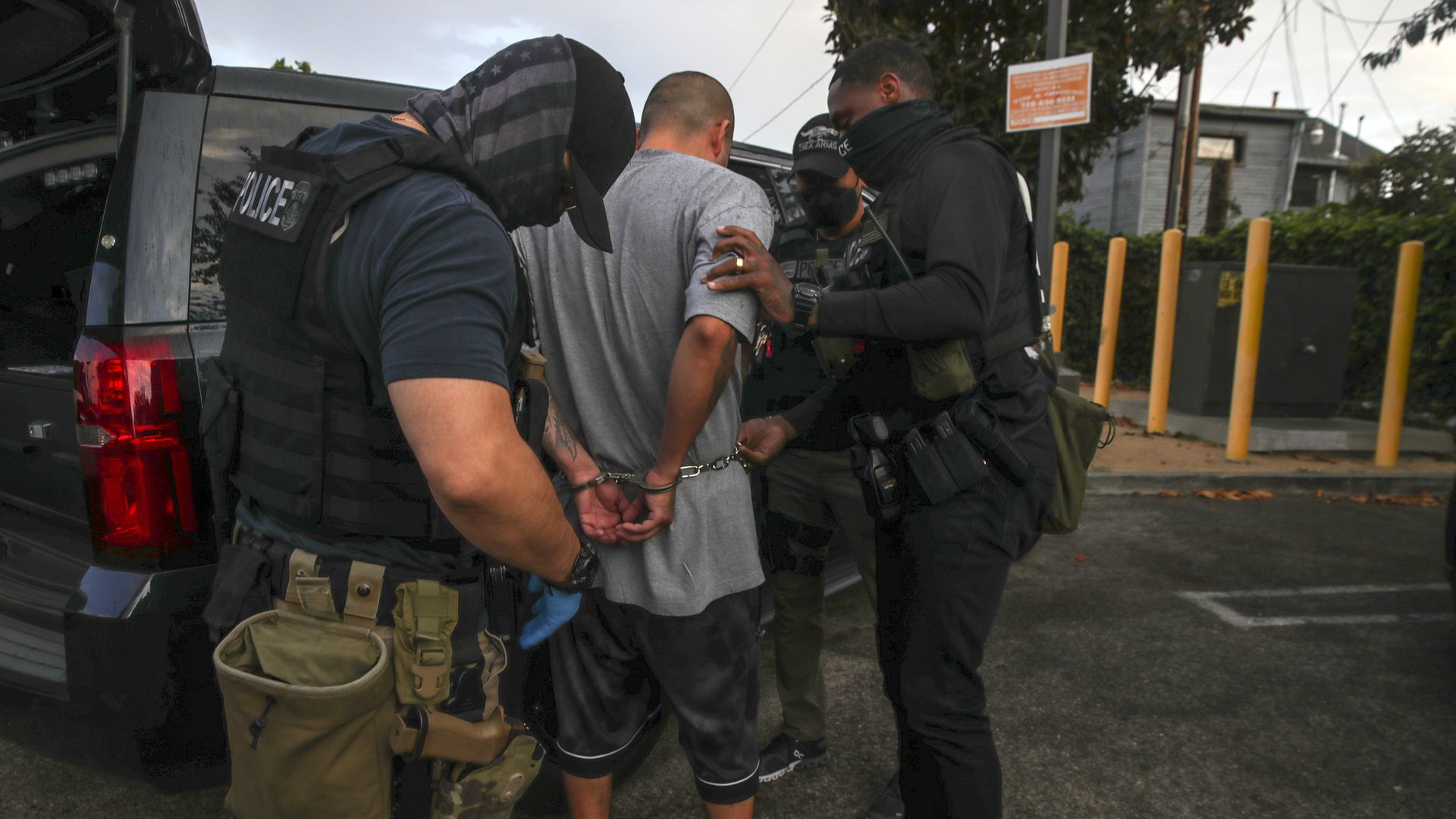
Immigrants arrested for homicides accounted for less than 1% of "at-large" arrests by Immigration and Customs Enforcement over the last six years, an Axios review found.
Why it matters: President-elect Trump has vowed to launch the "largest deportation of criminals in American history" — often focusing on the slaying of college student Laken Riley by an undocumented immigrant — but data shows crimes like homicide and sexual assault feature in only a small fraction of ICE arrests.
By the numbers: An Axios review of data for nearly 180,000 ICE at-large arrests broken down by criminal convictions from October 1, 2017 through Sept. 30, 2023 found:
- The largest numbers concerned immigration-related offenses (16%); driving under the influence (15%); dangerous drugs (15%), assault (9%) and traffic offenses (9%).
- 3% of the crimes were larceny, 1.7% sexual assault and 0.7% homicide.
- ICE at-large arrests are those made in public settings as opposed to when ICE picks up someone who's already in jail or prison.
Overall, ICE figures released earlier this year said there have been more than 425,000 noncitizen immigrants with criminal convictions in the past 40 years or more.
- About 13,100 — or 3% — were convicted of homicide, while 15,811 (3.7%) were convicted of sexual assault.
- Many are imprisoned in federal, state or local facilities and may enter deportation proceedings after serving their sentences.
Trump transition spokesperson Karoline Leavitt, reached for comment by Axios, didn't address the disparity in the ICE arrest data and Trump's claims about immigrant crime.
- In a statement, Leavitt said Trump will marshal all resources for "the largest deportation operation of illegal criminals, drug dealers, and human traffickers in American history."
Reality check: The federal government has prioritized deporting immigrants with criminal records since the Obama administration, Amy Maldonado, an immigration lawyer in Michigan, tells Axios.
- "What Trump is proposing is nothing new. We've never let murderers and rapists just roam the streets."
- "They're lying. This is just an excuse for mass deportations," Maldonado says.
The big picture: Study after study has indicated that immigrants — those in the U.S. legally or without authorization — commit crimes at lower rates than U.S. citizens.
- There are roughly 24.5 million total noncitizen immigrants in the U.S., according to the Pew Research Center. About 11 million of them don't have legal status.
2. Immigration curbs threaten caregiving


Some of the earliest and lasting effects from President-elect Trump's promised immigration crackdowns would be in-home health care and long-term care, both of which rely on a substantial number of foreign-born and undocumented workers.
Why it matters: Reducing an already thin labor market could have serious ramifications for aging adults or those with disabilities — and put more stress on family caregivers.
- More than 23% of home-aid workers are Hispanic women, per an analysis from the Center for Economic and Policy Research.
What they're saying: "Immigration policy is long-term care policy," said David Grabowski, a Harvard Medical School professor who's chronicled how foreign-born workers filled key nursing home roles early in the pandemic.
- He found nursing homes in regions with a higher share of foreign-born nursing assistants provided more direct care and better quality of care.
- "If you were to tighten up immigration or begin deporting individuals, it's going to lower the available workforce, and this is only going to add to an already challenging labor situation," he said.
By the numbers: Between 2021 and 2031, the long-term care sector will need to fill 9.3 million direct-care job openings as demand grows and workers exit the field, according to PHI, a research group that studies care workers.
- The American Immigration Council estimates more than a third of home health aides in the U.S. are immigrants. In states like California, New York and New Jersey, it's estimated at least 40% of the caregiving workforce is foreign-born.
3. Mexico makes record fentanyl seizure

Mexico's record seizure of fentanyl pills on Tuesday night was promoted as a blockbuster win, but an expert tells Axios Latino the timing is suspect.
Why it matters: The seizure comes on the heels of President-elect Trump's threats to impose tariffs on Mexico and Canada, claiming it will pressure them to stop the flow of migrants and drug-trafficking along the border.
- Mexican President Claudia Sheinbaum has said Mexico has been working for years to stop the flow of fentanyl, and that the U.S. should in turn be doing more to curb the demand for the drug at home and the flow of guns to Mexican criminal groups.
Driving the news: More than a ton of fentanyl pills were confiscated in Sinaloa, according to Security and Public Safety Secretary Omar García Harfuch .
- He added that more than 43 clandestine labs for synthetic drugs had been dismantled in northern Mexican states from October —when Sheinbaum took office — to this month.
- Sheinbaum said yesterday in her morning presser that Tuesday's seizure "was equivalent to about 20 million doses" taken off the streets, making it the largest operation of its kind.
What they're saying: The timing of the seizure seems suspect because of the back-and-forth between Sheinbaum and Trump, says Catalina Pérez Correa, a law analyst specializing in the criminal system and drug policy in Latin America.
- "It begs the question that if they've been able to do seizure operations like this for a while, why was it until after the tariff threat that they did so?" she asked, also suggesting the government might've been lacking will or was simply waiting to send a message.
4. CPAC goes south of the border

Argentina yesterday hosted its first Conservative Political Action Conference, an offshoot of the U.S. event.
Why it matters: The conservative conference is making inroads in South America.
- CPAC also held a similar event in Brazil this summer.
- Argentine President Javier Milei is a right-wing leader who has expressed admiration for Trump.
State of play: Among CPAC Argentina's keynote guests was Lara Trump, the co-chair of the RNC and daughter-in-law of Trump.
- In her speech, she referred to cuts and austerity measures Milei's government has undertaken since last December, saying the U.S. hopes to do the same with the announced Department of Government Efficiency that will be led by Elon Musk and Vivek Ramaswamy.
- Milei's government has slashed public education budgets, cut funding to certain provinces, eliminated ministries like the ones dedicated to the environment and to women's issues, advocated for book bans, and curbed the distribution of birth control and funds for teen pregnancy prevention programs.
- While the fiscal budget has been balanced, poverty has increased dramatically in Argentina, reaching 53% of the population — 11 percentage points more than last year.
5. Stories we're watching

1. Colombia's Supreme Court this week called for President Gustavo Petro to send in written statements in a corruption case.
- The case involves alleged fund misuse at the agency for disaster and emergency management.
- Petro has been summoned to testify because one of the people allegedly involved was Ricardo Bonilla, who until last night was Petro's finance minister.
- Petro has said he had no involvement and that, while he didn't think Bonilla was guilty, it was better for Bonilla to step down to avoid "attacks" against Petro's government.
2. Cuba's electric grid went fully offline yesterday for the third time since late October, and until today only 50% had been re-established.
- The island has been suffering from more acute outages in the past few months due to a lack of fuel, which authorities blame on the U.S. embargo and on wear and tear on the grid.
- Yesterday's mass blackout was caused by power failures at the Antonio Guiteras plant, similar to October's blackout, while one in November was mostly caused by Hurricane Rafael.
6. 🪅Pachanga: Jesse Guardiola
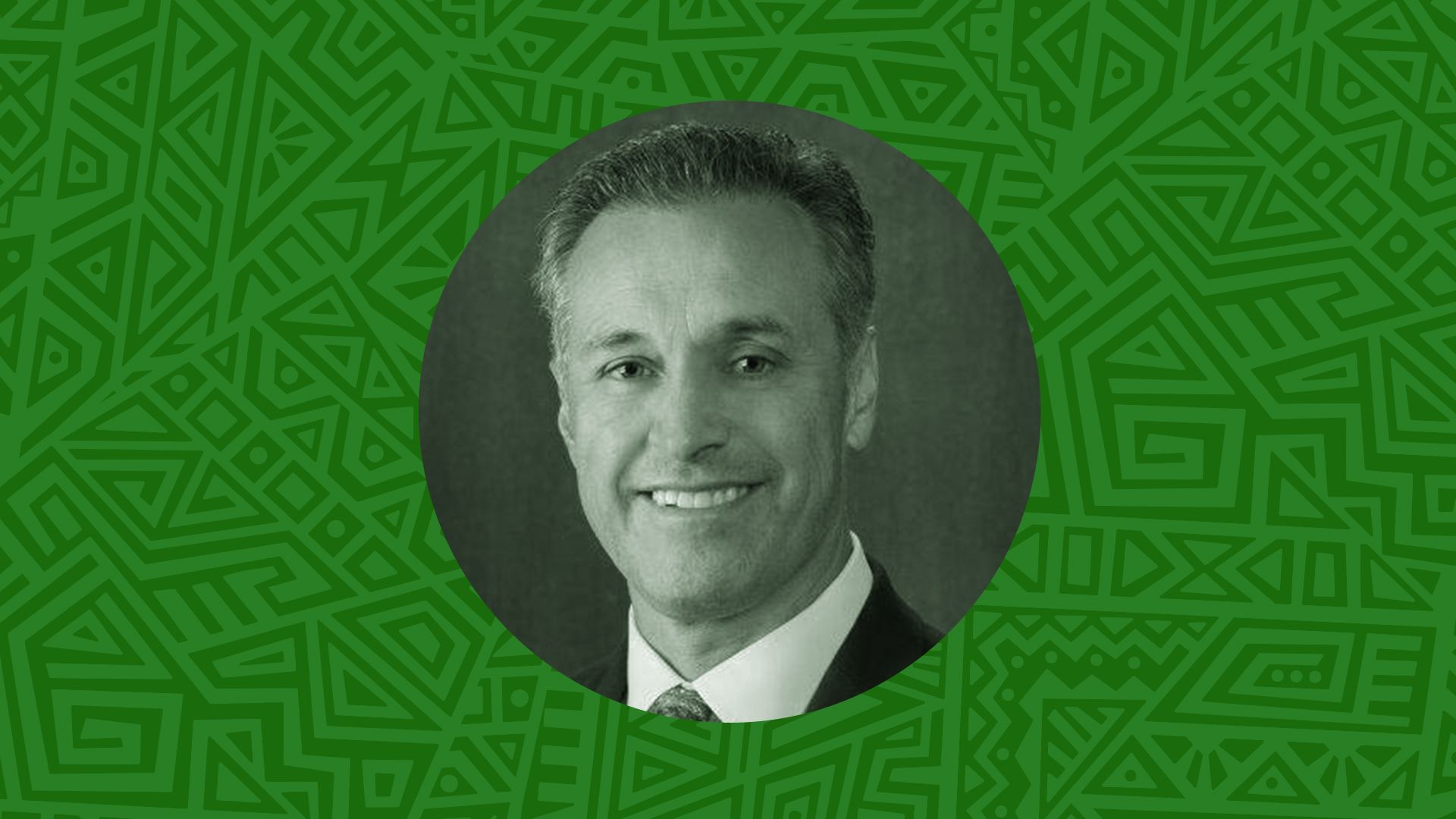
Our hats off to Jesse Guardiola, the vice president of community engagement and government relations for the Tulsa Area United Way!
- Jesse works to address community needs while working closely with corporations, foundations, schools, nonprofits and various government agencies.
- He also focuses his efforts on helping Tulsa's Hispanic community.
Keep up the amazing work, Jesse!
🎸 Russell is reading "The Barn: The Secret History of a Murder in Mississippi" and listening to blues while riding the Metro in D.C.
🥊 Marina is getting into kickboxing workouts to destress.
🎄Astrid is sad the bottom part of her Christmas tree won't light up anymore.
Our sincerest thanks to Carlos Cunha, Alison Snyder and Axios Visuals for their contributions!
Sign up for Axios Latino