
Axios Generate

May 20, 2024

🌄 Good morning, all. Hope you had a great weekend. We'll hit the ground running with a smooth 1,096-word, 4-minute read.
🎸 This week in 1992, Los Lobos released the album "Kiko," which provides today's intro tune...
1 big thing: The Central American link to Houston's disaster
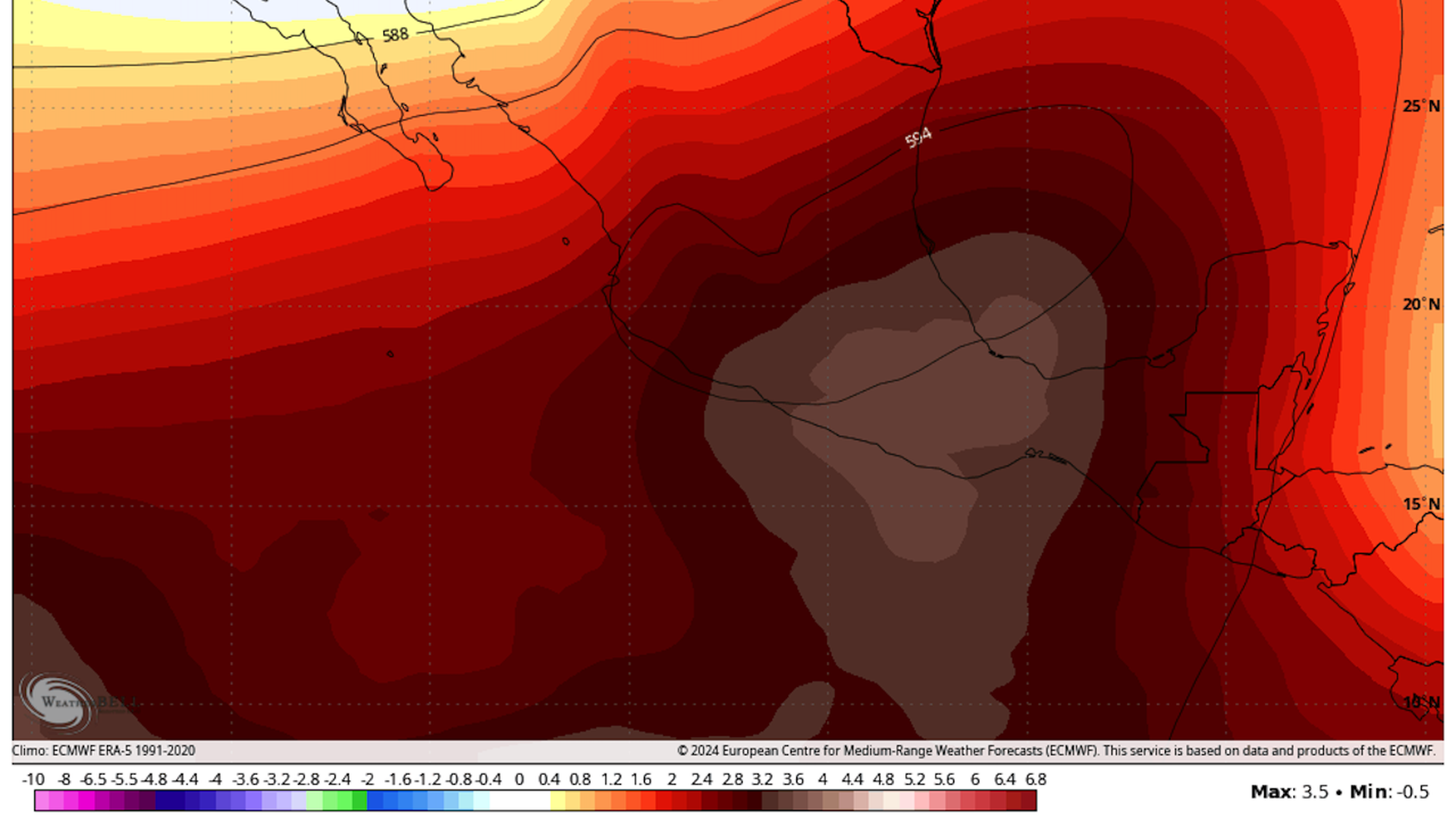
The derecho that killed at least four people in Houston and barreled through New Orleans into northern Florida late last week has ties to a record-shattering, relentless heat wave anchored over Central America.
Why it matters: With extreme weather, particularly in this era of rapid climate change, seemingly disparate events thousands of miles apart can be closely connected, with one triggering or intensifying another.
Zoom in: During the past several weeks, a powerful area of high pressure aloft, or heat dome, has parked itself over Mexico and occasionally spun southeastward, over the Yucatán.
- It has led to scorching temperatures across the region, with monthly and all-time temperature records falling in Belize, Guatemala and Mexico, where concerns are rising over Mexico City's diminishing water supplies.
- The heat dome's northern reaches have brushed up against the U.S., with record heat enveloping South Texas and highly populated areas of Florida from Tampa to Miami.
By the numbers: The ongoing heat wave has helped to cause already hotter-than-average ocean temperatures across the Caribbean Sea and Gulf of Mexico to increase further, raising temperatures of adjacent land areas even more in a positive feedback loop.
- Key West, Fla., for example, has set records for reaching a heat index of nearly 115°F and warmest overnight temperatures.
- Miami saw its third-highest heat index reading of 112°F on record Saturday and again yesterday, with all of the other historical records occurring during July and August.
Context: Heat domes have become hallmarks of the worst heat waves that are now more frequent and intense occurrences as the world warms.
What's next: Florida's sultry heat shows no signs of abating. In fact, it may expand to more areas of the U.S., including nearly all of South Texas and into the Southern Plains this week.
2. Mapped: Heat dome hits sea surface temperatures


Central America's heat dome is reinforcing already unusually hot ocean temperatures across the Caribbean Sea and Gulf of Mexico, two notorious hurricane breeding grounds.
- Why it matters: Computer models are signaling higher than usual expected storm activity in this region during hurricane season.
- Threat level: Bathtub-warm waters are also increasing temperatures over adjacent land areas and making it especially difficult to cool down at night.
- The broader North Atlantic Ocean Basin, and so-called "Main Development Region," where many hurricanes form, are already at record highs, which has led multiple forecasters to call for an extremely active season overall.
3. UAE giant enters U.S. market with LNG stake
ADNOC, the United Arab Emirates' state-owned oil and gas heavyweight, has acquired an 11.7% stake in NextDecade's Rio Grande LNG project.
Why it matters: It's ADNOC's "first strategic investment" here and a "significant milestone in ADNOC's international growth strategy," the firm said.
State of play: ADNOC has a stake in phase 1 of the Texas project, but terms of the 11.7% acquisition were not disclosed.
- The UAE company also secured a 1.9 million ton-per-year offtake agreement in the subsequent phase, subject to NextDecade's final investment decision expected this year.
- The deal comes as the U.S. has emerged as the world's largest LNG supplier, with more capacity slated to come online this decade despite the White House pause on new approvals.
What we're watching: Saudi Aramco has also signaled interest in entering the U.S. LNG market.
4. Warming drives Antarctica sea ice melting
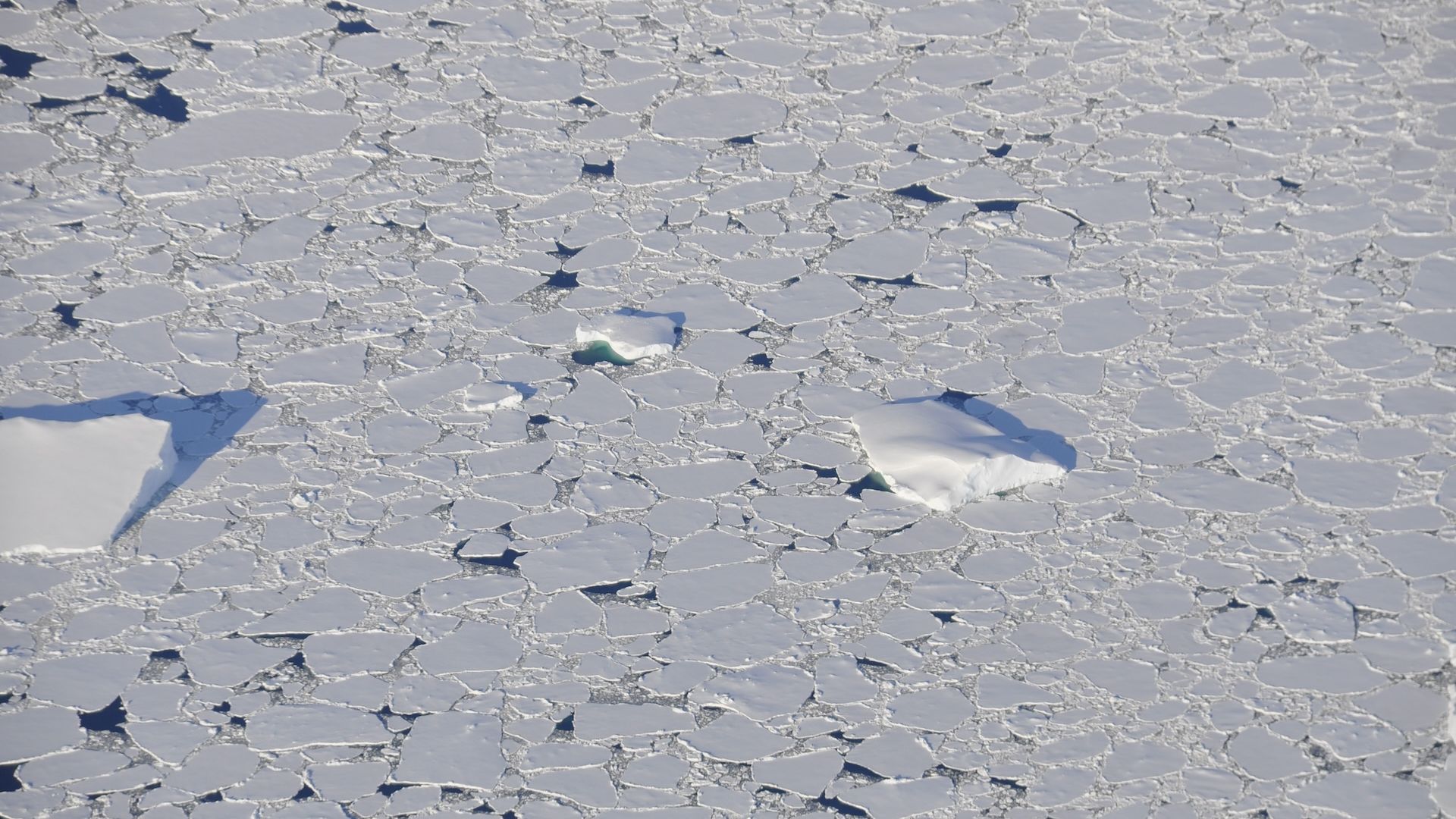
Human-caused global warming made the record low sea ice extent surrounding the Antarctic continent in 2023 far more likely to occur, according to a new study.
Why it matters: The findings may solve a mystery behind what exactly steered Antarctic sea ice cover into a nosedive in 2023, harming unique species that depend on the ice cover for hunting and breeding.
What they found: The study, published today in the journal Geophysical Research Letters, found the sea ice low was a 1-in-2,000-year event without climate change.
- But in models that incorporated modern levels of greenhouse gases, it was four times more likely.
- The findings clearly show that 2023's record low ice level was at least partly human-driven, but still a rare occurrence.
What's next: The study also examines prospects for sea ice recovery, finding that the sea ice may not fully recover, even after two decades.
- This lends support to those hypothesizing, based on the recent trends, that Antarctic sea ice may have entered a new regime featuring less and more fragile ice cover.
The intrigue: Such a regime shift could have dramatic repercussions for Antarctic species, as well as prevailing weather conditions, carbon cycling between the sea and the air, and other dynamics, many of which may be little understood right now.
5. 👀 Big this week: Shell and Congress
🛢️ Shell's annual general meeting tomorrow will offer a referendum on the oil giant's posture on climate and the energy transition.
- Why it matters: European majors are under the microscope as they juggle pressure to act on climate with resilient — and lucrative — fossil fuel demand.
- What we're watching: Shareholder votes on an activist resolution demanding tougher emissions targets, which management opposes. Shell is also putting its own strategy, which it has softened slightly, up for a vote.
- The bottom line: Management will prevail on both, but the amount of dissent will be an early gauge of investor satisfaction with new(ish) CEO Wael Sawan.
⚡Several Capitol Hill hearings this week could be informative, and here are two on our radar.
- What we're watching: Tomorrow the Senate Energy and Natural Resources Committee dives into rising U.S. electricity demand — a hot topic amid the rise of AI, EVs, and new factories.
- Friction point: Later in the week, expect adversarial questioning from Republicans when Energy Secretary Jennifer Granholm appears before the House Oversight and Reform Committee.
6. 🏃🏽♀️Catch up quick on tech finance: Honda and Aramco
🚗 Honda plans to boost investment in electrification and adjacent initiatives to $65 billion through fiscal 2031, the automaker said late last week in a strategy update.
🇸🇦 Saudi Aramco made an equity investment of undisclosed size in the direct air capture startup Spiritus, the firms said.
- Why it matters: DAC players are drawing big-name backers, despite questions about whether the tech can economically reach climate-meaningful scale.
- State of play: Spiritus, which has raised $11 million to date, disclosed the late 2023 funding when announcing a memorandum of understanding to explore collaboration. It coincided with Energy Secretary Jennifer Granholm's visit to the kingdom.
- Catch up quick: Aramco also revealed MOUs with two other startups it has previously invested in: Rondo, which provides energy storage for industrial heat and power, and the building efficiency firm Aeroseal.
7. 💬 Quoted
"There has been a big reality check around renewables growth. There's been a huge change in the cost environment."— Wood Mackenzie renewables analyst Norman Valentine, speaking to the FT about European power giants scaling back or reviewing their targets amid market hurdles
📧 Did a friend send you this newsletter? Welcome, please sign up.
🎊 Thanks to Chris Speckhard and Javier E. David for edits to today's edition, along with the brilliant Axios Visuals team.
Sign up for Axios Generate


/2024/05/20/1716202650214.gif?w=3840)