Study: Antarctic sea ice melting boosted by warming climate

Add Axios as your preferred source to
see more of our stories on Google.
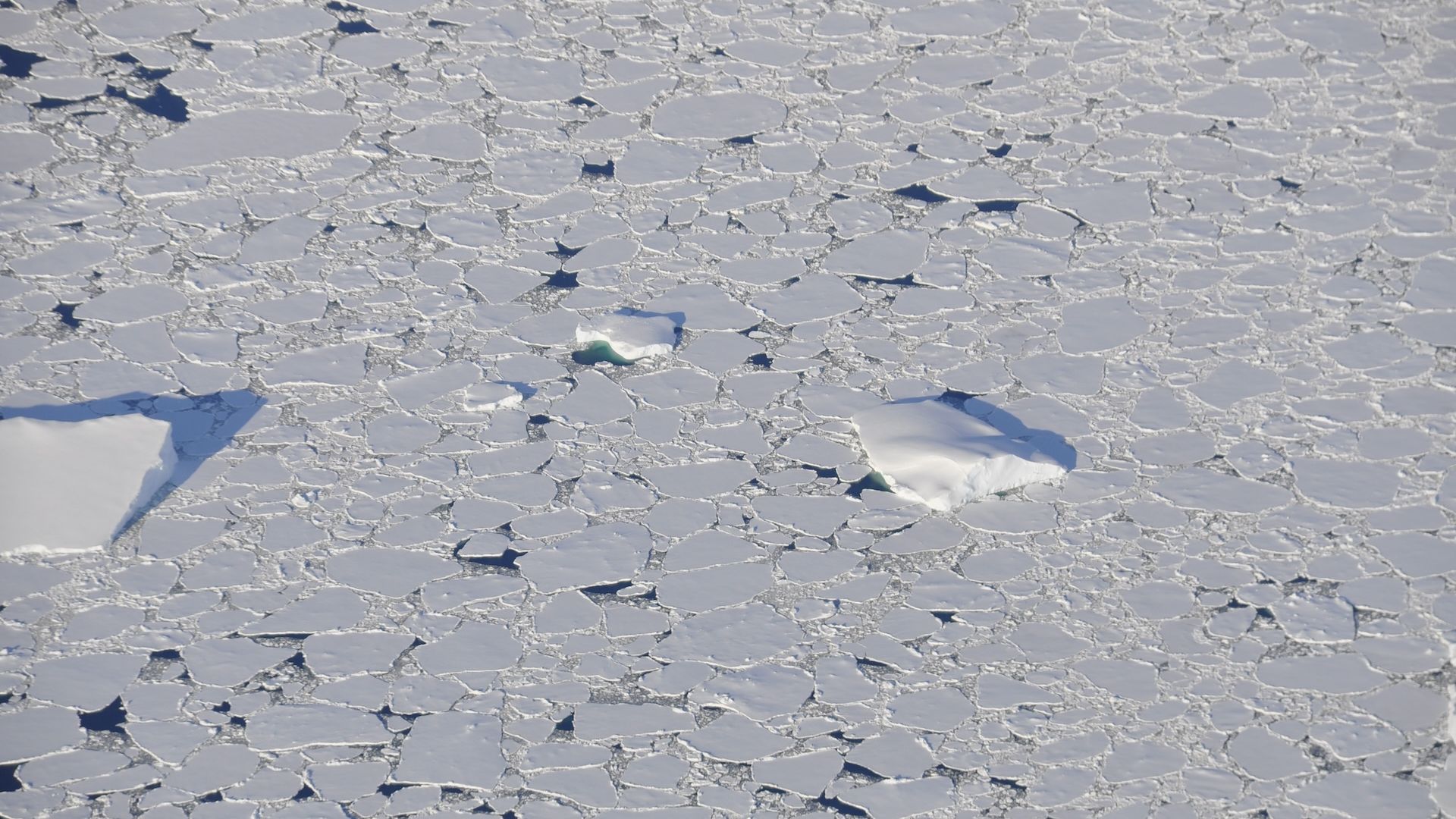
Aerial view of Antarctic sea ice. Photo: BAS, David Vaughan
Human-caused global warming made the record low sea ice extent surrounding the Antarctic continent in 2023 far more likely to occur, according to a new study.
Why it matters: The findings may solve a mystery behind what exactly steered Antarctic sea ice cover into a nosedive in 2023, harming unique species that depend on the ice cover for hunting and breeding.
Yes, but: For many decades through about 2015, while Arctic sea ice was declining to new lows each melt season as the climate rapidly warmed in the Far North, Antarctic sea ice was actually increasing.
- 2023's record low was seen as a shocking outlier and a potential wakeup call for a new Antarctic climate regime taking hold.
What they found: The peer-reviewed study, published Monday in the journal Geophysical Research Letters, found the sea ice low was a 1-in-2,000-year event absent climate change.
- But in models that incorporated modern levels of greenhouse gases, it was four times more likely.
- The findings clearly show that 2023's record low ice level was at least partly human-driven, but still a rare occurrence.
How they did it: The study, by scientists with the British Antarctic Survey, used 18 different climate models to determine the potential role played by climate change.
- Specifically, they examined the shift in probabilities between a world without added greenhouse gases from human activities, and the actual atmosphere we have today.
- Current levels of greenhouse gases are at their highest levels in human history, and likely well before that.
What's next: The study also examines prospects for sea ice recovery, finding that the sea ice may not fully recover, even after two decades.
- This lends support to those hypothesizing, based on the recent trends, that Antarctic sea ice may have entered a new regime featuring less and more fragile ice cover.
The intrigue: Such a transformation in sea ice coverage could have dramatic repercussions for Antarctic species, such as sea lions, whales and penguins.
- It could also alter prevailing weather conditions, carbon cycling between the sea and the air, and other dynamics, many of which are little understood right now.
- One concern is that less sea ice could speed up the melting of land-based glaciers, which would hasten sea level rise.
The bottom line: Sea ice loss is no longer limited to the Arctic, and scientists are just now learning more about what this means.
