Axios Generate
June 02, 2023

1 big thing: Warming Atlantic yields coastal worries


Threats from the still-emerging Atlantic hurricane season are converging with preexisting oceanic and atmospheric trends, underscoring how climate change is giving birth to unprecedented storm conditions, Andrew writes.
The big picture: The tropical Atlantic is especially toasty, particularly temperatures in one crucial swath of the sea known as the "Main Development Region."
- This is where many tropical storms and hurricanes form and intensify; ocean temperatures here are closely watched at the start of the season and used to help predict storm activity.
- In many seasons, freshening trade winds tend to cool those waters down. This year, that's not expected to happen.
- Climate change is a major factor driving ocean temperatures higher.
Why it matters: Generally, warmer waters concern public officials and meteorologists responsible for tracking landfalling storms along the East and Gulf coasts because it would suggest a more active season.
- As a reminder to expect the unexpected, the first fully tropical cyclone of the season — known simply as Tropical Depression Two — formed Thursday in the northeastern Gulf of Mexico.
Meanwhile... A likely El Niño event in the tropical Pacific Ocean continues to develop, with unusually warm sea surface temperatures at play there, too.
- Waters have been steadily warming in a key area that helps climate scientists diagnose El Niño events, known as "Niño 3.4."
- Tropical weather patterns are also starting to shift somewhat, potentially hastening El Niño's arrival.
- Reliable computer models continue to project a moderate-to-strong El Niño is ahead, possibly by the height of hurricane season in the late summer and early fall.
- Usually, these events make for less active Atlantic hurricane seasons because of their effects on global weather patterns.
Yes, but: With climate change elevating ocean temperatures throughout the Atlantic, beyond the tropics, and large stretches of the expansive Pacific, there is nothing typical about this setup.
- For example, ocean temperatures have been at or close to record levels globally this spring.
Threat level: An additional risk of warmer water is the increased likelihood of rapidly intensifying hurricanes.
- That has been happening with greater frequency and magnitude as the climate warms.
Context: Emphasizing the ocean conditions, a veteran hurricane forecast group at Colorado State upped its Atlantic outlook on Thursday to 15 named storms this season.
- This is an increase from 13 named storms in its previous forecast.
- Of that number, it predicts 7 will become hurricanes with 3 major hurricanes of Category 3 or greater. These are higher numbers, too.
What they're saying: Michael Lowry, a hurricane specialist at WPLG Local 10 in Miami, said historically high sea surface temperatures in the Atlantic and globally, plus a potentially moderate-to-strong El Niño, have no real precedent.
- "We don't have many great analogs in part because global sea surface temperatures have never been so warm," he told Axios.
2. The future of permitting as debt bill heads to Biden

Illustration: Shoshana Gordon/Axios
Bonus policy news: Lobbying and fusion

Illustration: Natalie Peeples/Axios
3. Tribeca film "story of hope" for LGBTQ disaster survivors

A nonbinary Filipino comedian, Jaya, encounters fellow typhoon survivors in "ASOG." Photo: Aya Garcia, courtesy of Seán Devlin
4. New resources for battling the copper crunch
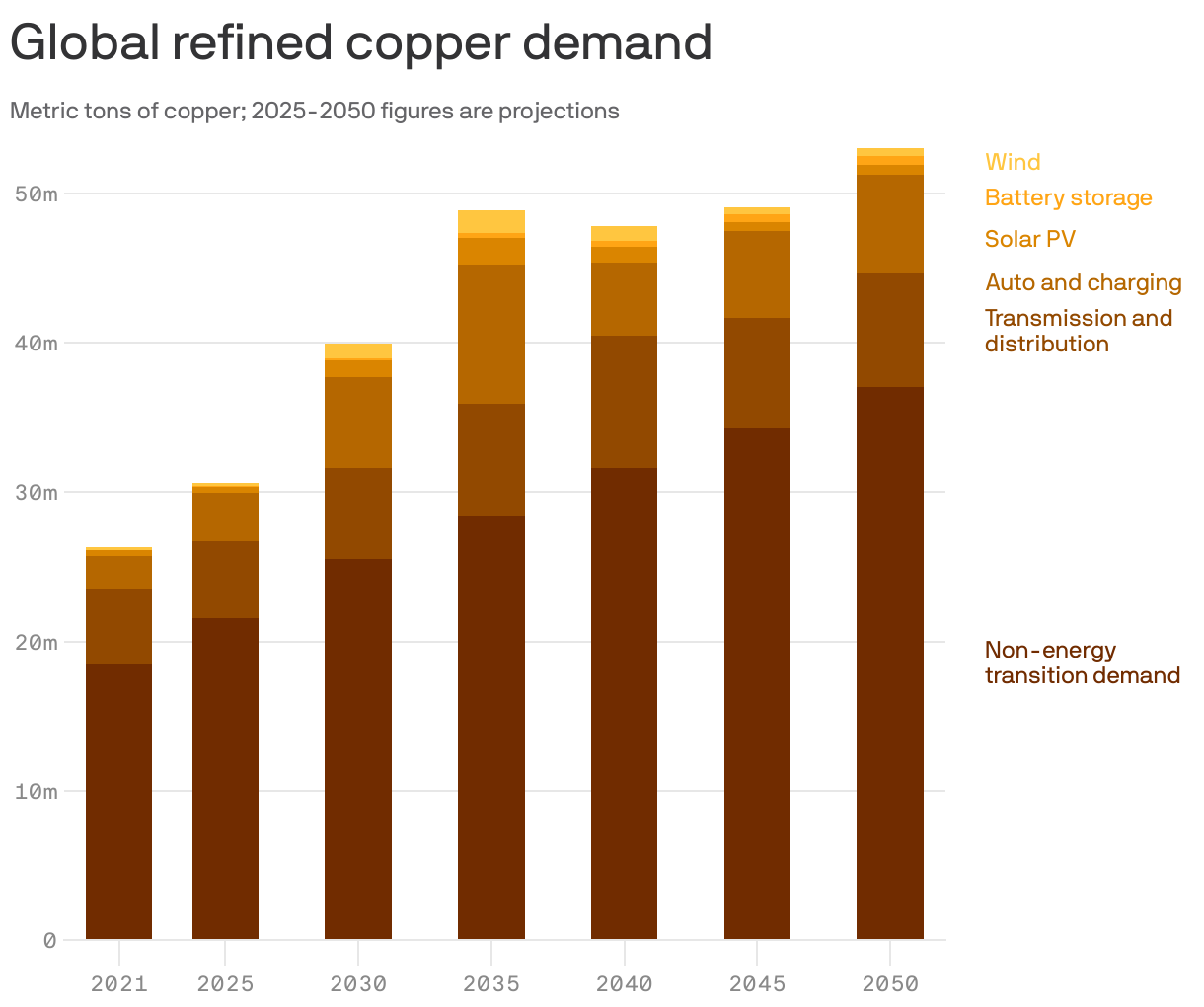
Ceibo, a Chilean startup with tech to extract more copper from existing mines, raised $30 million in series B financing led by the prominent VC firm Energy Impact Partners, Ben writes.
Driving the news: It can "economically and sustainably [unlock] supply of copper from sulfide ores, which traditionally are expensive and environmentally intensive to produce," the announcement states.
- The money will support multiple on-site trials, among other things.
Why it matters: Analyses from S&P Global (see above), the International Energy Agency and others show global climate goals require far more supply.
- Copper is used in EVs, renewable power, and transmission and grid infrastructure.
State of play: Meeting that demand faces huge hurdles that Ceibo can help overcome, backers say.
- "[D]eclining production, lower ore grades and the near-total inability to permit and construct new mines threatens a major shortage," said Energy Impact Partners' Shayle Kann via Twitter.
The bottom line: That crunch could derail climate progress "unless we find a way to economically unlock the vast copper reserves available at existing mines in the form of primary sulfides," he adds.