Axios Generate

June 03, 2024


🍳 Good morning! We're rolling into Monday with a quick 976 words, 3.5 minutes.
🚨 Situational awareness: Mexico's first female president-elect, Claudia Sheinbaum, is also a climate scientist who has contributed to UN IPCC assessments.
📻 The late soul pioneer Curtis Mayfield would have turned 82 today, and his brilliance opens today's newsletter...
1 big thing: Colombia's plan for UN talks
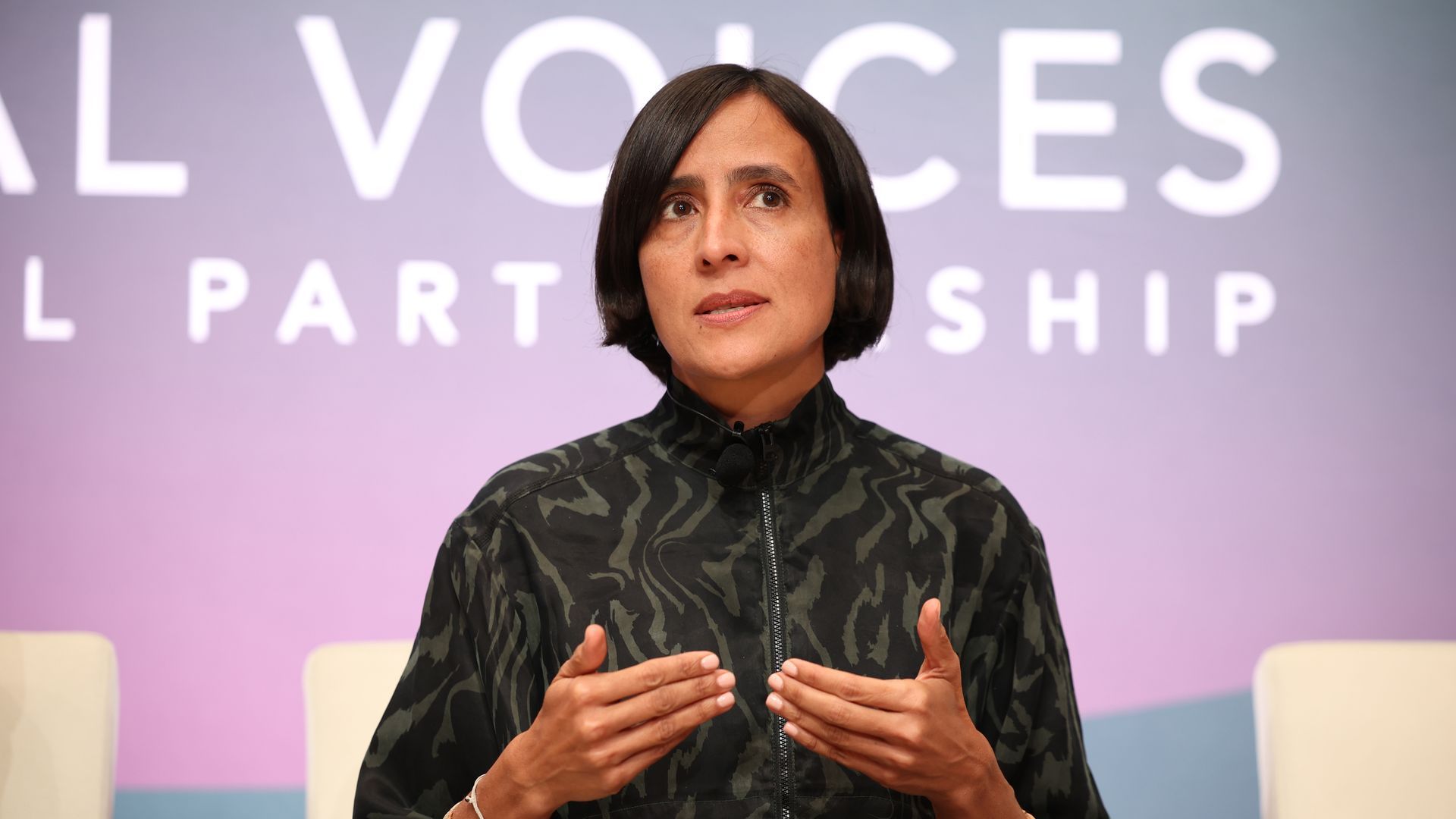
The Colombian official leading talks to strengthen a global biodiversity pact will elevate climate change in the negotiations when diplomats gather in her nation this fall.
Why it matters: In an Axios interview, environment minister Susana Muhamad revealed her goals for the October biodiversity summit and annual United Nations climate talks in November, where she'll be a high-profile figure.
The big picture: Muhamad seeks to go big when it comes to protecting nature, and reconceptualizing humanity's relationship with it.
- This shows a determination to meet a stretch global target to "halt and reverse" biodiversity loss by 2030.
- "Nature is also trying to adapt to the new conditions of the planet, if nature is able to adapt in a way, and we are able to decarbonize to a point that the temperature gets stable, then nature will be there to be our ally, to capture the carbon, but also to be able to continue living in this planet," she said.
What we're watching: Muhamad said Colombia is seeking to have 20 to 30 countries endorse a fossil fuel non-proliferation treaty by COP29 in Azerbaijan; they are currently about a dozen countries short.
- At COP28 in Dubai, Colombia backed the idea of a treaty to halt expansion of coal, gas and oil production, and winding down current output.
- The nation's current left-wing government is not signing new oil and gas leases.
The bottom line: The link between climate action and protecting biodiversity "is not being prioritized" enough, Muhamad said, adding: "If nature collapses, we all are going to collapse due to climate change."
2. Big this week: FERC, climate, AI

🗳️ The Senate's energy committee will vote tomorrow on President Biden's three nominees for the powerful Federal Energy Regulatory Commission.
- Why it matters: It will preview levels of full Senate support. Sitting FERC commissioner Allison Clements' looming departure this month would leave the agency without a quorum, unless and until she's replaced.
💬 Annual mid-year UN climate talks in Bonn, Germany, opened today.
- Why it matters: The Bonn conference will take the measure of agreement — and division — ahead for negotiators at COP29 in Azerbaijan late this year.
- What we're watching: Simon Stiell, the top UN climate official, wants progress on a new target for wealthy nations' finance for developing countries. "We cannot afford to reach Baku with too much work still to do," he said in a speech.
⚡ A House Energy and Commerce Committee panel gathers tomorrow for a hearing on rising electricity needs to serve artificial intelligence.
- What we're watching: Keep an eye on how witnesses and lawmakers may argue that surprisingly strong U.S. power demand growth should prompt reconsideration of EPA climate rules and other policies.
3. OPEC+ decision leaves market guessing

Oil prices barely moved following yesterday's OPEC+ decision to eventually unwind some crude production cuts — a pledge that came with a big asterisk.
Why it matters: The oil cartel's plan has market and geopolitical implications, especially during election season when energy prices will be campaign fodder.
- Despite a torrid spring rally that briefly stoked fears of $100 per barrel, Brent has mostly languished in a range well below $90 (it's $81 this morning).
- For now, OPEC+ is in no hurry to bring many more barrels to the market as demand growth remains modest.
Catch up quick: Current curbs totaling 2.2 million barrels per day will extend through the third quarter and then gradually phase out through September 2025.
- But those monthly increases "can be paused or reversed subject to market conditions," the group said.
- Meanwhile, roughly 3.7 mbd of other standing cuts will be extended through 2025, though the United Arab Emirates baseline production quota rises starting next year.
Between the lines: The extensions could mean that prices will "remain elevated through the U.S. presidential election," as the Wall Street Journal noted.
- But RBC Capital Markets says Saudi Arabia may have done enough to help talks with Washington about a security deal.
- The plans to taper cuts, while hedged, could be well received, Helima Croft writes.
- "Relations between Washington and Riyadh have seen a significant recovery from October 2022 lows and today's decision should keep that trend line intact."
What we're watching: The supply trajectory from non-OPEC producers including the U.S., which will influence their decision-making.
The bottom line: "OPEC+ member countries would like to start increasing oil production without negatively impacting prices. They cannot do that just yet," S&P Global Commodity Insights executive director Bhushan Bahree said in a note.
4. Charging "trees" could boost urban EVs


A New York startup called Gravity hopes to plant a network of high-powered electric curbside "trees" across the city that can recharge electric cars in as little as five minutes.
Why it matters: EVs make sense in congested cities like the Big Apple — where transportation is a major source of greenhouse gas emissions, air pollution and noise. Yet charging is a gigantic hurdle.
Driving the news: Google Ventures-backed Gravity, which recently opened what it claims is the country's fastest EV charging site at a Manhattan parking garage, now plans to bring the same technology to curbside plugs.
- Working with design architects at Rangr Studio, Gravity just released a new concept for curbside charging.
How it works: Called "DEAP Trees" (for Distributed Energy Access Points), they're sleeker and taller than other curbside chargers — without messy cables that clutter the landscape and trip up pedestrians.
- Instead, their charging cable pivots down from a hinged swing arm, and raises back up after charging. That flexibility means the system is compatible with any EV, no matter where its charging port is located.
5. 🛢️ Quoted
"The deal marks a shift in the 'Shale 4.0' wave of consolidation, in which public exploration and production (E&P) companies and operators outside of the Permian become primary acquisition targets."— Rystad Energy analyst Matthew Bernstein on ConocoPhillips' planned $22.5B acquisition of Marathon Oil, coveted for its assets in the Eagle Ford and Bakken shale plays
📨 Did a friend, colleague or even a frenemy send you this newsletter? Welcome, please sign up.
🙏 Thanks to Chris Speckhard and Javier E. David for edits to today's edition, along with the brilliant Axios Visuals team.
Sign up for Axios Generate