Axios Generate

October 22, 2024

🐣 Good morning! We've got a newsy edition that's still just 1,298 words, 5 minutes.
🎹 This week in 1972, the incomparable Stevie Wonder released the album "Talking Book," which provides today's intro tune...
1 big thing: How solar-powered school buses could help NYC's electric grid

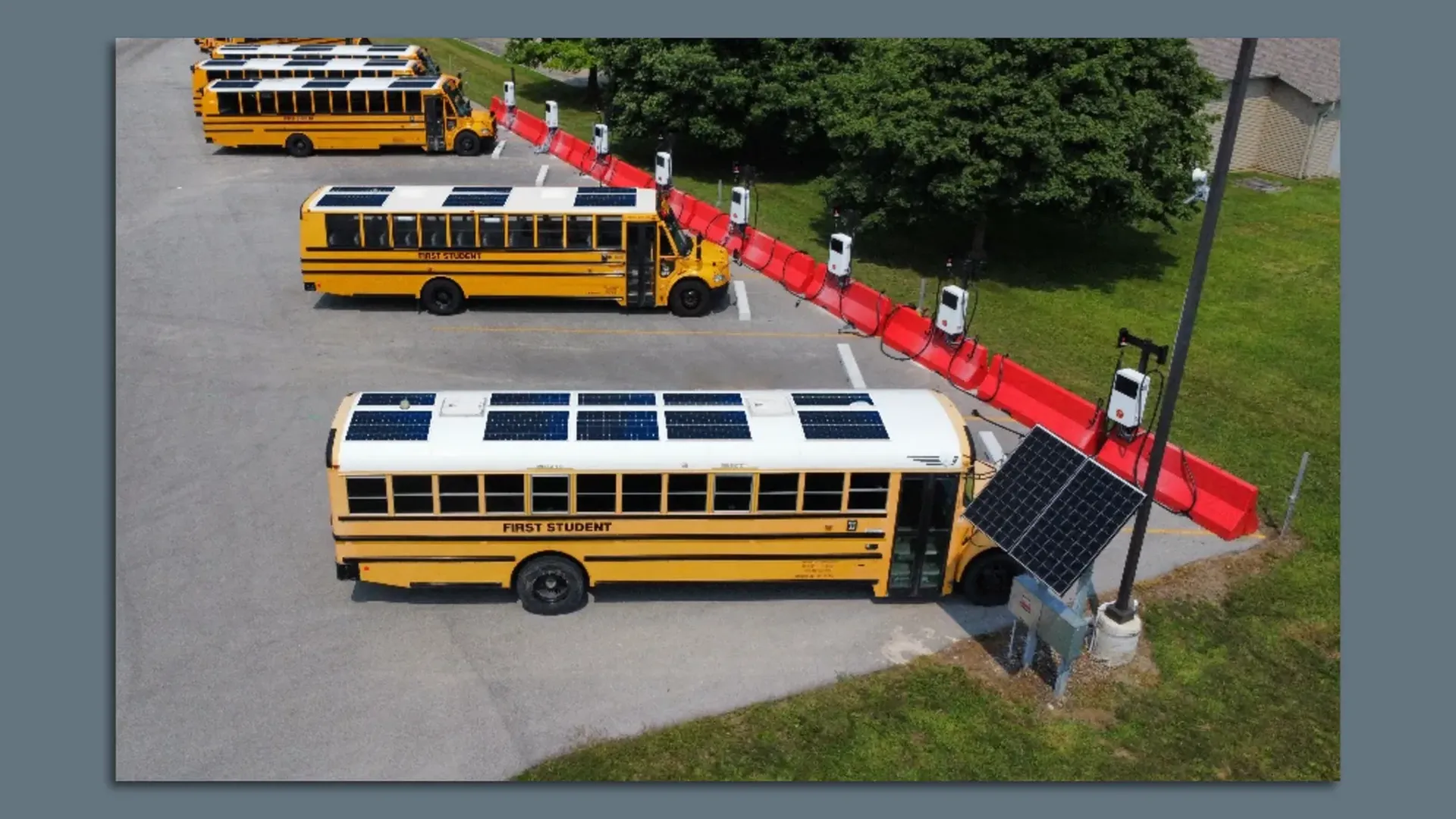
New York City's first solar-powered school buses will help to manage the city's growing demand for electricity by generating clean energy and sending it to the local grid during periods of peak demand.
Why it matters: By integrating solar buses into a smart energy hub, or microgrid, the project aims to show how electrification can work affordably even in urban areas like Brooklyn, where space is limited and demand for clean energy is high.
The big picture: As electric school buses proliferate, so has the concept of bidirectional charging, or vehicle-to-grid technology.
- With V2G, parked school buses can act as giant batteries to store surplus energy that districts can sell back to the utility when needed.
- New York is going a step further by using school buses to collect and store renewable energy from the sun.
Driving the news: The project is a joint effort between New York's utility, Con Edison, and First Student, the country's largest school bus operator and a leader in electrification.
- Twelve electric school buses are being outfitted with rooftop solar panels, replacing diesel buses at First Student's Malta Street depot in Brooklyn.
- Four of the solar buses are already in operation; the rest will be on the road by next school year.
How it works: The buses' solar panels, along with a 500-kW solar array on the rooftop of the depot facility, will be integrated into what ConEd calls a smart energy hub.
- The hub also includes a two-megawatt battery onsite to store and discharge energy as needed.
- First Student will charge the buses using low-cost charging infrastructure it designed called First Charge.
- Charging equipment is deployed above ground, mounted behind simple jersey barriers, instead of buried in underground trenches.
- That reduces construction costs by at least 30% and is more efficient and flexible, the company says.
In summer months, when the buses are idle and energy demand soars, the hub's renewable energy can provide backup power to the grid.
- It could also support emergency services and hospitals during power outages.
What they're saying: The combination of solar power and electric school buses into a smart energy hub that supports the local grid is revolutionary, First Student CEO and president John Kenning said in a statement.
- "This demonstration project paves the way for sustainable transportation solutions that can be replicated in cities across the country, all while providing students with a cleaner, quieter, and safer ride to school."
2. 🗞️ DOE unveils "clean" projects in coal regions
Breaking: DOE just announced 14 "clean" manufacturing projects it plans to stake in regions hit by closures of coal mines and coal-fired power plants.
Why it matters: Many of the projects use recycled materials and aim to shore up domestic supply chains, officials said.
Driving the news: The agency this morning detailed nearly $430 million in planned cost-sharing grants under the 2021 infrastructure law.
- It's the second tranche under the Advanced Energy Manufacturing and Recycling Grant Program.
- The latest projects combined will create over 1,900 jobs, and direct and indirect emissions "abated" will be greater than Iceland's annual total, Deputy Secretary David Turk told reporters.
State of play: Examples of the planned grants include:
- Nearly $25M for Anthro Energy's planned Louisville, Kentucky, project to make advanced electrolytes for lithium-ion batteries.
- $20M for two CleanFiber, Inc. projects in Washington state and Texas that would make advanced insulation from recycled cardboard.
- $87M for a Mainspring Energy plant near Pittsburgh to make its "linear generator" power systems.
What's next: It's not guaranteed cash. Projects now face more negotiations with DOE to get the money flowing.
3. "Greater than 99% chance" of the warmest year
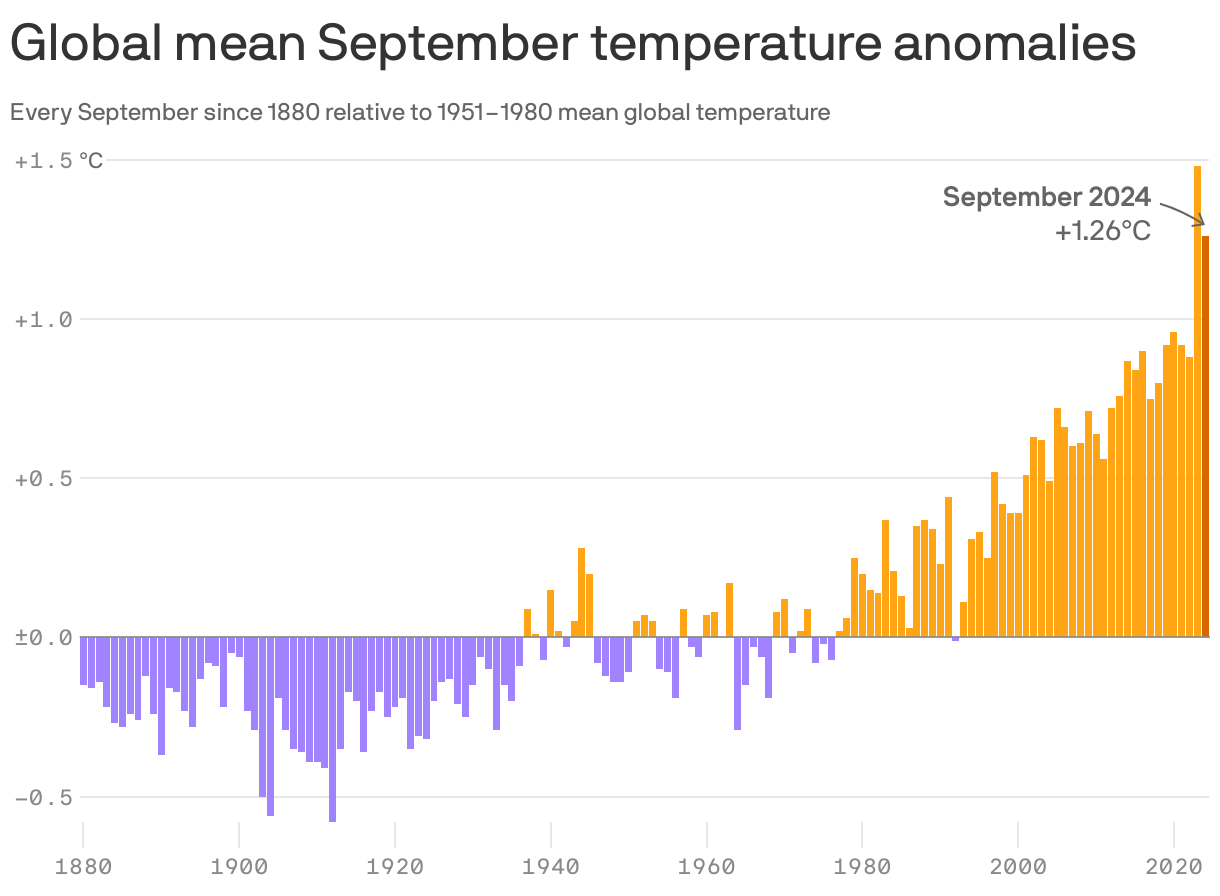
The planet just saw its second-warmest September on record, according to new NASA data.
Why it matters: September's temperature anomalies increase the chances that 2024 will beat last year as the warmest year in the instrumental record.
Zoom in: NASA's monthly climate data, along with NOAA's, was delayed due to the impacts of Hurricane Helene.
- NASA uses some information from NOAA's National Centers for Environmental Information (NCEI) in Asheville, North Carolina, which was temporarily knocked offline by the extensive flooding in that city.
- Global average temperatures during September were exceeded only by September 2023, with global average surface temperatures at 1.26°C (2.27°F) above the 1951-1980 average.
- Scientists examine 30-year timescales to more closely study climate change.
The intrigue: Gavin Schmidt, the top NASA climate scientist, said that in his view, 2024 is now nearly certain to beat 2023 as the warmest year on record.
- "The year-to-date anomaly in 2024 is significantly higher than in 2023," Schmidt said in a statement, noting the difference is about 0.18°C (0.32°F).
- He estimated that the chance of a new annual record being set in 2024 is greater than 99%.
- Other climate data through August tells a similar story, and it is expected that NOAA's numbers, when released, will include that agency's revised yearly ranking outlook.
The bottom line: Annual rankings reflect the influences of natural climate variability, such as El Niño events, combined with long-term human-caused warming.
4. 🏃 Catch up quick: legal edition
🛢️ Via Bloomberg, a federal judge "extended the validity of a U.S. government analysis undergirding oil development in the Gulf of Mexico, after oil industry trade groups said more time was needed to avoid potentially widespread disruptions."
- The case centers on an Endangered Species Act analysis of threats from potential spills.
🧳 Via Reuters, the Supreme Court will consider whether EPA can steer some challenges to its air pollution and climate rules "away from regional appeals courts favored by opponents of its actions and to a court in Washington that regularly hears regulatory disputes."
5. Major biodiversity summit begins in Colombia
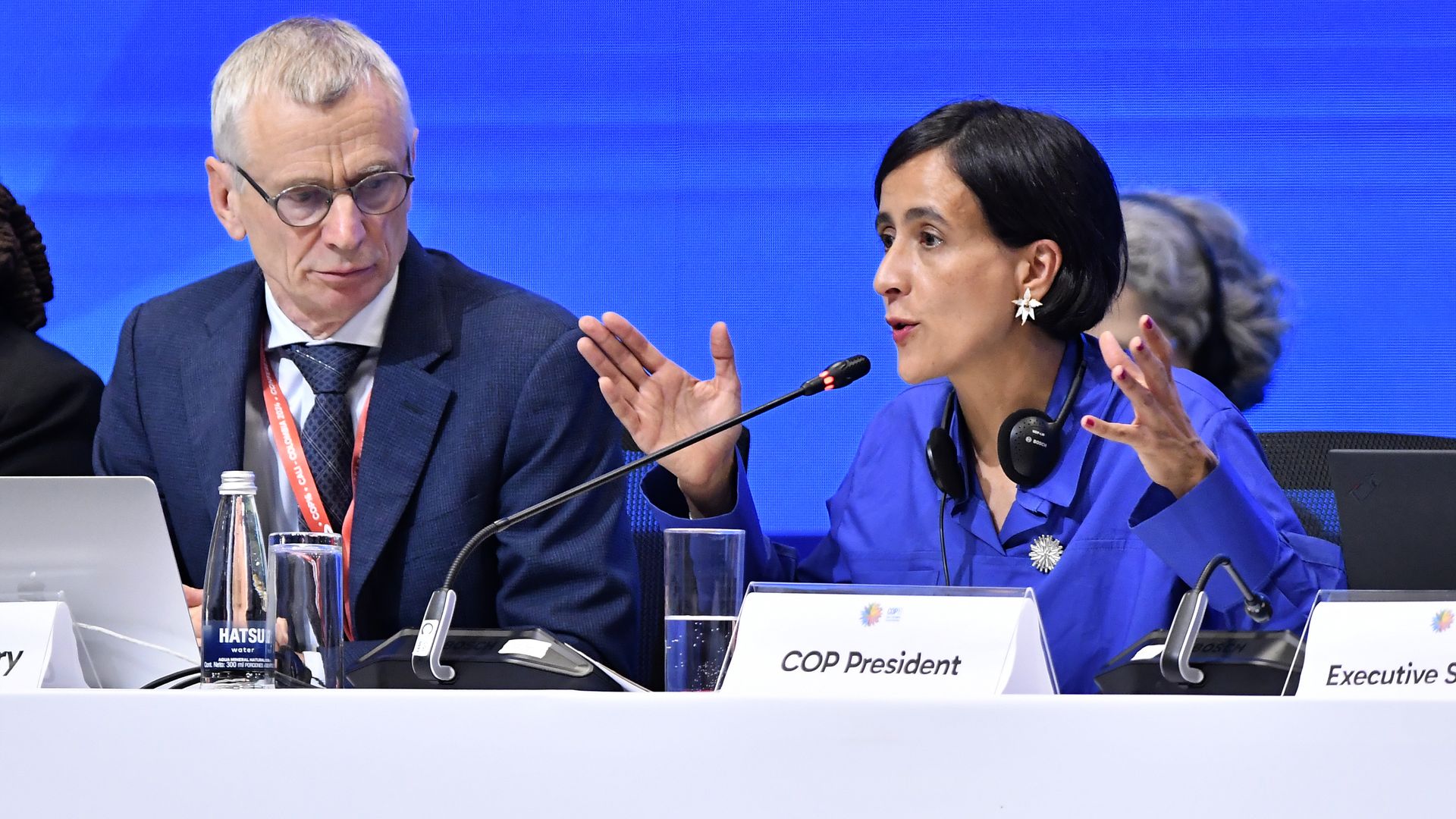
A two-week UN summit on biodiversity, aimed at putting into place the details and funding for protecting at least 30% of combined lands and waters by 2030, is underway in Cali, Colombia.
Why it matters: The summit comes as the planet's species are under assault from climate change, habitat loss and other forces.
Zoom in: Like with recent rounds of UN climate talks, this summit deals with filling in the details of a far-reaching, but voluntary, global agreement.
- In addition to government representatives, Indigenous peoples and nongovernmental organizations, the FT reports that over 1,000 companies are expected to attend COP16.
- This is seen as part of a growing "nature positive" agenda that values natural resources as assets in their own right.
- Governments established a new global biodiversity framework agreement at COP15 in Montreal two years ago, and now countries are being asked for their national biodiversity strategies.
What we're watching: How much new funding is put on the table, particularly from the wealthiest nations, for protecting ecosystems. Also, how Colombia's leadership steers the talks.
6. ⚛️ Charted: Nuke startups' big tech boost


Share prices of two small modular reactor startups — NuScale and Oklo — have soared since tech giants Google and Amazon unveiled deals with their competitors.
Why it matters: A rising tide may be lifting all boats, TD Cowen analysts said in a report, noting "other companies in the nuclear ecosystem saw positive price reactions as well."
Catch up quick: Last week Amazon announced a partnership with SMR player X-energy to develop multiple reactors, while Google unveiled its own agreement with Kairos Power.
What we're watching: SMRs face plenty of hurdles, but other recent developments are bullish, too.
- For instance, last week DOE opened the doors for applications to tap $900 million for deploying the tech.
7. 🧮 Number of the day: between 5 and 19 million tons
That's how much lithium reserves are estimated to sit underground in southwestern Arkansas, per new U.S. Geological Survey estimates.
Why it matters: If commercially recoverable, even the low end is nine times IEA's estimate of what's needed globally for EV batteries in 2030, USGS said.
- It comes as Exxon and others plan to extract lithium from brines in Arkansas' Smackover Formation.
The bottom line: With the big caveat that USGS didn't explore how much is recoverable, it still suggests a prolific resource.
📨 Did a friend, colleague or even a frenemy send you this newsletter? Welcome, please sign up.
🙏 Thanks to Chris Speckhard and Chuck McCutcheon for edits to today's edition, along with the brilliant Axios Visuals team.
Sign up for Axios Generate