Axios Future of Mobility
October 22, 2025

👋 Hi, it's Nathan Bomey, filling in for Joann while she's out. If my name rings a bell, it might be because I've been covering the auto industry in some capacity for nearly two decades.
- I could never replace Joann, but I'll do my best to keep this ride centered in the lane while she's away!
🤖 This week, we're looking at GM's new "eyes-off" autonomous driving system.
- Plus: How Uber is incentivizing drivers to buy EVs after the federal tax credit expired.
1,028 words, a 4-minute read.
1 big thing: GM's new "eyes-off" self-driving system

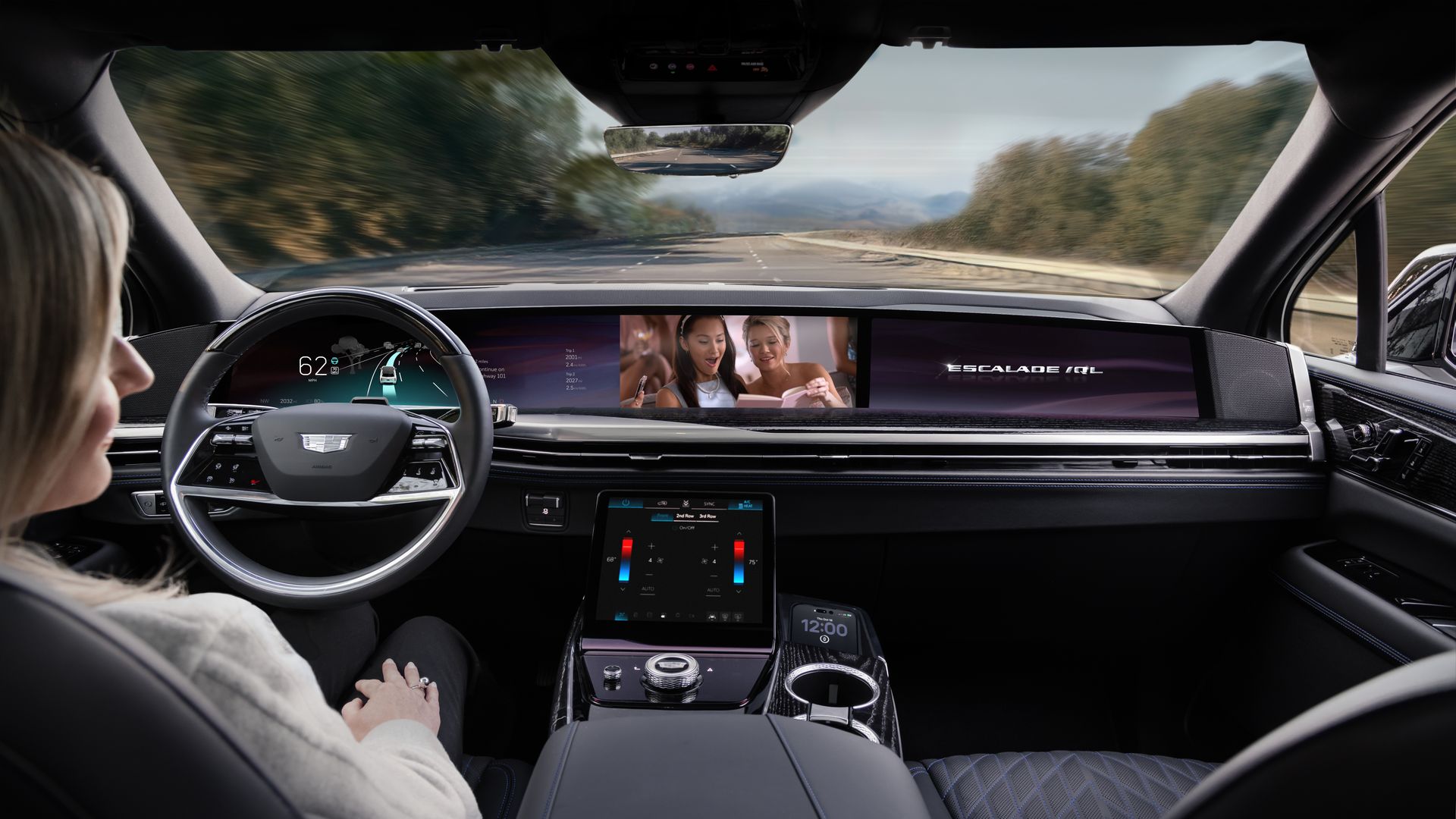
General Motors said today it will introduce an "eyes-off" autonomous driving system on a consumer SUV in 2028.
Why it matters: No major automaker has yet commercialized self-driving car technology that legally allows car owners to travel from place to place in their vehicle without keeping their eyes on the road.
- "It's more than just a vehicle," GM CEO Mary Barra said at a press event. "It makes your life easier, more streamlined, and, more importantly, safer."
Driving the news: The system will debut on the Cadillac Escalade IQ electric SUV, starting with highway driving and eventually transitioning to include urban roads.
- "This allows you to do something else at that time, connect with others, catch up on work, your favorite TV show," GM chief product officer Sterling Anderson told Axios in an interview.
What they did: GM customers have already driven 700 million miles using the company's current Super Cruise system, which drives the vehicle under certain conditions while using eye-tracking technology to ensure the operator is still paying attention to the road.
- The new "eyes-off" system builds off of Super Cruise's learnings, as well as the advancements made by the Cruise driverless car division that GM shuttered in late 2024.
State of play: Unlike GM's planned offering, Tesla's "full self-driving" (FSD) system drives the vehicle in many environments, but requires drivers to keep their eyes on the road.
- Waymo provides driverless rides in several major cities, but does not sell vehicles to the public.
How it works: GM's eyes-off system will use a mix of Light Detection and Ranging (LiDAR), radar and cameras.
- That contrasts with Tesla's FSD, which uses only cameras. CEO Elon Musk says the transportation network was built for humans who drive only with their eyes, and thus self-driving cars should work the same way.
- GM's Anderson — who helped develop Tesla Autopilot and the Tesla Model X before cofounding autonomous trucking firm Aurora — said he disagrees with his former boss: "What I told him then, and what I'll remind him now, is humans have ears, noses, tongues, touch," Anderson tells Axios.
- "The evolutionary analog doesn't work here," he added. "Why do we have multiple modes? And why have we somehow managed to fuse them? And you don't think you can fuse LiDAR, radar and camera?"
The big question: What will it cost?
- GM executives declined to say, but the current Super Cruise system requires a monthly subscription of about $40.
GM also announced plans to launch a "conversational AI" system in its vehicles, using Google's Gemini platform.
- The system will "enable a more natural conversation" between driver and the vehicle, said David Richardson, SVP of software and services engineering.
2. 🔌 Uber's green rebrand
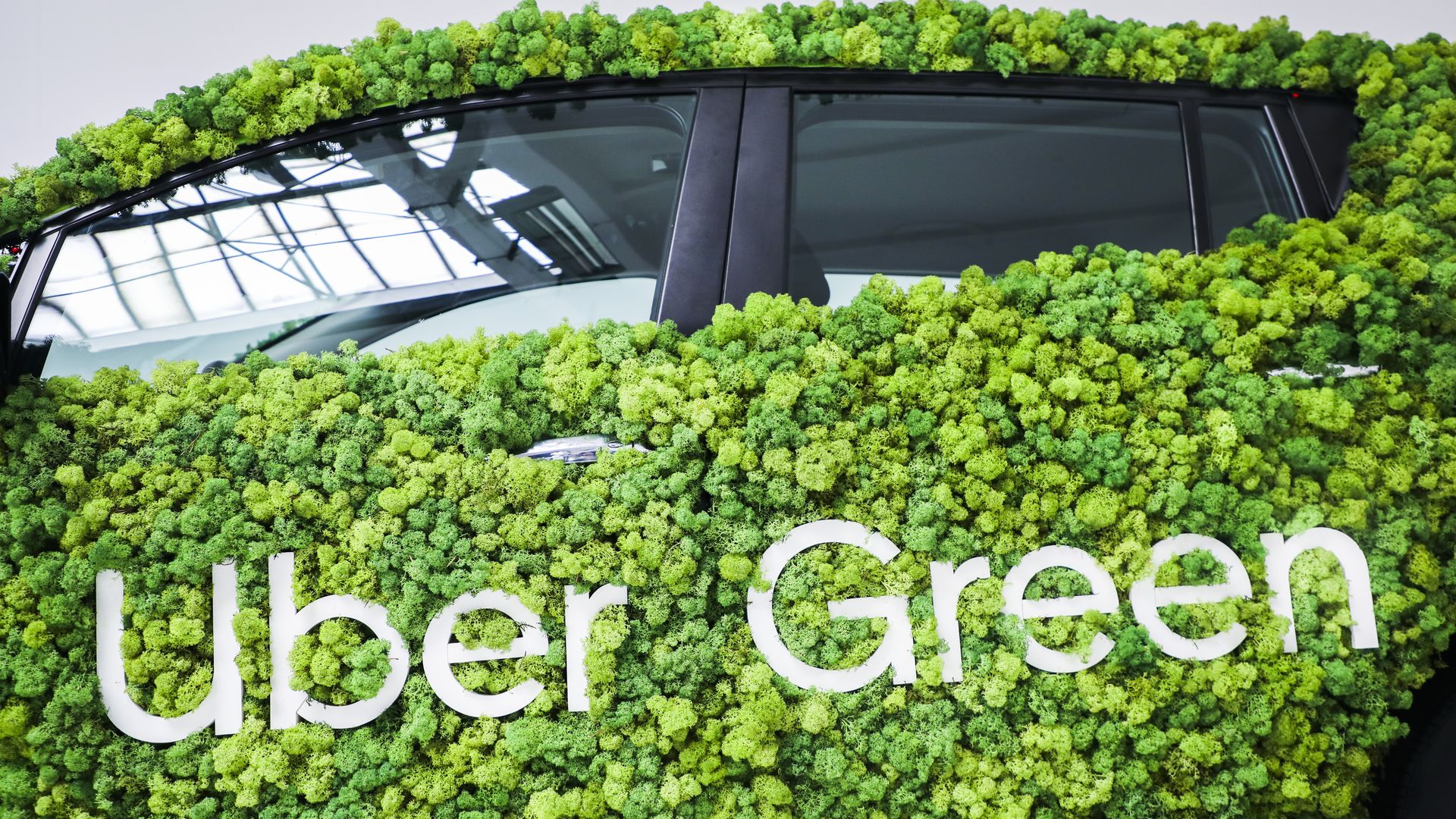
Uber plans to provide grants to drivers in key markets to switch to electric vehicles, and is rebranding its Uber Green option to Uber Electric.
Why it matters: The move comes after the expiration in September of the federal EV tax credit, which was worth up to $7,500 for new EVs and up to $4,000 for used ones.
Driving the news: Uber will provide $4,000 "Go Electric" grants to high-mileage, tenured drivers in markets with high demand — New York City, California, Colorado and Massachusetts — to purchase new or used EVs.
- "Affordability is an issue with EVs, and we want to make it as easy as possible for drivers to transition," Santosh Rao, global head of mobility sustainability, tells Nathan.
Zoom in: The announcement was paired with the news of the rebranding from Uber Green to Uber Electric, which the service says will make it "easier for riders to choose zero-emissions rides."
- Uber Green previously included hybrids, but the company switched to only pure EVs earlier this year.
What to watch: Whether Uber can meet its vision of transitioning to all zero-emissions vehicles by 2030.
- "We're giving it our best shot," Rao says. "We were putting resources, dollars behind it. We definitely need more action and partnership from the product industry, because climate is a team sport.
3. Drive-thru
🇪🇺 Nissan made a deal to pool its CO2 emissions for regulatory purposes with Chinese EV maker BYD to meet European carbon standards. (Automotive News)
🍔 Self-driving car company Waymo is partnering with DoorDash to provide deliveries, beginning in the Phoenix area. (Axios)
🤔 Tesla is poised to announce its third-quarter earnings after the bell today. Investors are eager to hear more about the company's underwhelming rollout of more affordable versions of the Model Y and Model 3. (Reuters)
💸 Average new-vehicle prices topped $50,000 for the first time. (ABC News)
🇺🇸 The White House finalized a new tariff of 25% on trucks and announced fresh relief measures for U.S. automakers. The UAW, which had pushed hard for it behind the scenes, publicly praised the move. (Axios)
4. 🚙 California dreamin'
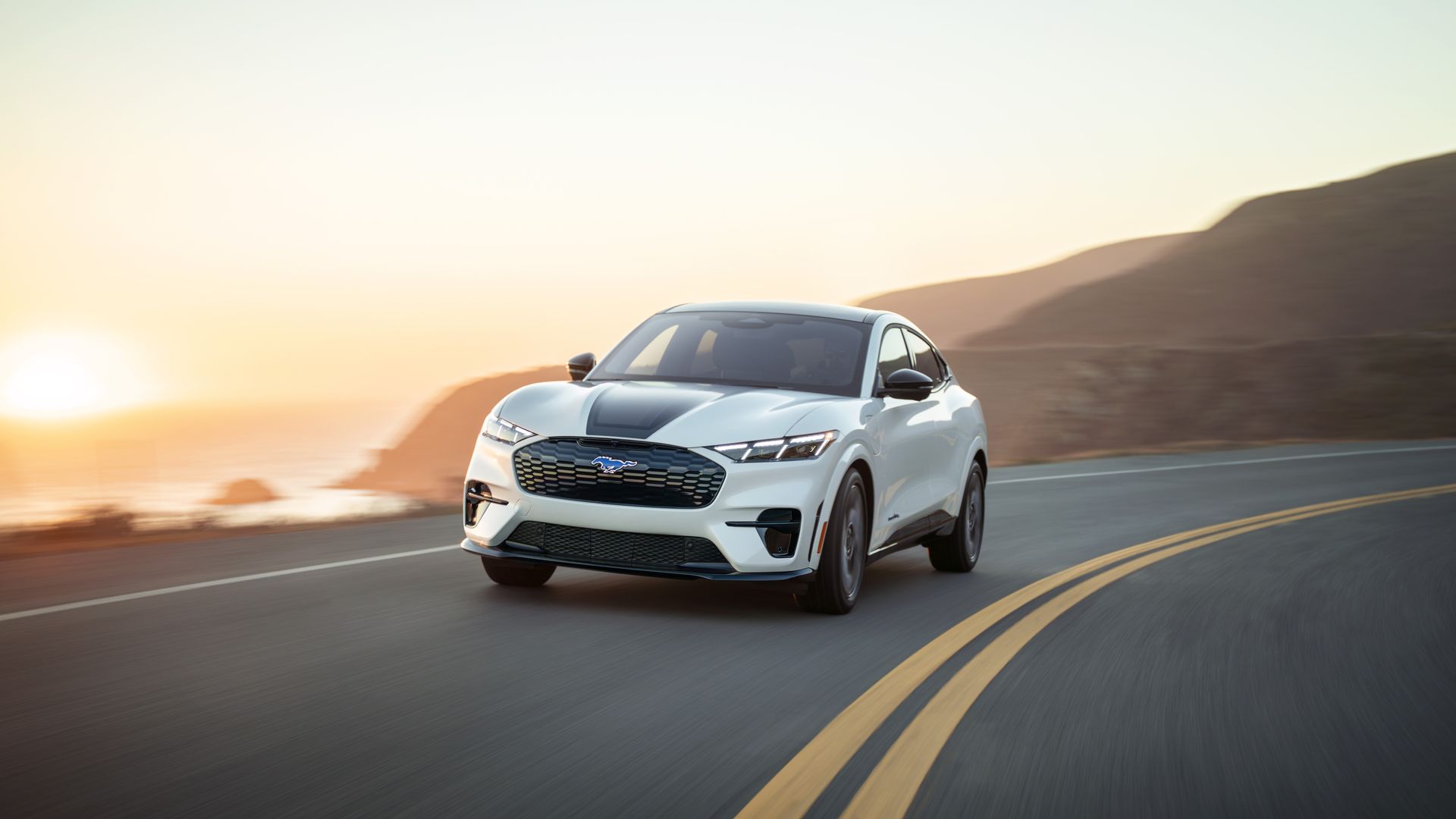
I'm not driving big rigs or test-driving exotic cars like Joann, but I did think this was pretty cool.
- Ford this week debuted the 2026 Mustang Mach-E GT California Special, an eye-popping new edition of the crossover EV.
State of play: It draws inspiration from the 1960s California Special version of the popular pony car, originally developed in cooperation with Ford's dealers in the state.
- Ford made only 4,000 units of the original California Special in 1968.
Zoom in: For this version, Ford developed a new color it's calling Rave Blue.
- That color is also now available on the standard two-door Mustang.
- The California Special also gets performance seats, special stitching on the interior, 280 miles of range and 480 horsepower.
The bottom line: The package costs an additional $2,495 above the Mustang Mach-E GT base price of $53,395.
Thanks to Ben Berkowitz and Bill Kole for editing. Sign up for Future of Mobility here.
Sign up for Axios Future of Mobility