Axios Future of Mobility

October 08, 2025

🚛 Howdy! Last week's semi-truck adventure prompted some fun suggestions for my CB handle.
- Diesel Diva, Chrome Cowgirl and Brighter Writer were some of my favorites. Thanks for the ideas!
💰 This week we're looking at state EV tax policies in light of the expiration of federal incentives.
- Plus: why Rivian's CEO is so confident and drone delivery companies are so mad.
All in 1,712 words, a 6.5-minute read.
1 big thing: How state EV tax policies stack up
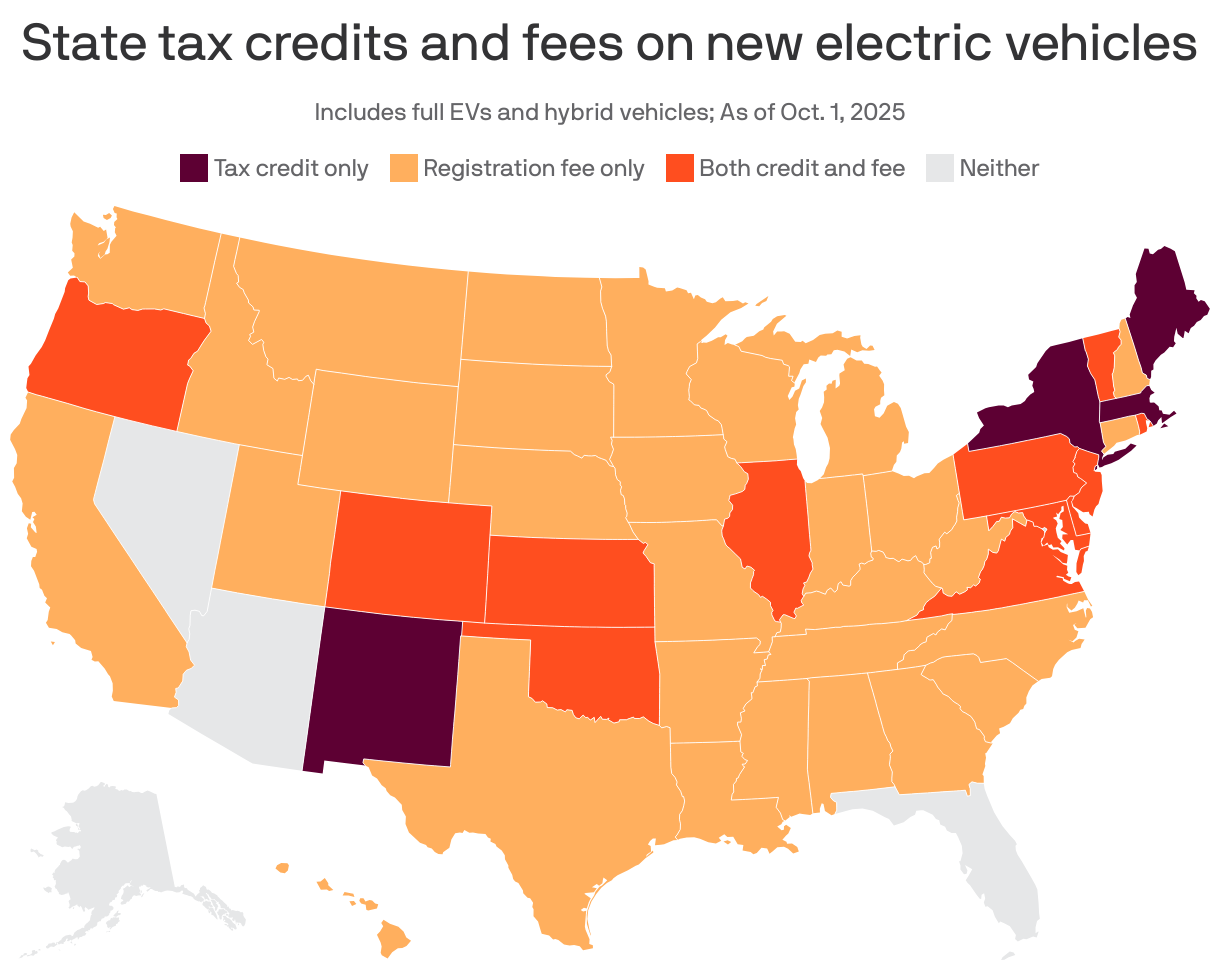
Federal tax credits for electric vehicle purchases may be dead, but depending on where you live, you might still get a sizable state tax break on your EV.
- But be prepared to pay a higher vehicle registration fee than your neighbor who drives a gasoline-powered car.
Why it matters: The rewards and penalties on EVs reflect an industry in flux, as policymakers try to balance environmental goals with the need to pay for roads and other critical infrastructure.
Catch up quick: Biden-era federal tax credits on EV purchases — up to $7,500 for new EVs and up to $4,000 on pre-owned EVs — were killed by Congress, effective Sept. 30.
- Buyers rushed to take advantage of the expiring federal credits, leading many forecasters to predict an immediate drop in EV sales.
- Some states hope their continuing incentives will help sustain at least some level of sales momentum for EVs.
Yes, but: Tax credits and rebates aimed at increasing EV adoption sometimes run counter to other fees levied against EV owners, note researchers at the Tax Foundation, a nonpartisan think tank that mostly supports lower taxes.
The big picture: States fund most of their road and infrastructure budgets with revenues from federal and state gasoline taxes.
- But that income isn't enough to meet rising costs, and the funding gap will keep growing as cars get more efficient and EV ownership grows.
- Since EV owners don't pay gas taxes, many states have levied extra fees on battery-powered cars to ensure they pay their share for road maintenance.
Driving the news: Colorado is one example of how states are threading the needle on EV policies.
- After the federal tax credits ended, the state said it would increase EV subsidies for low- and middle-income drivers who trade in an old gas-guzzler.
- Yet EV owners must pay an extra $60.05 annual registration fee in Colorado.
Where it stands: Forty states impose a higher vehicle registration fee for EVs and hybrids to offset lost gas tax revenue, according to the Tax Foundation.
- These fees range from $50 in Hawaii and South Dakota to $260 in New Jersey.
- 17 states offer state tax incentives for EV purchases, ranging from a $1,500 tax credit in Rhode Island to a $7,500 credit in Oregon and Maine.
- 12 states have both a higher registration fee and a credit; 4 states have neither.
What to watch: Some experts say a better way to pay for roads is to institute a vehicle miles traveled (VMT) tax to charge everyone based on how much they drive.
- Four states — Oregon, Utah, Virginia and Hawaii — currently have VMT tax programs, and others are discussing it.
- There are technical and privacy challenges, however, and some environmentalists worry new fees would slow the adoption of EVs.
2. Rivian CEO: I've never been more confident
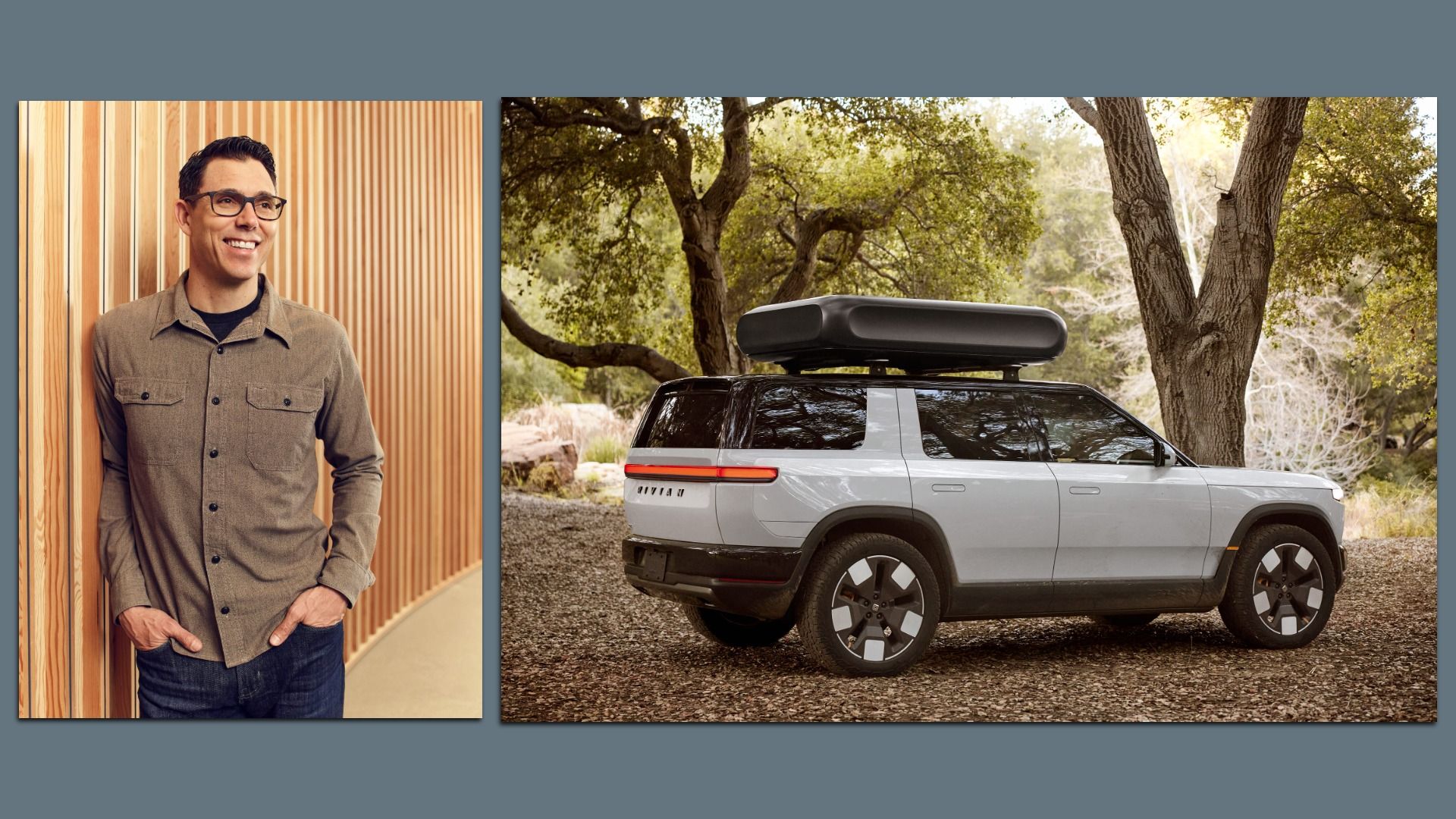
Rivian might be facing huge headwinds, but CEO RJ Scaringe is looking forward to 2026 and the launch of the company's next model, the $45,000 R2.
"I've never been more confident in the company than I am today," he told me this week during a fireside chat I moderated for the Automotive Press Association.
- "We've got this product about to launch. It is insanely good. It takes everything that we've learned in launching the R1 and embodies it in a smaller package."
Why it matters: Skeptics have been predicting Rivian's failure since Scaringe founded the company 16 years ago. Backed by Amazon and Volkswagen Group, it's arguably the most competitive U.S. EV manufacturer behind Tesla.
Other highlights from our conversation:
On EV sales trends: Other than Tesla's Model 3 and Model Y, "if I were to look at the list of EV choices there are today, most fall into the category of okay, but not highly compelling, and as a result, they've been unsuccessful in generating sales."
- Better EV options like the R2 will expand the market, he says.
On the Trump administration: "As much as there's been the perception of an anti-EV policy, I think the current administration is very much pro-business and pro-technology, or American technology first."
- Rivian is aligned with that view, he said, noting that 100% of its production is in the U.S., and its supply chain is vertically integrated here.
On Chinese competition: Chinese manufacturers have two key advantages: extremely low cost of capital and very low labor costs. But those advantages would disappear if they tried to sell cars in the U.S. because they're likely to be heavily tariffed.
- Chinese carmakers' technology isn't any better than Tesla's or Rivian's, he said, but it is a threat to legacy automakers that don't switch to modern software-defined platforms.
On autonomy: "This is by far the biggest investment category for us as a company. We're investing more money here than anywhere else in business."
3. Drone delivery hits regulatory snag

Retailers and drone delivery companies say the federal government is overreaching with a proposed law on drone operations that would require TSA-like security screening for their stores, employees and potentially even their customers.
Why it matters: The proposed rule, which assigns 55-pound delivery drones the same risk profile as huge cargo planes, would cripple the drone delivery business just as it's about to take off, industry leaders say.
- The regulation doesn't match the risk, says Adam Woodworth, CEO of Alphabet-owned Wing, Walmart's drone delivery partner.
- "As written today, everyone who walks into a Walmart would need to go through a TSA Level 3 background check, which is, like, fingerprints and stuff, because they could touch the macaroni and cheese on the shelf that's going to go on the airplane because that's now 'cargo' for an airplane," he tells Axios.
- "It's well-intended," he says, "but the details are what matter."
The big picture: Drone deliveries have yet to take off in huge numbers because operators need case-by-case approvals to fly long distances.
- President Trump in June signed an executive order directing the FAA to fast-track rules that would allow drones to fly beyond the visual line of sight.
Yes, but: The industry's enthusiasm faded once they dove into the details.
- More than 1 million responses were recorded during the public comment period, including from Amazon, Walmart and DoorDash.
Zoom in: While they praised some aspects of the FAA rule, there was widespread opposition to the TSA's security requirements.
- People who pick and pack items for delivery don't have anything to do with flying drones, and thus, don't present a security risk, Walmart wrote.
- "We're concerned that as drafted it could ensnare hundreds of thousands of store associates across our current and future drone delivery markets who would need to undergo a TSA background check — even if their jobs may not regularly involve drone deliveries."
- "The practical effect is that every goods supplier, package handler and package loader supporting a drone delivery service would be required to visit a TSA enrollment center, with turnaround times of up to 60 days" — that's infeasible in a retail store with high turnover rates and seasonal employees, noted Wing.
Zipline, another leading drone operator, said the TSA requirements are "either redundant or wrong-sized" for package delivery.
- DoorDash noted that other modes of package delivery — by car or bike, for example — aren't subject to similar security standards.
Between the lines: The FAA, part of the U.S. Transportation Department, has been working alongside industry stakeholders for years to create appropriate regulations for drone operations.
- TSA, a different agency under the Department of Homeland Security, entered the FAA's rulemaking process at the 11th hour, without any industry outreach, according to a spokesman for U.S. Rep. Dina Titus (D-Nevada).
- Titus and U.S. Rep. Rudy Yakym (R-Indiana), who lead the Congressional Unmanned Systems Caucus, want TSA to withdraw its proposed rules, consult industry stakeholders, and consider a new security framework that efficiently mitigates the safety threats while allowing FAA regulation to move forward.
The U.S. government is shut down; neither the FAA nor TSA responded to Axios' request for comment.
The bottom line: If a nefarious character wants to drop a burrito on your house, it's not likely to cause a national security threat.
4. Drive-thru
🥱 Tesla introduced a slightly cheaper version of its Model Y crossover and Model 3 sedan, disappointing investors who expected something more. (Axios)
🔥 A fire at Novelis' Oswego, N.Y., plant, which supplies about 40% of U.S. auto industry aluminum, will disrupt automakers for months. (Wall Street Journal)
🪓 The Department of Energy is considering revoking nearly $1.1 billion awarded to Stellantis and General Motors last year by the Biden administration to retool Midwest factories for electric vehicle production. (Reuters)
- The projects are among a list of $12 billion in awards that could be canceled as the partial government shutdown persists.
5. What I'm driving: Ford Maverick Lobo
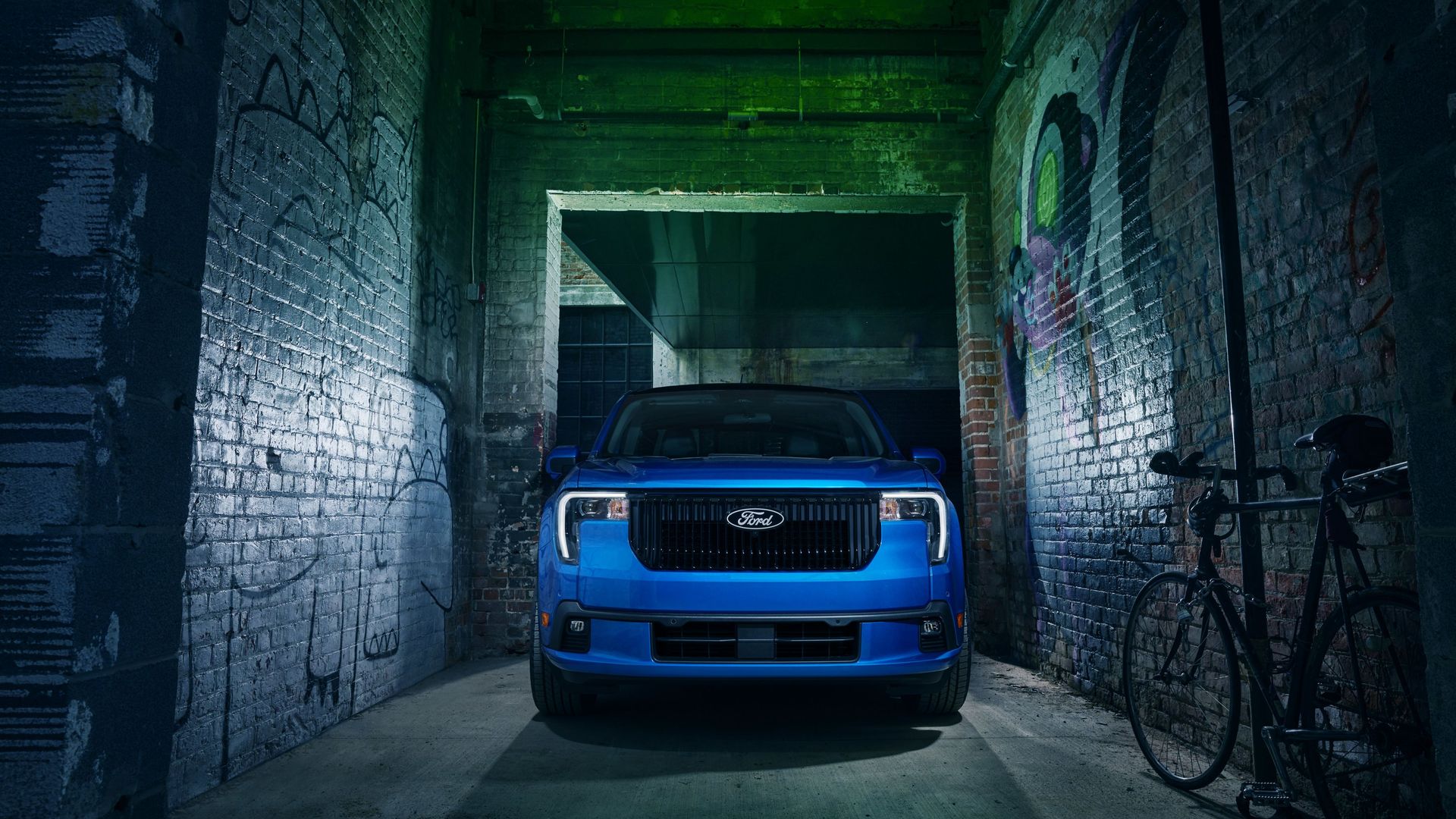
Ford's Maverick Lobo is a cool-looking small pickup inspired by the lowered-truck era from the mid-1980s to the early 2000s.
The big picture: Lobo is the street-performance version of Ford's smallest pickup, complementing the off-road Tremor version and the original Maverick hybrid.
Between the lines: The Maverick, with a starting price around $28,000, will soon be the entry point to the Ford brand after the Escape SUV goes out of production later this year.
- Adding more varieties like the Lobo, which starts at $36,000, will help draw more customers to the Maverick line.
What's new: The Lobo rides about an inch lower than the original Maverick, and its performance-tuned steering makes the truck drive more like a performance car.
- In Lobo mode, meant for closed tracks or autocross, torque vectoring is activated and the usual stability control system is dialed back, making drifting easier, though it didn't seem wise to try that in my neighborhood.
The bottom line: While I didn't fully assess the driving performance, the Lobo looks cool, the way a street truck should.
I test-drive vehicles in my role as a juror for the North American Car and Truck of the Year awards. Opinions are my own.
Thanks to Jeffrey Cane and Amy Stern for editing. Ask your friends and colleagues to subscribe!
Sign up for Axios Future of Mobility