Axios Future of Mobility

July 15, 2026

👋 Hi again! Autonomous vehicles are racing ahead, and regulators are struggling to keep up. Today, we're looking at the consequences of that mismatch.
1,687 words, a 6½-minute read.
1 big thing: Writing robotaxi rules in real time
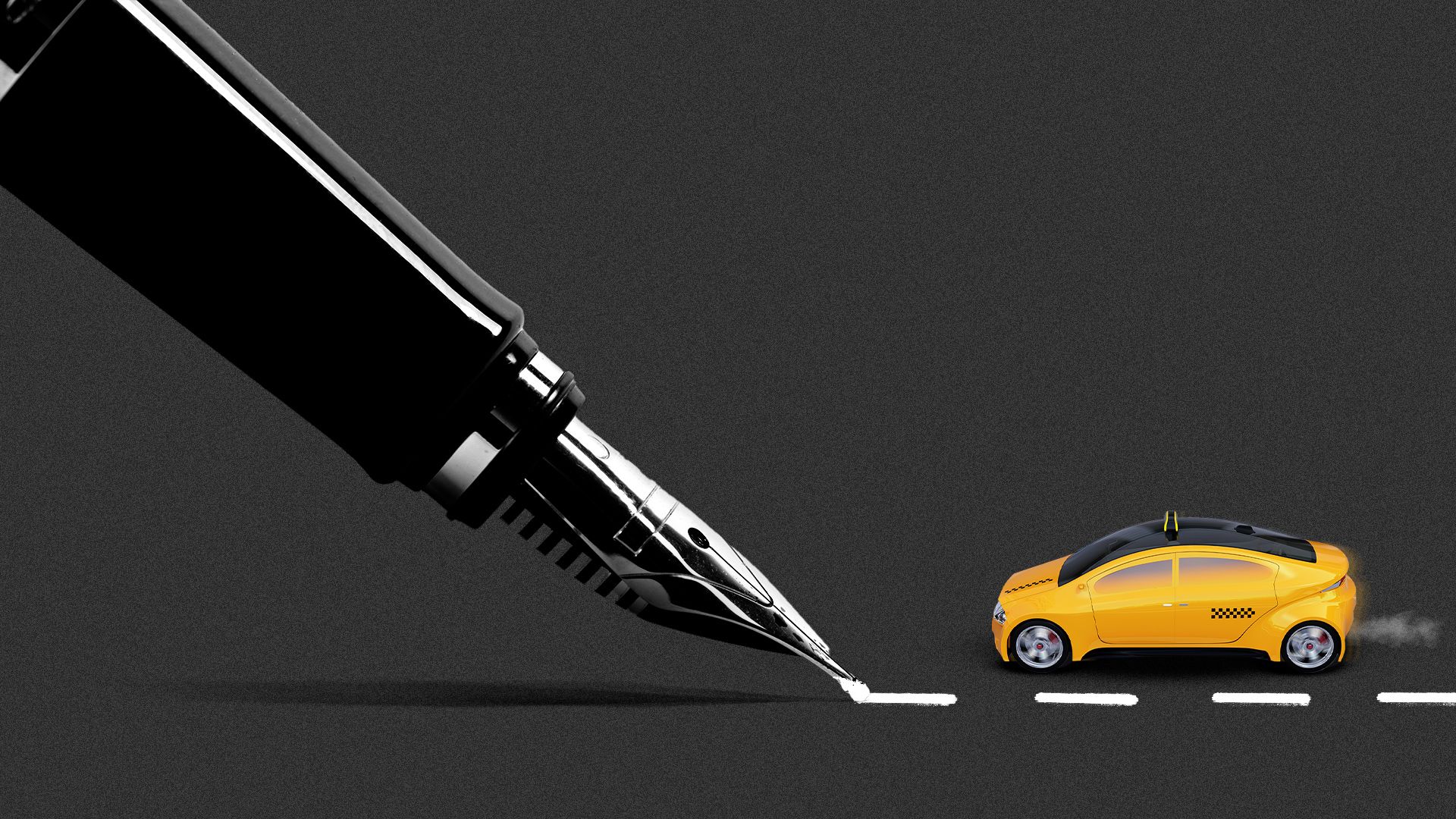
The rules of the road for autonomous vehicles are being written in real time, one debate at a time, in Washington and in statehouses and city halls across America.
Why it matters: The growing patchwork of federal, state and local rules could become the next major hurdle to scaling robotaxis in the U.S.
The big picture: Every new robotaxi deployment is becoming a test case for policymakers about where AVs can operate, how they're regulated and who gets to write the rules.
- Traditionally, the federal government oversees vehicle safety standards, while states issue driver's licenses and local governments regulate road use.
- But those regulatory roles have blurred in the self-driving era, and Congress has yet to pass AV legislation that offers any clarity — leaving a free-for-all across every level of government that tangles together both halves of the robotaxi question: the technology and the business repercussions.
State of play: With robotaxis already deployed in many cities, governments are rushing to fill the policy vacuum by adding their own guardrails.
- A bill under consideration by the Washington, D.C., City Council would limit the number of robotaxis allowed and would tax operators 15 cents per mile traveled to deter empty cars from circling in search of riders.
- A highly prescriptive bill in New Jersey, meanwhile, would require AVs to use cameras plus at least two additional sensors — effectively banning Tesla's camera-only Robotaxi service.
Friction point: Lobbying has intensified across the spectrum, with Waymo touting its own safety research and doctors arguing AVs should be a public health imperative.
- Uber — with AV ambitions of its own — wants to prevent Waymo from getting too far ahead and instead is pushing for laws that require a hybrid network featuring both robotaxis and human drivers.
- Union leaders, meanwhile, are concerned about driver job losses and are successfully beating back legislative efforts in many states.
- "It is yet another example of Big Tech companies trying to steamroll cities into changing laws to accommodate them, and it comes at the expense of middle-class professional drivers and anyone else who wants safer streets in our city," Bill Davis, president of Teamsters Local 639, said earlier this week in opposition to D.C's proposed bill.
Where it stands: California and Texas, two of the earliest AV markets, recently adopted formal AV policies as the technology moves from the pilot phase to commercial deployment.
- But in many other states, AV bills have failed, including Maryland, Minnesota, Missouri, Oregon, Virginia, Washington and Illinois.
- Some cities, including Minneapolis, Portland and New Orleans, instead are trying to craft local ordinances that would govern robotaxis already roaming their streets in test mode.
Zoom out: At the federal level, the Trump administration is moving to rewrite decades-old safety standards for cars with no steering wheel or pedals while removing other red tape.
- Longer term, it's also working to establish dedicated performance standards for AVs.
Yes, but: At the same time, NHTSA is trying to rein in robotaxis that keep interfering with first responders. (More on that below👇).
The bottom line: The AV winners may be the companies that can navigate — and help shape — a rapidly evolving regulatory landscape as effectively as they built self-driving technology.
2. Feds to Waymo: no more excuses
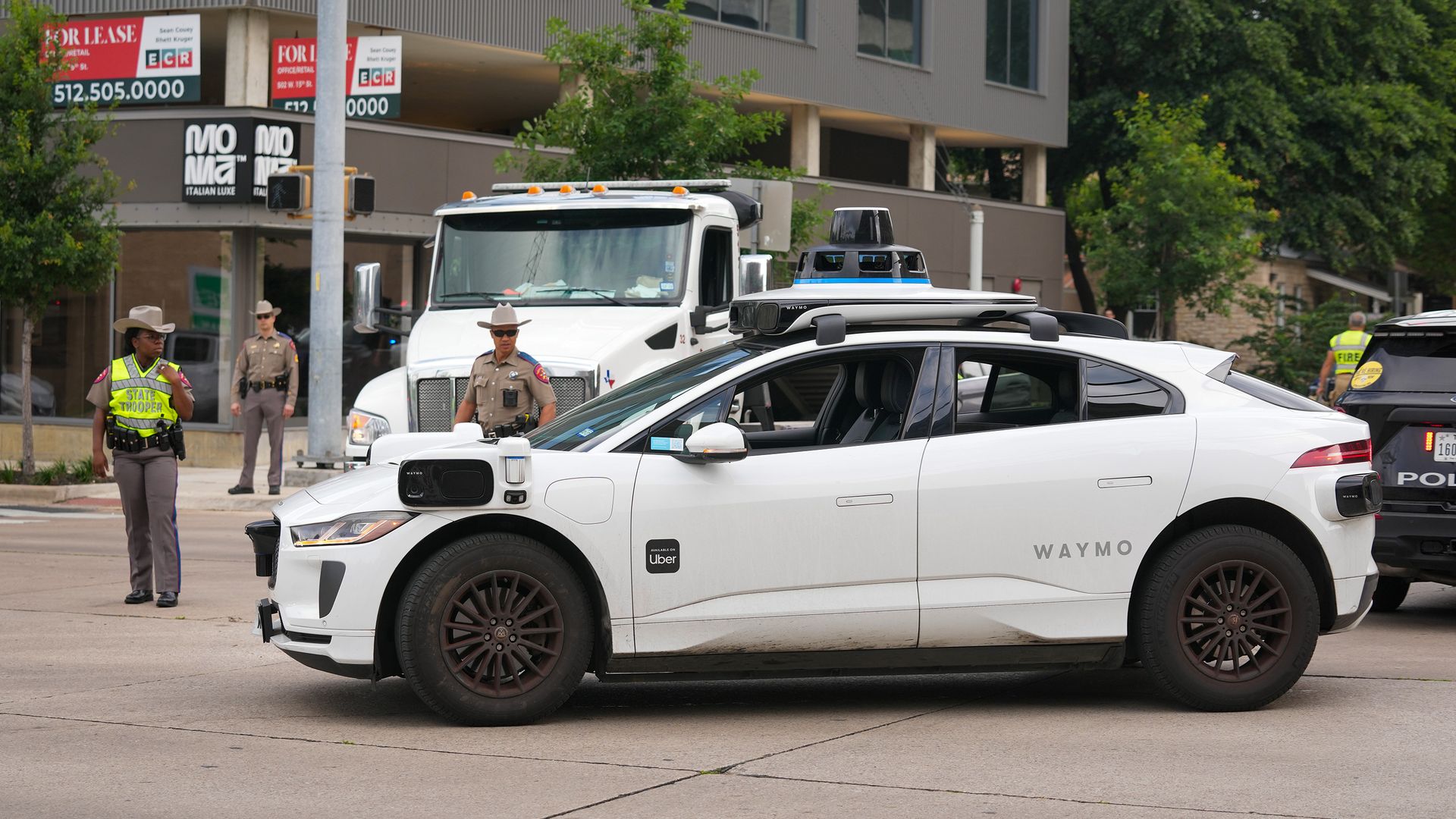
The Trump administration is simultaneously loosening federal rules to accelerate AV deployment while also slapping robotaxis for getting in the way of first responders during emergencies.
Why it matters: It's a reflection of how government regulations aren't keeping pace with the emerging technology. Self-driving cars are here, but uniform safety standards are not.
Driving the news: The head of the National Highway Traffic Safety Administration is sounding the alarm over what he calls "a disturbing trend" in recent months: AVs interfering with police, ambulances and fire trucks.
- In a letter to AV developers last week, Administrator Jonathan Morrison issued a stern warning to the industry, but there's no mistaking that his target was Waymo, which has driverless operations in 11 U.S. cities, and four more coming soon.
Zoom in: Morrison cited instances in which AVs drove into active emergency scenes, blocked the paths of ambulances and firefighters, or failed to recognize and respond to basic safety conditions like flashing lights, flares, smoke, fire and traffic cones.
- The letter comes after several high-profile incidents involving Waymos and first responders.
- "Let me be clear: The inability to detect and appropriately respond to such situations represents a functional insufficiency. Emergency scenes are not rare or extreme 'edge cases'" that can be blamed on a software anomaly, Morrison wrote.
- He's giving companies until the end of the month to explain how they will fix the problem.
Morrison noted that human drivers who impede emergency operations are subject to fines and even jail time, but it's not clear how NHTSA will punish AV companies for the same infraction.
The intrigue: NHTSA has not launched a safety investigation into the issue as it often does for similar concerns.
- Instead, the complaint is coming directly from the administrator, whose agency has otherwise been working feverishly to clear away regulatory hurdles for AVs.
What they're saying: Trial attorneys are calling for more accountability from Waymo.
- "Every time there's a bad night for Waymo, the company calls it an isolated incident," said Amy Witherite, founder of Witherite Law Group.
- "At some point, a pattern isn't isolated anymore — it's a track record," she said. "The question cities need to be asking isn't whether Waymo apologizes fast enough. It's whether these vehicles have earned the right to keep testing on streets full of pedestrians, cyclists, and families."
Waymo declined to comment.
What we're watching: AV companies either have to improve their technology to handle such dynamic situations or employ more remote emergency response staffers who can jump into action to quickly get vehicles out of the way.
3. Digital alerts could reroute robotaxis in real time
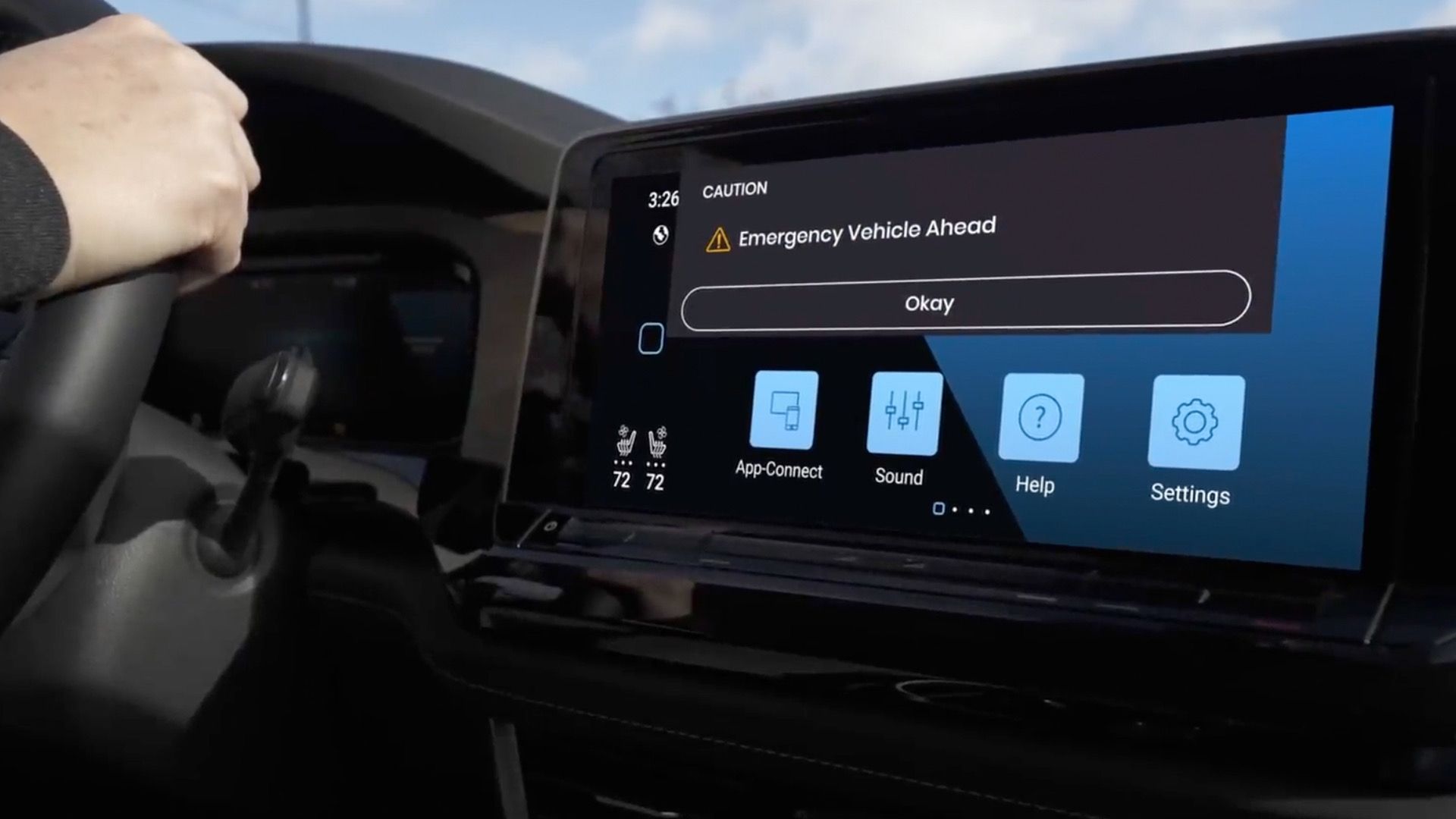
Technology that warns human drivers of emergency vehicles ahead could also be used by AV companies to reroute robotaxis away from danger, a Chicago-based technology startup says.
Driving the news: The issue is an opportunity for Haas Alert, which specializes in vehicle-to-everything (V2X) communication.
Catch up quick: The company's Safety Cloud platform provides real-time digital alerts to drivers and navigation systems when emergency responders are approaching.
- More than 5,000 agencies across the U.S. have installed Safety Cloud on their emergency vehicles, tow trucks, school buses and even snow plows, the company says.
How it works: Using existing cellular networks, alerts are delivered directly to nearly 3 million vehicle infotainment screens in Jeep, Dodge, Ram, Chrysler and VW models.
- Tens of millions of other drivers receive alerts through their smartphones via Waze and Apple Maps.
What they're saying: Safety Cloud could be integrated directly into AV companies' platforms so that robotaxis could be rerouted in real time when necessary, says Brock Aun, chief strategy officer at Haas Alerts.
- Analyzing that data over time could even help AV companies identify the riskiest corridors or times of day so they can avoid them altogether, he says.
State of play: Haas Alerts is engaged with all the major AV companies, but has yet to announce any pilot programs or tech deployments, according to Aun.
- One issue, he says, is that AV companies are reluctant to rely on cloud-based technologies and instead favor sensing systems that are fully integrated into the vehicle.
"If you're only relying on onboard tools for hazard detection, then you will not detect the hazard until you are upon it," Aun says.
- Connectivity is now sufficiently reliable to enable intelligent, cloud-based routing, he says.
- "This is the frontier of how these things will operate: combine ubiquitous connectivity with intelligent vehicles."
4. Drive-thru
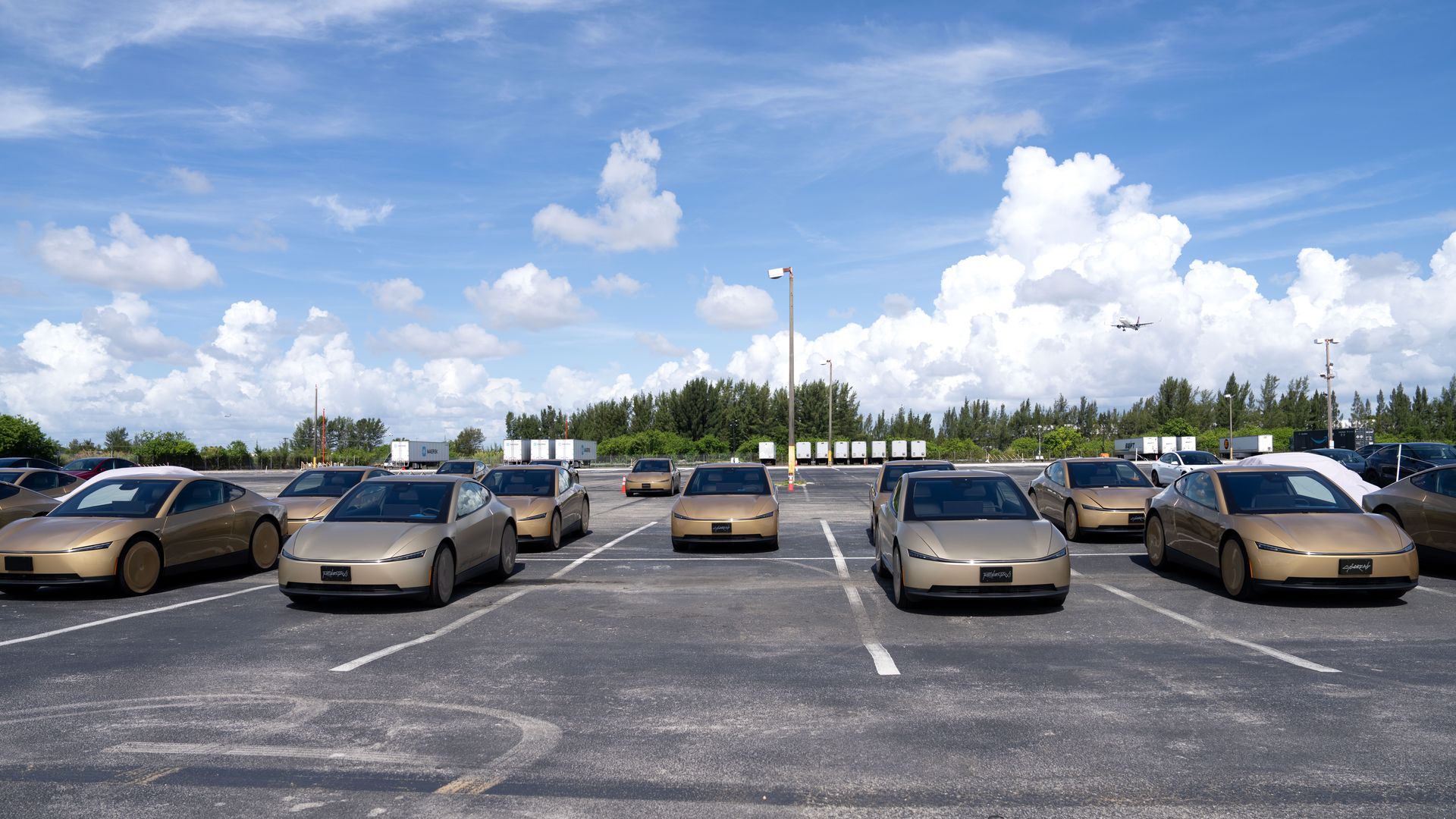
🚖 Tesla is ramping up production of Cybercabs in Texas and shipping them off to cities like Miami (above) where it plans to offer driverless rides.
The catch: It doesn't have permission to deploy vehicles without a steering wheel or pedals, nor has it even applied for an exemption from the National Highway Traffic Safety Administration.
- Tesla appears to be betting that NHTSA will soon loosen AV regulations enough so it doesn't have to bother asking for an exemption for the purpose-built two-seater with no human controls.
Yes, but: Tesla still has to perfect its fully autonomous driving technology before it can scale beyond the tiny fleet of Model Y Robotaxis currently on the road.
- All the Cybercabs pictured here have been retrofitted with steering wheels for testing, according to Grayson Brulte, cofounder of AUTNMY AI, who snapped the photo.
💵 California is offering state rebates of $3,500 on new electric vehicles for first-time buyers. The program for California residents is funded by the state budget and automakers. (Reuters)
⚡️ Lucid denied reports that it is considering a bankruptcy filing as part of a possible restructuring. The EV manufacturer hired the consulting firm AlixPartners to help strengthen its business, the company said. (Axios)
5. 🚘 What I'm driving
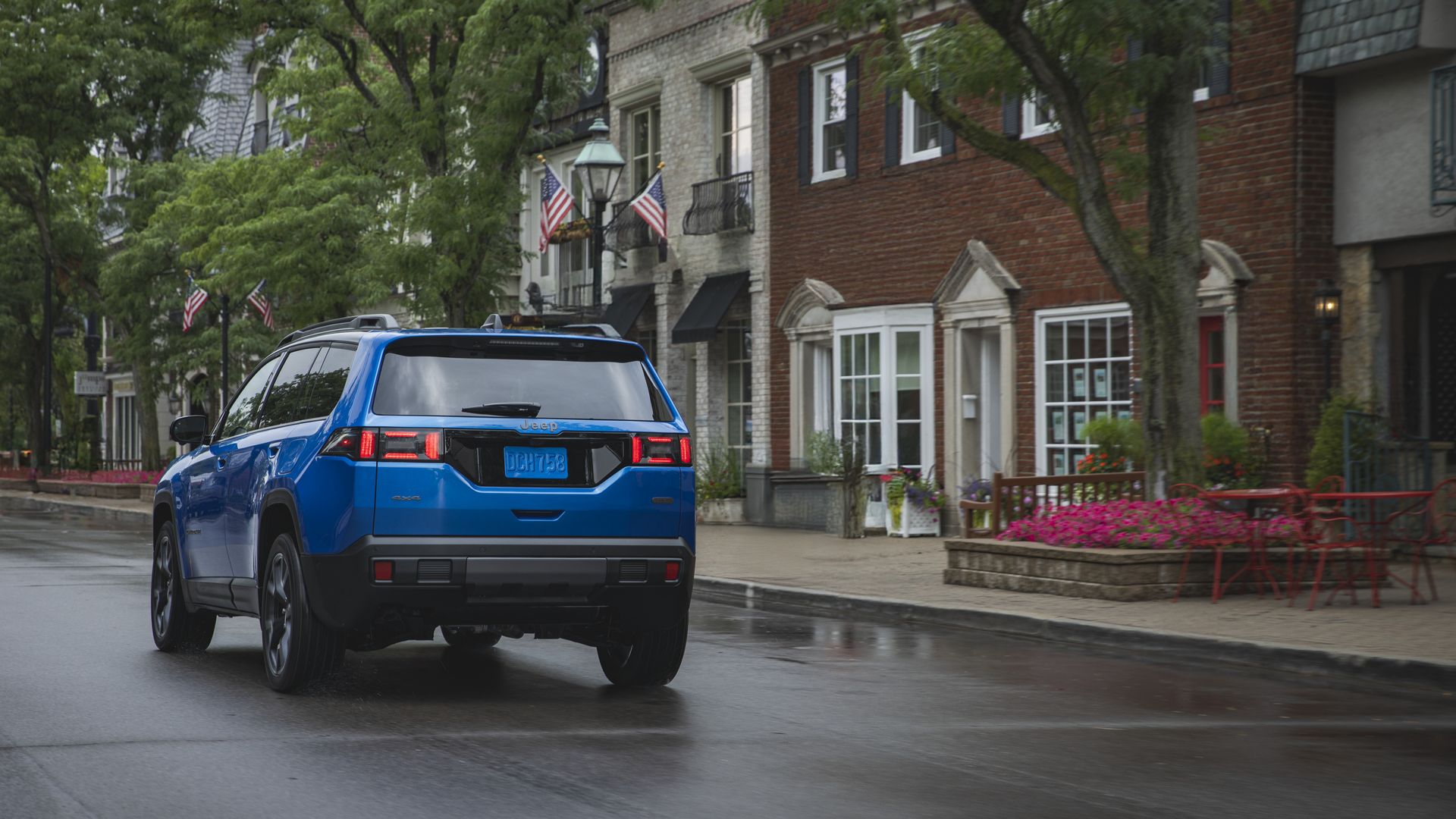
2026 Jeep Cherokee
- MSRP: Starts at $36,995 (including $1,995 destination charge); As tested: $46,585, for Overland 4x4 trim plus options like heated and cooled seats, surround view cameras and automated parking system.
- Under the hood: Hybrid powertrain, standard all-wheel drive; 210 hp and 37 mpg.
- Manufacturing site: Toluca, Mexico.
What's new: Everything! The Cherokee was discontinued in 2023, but is back now as a hybrid-only midsize SUV, with a roomier cabin and 30% more cargo space.
What I loved: Sharp, boxy styling delivers Jeep's iconic design cues in a modern package. Comfy ride, smooth hybrid power, and clean, upscale interior with tons of space.
What I didn't love: While some of the interior materials felt classy, others felt cheap, like the dark slatted cover on top of the dash, which reflected an annoying lattice pattern on the windshield, and the too-small rotary shifter on the center console.
The bottom line: It's a mostly well-executed remake of an iconic Jeep.
I test-drive vehicles in my role as a juror for the North American Car and Truck of the Year awards. Opinions are my own.
Thanks to editors Pete Gannon and Bill Kole. If you're a fan of this newsletter, please ask your friends to sign up, too.
Sign up for Axios Future of Mobility