D.C. holds first hearing on legalizing Waymo and robotaxis

Add Axios as your preferred source to
see more of our stories on Google.
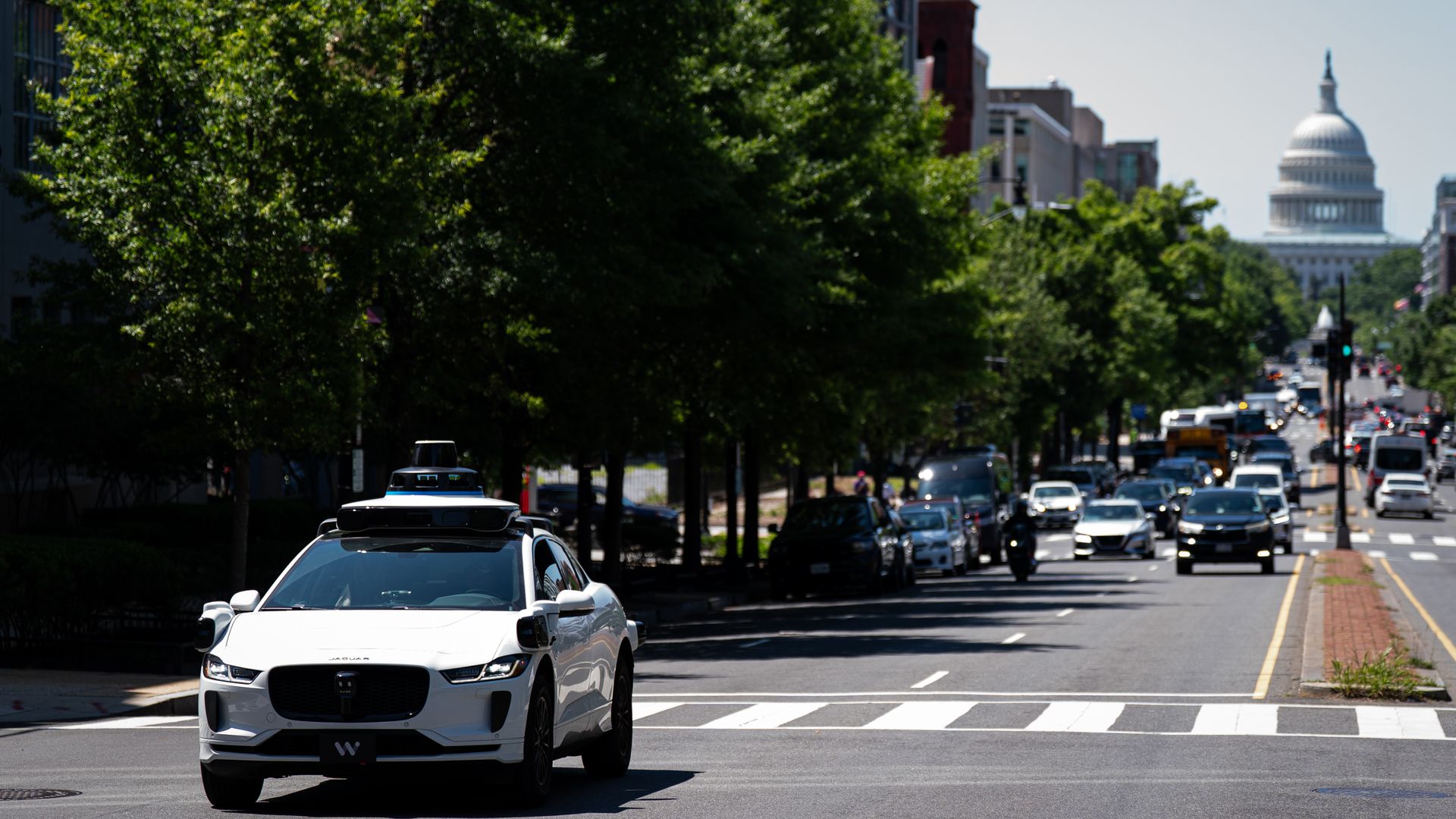
Photo: Al Drago/Bloomberg via Getty Images
D.C.'s first public hearing on legalizing robotaxis fielded an array of questions about the tech Monday — from job losses to privacy.
Why it matters: D.C. is considering how to adopt the driverless cars, and a lot of eyes are on the city's lawmakers, given that it's the nation's capital.
- "What we do will set precedent for a lot of other cities," said Council member Charles Allen, who authored the bill under consideration.
The big picture: Representatives of big robotaxi companies — including Waymo and Tesla — were optimistic about D.C. taking a step forward on driverless cars.
- Waymo says it'll build out two service centers in Wards 5 and 7, hiring hundreds of employees and investing millions. Acknowledging job losses, Waymo's Matthew Walsh told council members that the tech will spur demand for growth in other areas, like fleet managers and vehicle parts suppliers.
- One example, he said: "We go through an incredible amount of tires."
The other side: Rideshare drivers and labor union leaders spoke in opposition, worried about declining fares if robotaxis enter the market and job losses entirely.
Zoom in: Allen's bill proposes a 15-cent tax on miles traveled per vehicle to fund Metro transit investments and assist displaced gig workers.
- Allen pressed Waymo executives on privacy concerns, including whether their robotaxis — with their sensors and cameras — track people walking down the street.
- Many people, he said, were even worried about whether the bots could see through people's clothes.
"No, it cannot see through your clothes," said David Margines, Waymo's director of product management.
The bottom line: Those who testified were either "really in support" or were "really concerned in opposition," Allen said, previewing tensions ahead between the labor and tech communities.
- The bill could see tweaks before it moves out of the Transportation Committee, and a full vote likely wouldn't happen until the fall.