Axios Future of Energy

March 10, 2026

📐 Today we've got angles on Iran and beyond, with items on...
- What price spikes won't change
- A grid tech exclusive
- What's next for electric flight and more, all in 1,516 words, 5.5 minutes
🙏 Thanks to Chuck McCutcheon and Chris Speckhard for edits to today's newsletter, along with the brilliant Axios Visuals team.
🎶 Happy birthday to singer and songwriter Neneh Cherry, who has today's intro tune...
1 big thing: Why oil price spikes won't bring a lasting shift
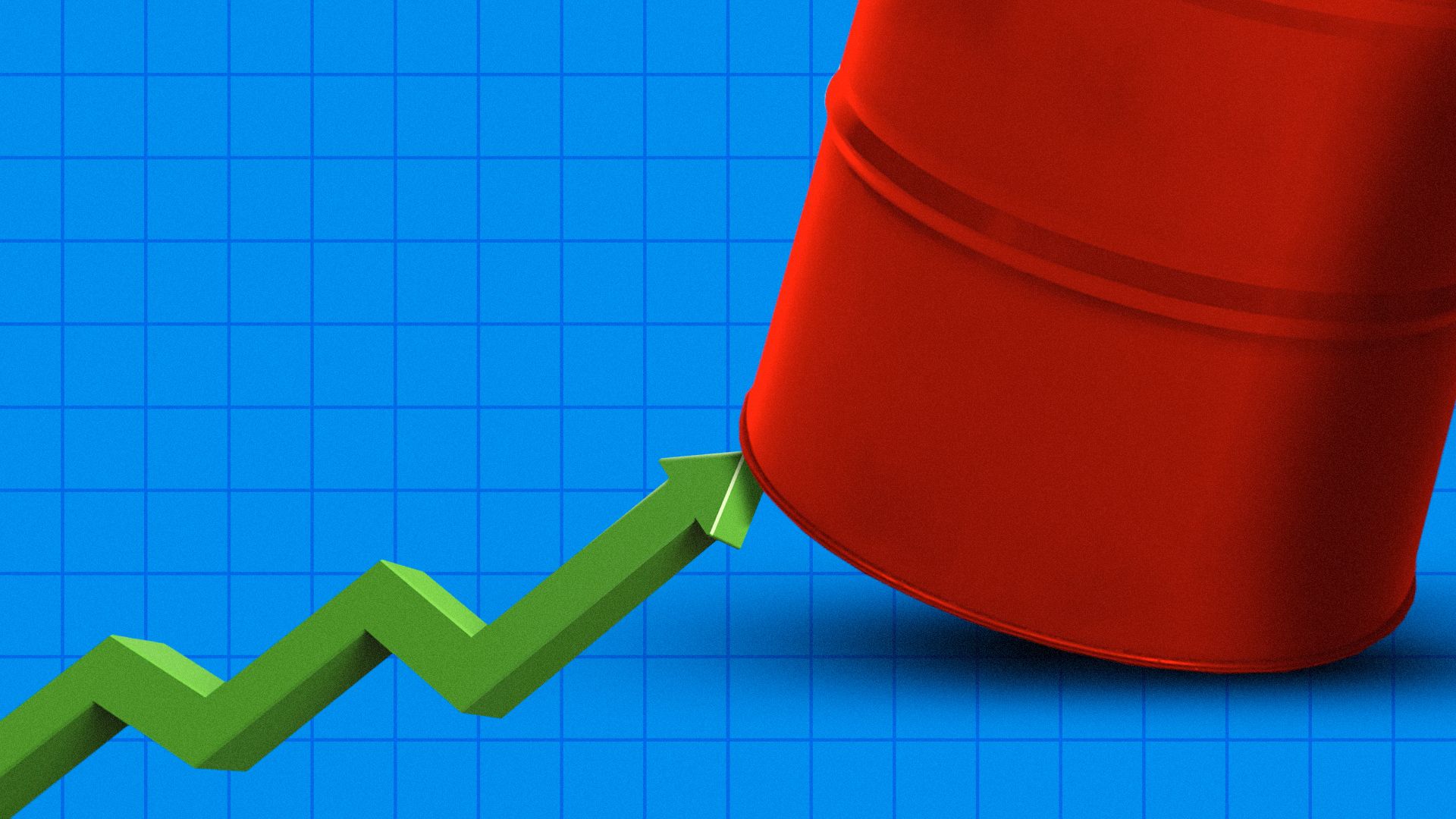
Oil prices would need to stay high for years — not weeks or months — to drive a lasting shift away from the fossil fuel.
The big picture: Every time oil spikes, the same question surfaces: Will this push more people into electric cars or install solar panels onto rooftops?
State of play: That's happening again after oil prices zoomed past the $100-a-barrel mark in the wake of the Iran war.
Driving the news: Prices dropped at least temporarily in the wake of President Trump signaling yesterday evening he wants a quick end to the conflict, as well as talking up ways to lower oil prices.
Reality check: Energy transitions hinge on stable policies and market signals that last for decades.
- Temporary price jolts from unstable geopolitical unrest haven't produced durable change — at least not in the U.S.
What they're saying: "Consumers have been riding an oil price roller coaster for 20 years now," said Bob McNally, who leads consultancy Rapidan Energy Group and advised President George W. Bush on energy security.
- This includes everything from the 2008 recession to the 2020 COVID-19 pandemic.
- "They've learned that booms follow busts, and vice versa. Absent stable and higher fuel prices, we are unlikely to see a rapid and lasting shift to EVs."
How it works: This recurring debate often skips key distinctions between oil (used in transportation; priced on a global market) and natural gas (not used in transportation, priced regionally).
Zoom in: Even the most extreme scenarios analysts are currently modeling would last months — not years.
- Rystad Energy looked at two- and four-month interruptions to traffic through the Strait of Hormuz, a vital artery for global oil and gas.
- The shorter scenario appears more likely, the firm said yesterday, though it warned more extreme outcomes beyond even four months "cannot be ruled out."
"What matters is not simply how high oil goes, but whether this episode reshapes perceptions of geopolitical risk in a durable way," said Jason Bordoff, founding executive director of Columbia University's Center on Global Energy Policy.
The intrigue: Interest in electric cars tends to surge during periods of high gasoline prices, said Jessica Caldwell, head of insights at Edmunds, the car-buying site.
- However, "[t]he difference today is that consumers are navigating an extremely tough financial environment," Caldwell said by email, pointing to persistently high interest rates and higher transaction costs.
What we're watching: How long this all lasts.
- "Ultimately, adoption may hinge on how long consumers believe geopolitical tensions will continue to put upward pressure on oil prices," Caldwell said.
Axios' Joann Muller contributed reporting.
2. 💵 Exclusive: Google, Tesla, others tackle affordability

A new coalition of companies that includes Google and Tesla will address energy affordability by tapping into underused electricity grid capacity, coalition officials told Axios exclusively.
Why it matters: It's the latest example of how soaring electricity rates — from AI data centers and other demands — have moved affordability to the front burner.
Driving the news: The group Utilize plans to work with state lawmakers, regulators, utilities and others to improve how the grid operates by focusing on affordability along with electricity reliability and speed.
- Officials said they plan to release research soon from The Brattle Group showing U.S. consumers could save as much as $180 billion over a decade from system improvements.
State of play: In addition to Google and Tesla, Utilize's members include air conditioning giant Carrier, deployment services company Sparkfund, electric panel firm SPAN and data center developer Verrus.
- "We recognize that there's a need to prioritize affordability and do so in a way that really empowers states to make the best decisions," said Ian Magruder, Utilize's executive director.
What we're watching: The coalition hopes that developing and communicating ideas about battery storage, distributed energy resources and other technologies can get them more rapidly adopted.
3. 🛢️ A wild day in oil markets brings limited sighs of relief


Oil prices have swung wildly since Sunday night's open as markets digested weekend escalation followed by President Trump signaling yesterday afternoon that he wants the war to end soon.
Why it matters: Energy price spikes are rippling throughout the U.S. and global economies.
- U.S. average regular gasoline prices have soared over 50 cents per gallon this week, and diesel costs — which affect many industries — are up sharply too.
Catch up quick: Trump said the war with Iran will be over "very soon" but signaled it won't be this week.
- He also suggested easing sanctions, though it's not clear what might happen beyond the waiver granted to India's import of Russian barrels.
What we're watching: G7 energy ministers are reportedly meeting today to weigh coordinated releases from emergency oil reserves.
The bottom line: "Trump's words will only go so far. Ultimately, the market will need to see a resumption of oil flows through the Strait of Hormuz to sustain a move lower in oil prices," ING analysts said in a note.
4. 🛫 Exxon packs up and more energy notes
🧳 Exxon is asking shareholders to approve moving its formal incorporation from New Jersey to Texas, citing a more favorable legal and regulatory environment.
- Our thought bubble: Though ExxonMobil's roots in New Jersey go back to the 19th century, its presence these days is more of a footnote.
📉 U.S. solar capacity installations fell 14% last year, though it was again the largest source of new additions, per fresh industry data.
- Why it matters: Trump 2.0 policy changes caused some of the decline, per the Solar Energy Industries Association and Wood Mackenzie report.
- The bottom line: "Many projects stayed on track, but the market and policy uncertainty took a toll, leading to project delays and cancellations across all segments," it finds.
- Go deeper: Read the analysis ... Reuters coverage.
⛏️ Via Bloomberg, "Venezuela's National Assembly gave preliminary approval to a new mining bill as the government pledges to move at 'Trump speed' to revive the sector and attract foreign investment."
5. ⚔️ Iran notes: Putin, Hormuz, climate

💬 "The biggest winner out of this dire situation is Vladimir Putin and Russia, because high oil prices, where they are now, only replenish the Russian treasury and its ability to finance its war," prominent energy analyst and historian Dan Yergin said yesterday.
- Context: Yergin, in a wide-ranging briefing about this month's CERAWeek conference, also noted the U.S. recently eased sanctions on Russian oil sales to India.
🎯 Why are tankers so vulnerable in the Strait of Hormuz? It's not only because it's narrow.
- State of play: Trump said American forces sank nine Iranian warships and are working to neutralize the rest of its navy, but Iran doesn't need a conventional fleet to make passage through the strait dangerous.
- Threat level: While you've probably heard that it narrows to around 22 miles across, designated shipping lanes are far smaller still — concentrating traffic into predictable corridors for Iran to monitor and target adversaries from shore. Go deeper on other reasons.
🌎 UN Secretary-General António Guterres is calling today's oil and gas shock an opportunity to hasten movement toward renewables.
- Why it matters: His comments come as climate has fallen down the global diplomatic priority list, and the UN is seeking fresh ways to boost the annual COP process.
- The big picture: "The resources of the clean energy era cannot be blockaded or weaponized. There are no price spikes for sunlight and no embargoes on the wind," Guterres wrote on LinkedIn and other platforms.
6. 🇨🇳 Charted: China's big crude buffer


This chart ☝️ helps explain part of what we explored yesterday: why China is relatively well positioned to weather an energy crisis that could even bring long-term geopolitical benefits to the U.S. rival.
7. 🚁 The next step for electric aircraft in the U.S.

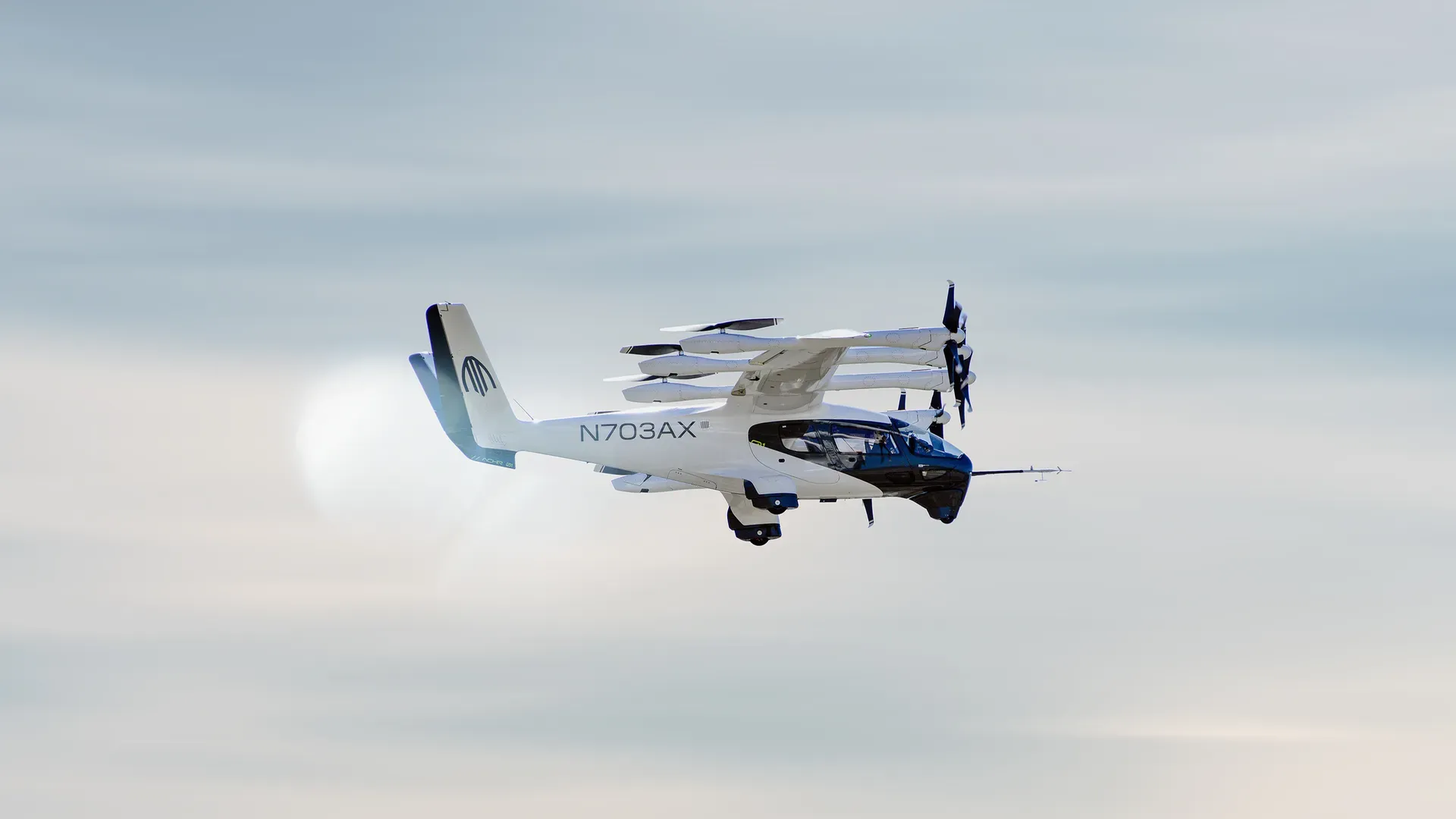
The U.S. aims to accelerate the next era of aviation with eight pilot projects to test innovative electric aircraft across 26 states, the Trump administration announced yesterday.
Why it matters: Together, the projects will create one of the largest real-world testing environments for next-generation aircraft in existence, the Federal Aviation Administration said in a statement.
- The initiatives include air taxi passenger flights in Manhattan, regional flights across Texas, and cargo delivery and medical response in Florida.
The big picture: The U.S. is competing against China to lead in advanced air mobility.
- China has rapidly scaled industries it prioritizes, such as electric vehicles, raising the stakes for U.S. companies racing to commercialize next-gen aircraft.
How it works: The approved projects announced yesterday are part of the Trump administration's Advanced Air Mobility and Electric Vertical Takeoff and Landing (eVTOL) Integration Pilot Program, or the eIPP.
8. 🗣 Quote of the day: Superlatives edition
"It's got to be the biggest surprise in the electric industry's history."— Rob Gramlich of Grid Strategies LLC, speaking about the soaring power demand due to data centers at a Dallas Federal Reserve conference last week
📬 Did a friend send you this newsletter? Welcome, please sign up.
Sign up for Axios Future of Energy