Next-generation electric aircraft cleared for takeoff in FAA test program

Add Axios as your preferred source to
see more of our stories on Google.
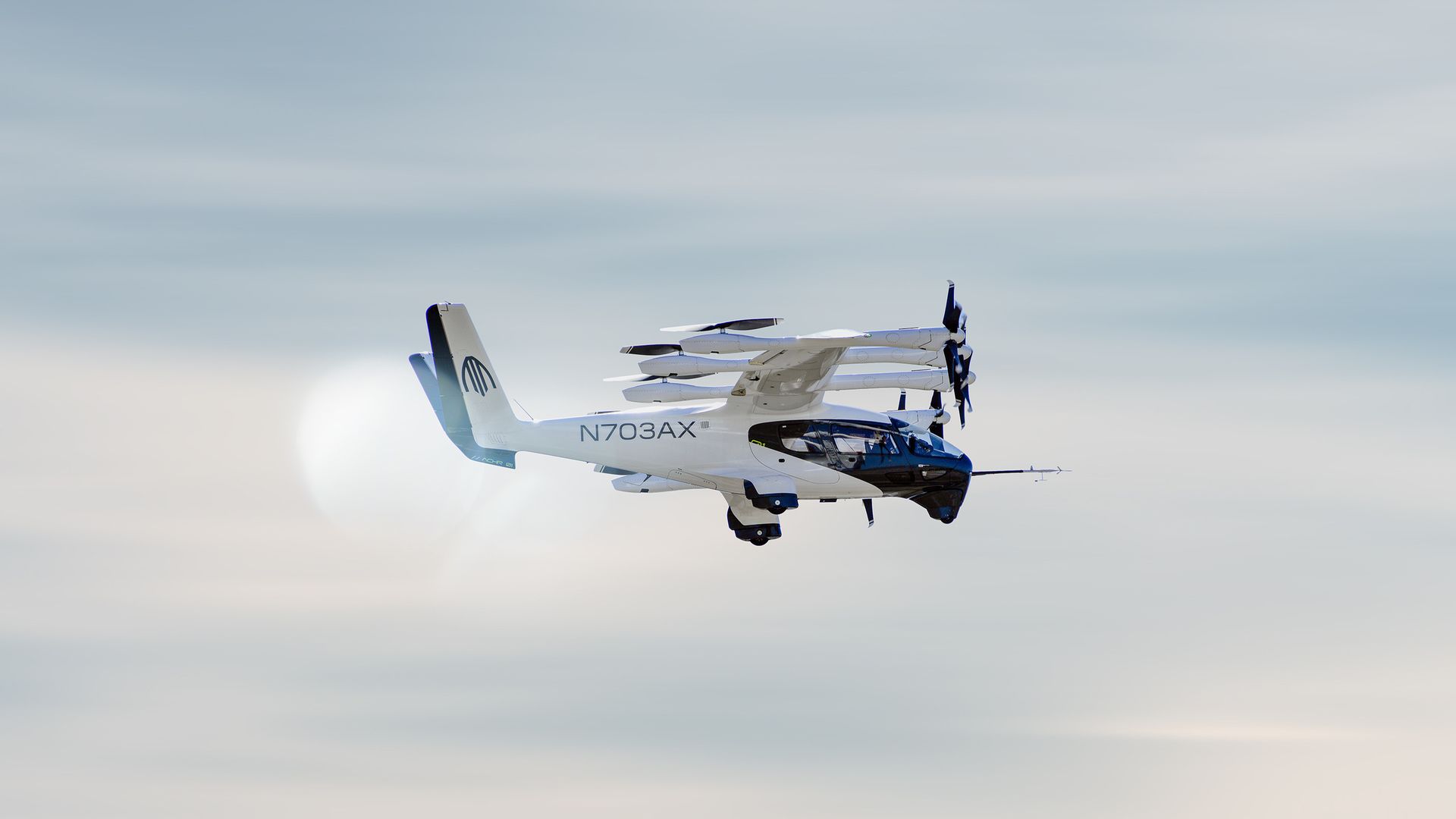
Archer Aviation's Midnight electric air taxi. Image courtesy of Archer
The U.S. aims to accelerate the next era of aviation with eight pilot projects to test innovative electric aircraft across 26 states, the Trump administration announced Monday.
Why it matters: Together, the projects will create one of the largest real-world testing environments for next-generation aircraft in existence, the Federal Aviation Administration said in a statement.
- "Working together, we will ensure America leads the way in safely leveraging next-gen aircraft to radically redefine personal travel, regional transportation, cargo logistics, emergency medicine, and so much more," Transportation Secretary Sean Duffy said.
The big picture: The U.S. is competing against China to lead in advanced air mobility.
- Just last week, China declared that the "low-altitude economy" — drones and electric air taxis — will be an engine of growth, alongside critical industries like artificial intelligence and quantum computing.
- China has rapidly scaled industries it prioritizes, such as electric vehicles, raising the stakes for U.S. companies racing to commercialize next-gen aircraft.
How it works: The approved projects announced Monday are part of the Trump administration's Advanced Air Mobility and Electric Vertical Takeoff and Landing (eVTOL) Integration Pilot Program, or the eIPP.
- The idea is to give U.S. companies an opportunity to test their operations in the real world, ahead of achieving final FAA certification of their aircraft.
- In essence, it's a flying start for companies like Joby, Archer, Beta and five other U.S. aviation startups.
The projects include air taxi passenger flights in Manhattan, regional flights across Texas and cargo delivery and medical response in Florida.
- Most of the projects involve the use of eVTOLs — imagine giant, low-flying electric drones carrying passengers or cargo — that take off like helicopters and fly horizontally like traditional planes.
- Some will also include electric or hybrid planes that take off and land conventionally, or require only a short runway.
- The projects are structured as public-private partnerships between government entities and multiple companies.
Zoom in: Here are a few of the eight projects selected from more than 30 proposals submitted.
- Port Authority of New York and New Jersey: 12 test concepts across New England — including eVTOL passenger service at the Manhattan heliport. (Partners: Archer, BETA, Electra, Joby)
- Texas DOT: Regional flights linking Dallas, Austin and San Antonio — with Houston planned next — plus air taxi networks in each city. (Partners: Archer, BETA, Joby, Wisk)
- Louisiana: Testing cargo and personnel transport in the Gulf for the energy industry. (Partners: BETA, Elroy Air, other)
- Florida DOT: Statewide projects spanning cargo delivery, passenger service, automation and medical response. (Partners: Archer, BETA, Electra, Joby, other)
What's next: Operations will begin under the test program by this summer.
- Data gathered from these pilot projects will be used by the FAA to develop new regulations to safely enable eVTOL technology nationwide.
The intrigue: Los Angeles, which hopes to have electric air taxis flying in time for the 2028 Olympics, was not selected as a test site — potentially hurting Archer's ambitions as the "official air taxi partner" of the LA Games.
- California Gov. Gavin Newsom has stepped up public criticism of Trump as he gears up for a likely Democratic run for president.
- But Melissa McCaffrey, Archer's head of government affairs, said she doesn't think politics played a role in LA's exclusion, adding that Archer is still laying the groundwork to "demonstrate this technology to the world during the Olympics."
What we're watching: Archer sued its archrival Joby Monday in federal court in California, claiming Joby has ties to China and should be disqualified from the FAA program.
- Alex Spiro, an attorney for Joby, said the company "doesn't respond to nonsense."
