Axios Future of Defense
April 22, 2026

Hello from IAD, an airport that does not deserve all the hate it gets.
- Thanks to everyone who participated in our Sea-Air-Space breakfast event. Good times.
- Also: If you're a CEO or on their team, ask to join Axios CEO Jim VandeHei's new C-suite newsletter. It publishes every week.
💵 Situational awareness: Lockheed Martin will this morning announce a $25 million investment in Fortem Technologies. The company, based in Utah, specializes in drone countermeasures.
New: The latest from National Harbor, JPMorgan Chase's Euro expansion and AeroVironment's naval laser.
Today's newsletter is 2,073 words, an 8-minute read.
1 big thing: Golden Dome and Guetlein

It's been almost one year since the Trump administration revealed its Golden Dome game plan.
Why it matters: President Trump said his hemispheric missile shield will block "very close to 100%" of inbound threats, and will come online before his second term is up.
- But the public remains in the dark about what, exactly, it looks like and how it will be funded fully.
In these past 11 months:
- The price tag has grown to $185 billion.
- Space-based interceptors remained in limbo, with Space Force Gen. Michael Guetlein telling Congress: "If boost-phase intercept from space is not affordable and scalable, we will not produce it."
- Tens of billions of dollars have been appropriated, and the latest funding request, $17.5 billion for fiscal 2027, largely banks on reconciliation.
- And everyone and their mother has bragged about their selection to the $151 billion Scalable Homeland Innovative Enterprise Layered Defense contract, a Missile Defense Agency clearinghouse.
Driving the news: Guetlein's comments raised eyebrows and sparked renewed criticism of the project, slated to come online in some form in the summer of 2028.
- "The vision is ambitious, but it is achievable," he told a House Armed Services subcommittee last week.
- "From a Golden Dome perspective, we're working really hard to make sure that we use the right effector against the right threat," he added. "Because we are so focused on affordability, if we can not do it affordable, we will not go into production."
Catch up quick: At the heart of Golden Dome is a mesh of existing and future sensors, spotters, communication links, jammers and interceptors. There are also operators and maintainers to consider.
- Trump has pitched the dome as the successor to the Reagan-era Strategic Defense Initiative. Recent missile-and-drone barrages overseas have spiked concerns about domestic vulnerabilities.
What they're saying: "You architect a missile defense system by looking at the threats, mapping them to your capabilities, and deciding what you can address today, what you can advance with a few extra million, and what falls outside your reach," Jason Lapadula, a former Pentagon official and Marine infantry officer, told me.
- Trump's executive order "boxed the program into some difficult technical development activities, such as boost-phase intercept," he added, "which require a lot of human and financial capital."
The bottom line: Analysts are questioning whether Trump's vast ambitions align with current government-touted cost and time estimates.
Go deeper: Inside Apex as it readies a Golden Dome demo
2. Sea-Air-Space notes

Here's the latest from the Sea-Air-Space show floor, just south of Washington.
Why it matters: News abounds!
⚙️ Shield AI has acquired "a bunch" of GE Aerospace F110 engines for prototype X-BAT aircraft, which are being fabricated in Texas, according to Armor Harris, a senior vice president. X-BAT, he added, "has the same size payload bays" as the F-35.
🇵🇭 Martac has delivered one T38 and four T12 unmanned surface vessels to the Philippines. Two more T38s are en route, expected to arrive around May or June, according to Seamus Flatley, the company's chief growth officer.
🍯 Beehive Industries anticipates being able to produce hundreds of Frenzy 8 engines annually, beginning this year. Production is set to ramp into the thousands by next year. An Air Force delivery is expected shortly.
🔋 Blue Water Autonomy's first Liberty-class autonomous vessel is under construction in Louisiana. The startup said it's doubled the available power onboard.
🛡️ Lockheed Martin secured a contract to integrate the PAC-3 Missile Segment Enhancement into the U.S. Navy's Aegis combat system.
🪽 Boeing and the Navy flight-tested the GBU-75 Joint Direct Attack Munition Long Range at the Point Mugu Sea Range in California. The trials this month "validated" the weapon's use aboard an F/A-18 Super Hornet.
🏭 Anduril Industries partnered with Edison Chouest Offshore to produce autonomous surface vessels domestically. The neo-prime was already working with HD Hyundai in South Korea.
⏩ Honeywell Aerospace announced an expansion of F124 jet engine manufacturing at its Phoenix campus.
🤖 Hanwha Defense USA and Magnet Defense unveiled their intent to together build medium-sized unmanned surface vessels as well as AI-fueled shipyards.
🧠 Applied Intuition inked an agreement with HII, the nation's largest shipbuilder, to advance its Warship OS for manned and unmanned systems. That includes integration onto HII's REMUS.
🕹️ Leidos and HavocAI are collaborating on aerial and maritime autonomy, with the goal of letting a single person control "fleets" of smart machinery over vast areas. An "operational validation," as Leidos described it, is scheduled for late this year.
3. Finalizing F/A-XX
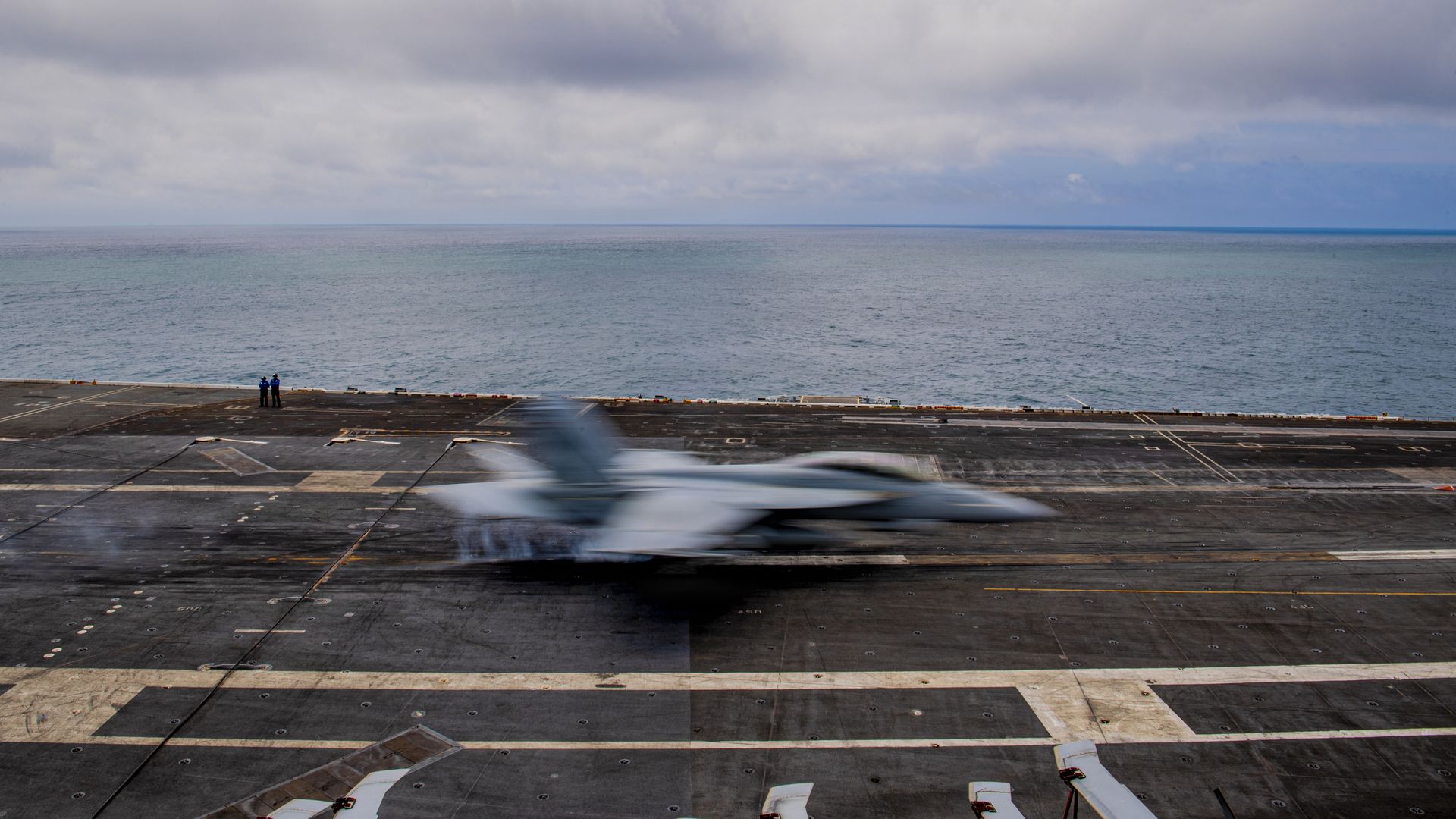
The builder of the U.S. Navy's futuristic fighter, known as F/A-XX, will be selected in August, according to the service's top uniformed official.
Why it matters: The long-awaited decision would cap a secretive competition between Boeing and Northrop Grumman, and also signal some sort of consensus between the White House, Pentagon and Hill.
Driving the news: Chief of Naval Operations Adm. Daryl Caudle discussed the timeline on Monday with reporters at the Sea-Air-Space conference in Maryland.
- The need for F/A-XX, he said, is "clearly there."
- "It ties to our MQ-25, for stealth refueling. It ties to our reach. It ties to the work we're doing making the carrier something that remains very effective into the future, based on the range it can operate safely."
- USNI News first reported on the remarks.
State of play: The Trump administration has repeatedly tried to shelve F/A-XX in favor of the Air Force's new F-47 fighter, citing industrial strain.
- "We've got a lot of airframes out there. We've got an F-35 program. We've got an F-47 program. We're still building the F-18. P-8s. C-130s. We've got a lot of airplanes being built," Caudle said.
- "The Air Force has a lot of demand on the system, and the Navy has a lot of demand," he added. "There was a 'check twice, cut once' mentality on this decision."
Follow the money: The administration's $1.5 trillion budget blueprint for fiscal 2027 included $140 million for the Navy warplane, which will succeed the Super Hornet.
Go deeper: Navy nominee wants futuristic fighter despite White House doubts
4. Eurotrippin'

JPMorgan Chase is bringing its $1.5 trillion security-and-resiliency initiative to Europe.
Why it matters: European rearmament chatter is maturing, as Russia bombards Ukraine, President Trump flames NATO and air-and-missile defense demands are laid bare by the Iran war.
Driving the news: JPMorgan Chase yesterday announced its transatlantic expansion alongside its plan to tap retired Adm. Tony Radakin, the former chief of U.K. defense staff, for its SRI external advisory council.
- Radakin's appointment is pending regulatory approval.
- Other advisers include retired Gens. Chris Cavoli and Paul Nakasone, the former heads of U.S. European and Cyber commands.
Catch up quick: SRI was initially rolled out in October with a pledge to invest billions of dollars in national-security-aligned companies and industries. Topics of interest include:
- Battery storage
- Nanomaterials and microelectronics
- Nuclear energy
- Munitions
- Quantum computing
- Secure communications
- Shipbuilding
What they're saying: "The national and economic security of countries depends on strong, resilient and reliable supply chains and robust critical industries," CEO Jamie Dimon said in a statement.
- "Now, it is in our best interest to address these challenges together — because our security, freedom and economic growth depend on it."
The intrigue: Breaking Defense in December reported both startups and legacy contractors are fair game for investment.
Go deeper: Canada, like Europe, seeks to break U.S. defense dependency
5. Triton takes a tumble
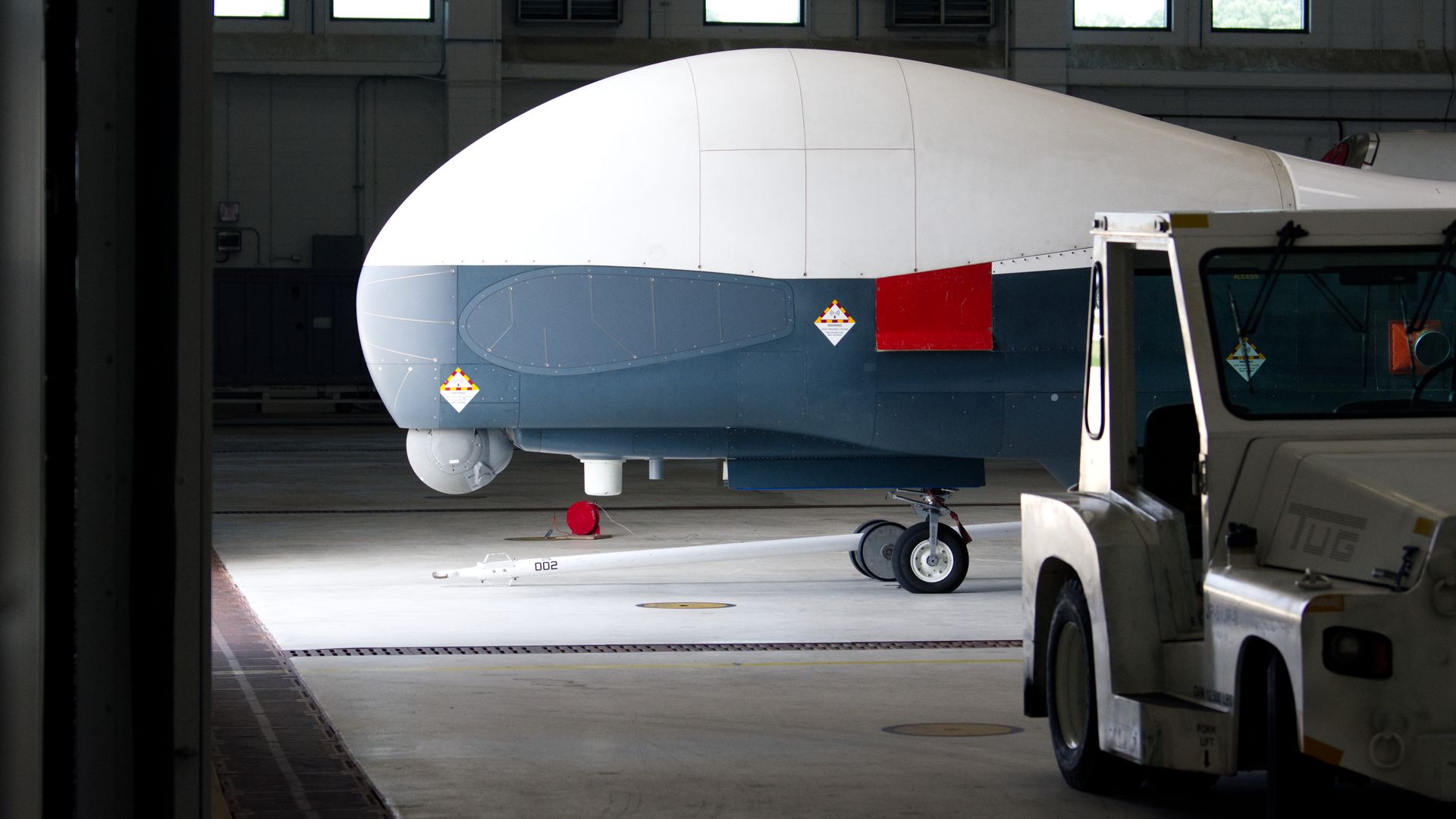
An MQ-4C Triton crashed this month, according to U.S. Navy data and publicly available flight logs.
Why it matters: At roughly $240 million a pop, the Northrop Grumman-made maritime surveillance drone is among the single priciest losses amid the Iran war.
Driving the news: Naval Safety Command's latest aviation mishaps report mentioned a Triton going down April 9 but withheld the location, citing security. No one was injured.
- The drone vanished from flight-tracking sites while near the Persian Gulf, as first reported by The War Zone. It rapidly lost altitude ahead of the online disappearance.
State of play: Northrop, as of the summer, had delivered 20 Tritons to the Navy. It had sent three to Australia and was building a fourth in Mississippi, as well.
- The massive drone, with a 130-foot wingspan, is capable of flying at altitudes above 50,000 feet for more than 24 hours.
- It can also pair with Boeing-made P-8 aircraft, which hunt submarines.
The other side: U.S. Central Command did not answer questions from Axios. Northrop declined to comment.
Go deeper: Iran war costs grow as key U.S. systems are knocked out
6. ICYMI: Saildrone's sub-hunter
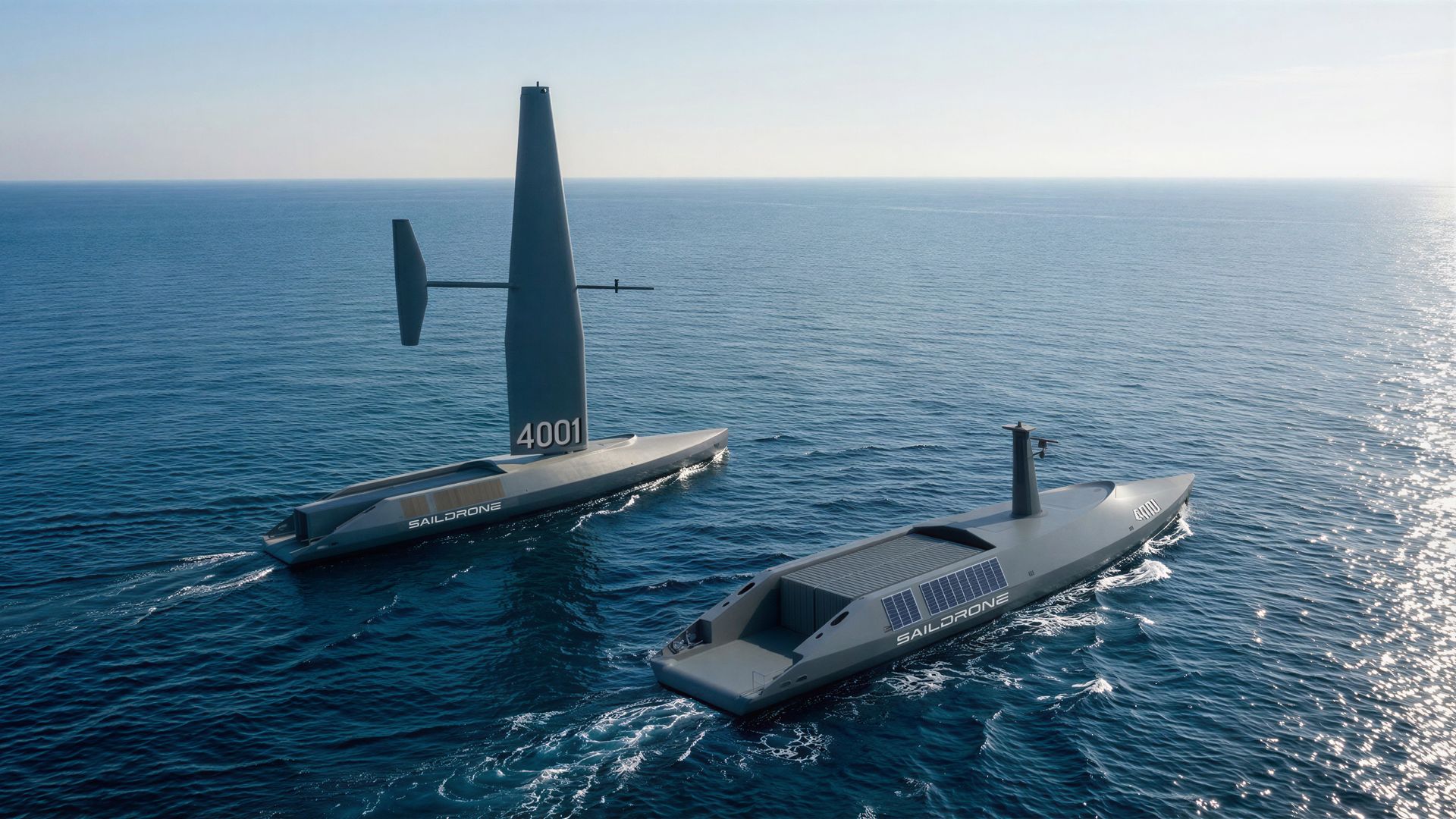
Saildrone on Monday unveiled Spectre, a 170-foot unmanned surface vessel the company says is optimized for anti-submarine warfare, far-flung surveillance and missile launches.
Why it matters: The design is the culmination of more than a decade of experience working alongside scientists, border agencies and militaries, according to CEO Richard Jenkins.
- "Arctic, Antarctic, High North, Southern Ocean, hurricanes — we did thousands of iterations to toughen our vehicles," he told me.
The big picture: The drone-boat market is increasingly crowded. Standing out is difficult, and the demands of the U.S. Navy are ever-changing.
- Saildrone has been at work on Spectre for two years. It will be submitted to the service's medium unmanned surface vessel marketplace, according to Jenkins.
- "It's 100% compliant with the threshold and desired requirements, without modification," he said.
7. Quick hits
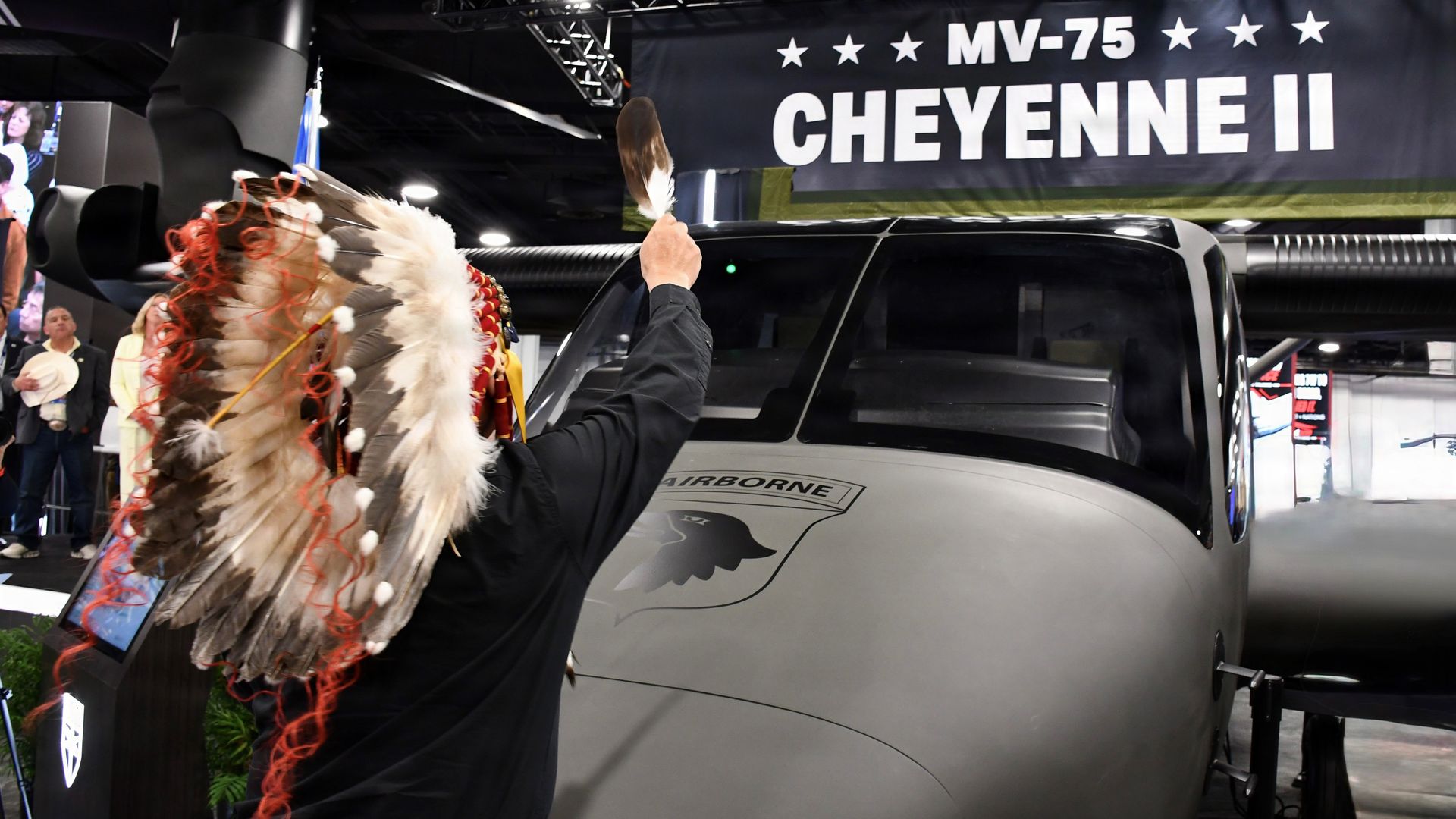
✍️ The U.S. Army named the MV-75 the Cheyenne II. The service said it considered more than 500 tribes for the namesake.
- Why it matters: This tiltrotor, made by Bell Textron, is the service's first. The 101st Combat Aviation Brigade at Fort Campbell, Kentucky, is expected to be the first unit equipped with it.
- 💭 My thought bubble: I broke the news of the AE 1107 engine tests last year. Check that out, here.
🌊 Ulysses announced a total $46 million raise, which includes a $38 million Series A led by Andreessen Horowitz. Other backers include Booz Allen Ventures and Harpoon Ventures.
- Why it matters: The startup makes autonomous surface and subsurface vehicles. "The ocean is the last great frontier," CEO Akhil Voorakkara said in a statement.
- 💭 My thought bubble: The drone-boat market is nearing saturation. There will be winners. There will also be losers.
🤖 Beacon AI inked a four-year contract with U.S. Special Operations Command valued up to $49.5 million. The company specializes in pilot augmentation autonomy that advises and assists — beyond the current autopilot systems.
- Why it matters: "We build systems that help crews avoid unsafe actions, improve performance, and execute complex missions more effectively," CEO Matt Cox said in a statement.
- 💭 My thought bubble: R2-D2, anyone?
🔀 Autonomy suites made by Applied Intuition and Accelint were swapped midflight aboard Northrop Grumman's Talon IQ, which utilizes an optionally manned Model 437 aircraft, during testing in California last week.
- Why it matters: "Modern air combat demands systems that are interoperable and continuously evolving, and this flight test shows how physical AI can plug directly into an aircraft" and execute "mission-critical behaviors," Peter Ludwig, Applied's chief technology officer, said in a statement.
- 💭 My thought bubble: Remember Beacon? (Take me back to Paris.)
8. Check this out
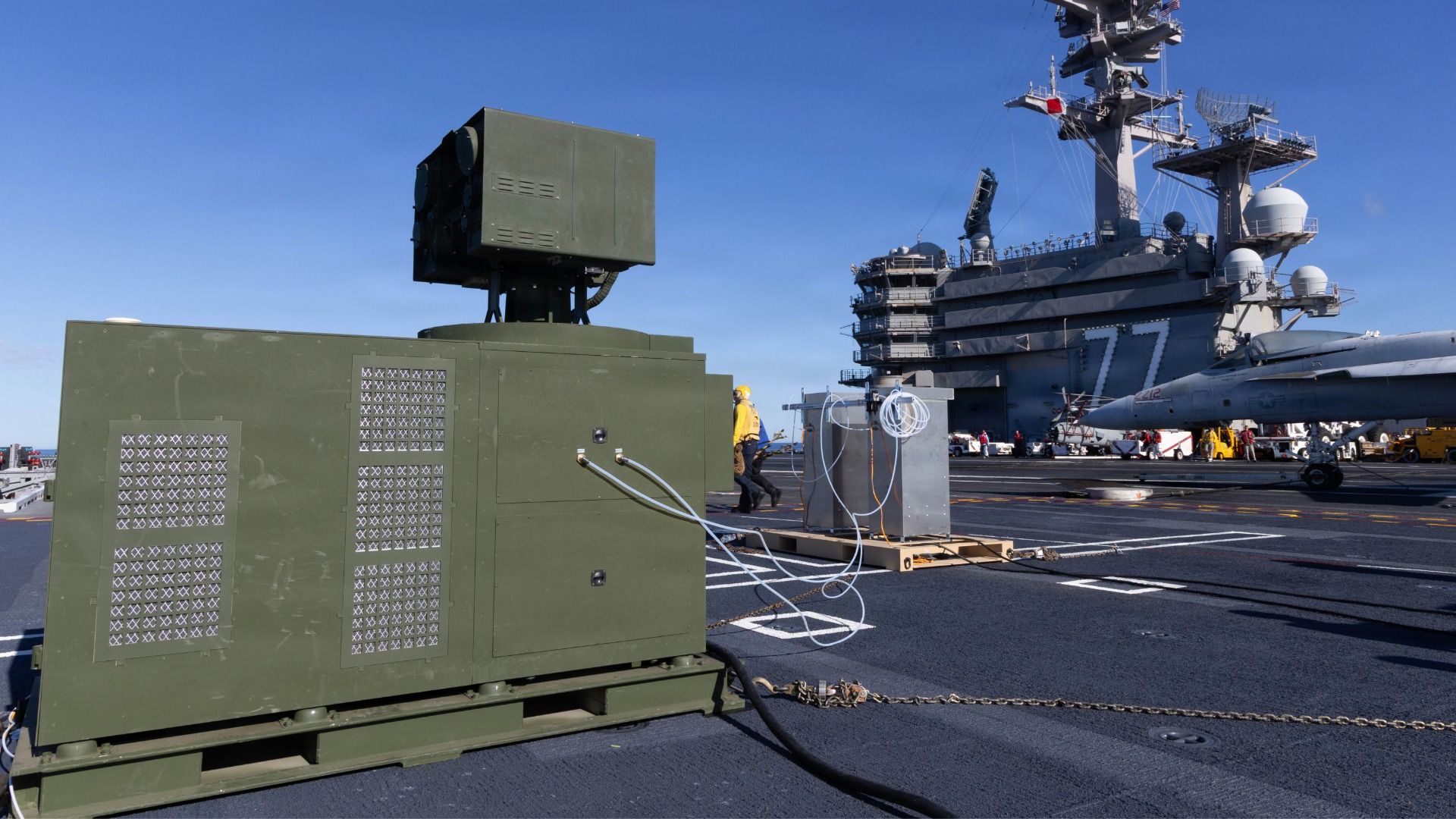
Seventeen drones were downed during a live-fire test of an AeroVironment laser weapon aboard the George H.W. Bush aircraft carrier, pictured above.
Why it matters: It's a major win for directed energy, long discussed and researched by the U.S. military but not yet widely adopted.
What they're saying: "I think we're at a really interesting inflection point right now," John Garrity, vice president of directed energy systems at AV, told me.
- "We trained all types of sailors, from an admiral down to enlisted folks. Within a half-hour, they were killing drones on these systems," he added.
- "From a performance perspective? Game over, lights out."
Follow the money: The White House's fiscal 2027 budget request featured more than $2 billion for research, development, testing and evaluation of directed-energy systems, according to Laser Wars' analysis.
Go deeper: U.S. Army buying Switchblade drones for $186 million
Shoutout to Dave Lawler for editing and Matt Piper for copy editing.
👋🏼 Thanks, as always, for reading and sharing. Tell your friends to subscribe here.
Sign up for Axios Future of Defense