Axios Future of Defense
February 11, 2026

Hello from a balmy San Diego. Has D.C. thawed out yet?
- Thanks to those who sent along recommendations last week. Y'all have good taste.
π Situational awareness: The chief of U.S. naval operations, Adm. Daryl Caudle, unveiled his "Fighting Instructions" β a vision for the service, industry collaboration, emerging tech and sailor training. Read it, here.
Ready up: Kodiak AI's latest defense adventure, Project Omega's emergence and lots of Red Flag flicks.
Today's newsletter is 1,861 words, a 7-minute read.
1 big thing: Red Flag realities
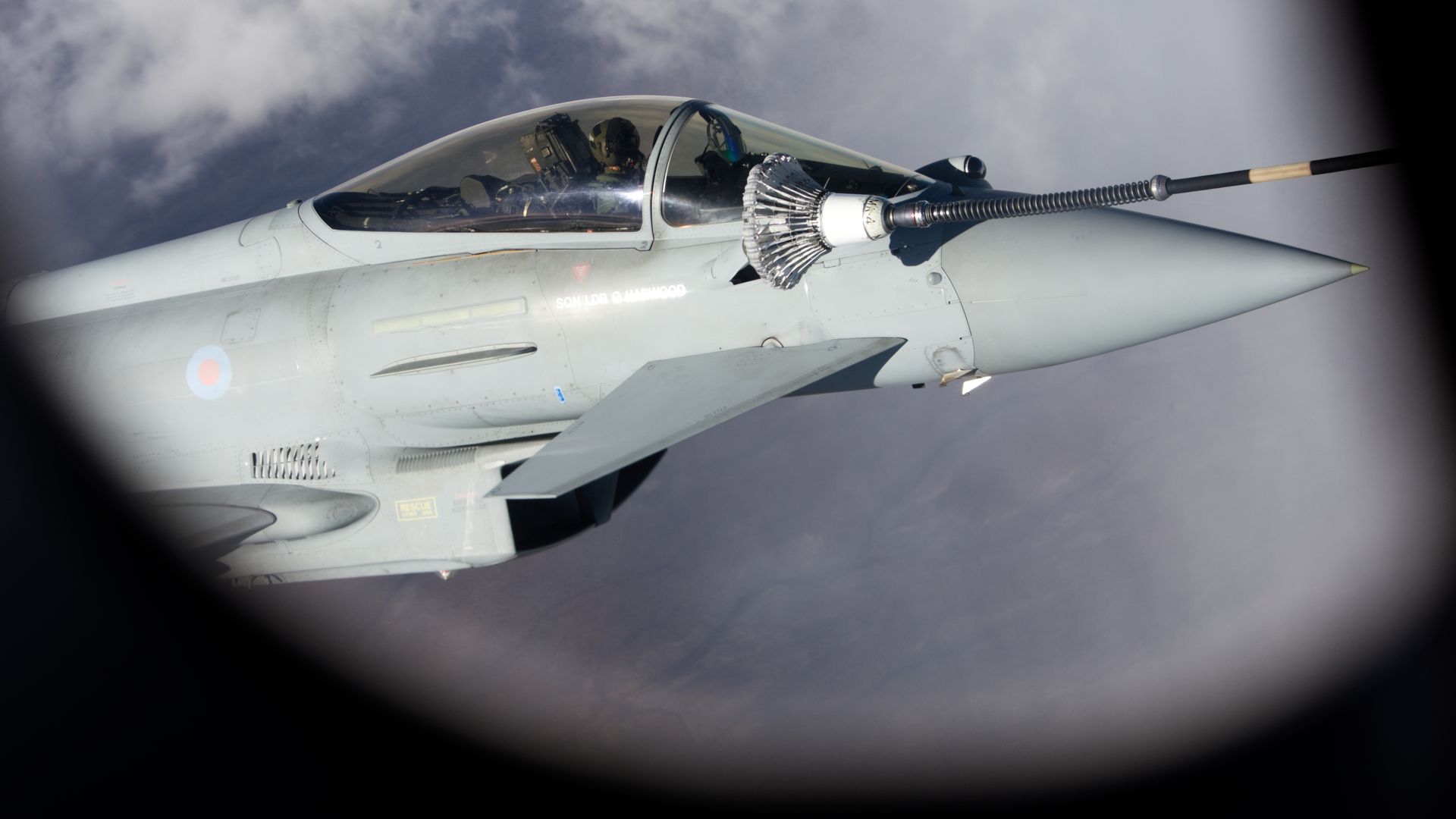
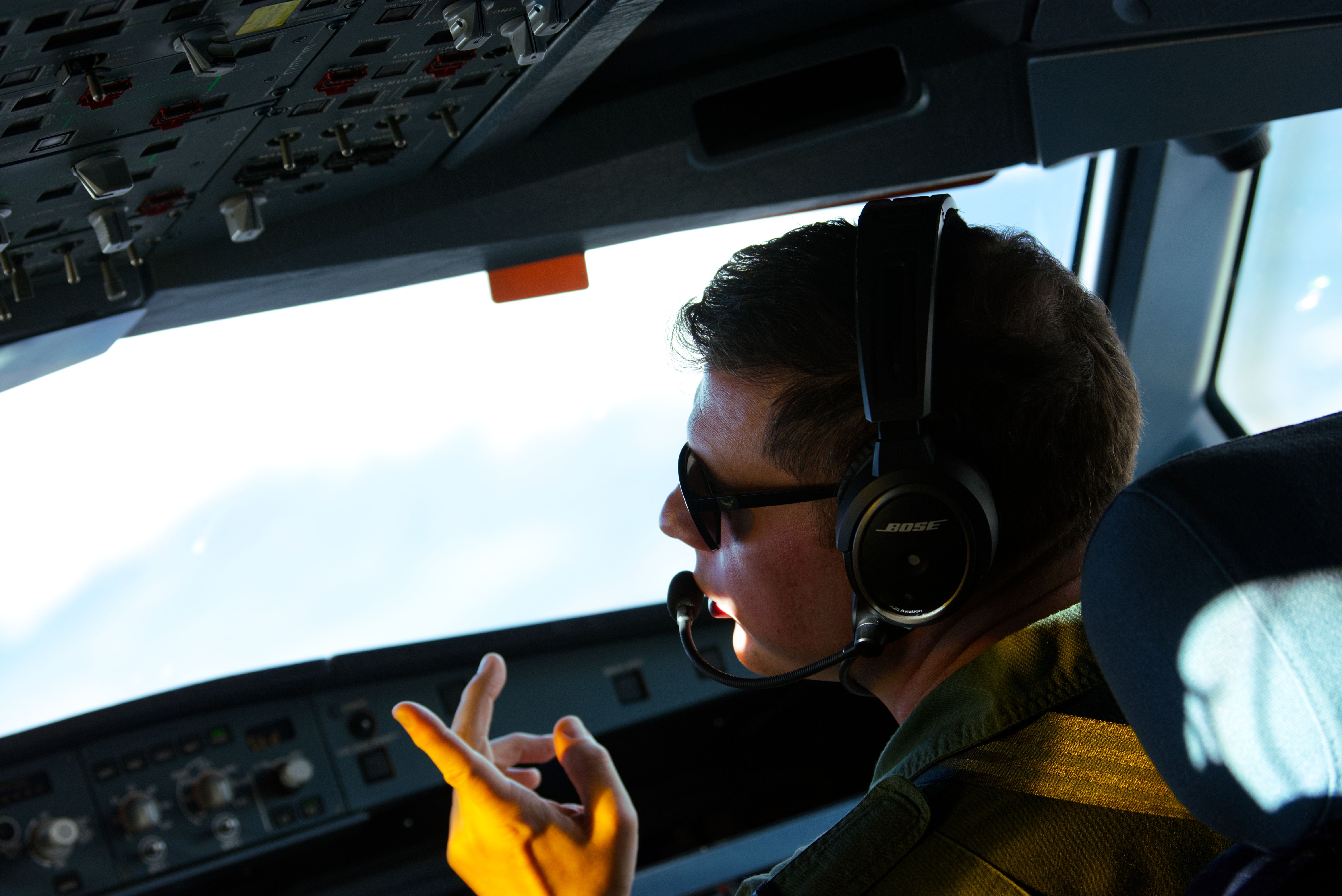
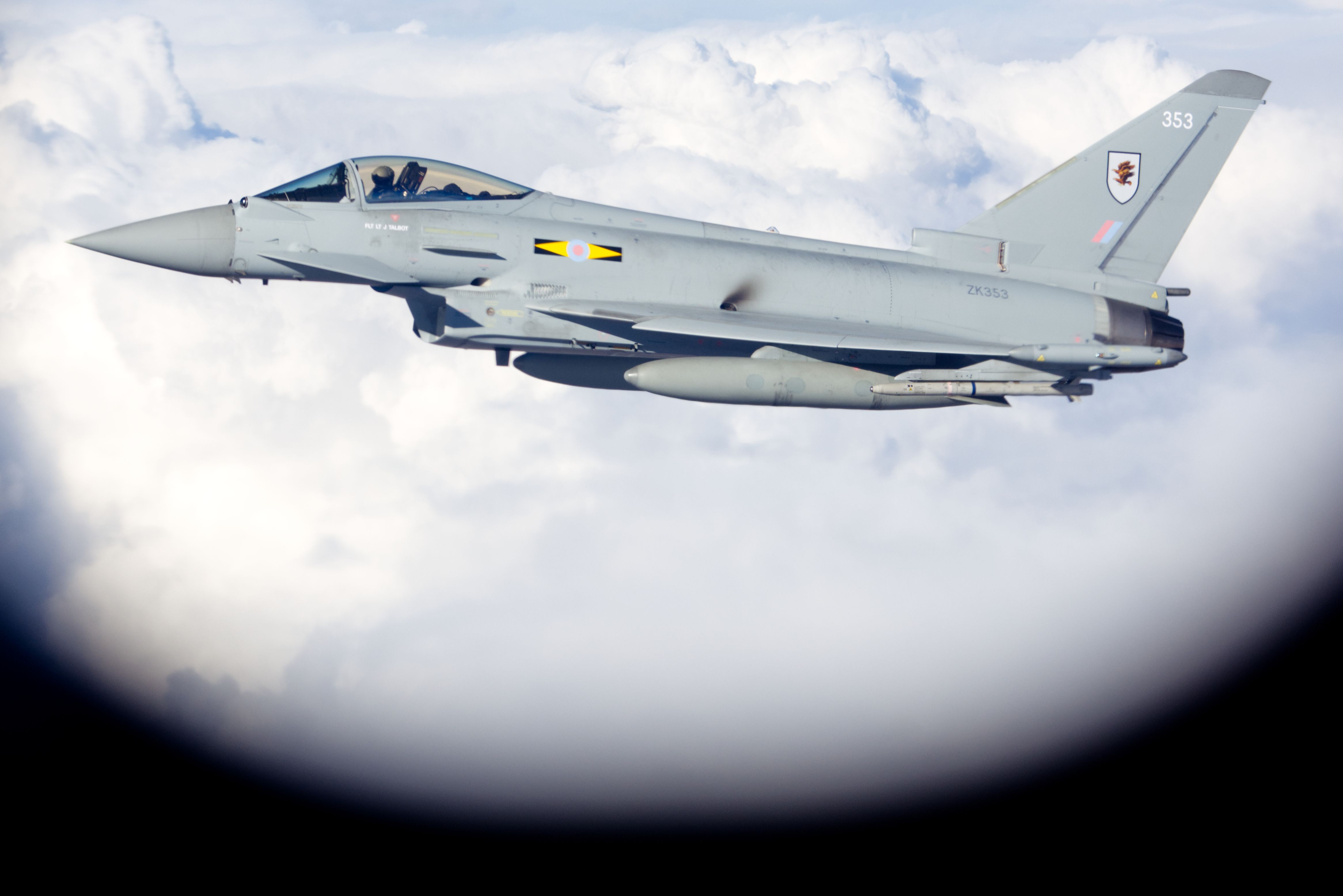
23,000 FEET ABOVE THE DESERT βΒ The British Voyager had some 70 metric tons of fuel aboard as it began circling the Nevada Test and Training Range. Over the course of a few hours, it topped off Royal Air Force Typhoons and U.S. Marine Corps F-35s. An American KC-135 lingered nearby.
- "We can talk to them," Master Aircrew Andy Welham-Jones said to the small group of reporters on board.
- It felt no different in the cockpit, he added, to restock the different warplanes from different countries.
Why it matters: The Voyager, part transporter and part refueling tanker, and its crew were fighting in Red Flag 26-1. The exercise embroils British, Australian and American forces β including aviators, cyber and space specialists, and logisticians β in realistic but less-than-lethal combat.
- "We've all been shot down at Red Flag before," Welham-Jones said.
Driving the news: I spent nearly 13 hours at Nellis Air Force Base, Nevada, on Friday, getting an intimate look at operations on the ground and in the air.
- This latest rendition of Red Flag emphasized coordination between London, Canberra and Washington, which are parties to the AUKUS agreement and regularly share intelligence.
- "This is not a mission rehearsal," said Col. Tony May, the exercise director and commander of the 414th Combat Training Squadron.
Zoom out: The U.S. has for years pursued the battlefield communications nirvana known as Combined Joint All-Domain Command and Control. At its simplest, CJADC2 envisions a state in which the right information gets to the right people at the right time no matter the geographical or technical boundaries.
- "We may have similar airplanes. You brought F-35s. We're flying F-35s. This is our chance to make sure they talk togetherΒ β the data links work, the communications work," May said.
- "Tactically, are we integrated?"
How it works: Red Flag has a decades-long lineage, born from the airpower lessons of the Vietnam War.
- Today's drills consider adversaries ranging from China to Russia to "some made-up country in the middle," according to May.
- "It's continually evolving. I took command in June, and we have overhauled everything about Red Flag," he said. "Every internal process, every product we produce, every scenario that we develop has been totally looked at."
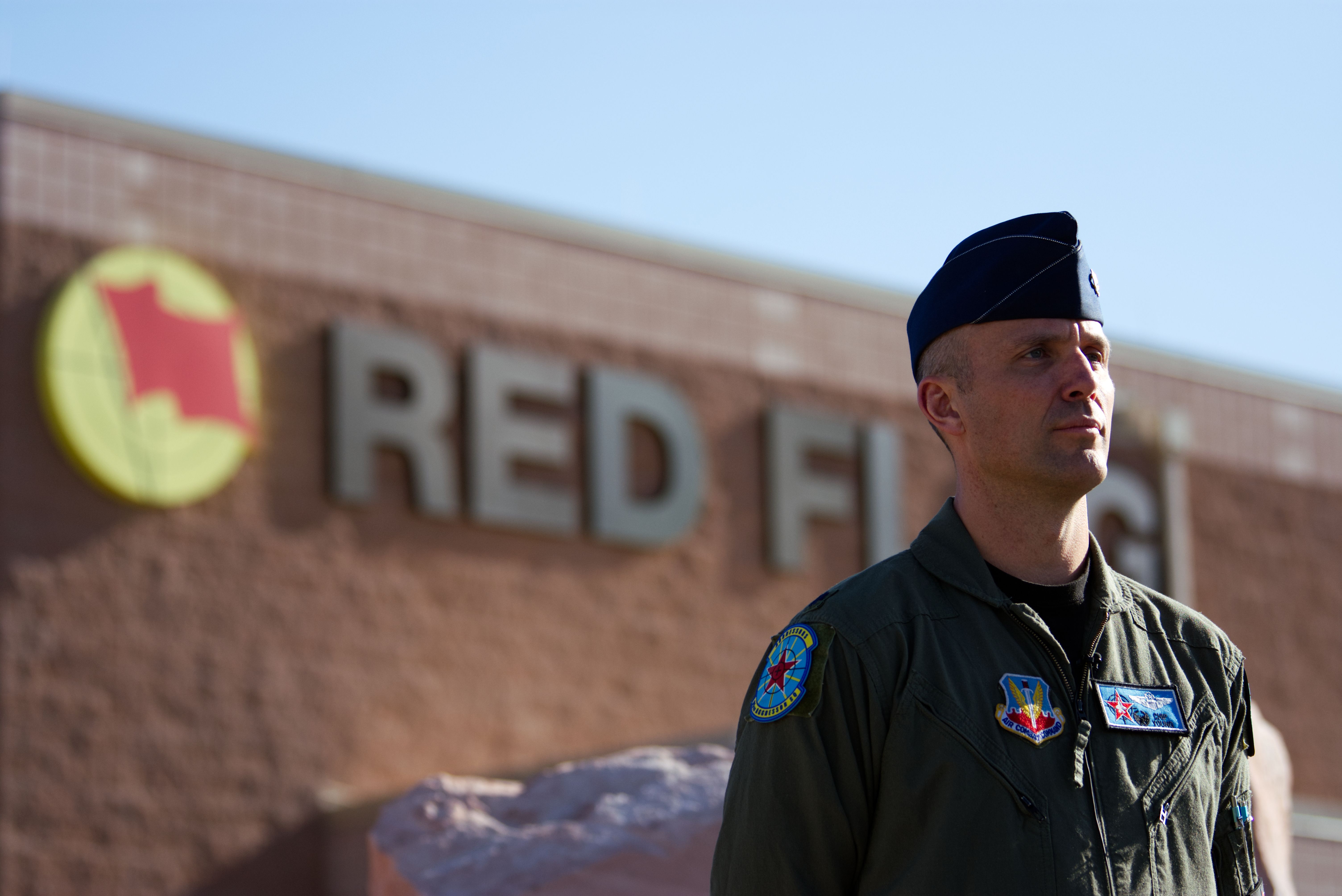
The intrigue: A trademark of the Red Flag sandbox is the so-called red air. For the first time, these frenemies are flying mostly fifth-generation aircraft. That greatly raises the stakes.
- "It's hard to hide from an advanced radar," Lt. Col. Ryan "Chip" Young, the commander of the 65th Aggressors, told me. "We're doing significant damage."
- The aggressors train on the tactics of adversaries and mimic them during exercises like this one. Asked if they were specifically modeling fights that could break out in Europe or the Indo-Pacific, Young said: "It's a mixed bag."
- "We want to make sure we get all the looks."
Threat level: The latest National Defense Strategy, published in January, references a "simultaneity problem," or the possibility of militaries coordinating across multiple theaters against the U.S. and its allies.
- National security analysts have for years warned of the threat posed by a loose-knit, anti-West coalition headed up by Moscow and Beijing.
The bottom line: Flight Lt. Matt Winwood, the Voyager pilot, praised the practice regimen once back on the ground. It was his first Red Flag.
- "It's really good to come out here and tank with some other countries we don't normally tank with," he said.
- It provides "a good idea of their procedures, and makes sure that we're ready for operations elsewhere."
More from Axios:
Air Force wants industry ideas for $500,000 missile
U.K. picks Anduril, Lockheed, 5 others for Apache drone project
Ditching AUKUS will "cause grave damage" in Indo-Pacific, says McCaul
2. Exclusive: Coyote countermeasures
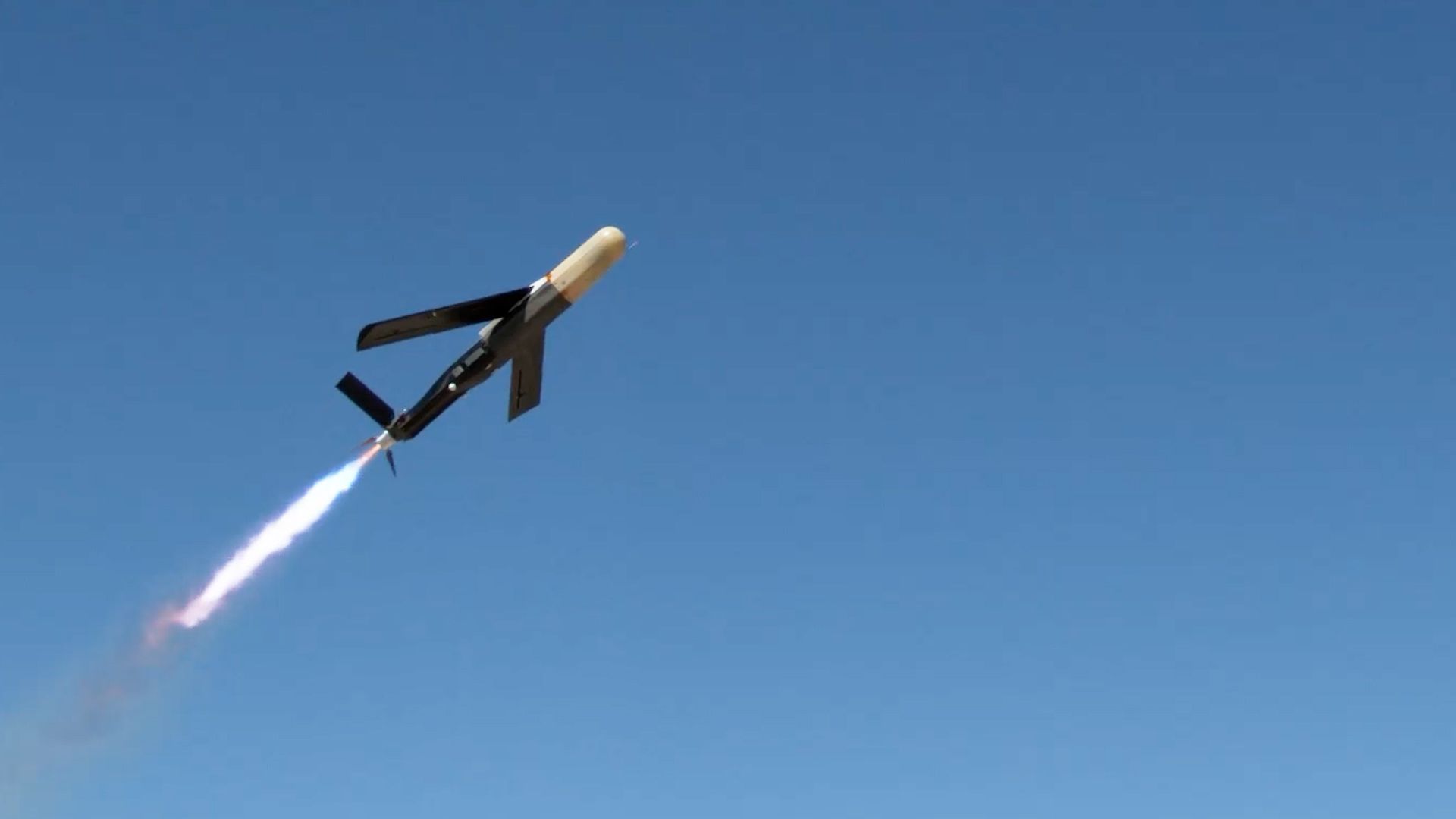
Raytheon, a division of RTX, downed multiple drones simultaneously at a U.S. Army exercise using a Coyote Block 3 Non-Kinetic interceptor, the company told me.
Why it matters: The drone-counter-drone conversation is red-hot.
- It's stoked by the Pentagon's Drone Dominance initiative, the Joint Interagency Task Force 401, Ukraine's stunning Spiderweb operation and security concerns surrounding stateside events like the Super Bowl and World Cup.
Driving the news: In footage shared with me, the Coyote zips past enemy drones; they almost immediately tumble out of the sky. There is no physical contact between the different aircraft, nor are there explosions or fireballs.
- The Coyote then lands in a net for recovery and reuse.
- The company knocked out at least 10 drones, including Group 1 and 2, during the Operation Clear Horizon trials in October.
What they're saying: "Coyote Block 3NK provides two key advantages," Tom Laliberty, Raytheon's president of land and air defense systems, told me.
- "One, the system minimizes collateral damage by using a non-kinetic effect, and, two, it provides a cost-effective option to clear airspace of cheap, commercially available drones that adversaries are using to threaten, spy on and attack U.S. and allied forces."
Follow the money: This version of the Coyote was included in the company's largest counter-drone contract to date, awarded in September as part of the Army's Low, Slow, Small Unmanned Aircraft Integrated Defeat System (LIDS) program.
What's next: Raytheon anticipates "significantly" increased production "across the Coyote family" this year, according to Laliberty.
- He declined to disclose specific figures.
Go deeper: Gambit exits stealth with L3Harris, RTX partnerships in hand
3. Exclusive: Kodiak and the Corps
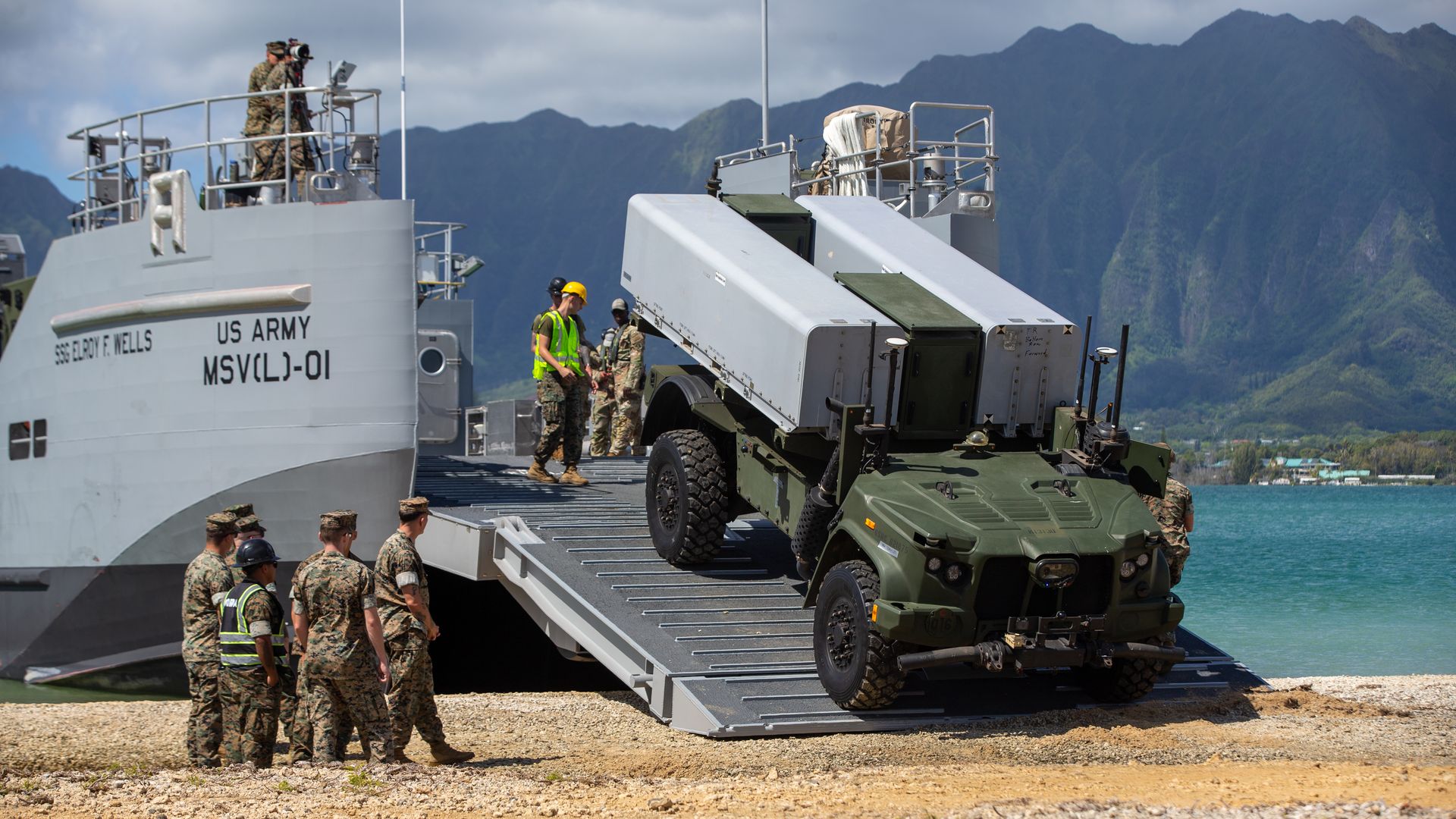
The U.S. Marine Corps tapped Kodiak AI to install its autonomy aboard the ROGUE-Fires vehicle, an integral part of a ship-sinking missile launcher known as NMESIS, among other potential setups.
Why it matters: It's another foot in the defense door for the California company, which previously worked with the Army on robotic combat vehicles and the Air Force on the flight line of the future.
- "This is a clear indication of the military, in general, wanting to move toward commercially mature technologies," CEO Don Burnette told me.
- "I think defense is going to be a massive opportunity in the next decade."
State of play: Kodiak expects its "Driver" to be integrated on an actual ROGUE-Fires early this summer. A surrogate vehicle will be used in the interim.
- "We're not building a separate, bespoke AI Driver for military applications. We're building a unified AI Driver," Bobby Bonello, head of defense business development, told me.
- "We're on a Class 8 commercial truck. We take that exact same system and we put it on an F-150. We take that exact same system and we put it on a Joint Light Tactical Vehicle. We take that exact same system and we put it on a Textron M3."
The intrigue: Kodiak is perhaps most well known for its autonomous trucking endeavor. It's run driverless routes for over a year now.
Follow the money: The Pentagon's fiscal 2026 budget blueprint allocated $13.4 billion for autonomy and autonomous systems. That included:
- $9.4 billion for aerial drones
- $210 million for ground vehicles
Friction point: Kodiak declined to disclose the value of the Marine Corps contract. It was awarded in January.
Go deeper: Defense industry heaps praise on Hegseth's weapons-buying reformation
4. Exclusive: Project Omega's plans
Project Omega exited stealth today with a $12 million seed round under its belt and plans to convert spent nuclear fuel into power sources the military can use for wearables, sensors, drones and more.
The big picture: The ambitions could help solve, in the long run, three major American concerns:
- What to do with all the spent fuel laying around
- How to keep troops healthy, informed and out of harm's way
- How to satiate an energy appetite that's growing, thanks to artificial intelligence and other factors
"We need to make sure that we're self-sufficient, we're energy independent. And that means we need the nuclear fuel cycle here in the United States," CEO Staff Sheehan told me.
- "We're the picks and shovels of the nuclear gold rush."
State of play: Omega is already working with the Department of Energy.
- It's doing separation and refining at Idaho National Lab and is turning the material into products at the Pacific Northwest National Lab.
- "One of the key unlocks we've done here is we've actually taken the energy that's in the spent fuel and we've demonstrated converting that energy into electricity," Sheehan said.
Zoom in: Omega is Sheehan's fourth business. It employs 15 people and is headquartered in Rhode Island.
- Its first offering is a power source that could resemble AA, AAA or smaller batteries.
- "That doesn't require you to rebuild your whole system β and I'm all about drop-in replacements," Sheehan said. "I don't like rebuilding infrastructure."
Follow the money: Omega's seed round was led by Starship Ventures.
- Other backers include Mantis Ventures, Buckley Ventures, Slow Ventures and Decisive Point.
- "Spent nuclear fuel may be considered trash for some but we think it is a treasure, and key to unlocking the next century of U.S. energy leadership," Hugo Peterson, Starship's chief operating officer, told me.
The intrigue: Omega has pledged not to do weapons work.
5. Quick hits
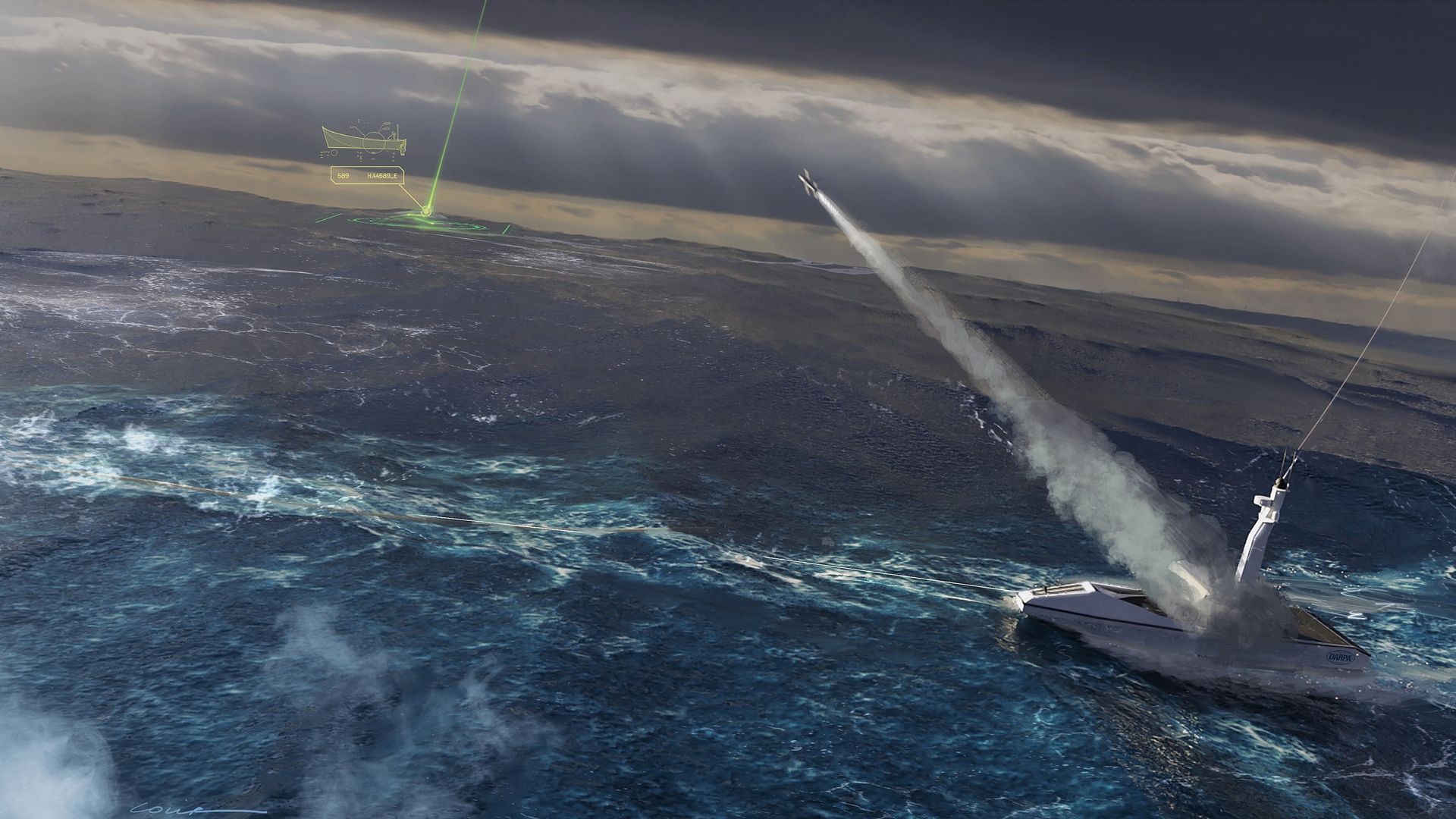
π Charles River Analytics, Leidos, Saronic and RTX's Raytheon were selected for the Pulling Guard program, run by the Defense Advanced Research Projects Agency.
- Why it matters: Pulling Guard seeks to develop semi-autonomous escort and overwatch options for unarmed logistics vessels.
- π My thought bubble: The Houthis must be fuming.
πͺ½ The Pentagon and Congress should support the purchase of at least 300 F-47 fighters to edge out China's integrated air-defense systems, a Mitchell Institute policy paper argues.
- Why it matters: "F-47s and B-21s in combination will be able to strike any target on China's mainland to deny sanctuary and eliminate capabilities critical to the PLA's air and missile forces," it reads.
- π My thought bubble: That's a lot of work for Boeing.
ποΈ The U.S. Army ordered communications gear, including MPU5 radios and PT5 devices, from Persistent Systems totaling $87.5 million. A prior order was valued at $34 million.
- Why it matters: The purchases are part of the service's Next-Generation Command and Control initiative.
- π My thought bubble: Defense-tech flashiness doesn't exist without the building blocks of connectivity.
π¨οΈ Marines at Camp Lejeune, North Carolina, are 3D printing National Defense Authorization Act-compliant drones dubbed HANX.
- Why it matters: "Some explosive ordnance disposal Marines are about to buy 20 of these, and they're going to be strapping explosives to it," Sgt. Henry David Volpe said in a statement.
- π My thought bubble: The full story's worth a read. Check that out, here. (Inside Defense also covered it, here.)
6. Check (these) out
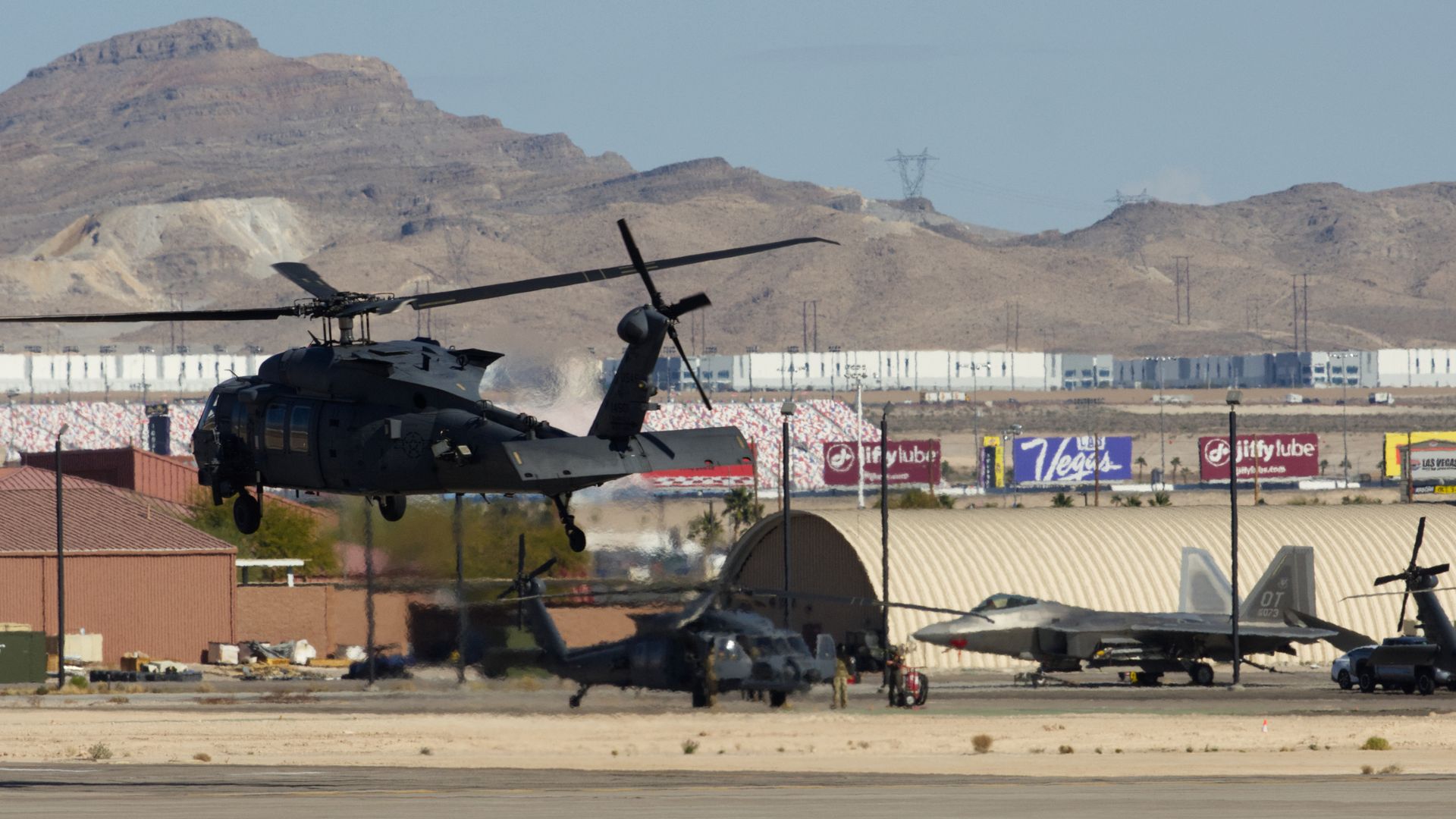
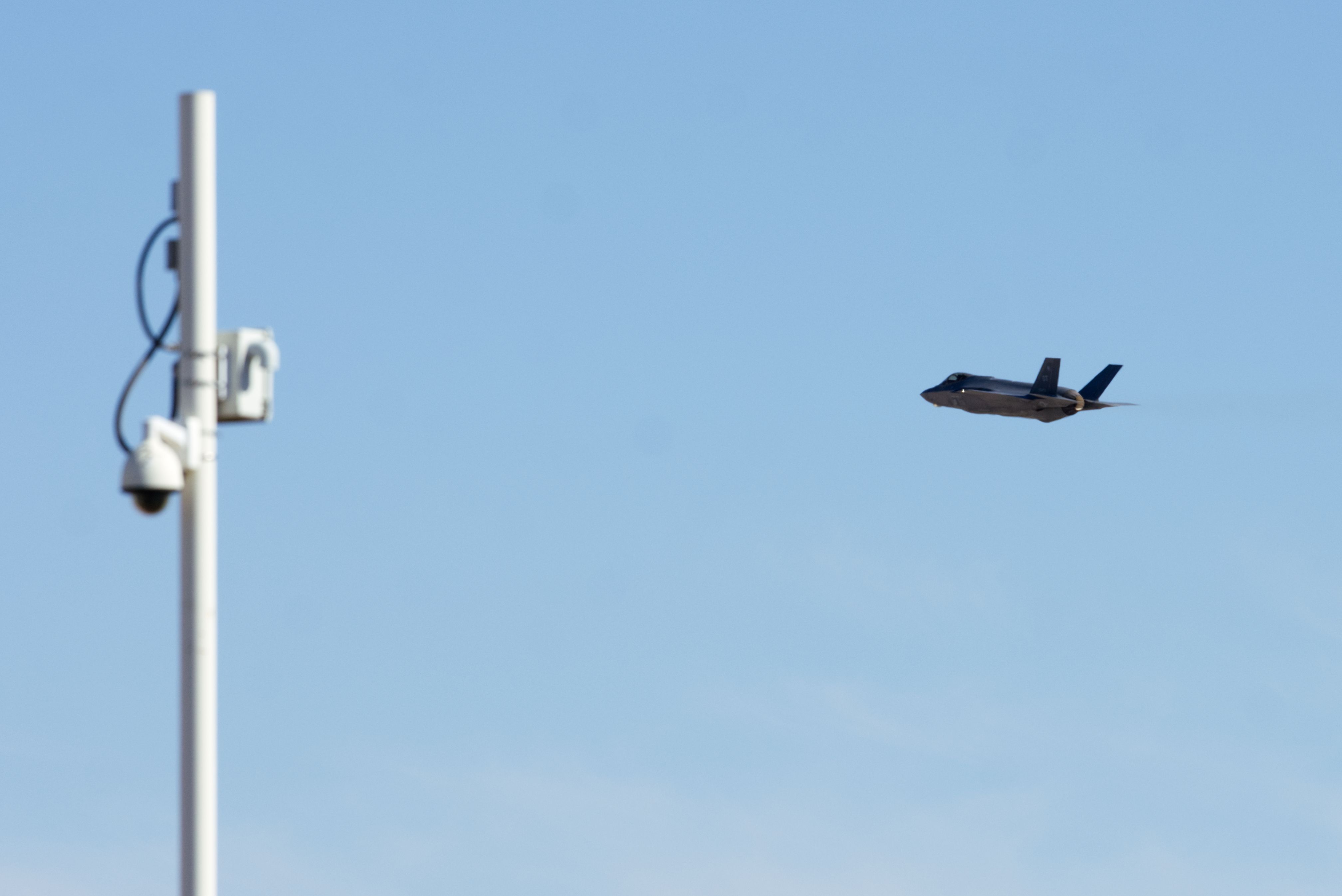
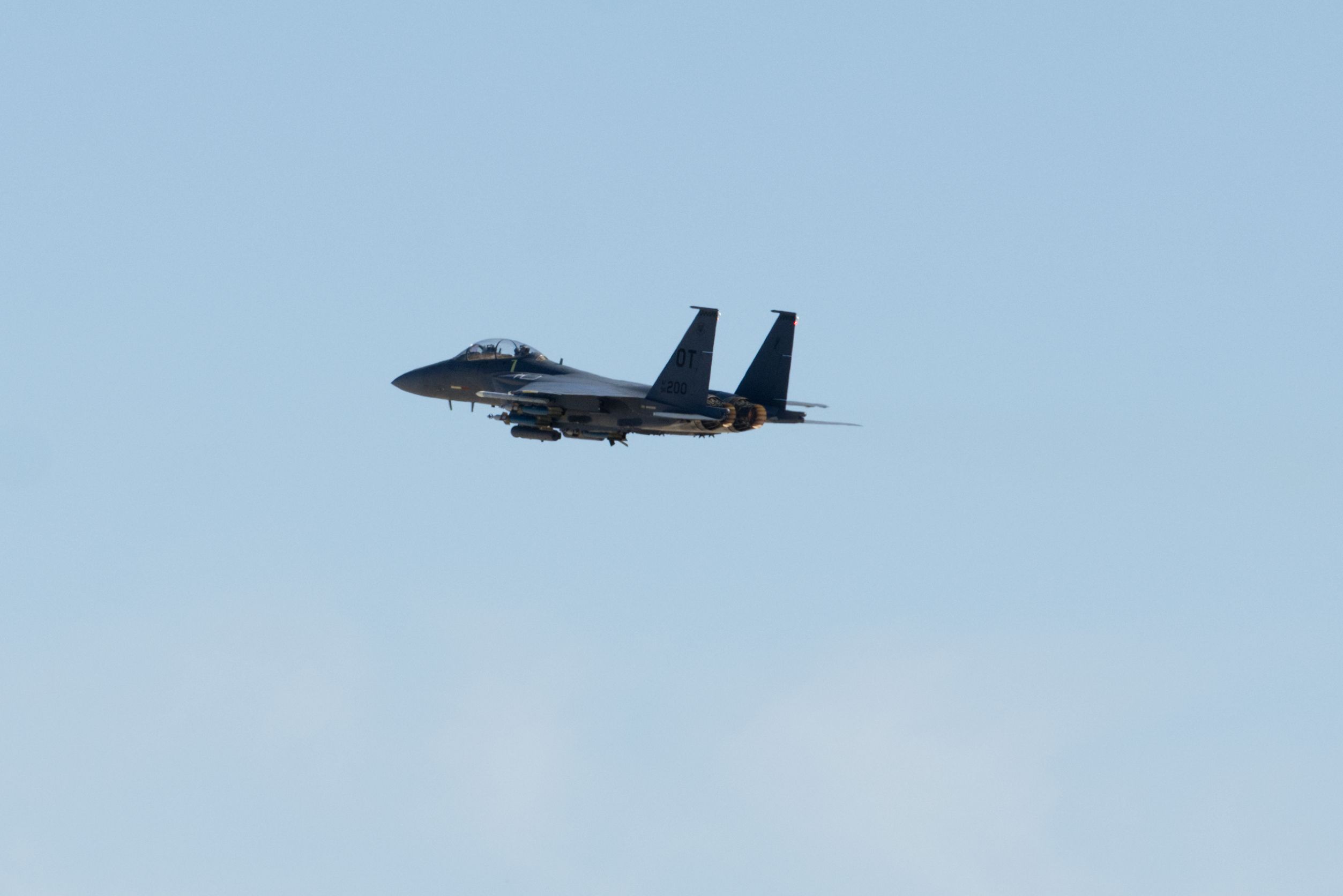
Here are some of my favorite photos from Red Flag 26-1. (I couldn't clog up the article, above, with all of these.)
Why it matters: Who doesn't love the look of an F-22 or F-35?
What's next: Keep scrolling!
Shoutout to Dave Lawler for editing and Matt Piper for copy editing.
ππΌ Thanks, as always, for reading and sharing. Tell your friends to subscribe here.
Sign up for Axios Future of Defense