Axios Future of Defense
September 25, 2024

Welcome back to the Future of Defense. The seasons changed since we last spoke.
- Sidenote: Thanks to those who stuck around for my panel at the Center for Arms Control and Non-Proliferation Annual Conference.
🤖 Situational awareness: President Biden on Tuesday told the UN there may be no greater test of future leadership than how the world deals with artificial intelligence.
- 💭 My thought bubble: Global consensus on anything is difficult. Good luck with something as lucrative as AI.
Keep scrolling for: Adm. Lisa Franchetti and 2027, B-21 testing in California, and plans to "shoot drones while driving at full speed."
Today's newsletter is 1,446 words, a 5.5-minute read.
1 big thing: Next-gen is "several years old"

It's back to the drawing board for the U.S. Air Force as air superiority is shaken by sophisticated drones, budget pressures back home and a growing appetite for mass, not rarity.
Why it matters: Fights abroad and industry's technological leaps are forcing militaries to rethink their biggest investments, including heavy armor and aircraft.
Driving the news: Months after the Air Force paused its Next Generation Air Dominance program, or NGAD, Secretary Frank Kendall told reporters the service is "taking a very hard look at whether we've got the right design concept."
- "The requirements are several years old now," Kendall said on the sidelines of the Air, Space and Cyber Conference in Maryland. "The concept, if you will, was an F-22 replacement designed very much for a specific mission under a specific set of circumstances."
- Robo-wingmen and other flying, armed computers have since come a long way.
Cost projections for an NGAD fighter at one point sat around $300 million. That's now too rich, according to Kendall, whose current preference is closer to the price tag of an F-35, or $80-100 million.
- "There's a real range in there," he said. "We need a unit cost that's affordable in significant numbers."
Between the lines: Such a gulf implies a major redesign.
- Cutting costs could mean sacrificing range and payload, going from two engines to one, and other "large-scale changes," according to Air and Space Forces Magazine and Aviation Week.
- "Whether there'll be variants that might be crewed or uncrewed is another question mark," Kendall said.
What they're saying: Vice Chief of Staff Gen. James Slife at another event said he "wouldn't rule anything out" but also "wouldn't rule anything back in."
- While lack of specificity can be blamed on the program's secretive nature, the public messaging feels like indecision.
- "How do we achieve air superiority in a contested environment? That would be one way to frame the question," Slife said. "A different way to frame the question would be: How do we build a sixth-generation manned fighter platform?"
Flashback: The Air Force intended to pick a contractor this year.
- Lockheed Martin and Boeing were considered top dogs. But Northrop Grumman CEO Kathy Warden this month suggested the company would play ball.
- Defense-contracting behemoths and smaller, specialized firms will chip into "whatever NGAD turns into," according to Slife.
What's next: A decision is due in the next few months. Industry and Congress are applying pressure.
2. Franchetti's wishlist
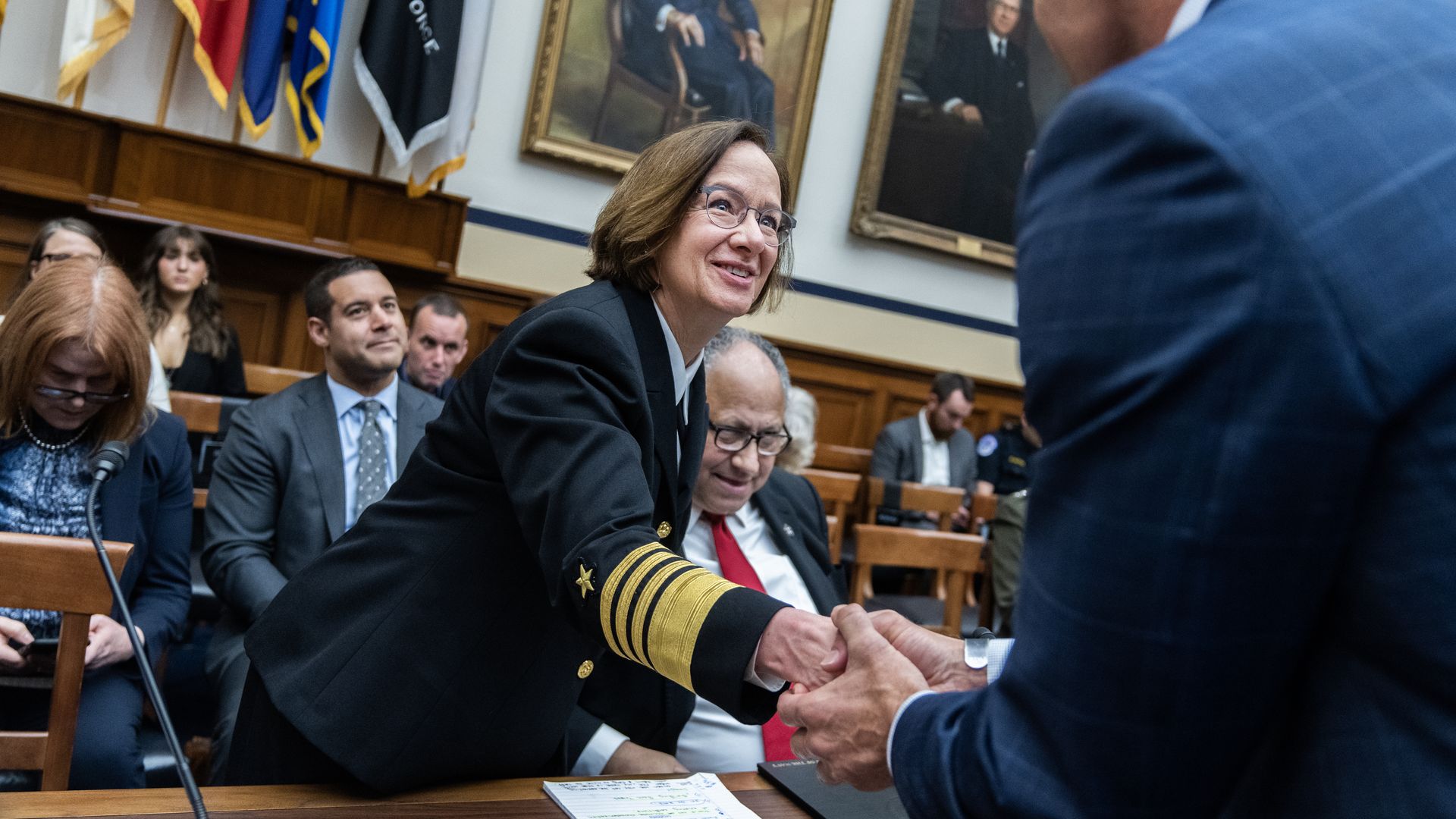
Adm. Lisa Franchetti, the chief of U.S. naval operations, wants to squash ship, submarine and aircraft delays as well as widely adopt robotics to prepare for potential war with China in 2027.
Why it matters: Flashy weapons are useless if you can't buy, build and repair them.
- As I've highlighted before, the U.S. has a labor and supply chain issue. These are acutely felt at America's shipyards.
Driving the news: Franchetti last week rolled out her "Navigation Plan," a document detailing her vision for the service now and in the future.
- Driving it is what she's calling "Project 33" — a list of seven personal priorities.
What they're saying: "The Chairman of the People's Republic of China (PRC) has told his forces to be ready for war by 2027 — we will be more ready," Franchetti writes in the plan.
- "We have seen breakthroughs in battlefield innovation over the last two years, with profound implications for the changing character of war."
- Franchetti cites the Black Sea, where Ukrainians are sinking priceless Russian ships with souped-up jet skis.
- A previous Navigation Plan pitched a hybrid fleet, with 373 manned ships collaborating with 150 uncrewed vessels.
Friction point: The Navy's priority boats are years behind construction schedule, and aging ships and protracted repair windows are compounding the problem.
- Navy Secretary Carlos Del Toro, shipbuilders and lawmakers discussed fleet funding behind closed doors last week.
- Of note was a proposal to accelerate sub construction and tweak how work is paid for, known as Shipyard Accountability and Workforce Support.
- Chris Kastner, the CEO of HII, in an email told me he thought SAWS was "kind of genius."
Between the lines: Project 33 launches as the "Davidson window" looms. Named for the former head of Indo-Pacific Command, Adm. Phil Davidson, the Taiwan-invasion timeline is an obsession in Washington.
My thought bubble: Smart machinery can augment naval firepower and construction ashore. Its adoption is win-win.
Go deeper: Gecko Robotics to expand its U.S. Navy gigs
3. Quick hits
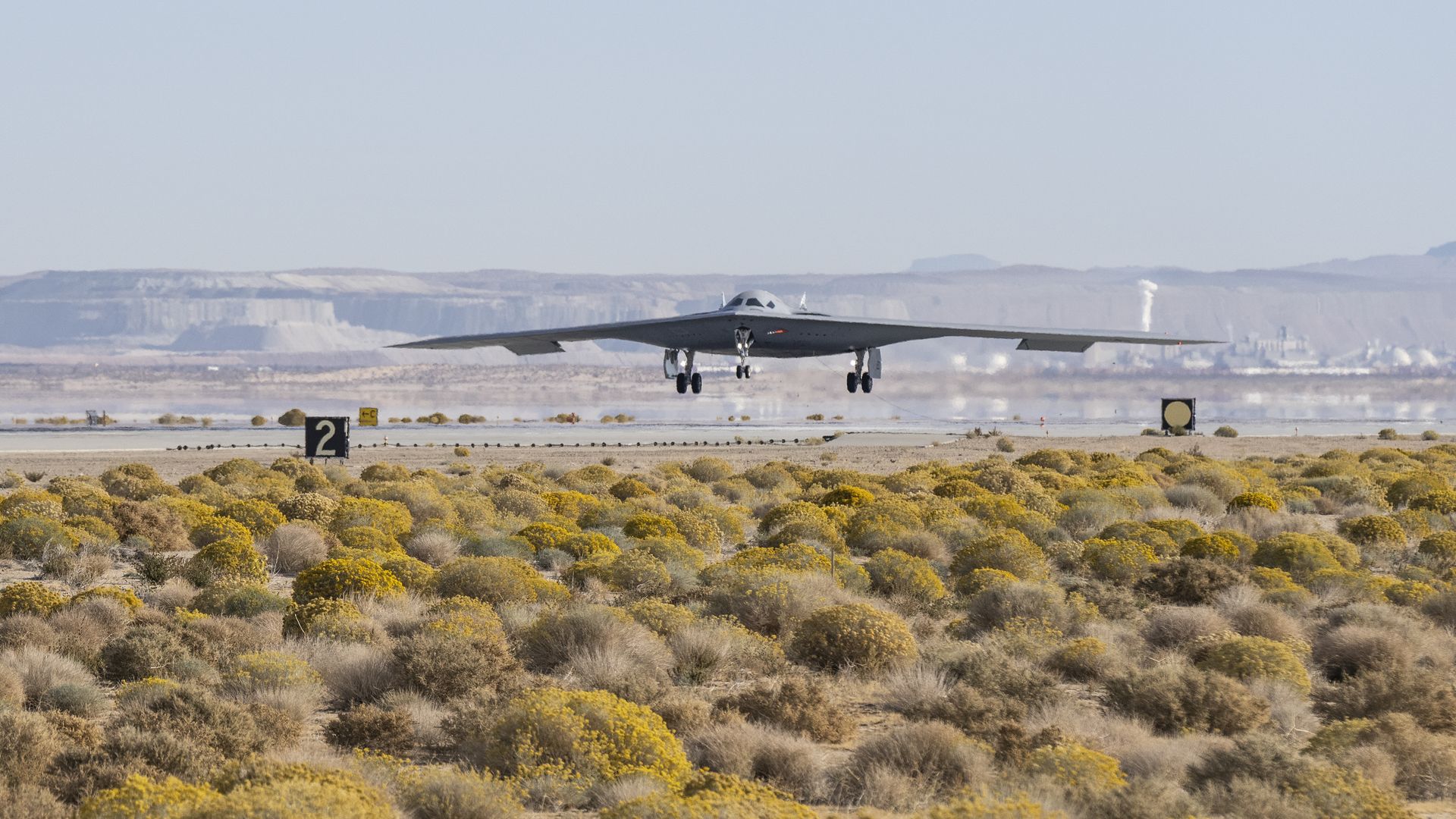
🆙 The closely guarded B-21 Raider is flying as often as twice a week while other ground tests proceed.
- Why it matters: The Northrop Grumman-made bomber is a major part of the U.S. nuclear arsenal overhaul. At least 100 are expected to be built.
- 💭 My thought bubble: Can't get enough of the B-21? Find fresh landing and takeoff footage here.
🧰 Ukrainian President Volodymyr Zelensky visited the Scranton Army Ammunition Plant in Pennsylvania over the weekend, ahead of talks at the UN in New York.
- Why it matters: The plant pumps out 155 mm artillery shells key to Ukraine's offense and defense, according to Axios' Rebecca Falconer.
- 💭 My thought bubble: Kyiv deserves all the help it can get. Zelensky's tease of ramped-up stateside production is also encouraging. (P.S.: I want to visit the plant, too.)
📡 Raytheon, part of RTX, delivered to Saudi Arabia its first AN/TPY-2 radar, made ultra-sensitive by a gallium nitride populated array.
- Why it matters: A "big reason why" other countries want this missile-defense radar is synergy with the U.S., Joe DiCesare, senior director of upper-tier missile defense, told me.
- 💭 My thought bubble: Demand for overhead defense is skyrocketing, and for good reason. In this case, you can't hit what you can't spot.
🛜 Second Front Systems raised $70 million in a round led by Salesforce Ventures.
- Why it matters: The digital hype keeps building. Here, funding flows to a company already working with NATO and ranked No. 28 on the Silicon Valley Defense Group's list of national-security startups.
- 💭 My thought bubble: In an era of software-defined hardware, anything that gets the ones and zeros out the door faster and more securely is a win.
4. Axios interview: Steven Simoni

This week's conversation is with Steven Simoni, the cofounder of Allen Control Systems and a former Navy nuclear engineer.
- We first crossed paths on X; at the time, it was Twitter. We eventually grabbed coffee and, weeks later, linked up at the company's under-construction showroom in Del Ray.
Why he matters: Simoni's company is injecting advanced machinery, small arms and robotic accuracy into the counter-drone competition. Its Bullfrog autonomous gun turret was studied at a recent Technology Readiness Experimentation event hosted by the Pentagon.
- He's also a fan of "Palmermaxxing." Ask a kid what that means.
Q: When you hear "future of defense," what comes to mind?
A: Drone swarms and logistics.
Q: When will wars be waged solely by robots?
A: I don't think they ever will.
- I do see it trending in that direction. However, the robotics in the next 20 years aren't going to be at that level for them to be fully without a human.
Q: What's the biggest challenge the defense industry faces at the moment? What can be done to alleviate it?
A: Some of the biggest challenges are in procurement. We need much more smaller, cheaper systems, like drones, swarms, and these are things we're not used to buying.
Q: Where are you investing internally, and how could it shake up the status quo?
A: We're investing in on-the-move technology for our robotic guns, to be able to shoot drones while driving at full speed — shake up maneuver warfare.
Q: How many emails do you get a day, and how do you deal with them?
A: I get about 40 emails a day. I use the "star" feature in Gmail to star the ones that are most important, and I "mark as read" the ones that aren't.
Q: What's your secret to a successful overnight flight?
A: I love overnight flights.
- As soon as I get off of it, I play a round of golf.
Q: What are you currently reading, or what's a book you'd recommend?
A: I just finished reading a fiction book — one of my favorite fiction books — called "A Confederacy of Dunces." I highly recommend it.
Q: What advice would you give your younger self?
A: I think most people are battling with their internal monologue and not thinking about you. Don't sweat it when you inevitably do something dumb.
5. Check this out
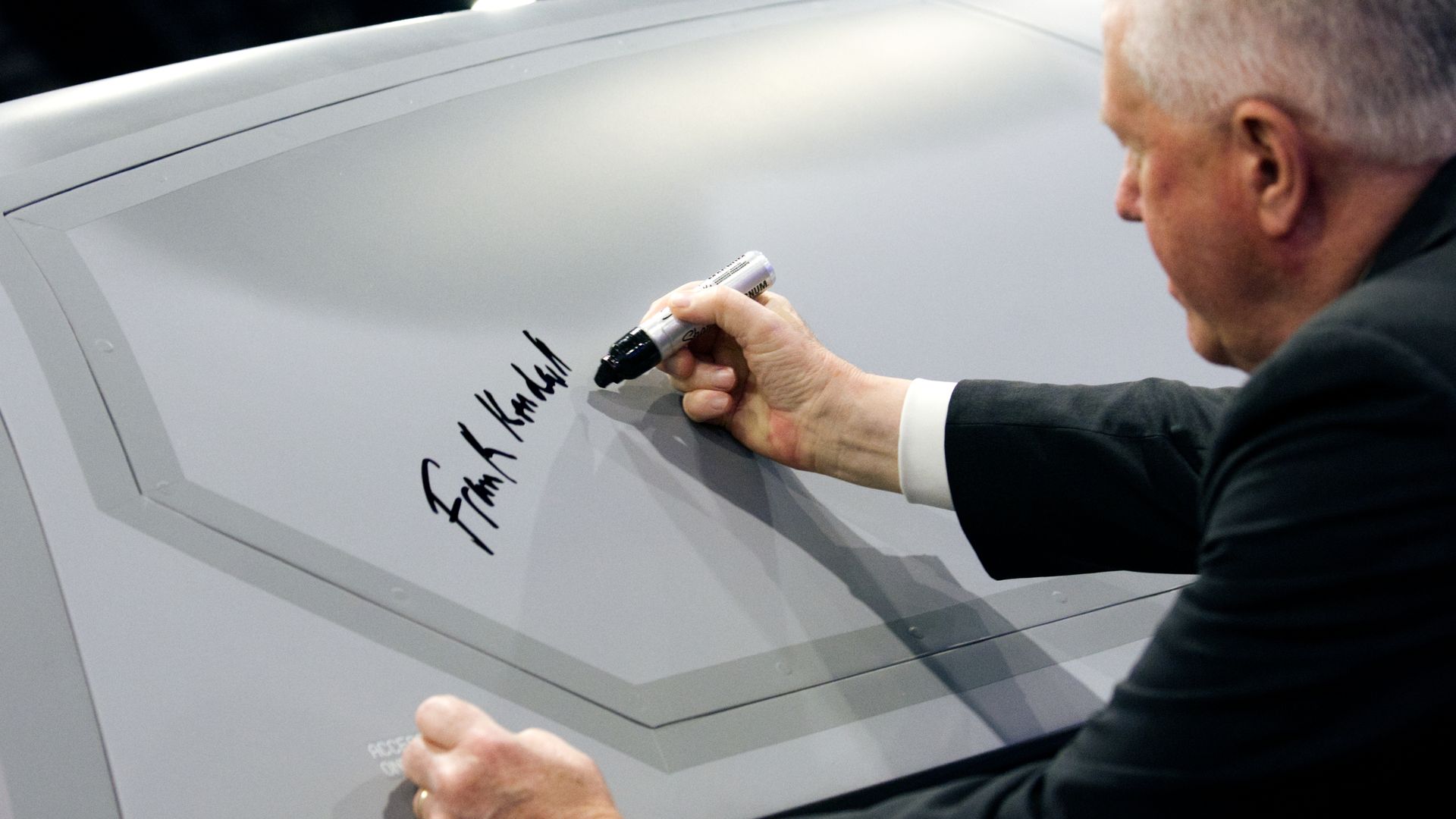
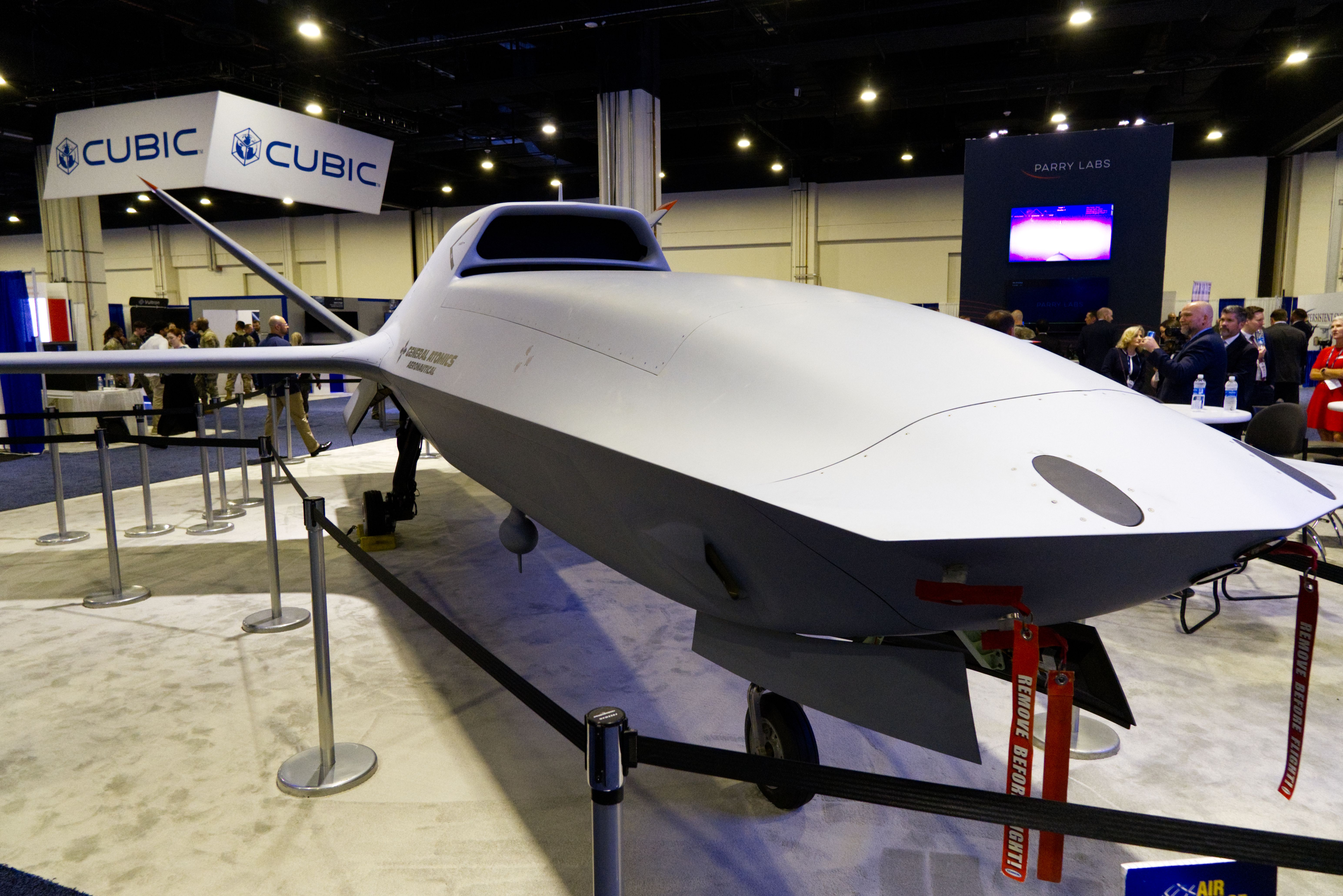
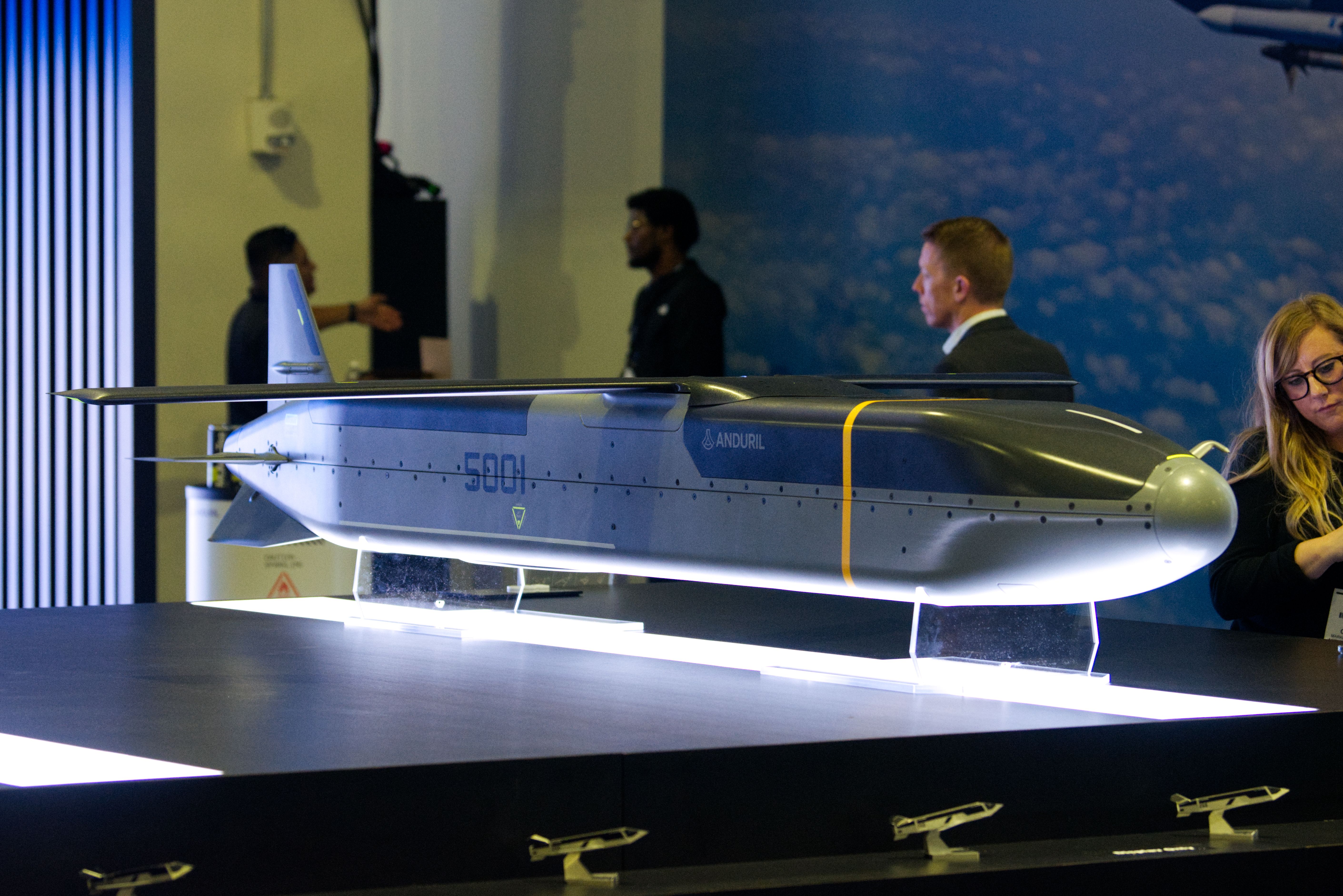
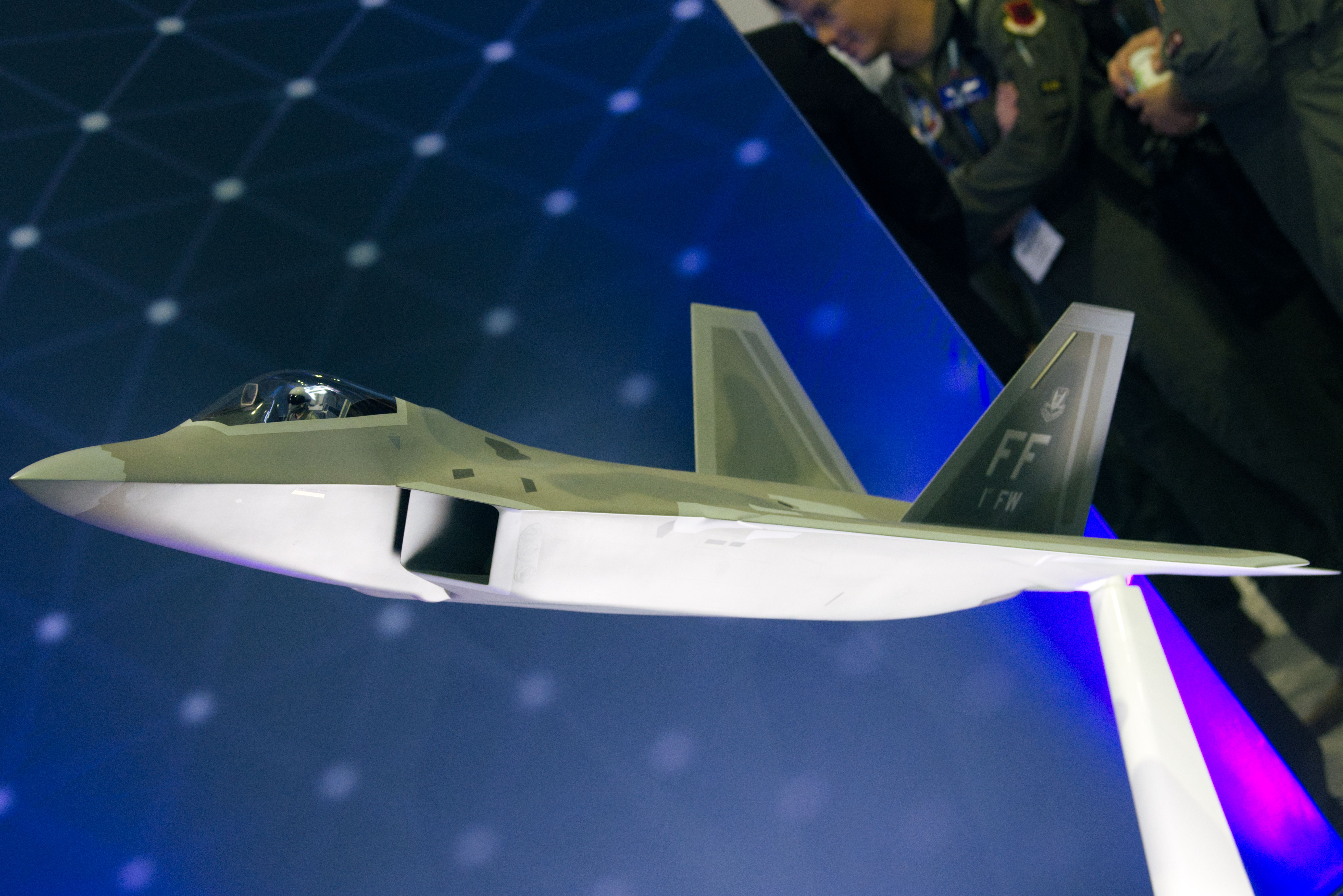
Some of the world's largest defense contractors hauled their hardware to National Harbor, Maryland, last week to hook potential buyers and flex on nearby competitors.
- Take a look at some of the show floor, below.

Shoutout to Nicholas Johnston for editing and Matt Piper for copy editing.
Did I miss something? What did you like or dislike? Shoot me a message by replying to this email.
Sign up for Axios Future of Defense