Axios Future of Defense

August 13, 2025

Hello, again. It's Wednesday morning.
- I turned 31 yesterday. I'm accepting tips and leaks in lieu of checks.
🍾 Situational awareness: The Defense Advanced Research Projects Agency christened the USX-1 Defiant, a 180-foot-long, 240-metric-ton autonomous ship.
- My thought bubble: The No Manning Required Ship program is one to watch. Keep an eye on the Defiant handoff, involving the Navy, too.
Warming up: Boeing's seekers, the Vulcan Elements Series A and the Huntsville vibe.
Today's newsletter is 1,877 words, a 7-minute read.
1 big thing: Golden Dome's "Fight Club" moment
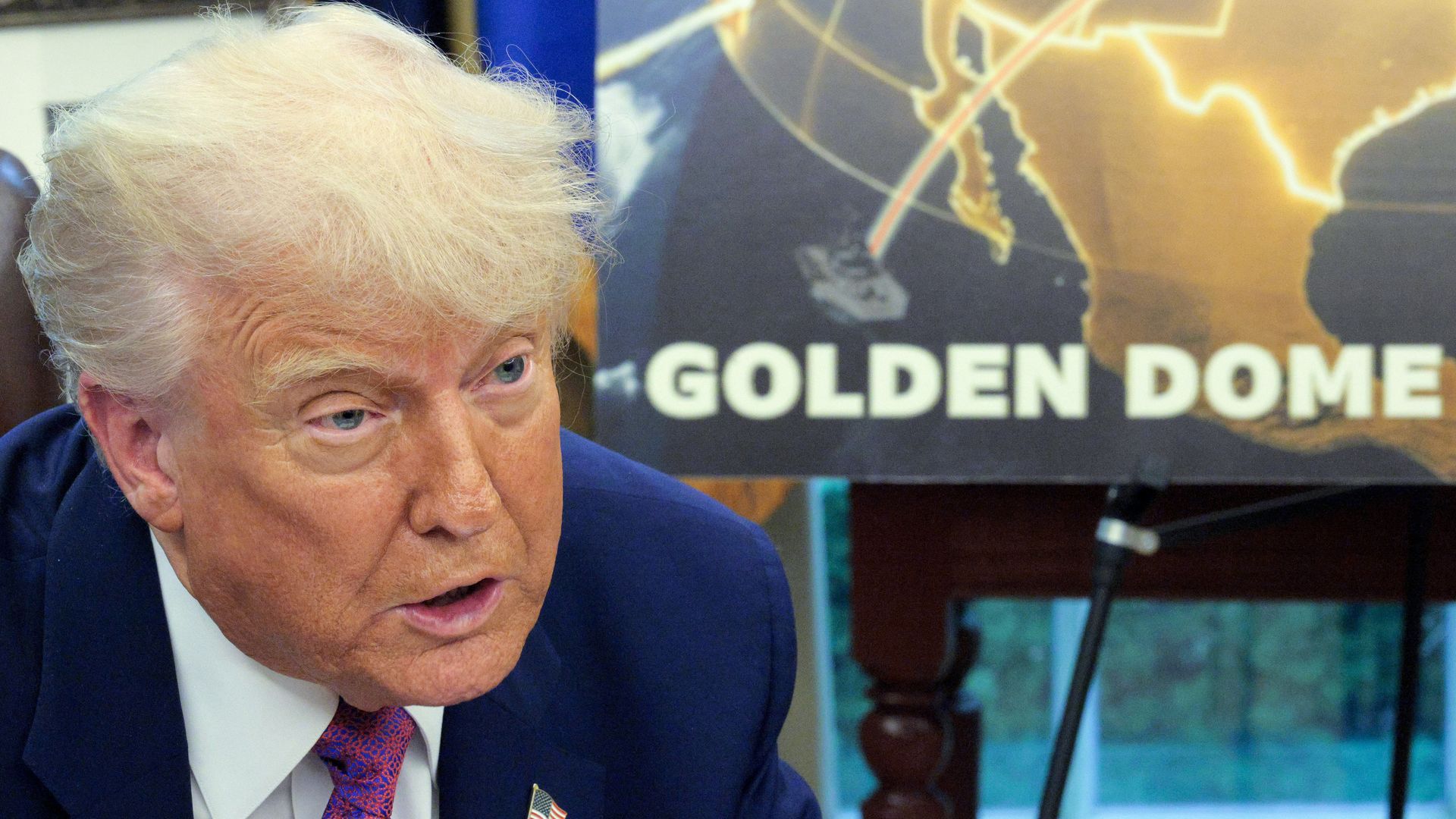
Golden Dome is the most publicly discussed U.S. defense project in years — except by the people commissioning it.
The big picture: The Trump administration is mum about its $175 billion hemispheric missile shield, but U.S. defense contractors are maneuvering and messaging as they seek a piece of the action.
Driving the news: Golden Dome was verboten for certain speakers on stage at the Space and Missile Defense Symposium in Huntsville, Alabama, last week. It was a different scene, though, in the hallways and at the happy hours.
Check this split-screen:
- From industry: Ads. Announcements. News hits. Sci-fi-style graphics with colorful grids, dramatic missile arcs and explosions. Promises.
- From the Pentagon: Very little, as headline after headline after headline made clear. As Breaking Defense put it: "The first rule of Golden Dome is don't talk about Golden Dome."
The intrigue: There is engagement — it's just behind closed doors. And contractors are pushing forward while still deciphering what, exactly, the administration wants and the military needs.
Here are some of the latest examples:
- Lockheed Martin launched a command-and-control incubator in Virginia to work on battle management, mission planning and AI integration. The company is also planning a test of space-based interceptors by 2028, according to Robert Lightfoot, who leads the company's space efforts.
- Peraton is eyeing a "system of systems integration approach" while leaning on its offensive and defensive cyber expertise, Milton Carroll, vice president of business development for space and intelligence, told me. "We don't build space assets," he said. "We don't build radars."
- AV and Sierra Nevada Corporation teamed up. Their announcement specifically mentioned sensors, directed energy and electronic warfare, as well as drone and missile defense.
- And L3Harris Technologies named Rob Mitrevski president of Golden Dome strategy and integration, a new role. The company is already involved with the Hypersonic and Ballistic Tracking Space Sensor program, namedropped in Trump's original decree.
Between the lines: Tom Karako, a missile-defense expert at CSIS, told me on the sidelines of the symposium that Pentagon silence is "probably temporary" and based on "internal machinations around public affairs."
- In the meantime? "We've got to create the consensus, and we've got to create the shared understanding of what is it that we're doing here and why," he said.
- "That's why my message is … Golden Dome: Start talking."
What's next: This administration needs to move with haste if it wants to meet its 2028 deadline, revealed during an Oval Office address earlier this year.
- If the project takes longer or costs more than promised, the next administration could see it as an expensive boondoggle.
Go deeper: Beltway bloat could doom Trump's Golden Dome
2. Exclusive: Northrop's chip shop
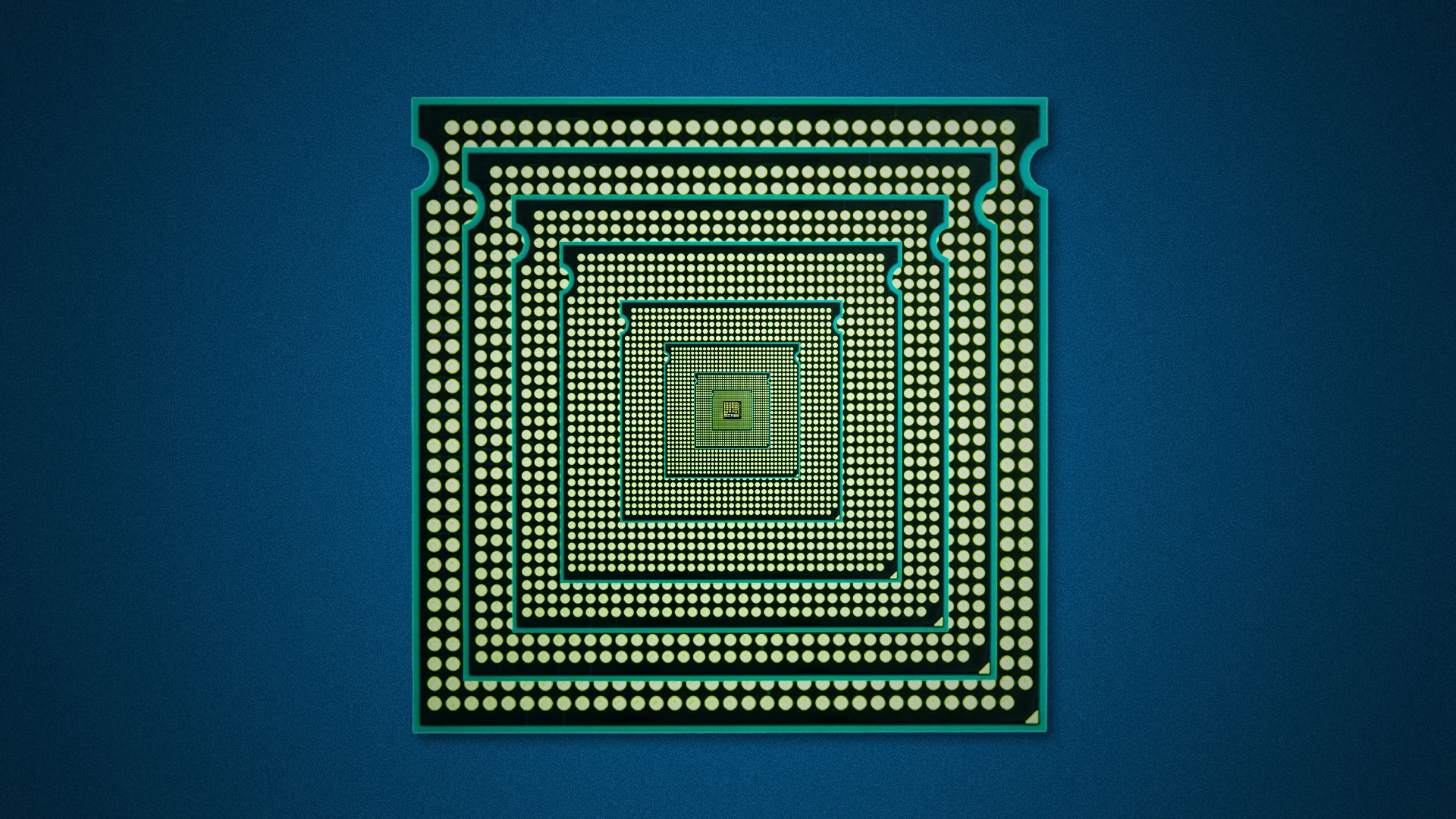
There's a chip factory tucked between Baltimore city limits and BWI Airport. For something so high-profile, it's easy to miss.
Why it matters: Northrop Grumman's Advanced Technology Lab in Linthicum Heights, Maryland, is pumping out precious, microscopic components at a time of surging stateside demand, questionable defense-industrial base fitness and broader international aggression.
- The company's chips can be found in F-16 and E-7 aircraft, Apache helicopters, G/ATOR radars, naval electronic warfare systems, drones, the James Webb Telescope and more.
Driving the news: I toured the lab — sterile "bunny suit" and all — in late July.
The intrigue: Northrop is positioning itself as a domestic expert that plays well with others, including other defense contractors.
- That means greater supply chain visibility for buyers and users as well as cooperation with competitors.
- "The company sees a lot of value in us being able to supply our microelectronics capabilities to benefit the national interest. That's national security. That's economic security," David Shahin, senior manager of Northrop's microelectronics center, told me.
Zoom in: The company is bullish on advanced packaging, a process that consolidates component footprints, ultimately saving space and boosting performance.
- Think of it like mixed-use versus single-family residential zoning.
- "The promise of advanced packaging for microelectronics is now you can fabricate the best chips wherever you need to," Shahin said, "and you can join them together into something that puts the whole system ... into something that is a fraction of the size."
Zoom out: Northrop expects to quadruple its chip production and delivery by 2030.
- It has facilities in California and Florida, as well.
3. Seeking change
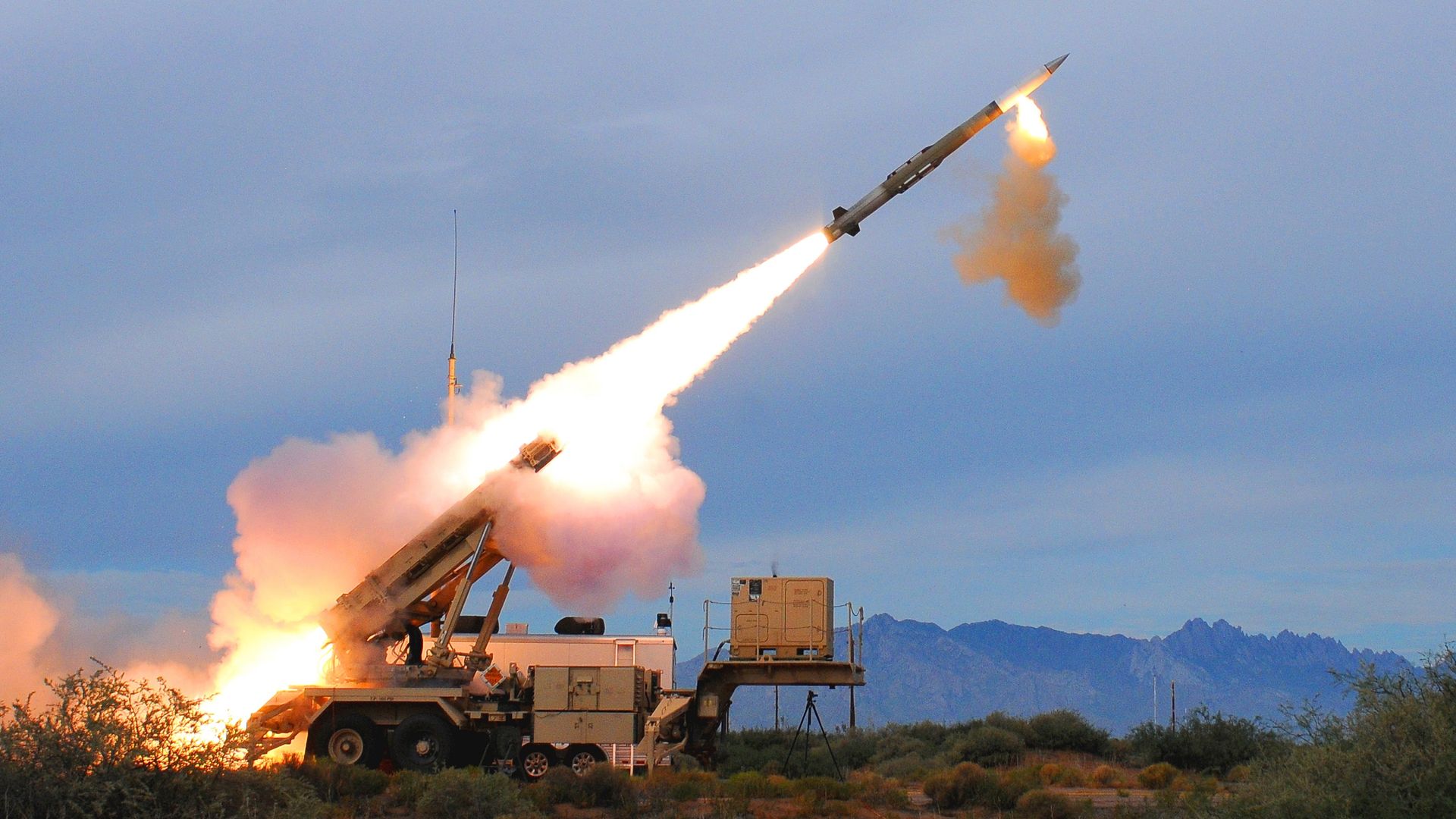
Boeing is exploring new technologies and production efficiencies for the Patriot missile seekers it builds, as global demand for the pricey interceptors skyrockets.
Why it matters: Changes in the formula could reduce costs or boost output. But finding the right mix — and not undercutting performance — is tricky.
Driving the news: In an interview at the Space and Missile Defense Symposium in Alabama, Boeing executive Jim Bryan told me ongoing research-and-development efforts include the introduction of "more solid-state components that are, maybe, lower maintenance," plus "smaller packaging."
- "The mix of technology in what we have today works very well," he said. "There is some apprehension to mess with a really good recipe."
State of play: Boeing, a subcontractor to Lockheed Martin, has produced more than 5,000 Patriot seekers since 2000.
- It hit an all-time high last year, completing more than 500 deliveries.
- "The market has been 'how much and how fast,'" Bryan said. "For the Army, we've asked them to give us a target. They say they need infinite now."
Zoom out: Engagements in Eastern Europe and the Middle East, namely the defense of Al Udeid Air Base in Qatar, have elevated the Patriot profile.
- Aviation Week on Aug. 6 reported Lockheed was eyeing a "dramatic rise" in interceptor production.
- "People want it because it works," Bryan told me. "That weapon is speaking for itself; that weapon is, essentially, selling itself."
Go deeper: U.S. moves Patriot defenses to Middle East with dozens of C-17 flights
4. Vulcan's Series A


Vulcan Elements, a North Carolina-based maker of rare-earth magnets, raised $65 million in Series A funding at a $250 million valuation.
Why it matters: The U.S. is pushing to onshore production of materials critical to its national defense, plus commercial needs, rather than relying on China.
- Rare-earth magnets also have been a bone of contention in U.S.-China trade talks.
What they're saying: "We have contracts with every branch of the military already, Navy, Army and Air Force, and we're ... doing initial deliveries on one of those contracts this month," Vulcan CEO John Maslin told Axios.
- "The picks and shovels of reindustrialization? The picks and shovels of the 21st century technology race? Chips, batteries and magnets. These magnets are going exponential in defense applications," he said.
- "Think drone technologies; think about the president's executive order on unleashing drone dominance. We need a lot of additional rare-earth magnets."
Zoom in: Altimeter led the funding round, joined by One Investment Management.
The bottom line: Beijing's recent crackdowns have spooked defense players and pushed supply chain discussions to the fore, much like how COVID-19 did for the average Joe.
5. Huntsville headlines

U.S. defense contractors and military leaders made some hefty announcements during the Space and Missile Defense Symposium, which wrapped up last week in Huntsville, Alabama.
Why it matters: The Rocket City is a national-security hot spot. And its profile keeps growing.
Here's what you may have missed:
🚛 Lockheed Martin is looking to make its Typhon missile launcher lighter and more mobile, following feedback from the U.S. Army.
- At Talisman Sabre 25, the service hit a target ship from some 100 miles away using a Standard Missile-6. "It's easier to see a ship at sea than it is a launcher platform in the jungles of Indonesia or the Philippines," Lt. Gen. Joel Vowell, the U.S. Army Pacific deputy, previously told reporters.
⚔️ The U.S. Army is approximately three months away from publishing its air-and-missile defense strategy for 2040, according to the head of the service's Space and Missile Defense Command.
- "It incorporates the changing environment that we're seeing," Lt. Gen. Sean Gainey told reporters. "We can no longer look at it the same, interceptor on interceptor."
🚀 Anduril Industries said it is now the third solid-rocket motor supplier to the U.S., challenging the country's long-standing duopoly.
- The company opened a facility in McHenry, Mississippi, where it expects to produce 6,000 tactical motors per year by 2026.
🌙 The Army this month plans to "start putting a message out for people that want to transition" to the service's new space-specialist role, 40D, according to Command Sgt. Maj. John Foley.
- "It's already going through Army staffing, for the space branch to be approved," he told reporters.
🔥 Northrop Grumman conducted a full-scale static test fire of a solid-rocket motor it concocted in less than a year, as part of the company's SMART Demo endeavor.
- "It's a clean sheet design all the way through development, manufacture and test — with speed," Jim Kalberer, the vice president of propulsion systems, told me. "2025 is our most ambitious year."
6. Quick hits
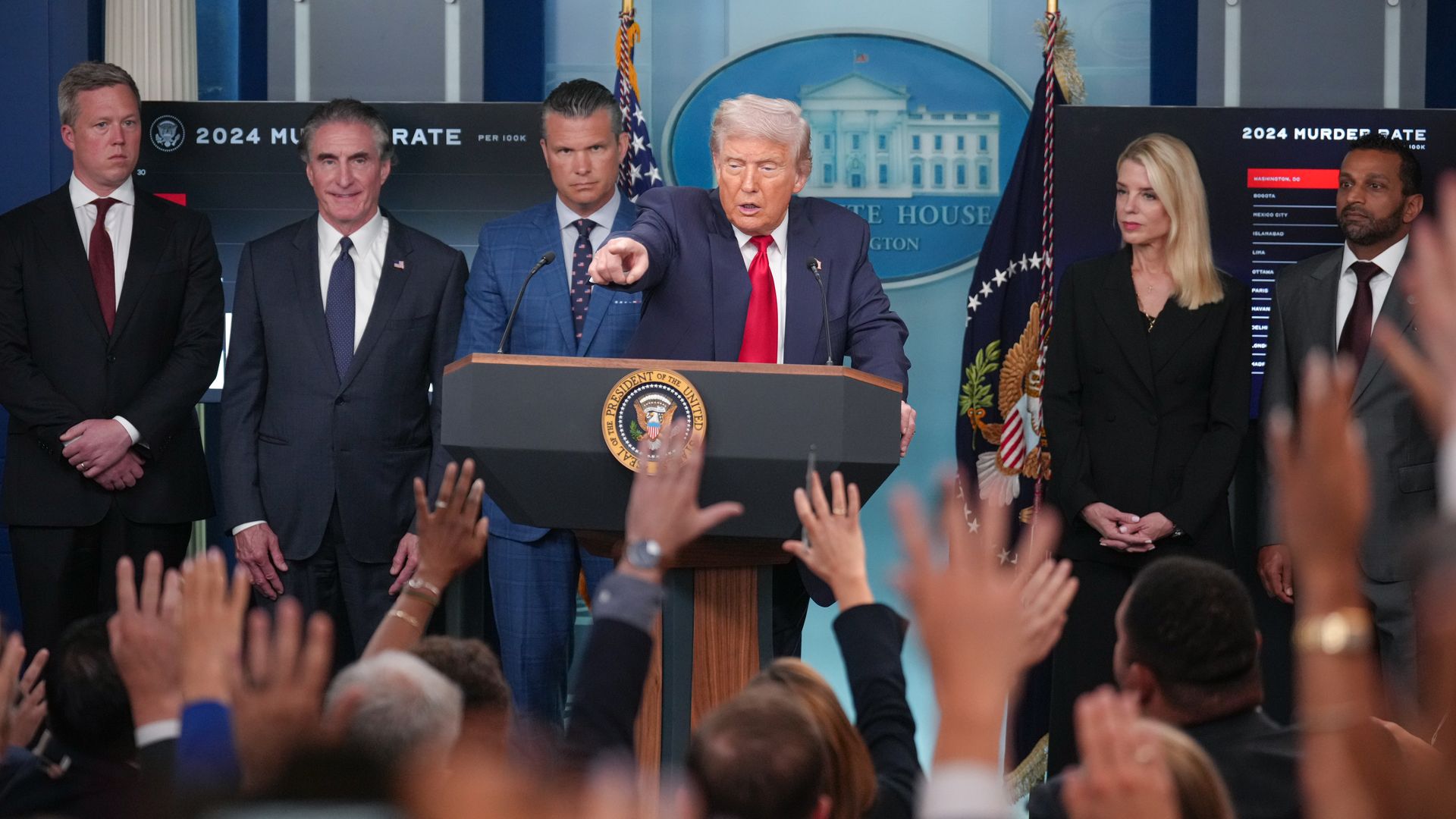
🪖 President Trump is deploying 800 National Guard troops to Washington as part of a larger law-and-order crackdown.
- Why it matters: One summer, two separate deployments. First Los Angeles and now D.C. That leaves one question: Where next?
- 💭 My thought bubble: Violent crime is down in all categories in the nation's capital during the first half of 2025, as my colleague Mimi Montgomery reported.
🇨🇳 Two Chinese ships collided in the South China Sea while harassing other vessels.
- Why it matters: One ship was rendered unseaworthy, according to the Philippine Coast Guard. It's also the latest example of Beijing's aggression in the region.
- 💭 My thought bubble: Check out the dramatic footage, here.
⌨️ Leidos and Second Front are teaming up to tackle software. It's a meeting of big and small, with the former being the 16th-largest defense contractor in the world based on defense-related revenue.
- Why it matters: The partnership "will allow critical commercial- and government-built mission applications to rapidly reach those who need them most," Second Front chief executive Tyler Sweatt told me.
- 💭 My thought bubble: Sweatt's a previous Q&A participant. Give our conversation a read, here.
➕ Motorola Solutions bought Silvus Technologies, a company that specializes in military networking and communications, including radios.
- Why it matters: It's a $4.4 billion deal.
- 💭 My thought bubble: More people need to write about radios!
7. Check this out

What's more strenuous? Notre Dame football workouts or military PT?
The big picture: I asked Dave Fitzgerald, a former lineman now performing the duties of U.S. Army undersecretary, exactly that question during our event in Huntsville, Alabama.
What they're saying: "Straight workout? Probably football. The difference is: When they would say that they were going to run you all night, you knew they really couldn't. The Army? They actually would," Fitzgerald told me.
- "Yeah, that sucked."
Go deeper: Drones, missiles and AI: Huntsville's role in the future of air defense
Shoutout to Dave Lawler for editing and Matt Piper for copy editing.
👋🏼 Thanks, as always, for reading and sharing. Tell your friends to subscribe here.
Sign up for Axios Future of Defense