Axios Future of Defense
June 17, 2026

G'morning from Detroit. Rock City? Motor City? A secret third thing?
- Say what's up if you see me at the last day of ReIndustrialize. (More on that below.)
‼️ Situational awareness: Small, explosive-strapped drones were at the heart of an alleged plot to attack the White House and surrounding area Sunday, the feds said. My colleague Avery Lotz has more, here.
Let's chat: Taiwan's HIMARS, HighGround's seed round and a brewing JLTV face-off.
Today's newsletter is 1,996 words, a 7.5-minute read.
1 big thing: Industrial ignition
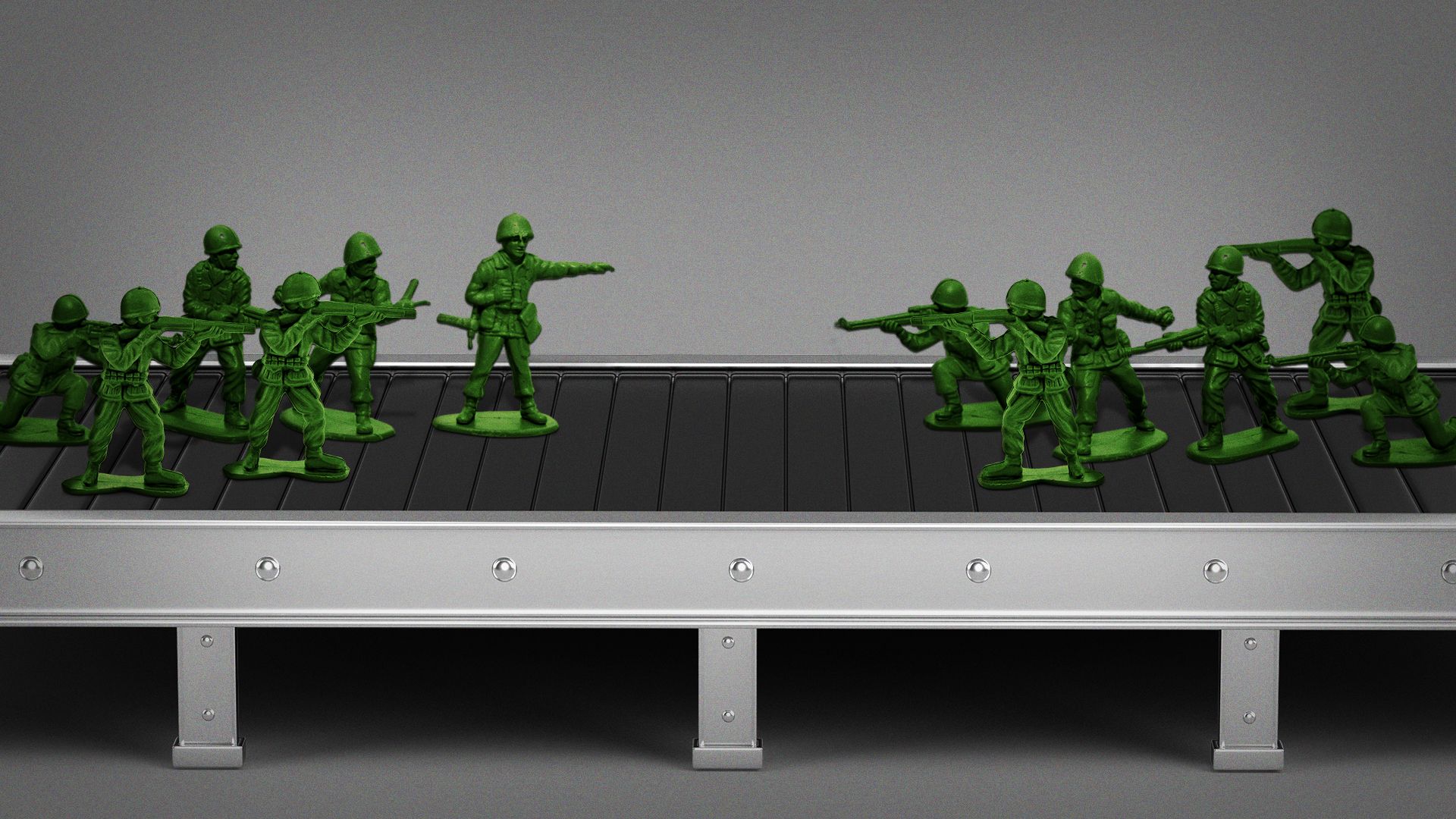
DETROIT — Private capital is pouring into the reindustrialization of America's arms industry. The folks involved in that push are gathered in Detroit this week to debate what success looks like, how long it will take to get there and whether it will truly make the U.S. safer.
Why it matters: This isn't just about pumping out more missiles, drones and jets on U.S. soil. It's about sourcing minerals and training workers. It's weathering political change, Pentagon bureaucracy and the boom and bust of investment cycles.
Driving the news: The ReIndustrialize conference is in its third year, and it's bustling as ever. The sustained buzz is a sign of traction, earned by acolytes as they rally around three causes:
- Improving American production scale and speed
- Fostering the stateside "build, baby, build" culture
- And reestablishing supply chain sovereignty
The big picture: I asked 10 defense-tech and manufacturing executives about this moment, as funding fills weapon-maker and autonomy wallets and every other person posts about their new factory.
- None mentioned making a quick buck.
- Some mentioned unrealistic promises and the novices who buy into them.
- Most mentioned a need to educate, grow and evolve a workforce gutted by offshoring and the dismissal of blue-collar work.
- Almost all mentioned supply-chain reform and a distancing from China, which maintains a stranglehold on critical minerals.
What they're saying: "This first phase of reindustrialization in the U.S. has looked a lot like: 'Oh, let's make end-products, because that's the way we've normally done this.' It's an extension of what we had done before, and that very quickly evolved into: 'Wait a minute, I can't get the things I need to make that product here,'" Miles Arnone, the chief executive at Re:Build Manufacturing, told me.
- "We're going to have to go deeper," he said.
- "Reindustrialization is, right now, very focused on defense and other things, because of current events. But I think that it's much more fundamentally about building — rebuilding — the culture of industry and industrial practice."
Threat level: Production and delivery, whether of shells, interceptors or their prerequisite parts, are chock with chokepoints — as evidenced by President Trump invoking the Defense Production Act for munitions.
- Multimillion-dollar air defenses expended in the Middle East, while combating Iran, will take years to replenish. Some of the Navy's most important vessels are over budget and years behind schedule.
- "Right now, the supply chain for some of our most critical defense systems is a black box, and we find out it's broken when it's already a crisis, not when we could have done something about it," Alisyn Malek, the chief executive at Averra, told me.
- "The countries that control their manufacturing infrastructure get to shape what comes next."
Reality check: Grand improvements take time. Small improvements rarely survive first contact. For reindustrialization to manifest, it must withstand elections, wars, middlemen and economic shock.
- "There's going to be this period where there's going to be a lot of capacity being brought up, as part of this hype, which I think long-term can pay off," Machina Labs CEO Edward Mehr told me.
- "If you say, 'Hey, everything manufactured in the United States?' I don't know, maybe 30 years. Maybe never."
The bottom line: Reindustrialization is bred by a motley crew. Financiers. Hawks and doves. Officials from all sorts of White Houses. Palmer-maxxers.
- "Some of the companies that got started during year one — at a bar, literally, founder meets a venture capitalist — are raising hundreds of millions of dollars," Austin Bishop, co-founder of the New Industrial Corporation, told me, referring to the conference.
- "It's the most American thing ever," he said. "It's like jazz and rock and roll. You put a bunch of people together and they start jamming, and out pops something magical."
Go deeper: A "desire to build"
2. Exclusive: Twenty? More like $1 billion

Twenty, a cyber warfare startup, raised $100 million and is now valued at $1 billion.
Why it matters: Cyber success stories like this are rare, as some investors latch onto things that go boom or can be hauled onto a conference floor.
- Even rarer is Twenty's unabashed pursuit and advertisement of offensive cyber tools.
Driving the news: Twenty announces its Series B today. Chief executive Joseph Lin told me the money will be spent on supercharging research and development and the "existing roadmap that we have."
- "We were founded to industrialize cyber warfare," he said. "And industrialize is a really, really important concept here."
Threat level: American networks and IT are under siege. Chinese hackers plant digital satchel charges on critical infrastructure, à la Volt Typhoon. Meantime, the potential of Russian spillover from the invasion of Ukraine was enough to spook Congress and the Cybersecurity and Infrastructure Security Agency alike.
- "Unlike all the other domains of warfare, this is the only domain of warfare where you have conflict happening day-in and day-out, 365 days a year, 24/7," Lin said.
- "Our adversaries have only become even more aggressive," he added. "They've been emboldened. They're no longer just stealing data from us."
- Twenty, it appears, wants to help punch back.
Follow the money: Accel led the Series B. Other backers include Friends & Family Capital, Point72 Ventures and Caffeinated Capital.
- The round brings the startup's total funding to $138 million.
- It has contracts with the U.S. military and intelligence community, but Lin declined to provide more detail.
Zoom out: Cyber and space operations have been paraded by the Trump administration, including in Midnight Hammer in Iran and Absolute Resolve in Venezuela.
- "For the first time," Lin said, "you're seeing an administration call for offensive cyber to be a national priority, in order to change adversary behavior."
Go deeper: Cyber specialist Method Security raises $26 million
3. Taiwan test-fire
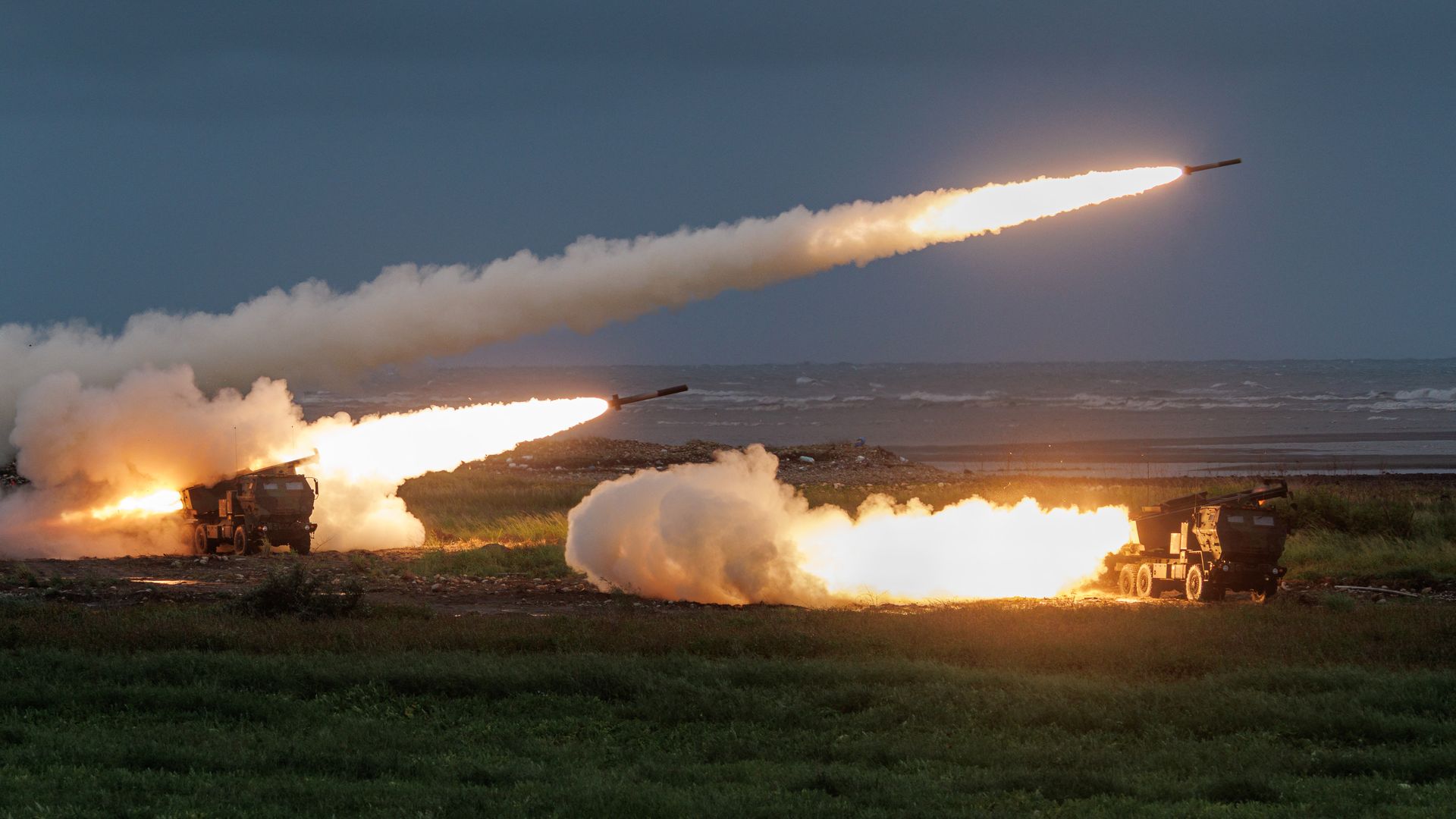
Taiwan for the first time fired U.S.-supplied High Mobility Artillery Rocket Systems off its western coast, toward the highly contested Taiwan Strait.
Why it matters: The salvos were part of a larger exercise simulating an invasion and potential countermeasures.
- The direction of the practice fire "makes sense" because "that's the most logical place for a mainland Chinese invasion," Sean King, an Asia scholar and senior vice president at Park Strategies, told me.
Zoom in: The Lockheed Martin-made launchers are a key piece of Taiwan's arsenal. Notably, they're mobile. During these drills, troops practiced what's known as "shoot-and-scoot" — concealing themselves, firing and quickly repositioning.
Yes, but: There were some misfires, TaiwanPlus and Taiwan News reported.
Zoom out: China considers Taiwan a renegade province and regularly pesters the island with warships and warplanes.
- The People's Liberation Army entered Taipei's air defense identification zone "a staggering 3,075 times in 2024," according to the U.S.-China Economic and Security Review Commission.
Flashback: Taiwanese forces also recently tested Anduril Industries Altius drones. They struck offshore targets.
Go deeper: Lockheed tapped for Taiwan F-16 sensors
4. Exclusive: HighGround happenings

HighGround has scored a $6.5 million seed round, chief executive and former Green Beret John Price told me.
Why it matters: The startup, straddling Washington and New York City, aims to equip advisors, researchers, investors and the generally curious with defense-and-aerospace market insights.
- "I care about defense, and I care about Wall Street and investment, specifically into this sector," Price said in an interview.
- "I care that the best companies get investment and that we create a furnace of technology."
How it works: HighGround's AI-fueled product, which it bills as an "intelligence layer," lets users dive into budget and contracting data; explore business profiles, buying habits and legislation; run what-if scenarios and simulations; and pump out reports.
- "I am pretty fond of saying that we have all of these capabilities on our Batman utility belt for acquisition," Price said.
- "I'm not sure we need more acquisition authorities. A lot of times it's just an education issue — or certain folks who like to do business a certain way."
Threat level: Defense-tech investing is, ultimately, a life-or-death bet. Someone somewhere will some day have to use the weapon developed by whatever company won a multimillion- or multibillion-dollar competition.
Follow the money: The seed was led by Next Frontier Capital. Tandem Ventures, Fulcrum Capital and Context Ventures participated.
- "John and his team have the fluency on both sides to provide immense value to every allocator, operator and adviser making high-stakes decisions in the defense market," Les Craig at Next Frontier said in a statement.
The intrigue: HighGround plans to expand into the federal health and pharmaceutical sectors in the future.
The bottom line: "If we can predict better on investment," Price said, "we'll get better companies."
Go deeper: VC investors step into defense tech with limited visibility
5. ICYMI: GM-LM


General Motors and Lockheed Martin plan to work together to strengthen U.S. manufacturing and boost America's readiness for war.
Why it matters: The collaboration, at the urging of the Trump administration, is portrayed as an effort to protect national security by strengthening the U.S. industrial base across the defense sector.
Driving the news: The two companies revealed their collaboration yesterday at ReIndustrialize.
- Early conversations are focused on how Lockheed can leverage GM's expertise in high-rate manufacturing, digital engineering and supply chain management, Frank St. John, Lockheed's chief operating officer, told reporters at a briefing.
6. Quick hits
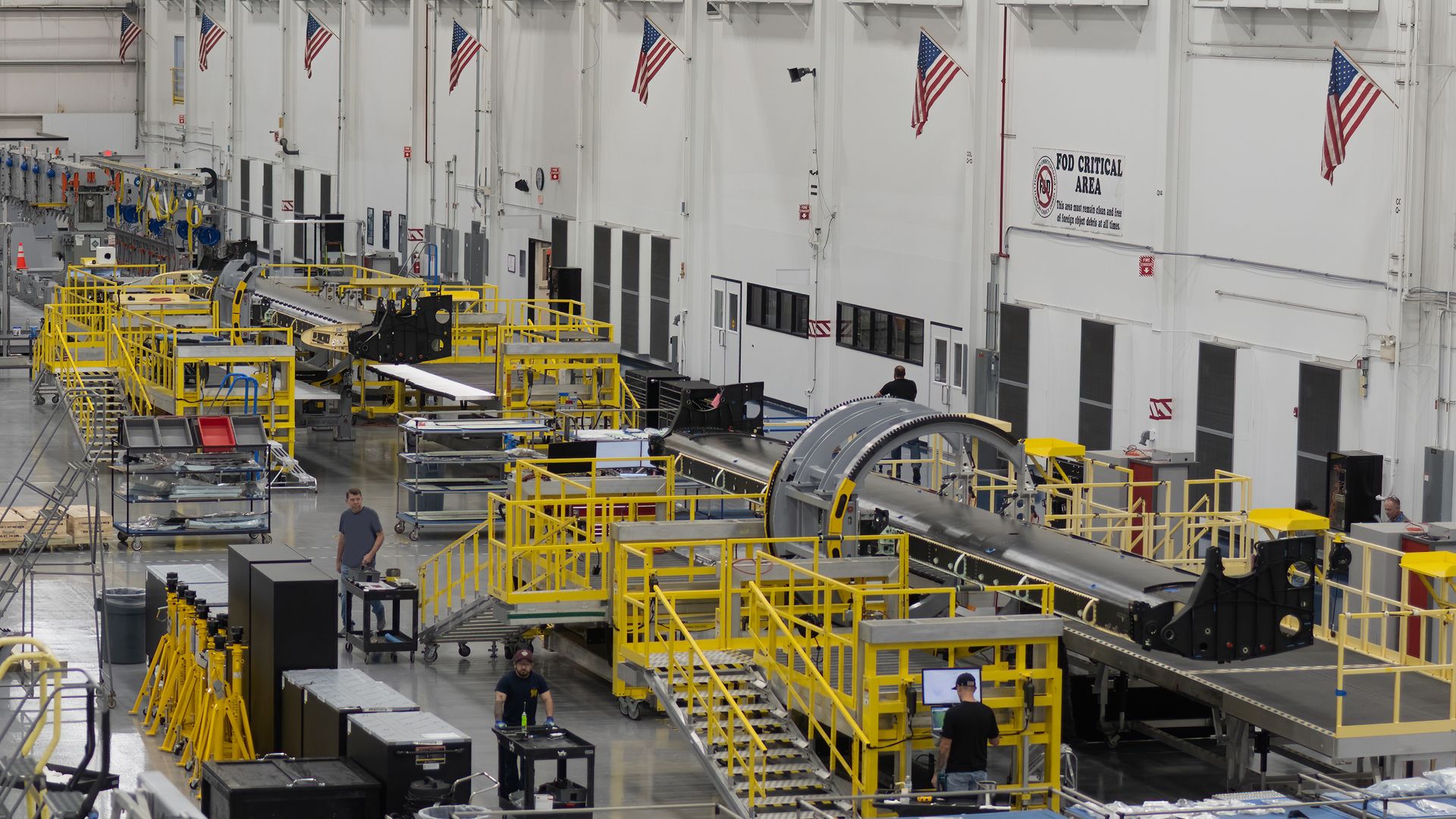
🪽 Bell Textron finished assembling two MV-75 Cheyenne tiltrotor wings, which will be used for the first two test aircraft.
- Why it matters: The company said it fabricated the first wing with "90% fewer labor hours" compared to the initial V-22 Osprey build.
- 💭 My thought bubble: Need to catch up on the Future Long-Range Assault Aircraft? Check this. Then this.
🌌 PiLogic is working with the U.S. Air Force Research Lab to help predict and assess electrical issues on spacecraft. The collaboration promises to deliver AI-powered diagnostic tools for design, test and maintenance.
- Why it matters: "Space missions demand both reliability and transparency," CEO Johannes Waldstein said in a statement. "Our technology gives engineers a clear, explainable understanding of system behavior, essential not just for defense, but for the rapidly expanding commercial satellite economy."
- 💭 My thought bubble: The truest test of autonomy and smart machinery is in space. Agree or disagree? Reply to this email!
🇬🇧 British defense chief John Healey and armed forces minister Alistair Carns abruptly resigned last week.
- Why it matters: In a letter shared on X, Healey said Prime Minister Keir Starmer and the Treasury are "unable" and "unwilling" to "commit the resources that the nation needs to defend the country at this time of rising threats."
- 💭 My thought bubble: Big accusation. Bigger blow.
🚚 Oshkosh Defense is positioning itself as "the original" maker of the Joint Light Tactical Vehicle as it responds to a Marine Corps request seeking additional suppliers for it. AM General, with its A2 variant, holds the current contract.
- Why it matters: The Corps is "not seeking a new-start vehicle development effort," according to the RFI. Rather, it's interested in "existing JLTV, JLTV-like, JLTV-equivalent, or substantially comparable light tactical vehicle solutions."
- 💭 My thought bubble: Is there a rematch afoot?
7. Check this out
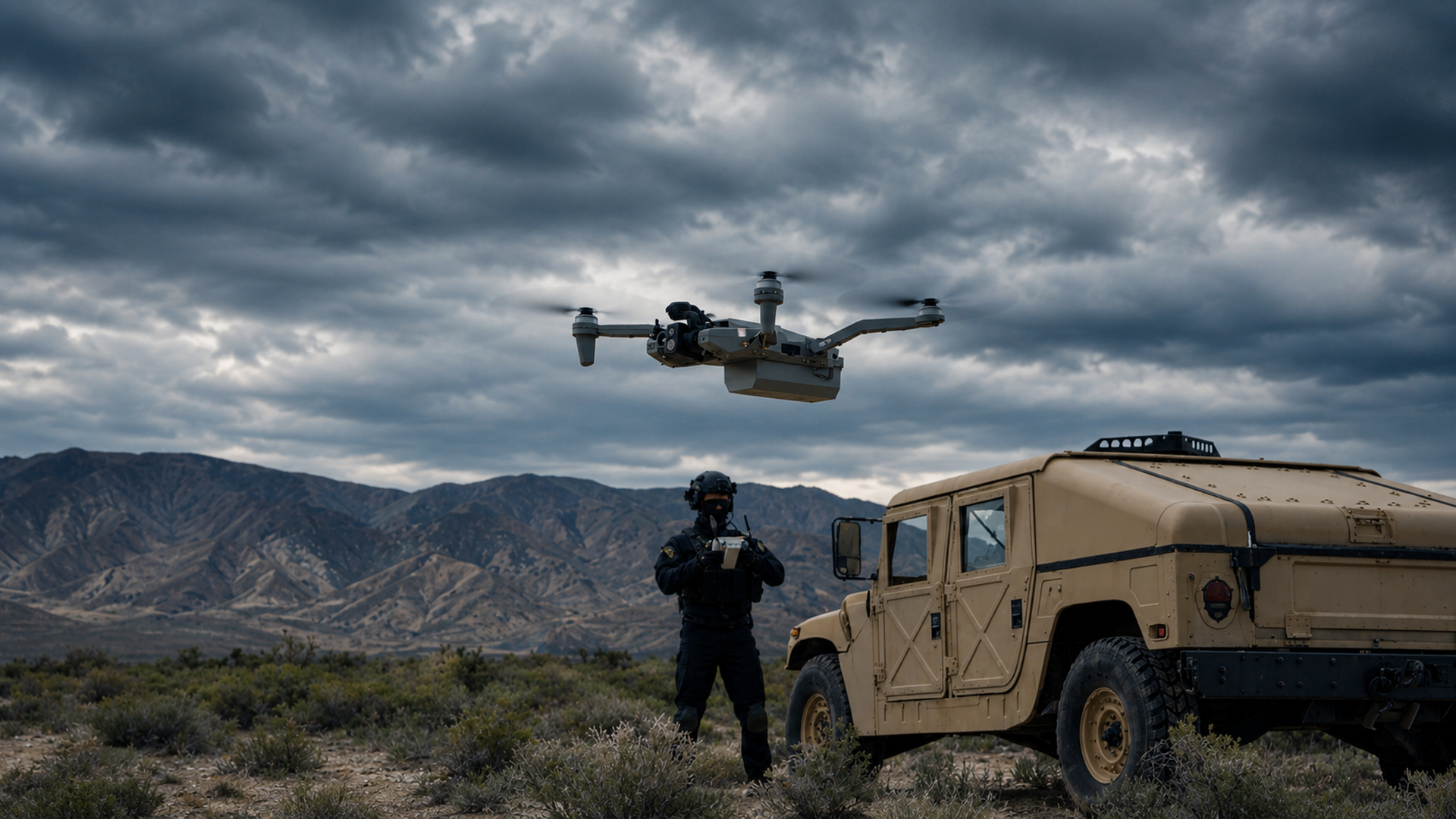
Red Cat Holdings this week unveiled the Hellcat drone. It's based on the existing Black Widow and was fine-tuned with Ukrainian feedback.
- "Small UAS programs need to keep pace with how operators are using them in the field," chief executive Jeff Thompson said in a statement.
The big picture: The rollout coincides with the Eurosatory defense conference in Paris.
By the numbers: Hellcat can stay aloft for more than 50 minutes, according to the company, and has nearly 7 miles of range.
Go deeper: Cheap drones transform global battlefield
Shoutout to Dave Lawler for editing and Matt Piper for copy editing.
👋🏼 Thanks, as always, for reading and sharing. Tell your friends to subscribe here.
Sign up for Axios Future of Defense