Axios Future of Defense
May 13, 2026

Rise and shine, y'all. It's Wednesday.
- I'm moderating a panel at the Offset Symposium tomorrow. See you there?
- I'm also headed to Taiwan on Friday. The next newsletter may be a bit shorter than usual.
📈 Situational awareness: Anduril Industries raised $5 billion, and is now valued at $61 billion. The Series H was led by Thrive Capital and Andreessen Horowitz.
- Check out my "Axios Show" interview with founder Palmer Luckey, here.
Onward: GDIT-NightDragon collaboration, F-16 upgrades and Venezuelan uranium.
Today's newsletter is 1,713 words, a 6.5-minute read.
1 big thing: May madness
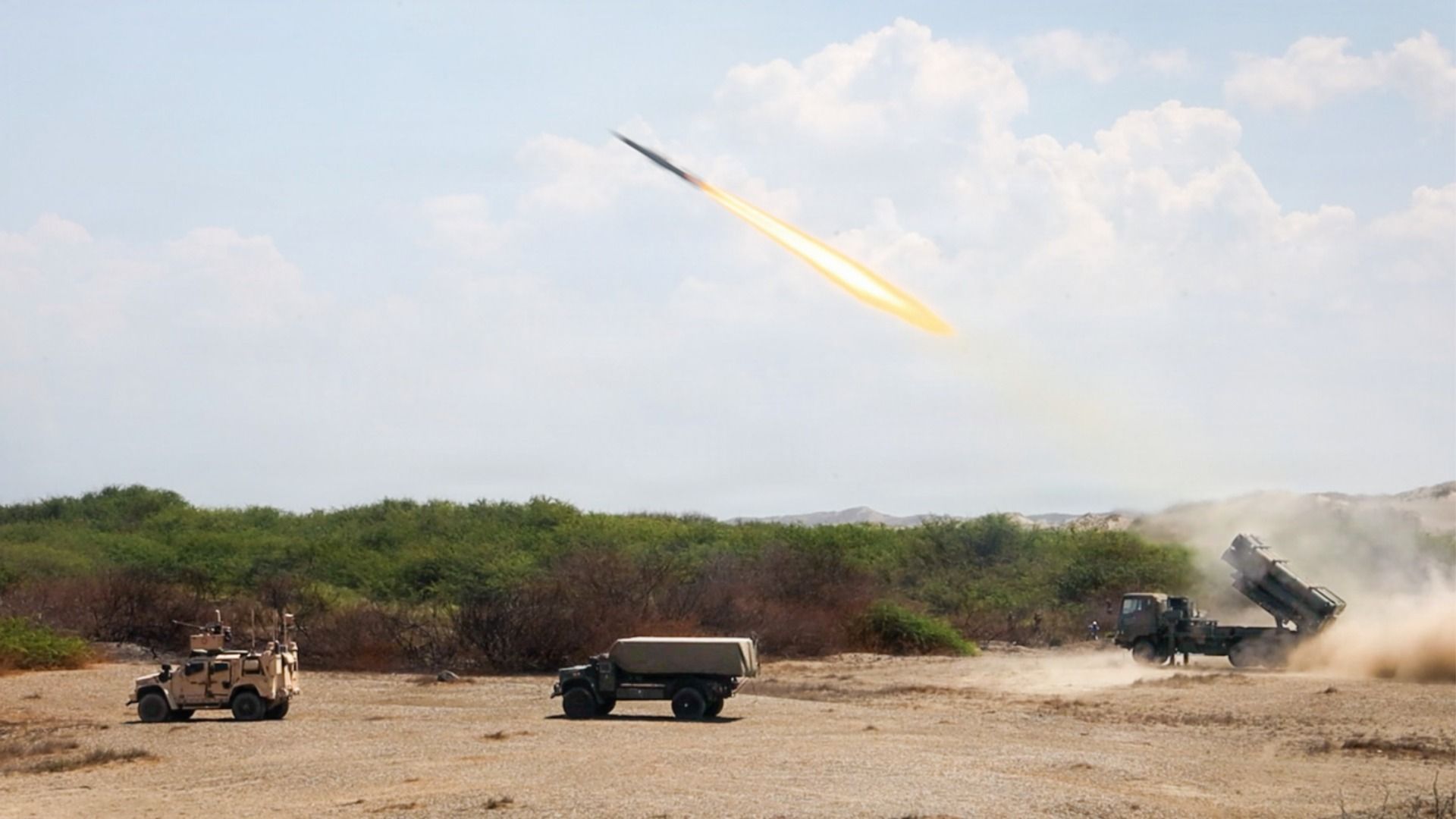
The first half of May is foreshadowing the future of Indo-Pacific security.
Why it matters: Long-term competition between the U.S., China and their friends — on AI, chips, cybersecurity, freedom of navigation, narrative influence, supply chains and more — is reshaping the world.
In just two weeks:
- The U.S. and Japan, participating in Balikatan drills, fired a Tomahawk missile with a Typhon launcher and ship-sinking Type 88 missiles from the Philippines — a first and, from Beijing's view, a provocation.
- Japan inked a defense cooperation agreement with Indonesia, hot on the heels of loosened arms-exporting restrictions.
- Taiwan's legislature approved $25 billion in special funding to buy weapons. The move follows months of deadlock, and comes as many in Washington press the White House to accelerate sales and deliveries despite foreign pressure.
- And President Trump headed to China to meet President Xi Jinping. They are expected to discuss everything from AI to nukes to agriculture to economic stability.
Friction point: Chinese officials have expressed dissatisfaction with all the regional military activity. Japan's slow-burn rearmament, the Chinese foreign affairs ministry said, is a "gray rhino charging towards peace and order."
Between the lines: The dynamic is in flux as the Trump administration shifts firepower away from the Indo-Pacific and toward the Western Hemisphere and Middle East, at least temporarily.
- Trump has also put distance between himself and long-standing allies.
What they're saying: The Washington-Beijing relationship is likely "the most important relationship on the globe," and has consequences for nuclear security, biotech and trade, said Christine Wormuth, the president of the Nuclear Threat Initiative and a former U.S. Army secretary.
- "Whether that relationship is going well or poorly matters a lot to Americans," she told me.
- "The issue I will be watching very carefully is what the two heads of state do or do not say about the issue of Taiwan."
- Even the subtlest changes in syntax will be obsessed over. While most analysts think Trump is unlikely to formally change the U.S. position on Taiwan, Xi may try to extract concessions behind closed doors.
What we're watching: American business executives will join Trump overseas. On the reported guest list are Nvidia's Jensen Huang, Boeing's Kelly Ortberg and GE Aerospace's Larry Culp.
The bottom line: "I think it's clear Trump is looking for some kind of economic detente with China," Grant Rumley, a former Pentagon official, told me.
- "The critical minerals ban has effectively shifted the U.S.-China competition from what looked like a boxing match to something closer to a marathon."
More from Axios:
China's nuke tests "are not small," NNSA boss says
Senator pitches Chinese AI questions in Hegseth letter
U.S. trails China and Russia on hypersonic weapons, task force finds
2. Exclusive: Reveal yourself

Reveal Technology is eyeing U.S. Army and Marine Corps biometrics programs as it rolls out its handheld Identifi system to hundreds of special operators.
Why it matters: Military biometrics is ripe for disruption, according to CEO Garrett Smith.
- "When I started in the Marine Corps, there was a technology that we deployed with to Afghanistan," he said. "That is, essentially, the same technology that's been in place for like 20 years."
Driving the news: Identifi was recently adopted as a Special Operations Command program of record. Initial fielding is underway.
How it works: Identifi combines an Android application and a peripheral known as IDsled. It's used to collect information about a person or verify who they are.
- Fingerprints, irises and vocal patterns can help troops find the right person in a crowd — a needle in a haystack — or distinguish real from imposter.
What's next: The number of Identifi users could soon double. Wider deployment is planned through fiscal 2026.
- "SOCOM is often seen as the trendsetter amongst all biometrics programs across not only the United States military," Smith said, "but also the intelligence community and also many of our partner forces."
3. Exclusive: "The triangle"

General Dynamics Information Technology and NightDragon have teamed up and are today making public their plans to accelerate U.S. government adoption of commercial and emerging tech.
Why it matters: Trump 2.0 is seeking new suppliers for the Pentagon and rewriting how the military does business.
- Symbiotic relationships between traditional primes and smaller, venture-backed startups are emerging — and appear to be bearing fruit.
- Meanwhile, interest in dual-use continues to tick up. The battlefield and boardroom are not mutually exclusive.
Zoom in: The GDIT-NightDragon collaboration will concentrate on national security, civilian and health sectors. AI, autonomy, cybersecurity and quantum are of particular interest.
- "It's not just the Pentagon or the Department of War that is facing problems that could be solved with autonomy," GDIT president Amy Gilliland told me.
- Government services and response times can be streamlined; sensitive personal information, like medical records, can be better protected from prying eyes.
- "I see this perfect storm that's been happening in the world," NightDragon CEO Dave DeWalt told me. "And it's created not just a perfect storm of threats, but also a perfect storm of opportunities."
The intrigue: GDIT has already won more than $120 million in contracts alongside NightDragon portfolio companies, like Horizon3.ai and Claroty.
Yes, but: Integrating companies, their tech and their strategies to win competitive contracts, sometimes worth billions of dollars, is no simple feat.
What's next: Expect more announcements from the pair in the near future.
- "I think this is the triangle that you're going to see happen more and more," DeWalt said. "How do we partner with government, together with our national security partner, together with venture capital?"
4. IVEWS news
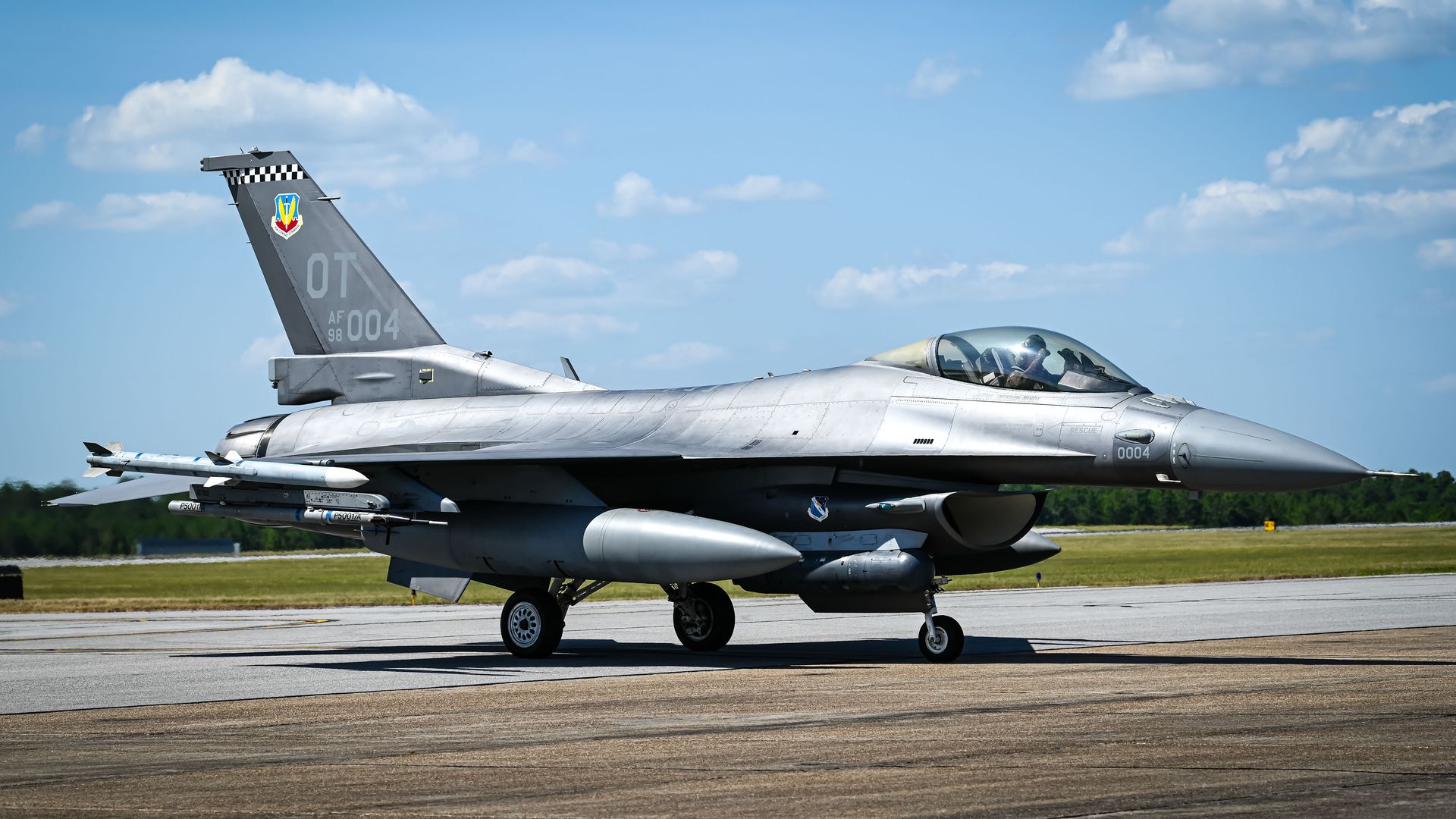
The U.S. Air Force wants to buy 206 upgraded electronic-warfare packages for the F-16 over the next few years, budget documents show.
Why it matters: The Lockheed Martin-made warplanes could be outfitted with Northrop Grumman's Integrated Viper Electronic Warfare Suite as soon as early 2028.
- "This is, essentially, putting sixth-generation electronic warfare into a fourth-generation platform," Mark Sandor, Northrop's director of strategy and mission solutions, told me.
State of play: This moment is years in the making.
- The Air Force first selected IVEWS in 2019. It flew for the first time in 2021, at the Northern Lightning exercise. Test flights aboard the service's F-16s kicked off in 2024. And an operational assessment wrapped in 2025.
- That same year, Northrop said IVEWS worked "seamlessly" with the SABR active electronically scanned array radar.
- "The hardware and software have been incredibly stable," Phil Louden, Northrop's IVEWS director, told me. "The Air Force is really aggressively ramping up."
Flashback: IVEWS got $187 million in 2025 reconciliation money, which funded low-rate initial production.
Zoom out: There has been much international interest in the electronic-warfare suite. Some 2,800 F-16s are in use in more than two dozen countries.
- Turkey was widely reported as a buyer in 2024.
- "We are actively involved in the foreign military sales process, with many partner nations," Louden said.
5. ICYMI: Boom times


Sweden Ballistics, a Swedish defense-tech startup focused on TNT production, raised $35 million in venture capital funding.
Why it matters: Europe is short on munitions, in part due to the Russia-Ukraine war, and is seeking to reduce its dependency on foreign supplies.
- It's not dissimilar to what we're now seeing in the U.S. and, perhaps soon, the GCC.
Zoom in: Sweden Ballistics, known as SWEBAL, has secured construction approvals for a facility that's slated to begin full-scale production in 2028.
- Investors in the round include Swedish family offices and individuals like Karl Engelbrektson (Sweden's former army chief) and Thomas von Koch (ex-CEO of EQT).
The bottom line: Energetics are a serious chokepoint, and one that does not get enough play in the press.
More from Axios:
Army kickstarts plans for huge artillery ammo factory in Iowa
JPMorgan Chase's security investment plan expands to Europe
Putin's war is "not just about Ukraine," says Estonian ambassador
6. Quick hits
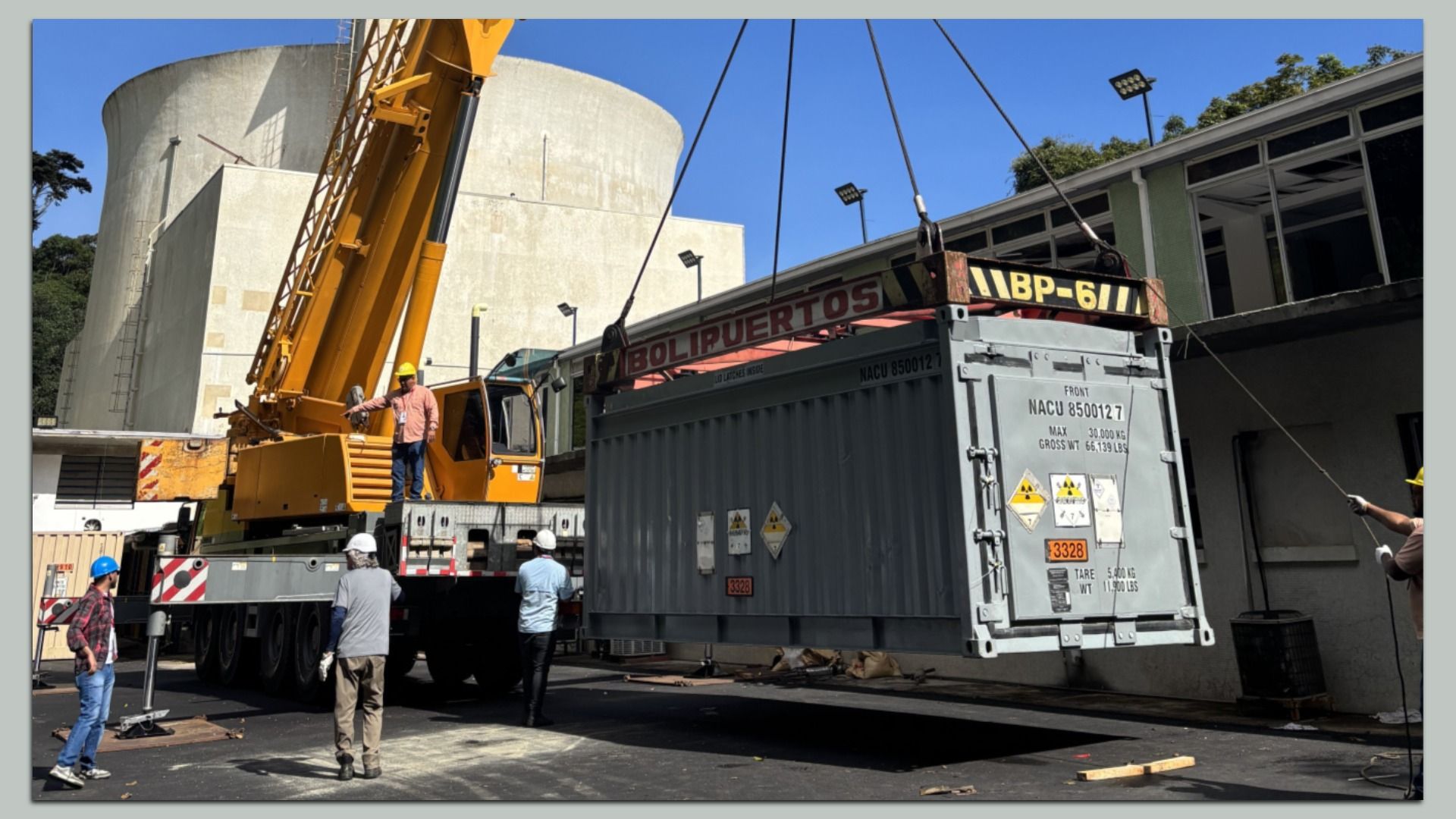
🇻🇪 The National Nuclear Security Administration said it removed "all remaining enriched uranium" from a research reactor in Venezuela. The move was internationally coordinated, including with experts from the U.K.
- Why it matters: The material arrived in the U.S. this month and will be processed in South Carolina, at the Savannah River Site's H-Canyon.
- 💭 My thought bubble: I would love to know the reaction in Aiken.
📡 The U.S. is experiencing a "golden age for defense technology," John Serafini, HawkEye 360's chief executive, told me on the heels of the company's initial public offering.
- Why it matters: The defense-tech buzz is contagious.
- 💭 My thought bubble: Shares were sitting around $35 at deadline.
💣 General Atomics Aeronautical Systems and the U.S. Air Force tested the Advanced Precision Kill Weapon System aboard an MQ-9A Reaper. The trials were conducted at the Nevada Test and Training Range.
- Why it matters: "APKWS can increase the number of weapons the MQ-9A is able to carry, as well being able to carry new lower cost weapons," GA-ASI president David Alexander said in a statement.
- 💭 My thought bubble: Drone-on-drone violence? Hell yeah.
👋 Brian Smith left In-Q-Tel for Washington Harbour Partners. Smith will lay out his rationale in a blog post, expected to publish today. Washington Harbour Partners has backed Apex Space, Chaos Industries, Hadrian, Hidden Level and more.
- Why it matters: The people and personalities behind the defense-tech boom are, arguably, as interesting as the weapons and tools themselves.
- 💭 My thought bubble: I broke news of In-Q-Tel's "forward-deployed" pivot last week. Check that out, here.
7. Check this out
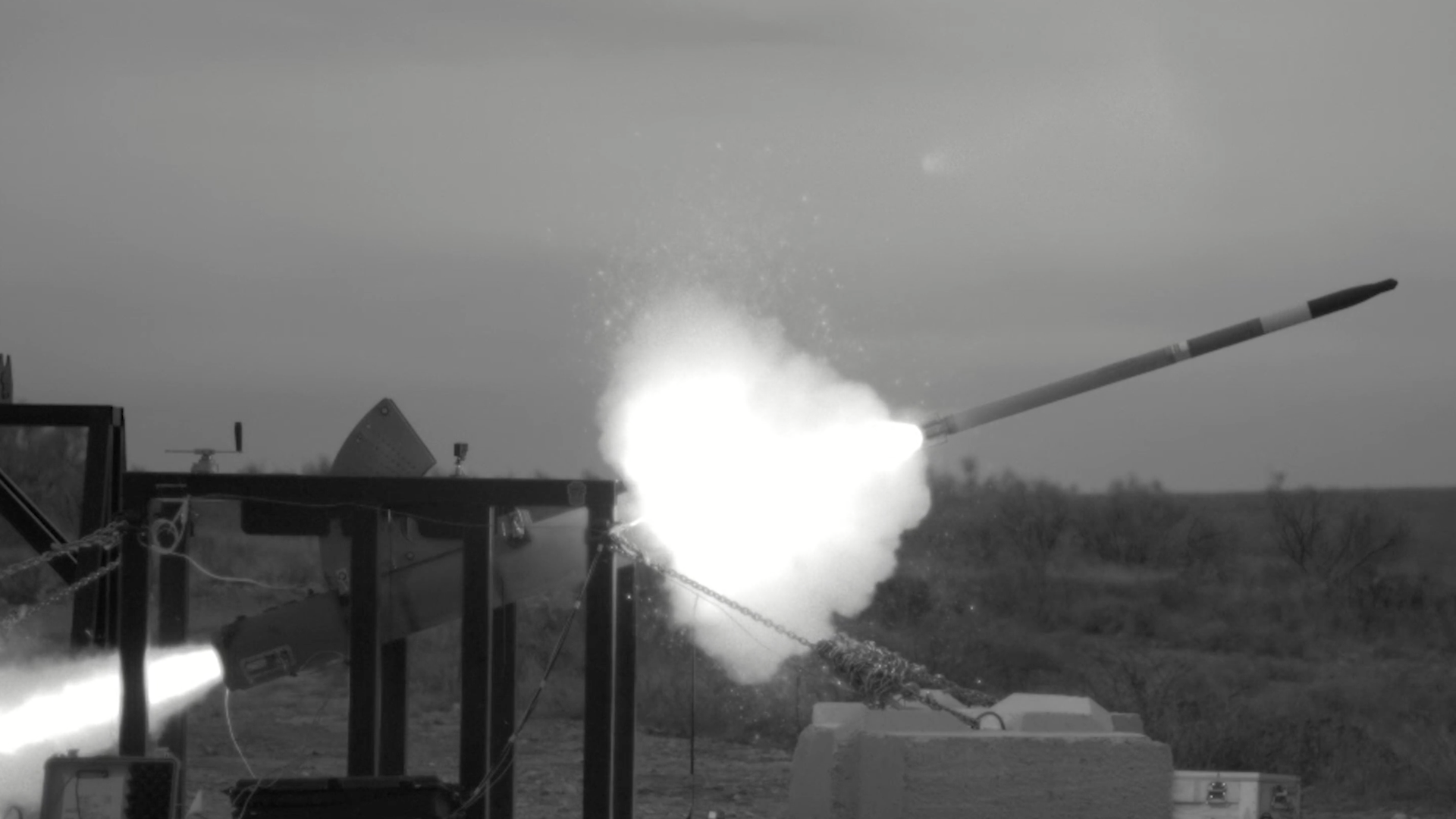
Ursa Major completed several flight tests of a small-diameter tactical solid-rocket motor using highly loaded grain.
The big picture: Check out a close-up of one of the launches, above.
- The full sizzle reel can be seen here.
Follow the money: Ursa said the trials were internally funded.
Go deeper: Ursa eyes space defense with $35 million Draper engine deal
Shoutout to Dave Lawler for editing and Matt Piper for copy editing.
👋🏼 Thanks, as always, for reading and sharing. Tell your friends to subscribe here.
Sign up for Axios Future of Defense