Axios Future of Defense

September 30, 2026

Good morning. An exciting update for y'all:
- Thomas Novelly has joined the Future of Defense crew. He'll be covering everything space. (See his first contributions below ⤵️)
- This newsletter will begin publishing twice a week. Exact timing TBD.
🚨 Situational awareness: Boeing won the F/A-XX competition and will build the U.S. Navy's futuristic fighter. (It's also building the Air Force's F-47.) The contract is worth more than $20 billion. More here.
Pick and choose: Space effects, Russian calculus and double-fisting Blackbeards.
Today's newsletter is 1,790 words, a 7-minute read.
1 big thing: BWXT's power move
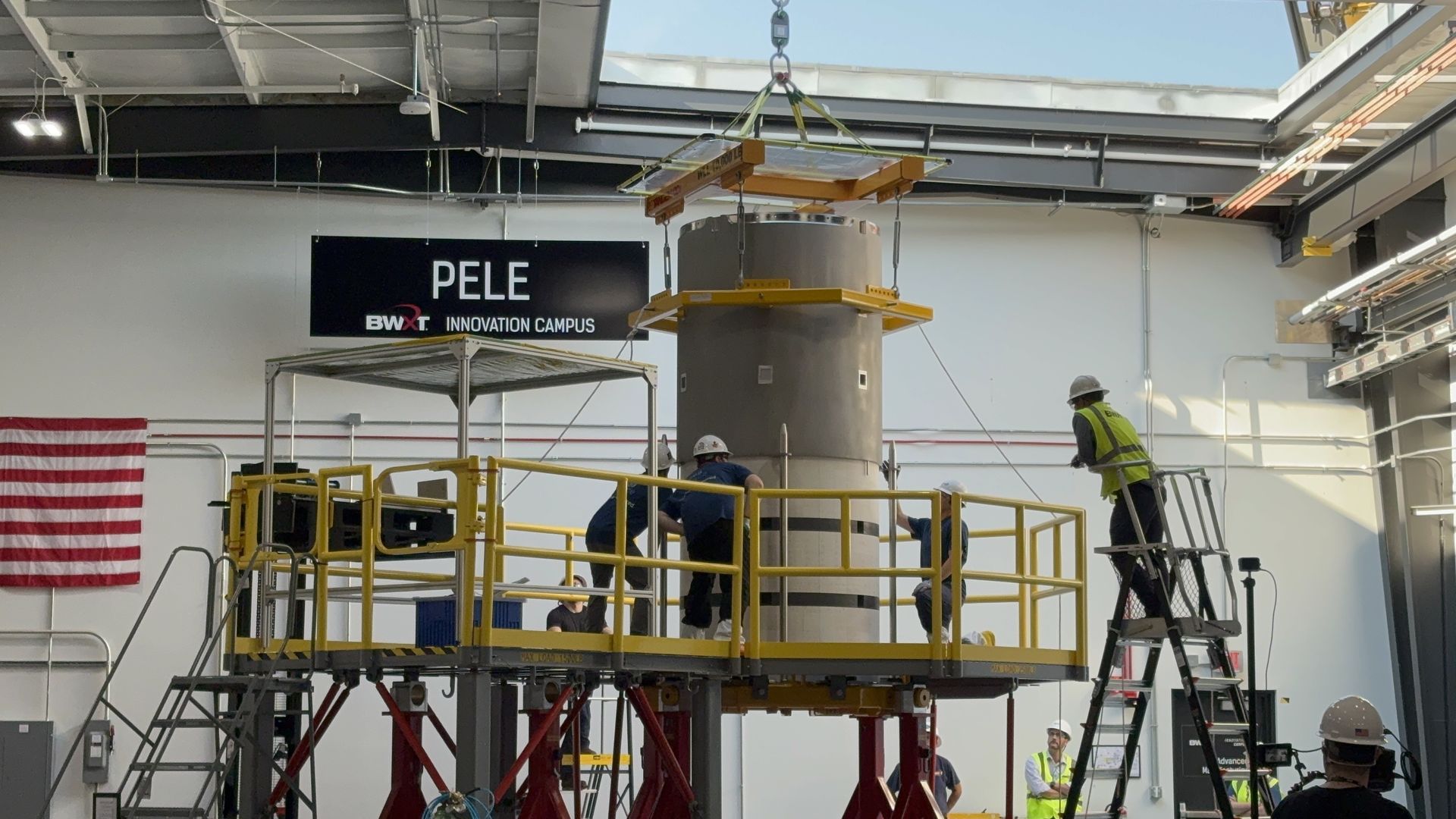
LYNCHBURG, VIRGINIA — The build room at BWXT's Innovation Campus was quiet. On the far end, perched above the ground and cloaked in what looked like plastic, the reactor core stood like an altar to nuclear energy.
- Just weeks ago, crews installed the core barrel, lowering it through a hatch in the roof. That pushed Project Pele, and potentially the future of military energy, one step closer to realization.
- "We are, truly, into the fabrication and assembly cycle," Charles Graves, director of government microreactors, told me.
- "There is a huge difference between looking at a paper reactor and getting to a point like this."
The big picture: BWXT was selected by the Defense Department's Strategic Capabilities Office in 2022 to develop and deploy a mobile microreactor capable of energizing troops and their gear in remote locations.
- Much of that work is concentrated here, at a fenced-off facility along the James River, about three hours southwest of Washington. (Contributors elsewhere include Northrop Grumman, Rolls-Royce LibertyWorks and Torch Technologies.)
- The system will next year be shipped to Idaho National Laboratory, where it will be fueled, tested and operated for three years.
- Ground there was broken in 2024. Graves said the site is "progressing well."
Driving the news: I linked up with BWXT this month to get an up-close look at Project Pele — its plans and parts, and the mockups that streamline construction.
Threat level: Military energy demands are enormous, and the diesel daisy chain of today is deadly. Resupply runs are targeted; the loud hum of generators can give away your position.
- Small, concealable reactors promise to ease the strain.
What they're saying: "The problem for Pele that we are trying to solve is: produce as much power as you can out of a module that can still fit within that shipping container constraint," Kate Kelly, president of BWXT Advanced Technologies, told me.
- "The gravity of the mission that we are all supporting is quite significant," she added. "The industry can't afford a mishap. We need to be successful."
Zoom in: Pele — named for the Hawaiian goddess of volcanoes and fire — is expected to produce 1.5 megawatts of "always on" electricity. It will use tri-structural isotropic fuel, which BWXT also makes and has supplied to other players, like the startup Antares.
Zoom out: Nuclear is mounting a popular comeback.
- Interest is pouring in from all sides: the White House, Pentagon, Silicon Valley, El Segundo. A Gallup poll conducted in March found growing support among average Americans.
- "The scope of opportunities in nuclear," Kelly said, "is just bigger than it has been."
What's next: BWXT's work on Pele is informing another effort known as Janus. Under that arrangement, the company is expected to build and operate BANR, a high-temperature, gas-cooled reactor, at Fort Campbell, Kentucky.
Go deeper: Trump's Iran envoys quietly convene nuclear experts in Tennessee
2. Exclusive: "Speed always wins"

Stratolaunch purchased a Boeing 777-200ER and plans to use it, after some modification, as a carrier for its Talon-A, a reusable, autonomous hypersonic aircraft, chief executive Zachary Krevor told me.
Why it matters: The addition of an upgraded 777 to the fleet increases Stratolaunch's flight capacity by about 35%. It also moves the aerospace company closer to being able to conduct multiple simultaneous hypersonic tests around the world.
- "Hypersonics are a national security priority," Krevor said. "You can look through history: Speed always wins."
Driving the news: Stratolaunch closed on the acquisition this month.
- The 777 will be based in Mojave, California, where the company is headquartered, but could be staged in different countries depending on demand.
The latest: The aircraft is "already in the detailing process," Krevor said. It will get a new paint job, and multiple pylon stations will be added to enable air launch of Talon-A and other systems. Work is expected to wrap next year.
- "With Talon-A, we use a custom release system. But with our targets program, we're using a very typical bomb ejector rack that's found on many fighter jets and bombers," Krevor said.
- "We don't touch the power plants, the avionics aspects," he added. "It flies like a normal 777; our aircrew has already got their 777 type rating."
Zoom out: Stratolaunch's fleet also features Roc, the world's largest fixed-wing aircraft by wingspan, and a Boeing 747 known as Spirit of Mojave.
Follow the money: The company is a key player in the Defense Department's Multi-Service Advanced Capability Hypersonic Test Bed (MACH-TB) and counts the Air Force, Navy, Missile Defense Agency and NASA among its customers.
- The Pentagon has "stated they want 50 — five-zero — hypersonic flights on an annual basis, just for MACH-TB," Krevor said.
- "They want to fly, and they want to fly again."
What we're watching: An Atlantic Council study shared first with Axios last year found American sluggishness to develop and deploy hypersonic weapons, coupled with Russian and Chinese advances, was fostering a "battlefield asymmetry."
3. Exclusive: Astranis action

Thomas here, with my first Future of Defense dispatch:
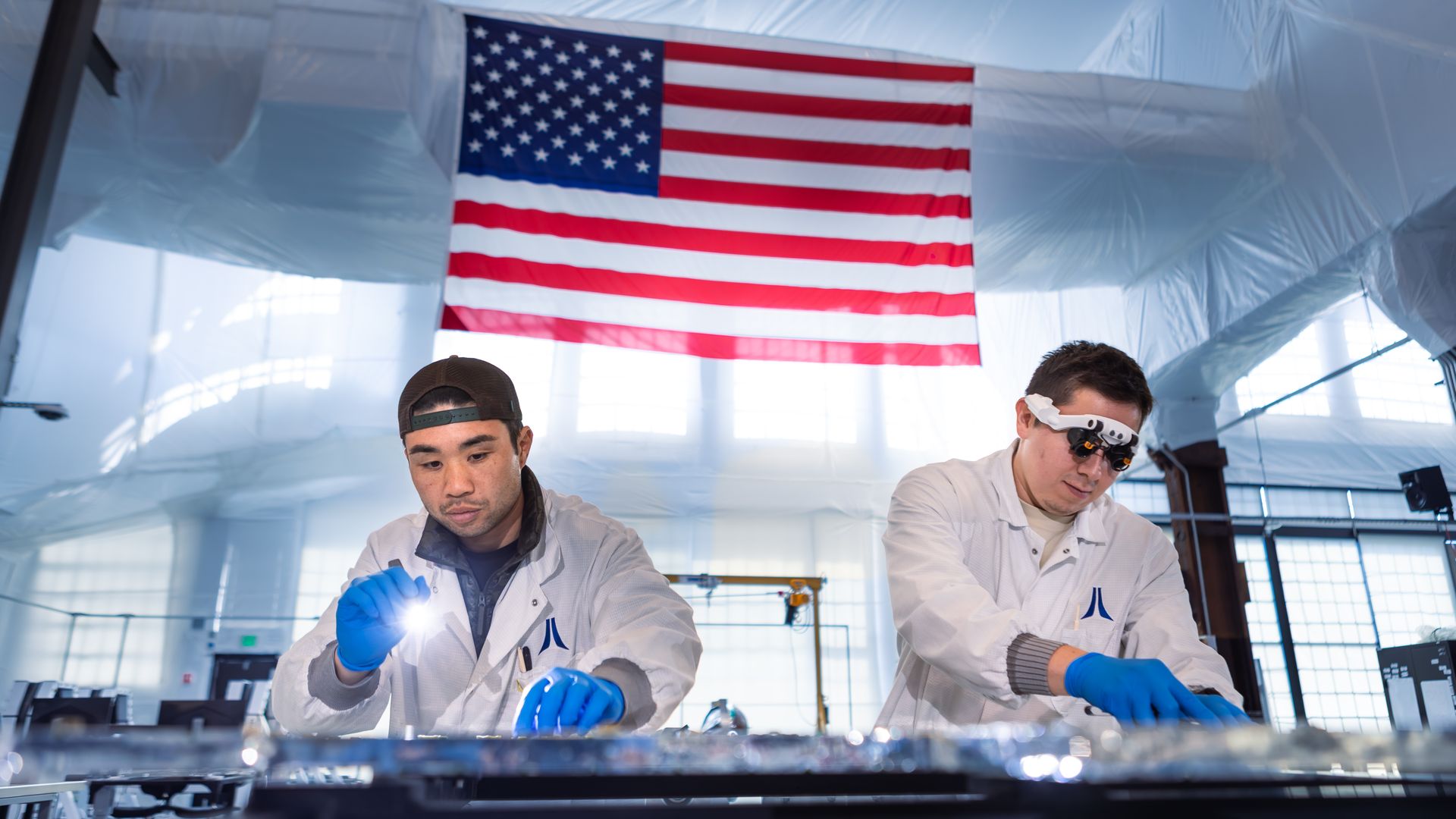
The U.S. Export-Import Bank has approved a nearly $500 million loan for Astranis to boost its domestic satellite production, Axios has first learned.
Why it matters: Astranis has contracts stateside and abroad, with customers in Oman, Saudi Arabia, Taiwan and Thailand. More funding is needed to meet the growing international demand for sovereign satellite capabilities.
- EXIM approved the $468 million credit facility last week to grow "Astranis' capacity to manufacture and operate satellites," the bank said in a statement.
Zoom in: Astranis makes small geostationary satellites that orbit in tandem with Earth's rotation, providing broad coverage and visibility.
By the numbers: The private San Francisco-based company has five satellites floating above Earth today.
- With a backlog of more than $1 billion in commercial contracts, more sats are on the horizon.
Zoom out: EXIM's loan is the latest investment under the bank's national security-focused Make More in America Initiative.
- Other recent aerospace-focused EXIM investments include Beta Technologies and CesiumAstro.
The bottom line: "In order to lead across the globe, America must lead in space," EXIM chairman John Jovanovic told me.
Go deeper: Four companies plot extra GPS access for U.S. military
4. The Danes dish

More than four years into its invasion of Ukraine, Russia is taking more risks and suffering "heavy losses for marginal territorial gains" — while intensifying its use of sabotage and cyberattacks against the West, according to a Danish intelligence report.
Why it matters: It's both a bleak outlook for Moscow and a red alert for Europe.
Driving the news: The Danish Defense Intelligence Service (DDIS) on Sept. 24 shared its assessment of the "Russian threat," accounting for recent drone-and-missile incursions into NATO airspace and a frigate-and-helicopter dustup in the Baltic Sea.
- The three-page document supplements a report published early last year.
Between the lines: Russian belligerence is being influenced by what Ukrainian President Volodymyr Zelensky calls "long-range sanctions," or successful deep strikes on critical infrastructure.
Zoom out: The Russian economy is on the brink of "a major crisis," the Danish report notes, spurred in part by defense spending and international sanctions.
- The Russian military has suffered more than 1 million casualties since the war began. This summer, casualties were thought to be outpacing recruitment.
What's next: Russian President Vladimir Putin is expected to continue lashing out at Ukraine's neighbors and supporters, but the DDIS saw "no indications" of a looming invasion of a NATO country.
Go deeper: NATO chief heads to Washington as Trump 2.0 flames the alliance
5. Space squad

Thomas, again. Check this out:
The U.K. military is building up its space arms and is readying troops to use them, a move leaders said is needed to prevent growing enemy interference with its satellites.
Why it matters: After the United States' bombshell revelation that it has "on-orbit space control weapons," a key ally is advertising its growing space arsenal to deter Russia's aggressive space posture.
- Air Chief Marshal Harv Smyth announced last week that the U.K. "is now developing capabilities for orbital warfare" to stop anti-satellite weapons, and the Royal Air Force established its first-ever dedicated Space Effects Squadron to "disrupt, degrade and deny hostile activity."
Driving the news: For the past year, the U.K. has been using ground-based technology to jam enemy satellites, the BBC reported.
- "So make no mistake, the satellite services you may have taken for granted now face unprecedented threats," Smyth said. He also singled out Russia's space maneuvers as "uncommon and dangerous."
Follow the money: The U.K. recently unveiled a £298 billion (roughly $400 billion) defense spending plan, with some of that investment targeted for new space capabilities and protecting its existing assets in orbit.
- Smyth said the space sector underpins 20% of the nation's GDP.
The bottom line: Victoria Samson, the Secure World Foundation's chief director of space security and stability, told me there's "much more openness and willingness to talk about these sorts of capabilities, which just was not here even just a couple years ago."
- "They're putting their money where their mouths are."
Go deeper: There are American weapons in space
6. Quick hits
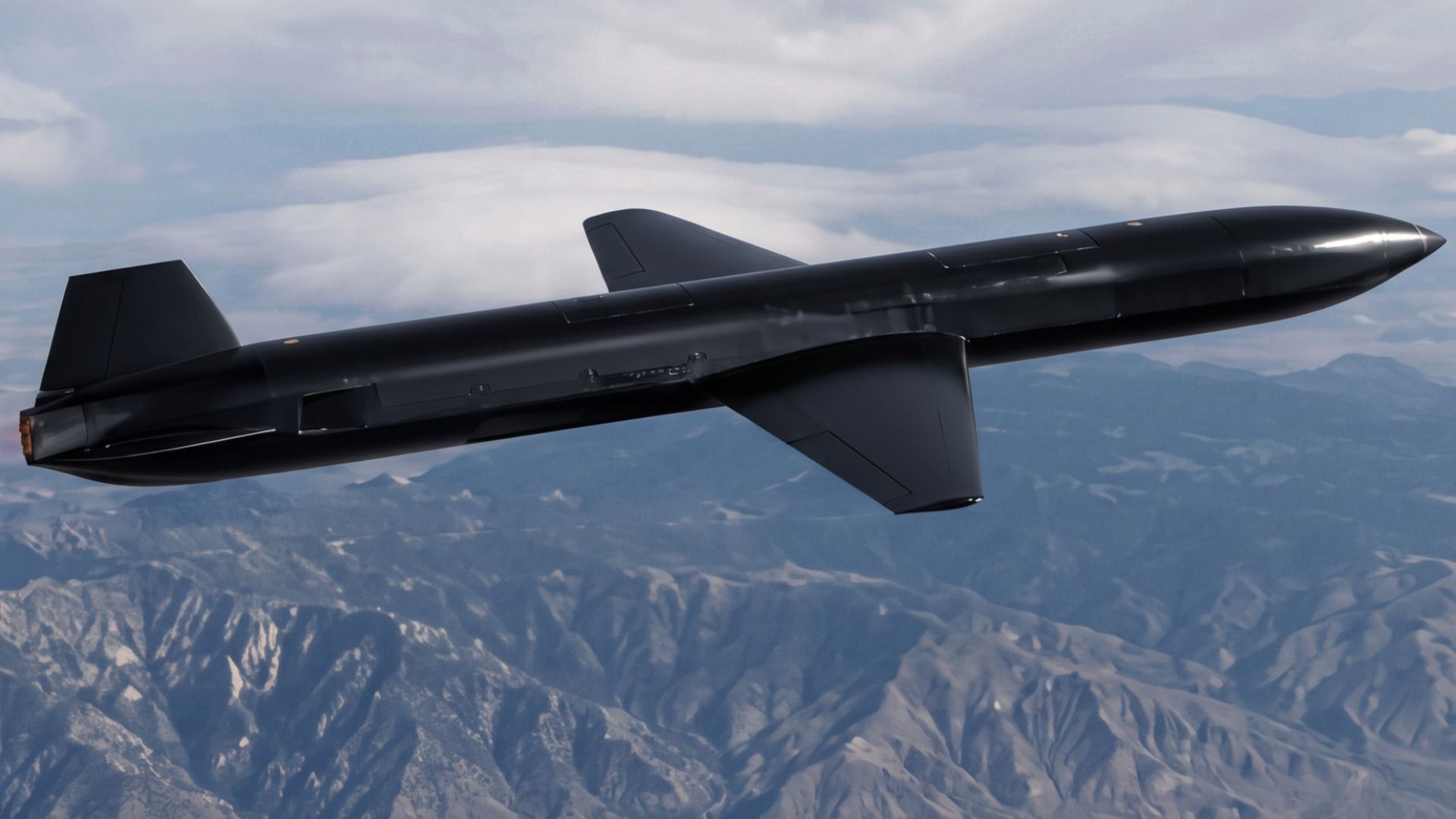
💥 Aevex unveiled Specter, a turbojet-powered "one-way attack platform" developed alongside advanced manufacturer Divergent. The companies teased ground- and air-launched variants.
- Why it matters: "Specter reflects our lessons learned on capability from delivering thousands of autonomous systems in theater," Aevex's chief technology officer, Manan Patel, said in a statement.
- 💭 My thought bubble: At what point does a drone become a missile? A missile become a drone?
🧰 Traysar revealed it's developing Terminus, a truck-mounted boring machine. The subterranean startup is also partnering with Armada, known for its mobile data centers.
- Why it matters: The underground domain is heating up, fueled by Palmer Luckey's teases as well as tunnel-clearing clashes and bunker-busting bombing campaigns in the Middle East.
- 💭 My thought bubble: Traysar CEO Yadin Soffer made his case on "The Drone Ultimatum" podcast this summer. It's worth a listen.
7. Check this out
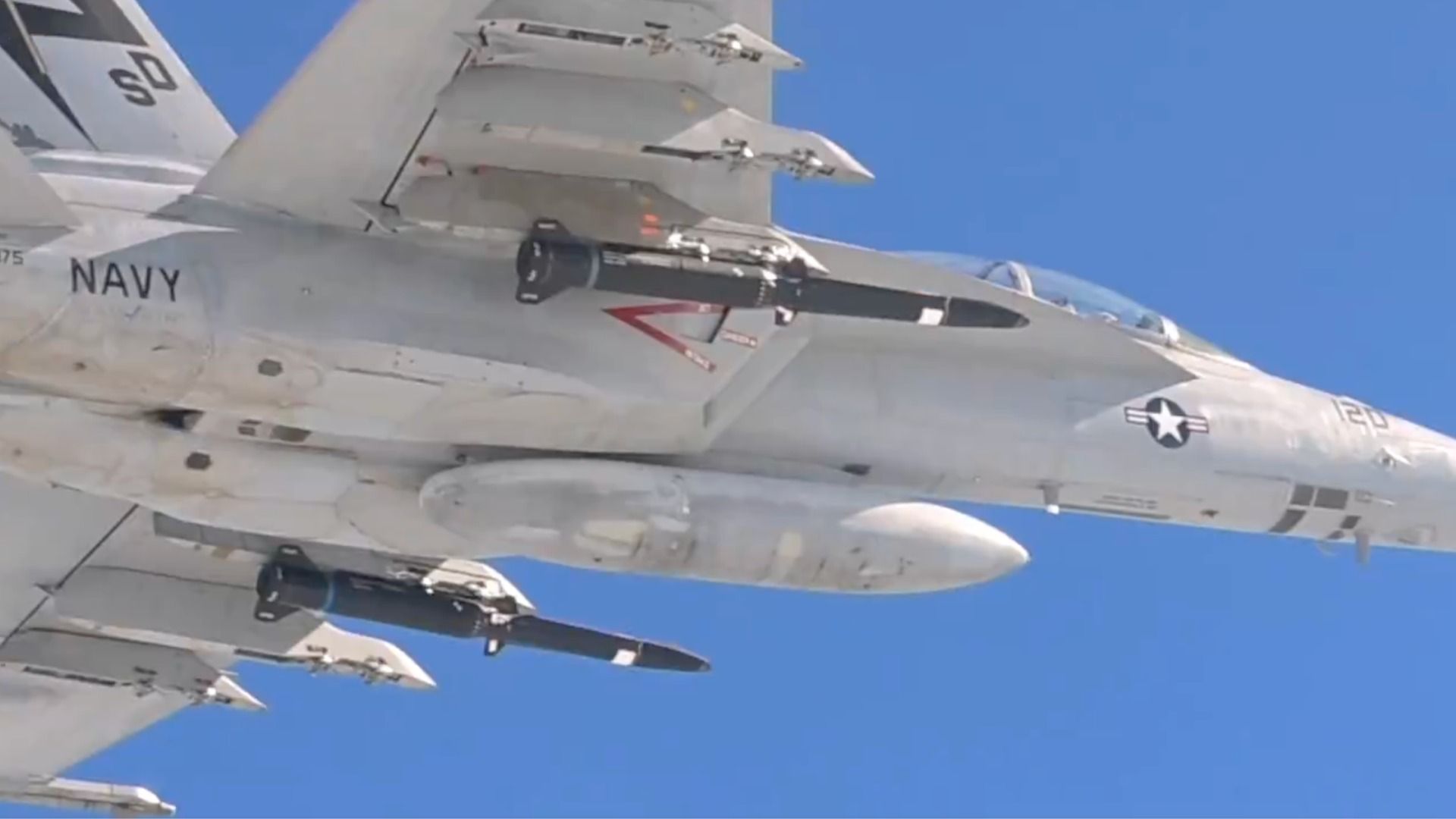
We knew Castelion's Blackbeard was airborne.
- We just hadn't seen it like this.
The big picture: Footage shared Sept. 25 by Naval Air Systems Command offered, as The Aviationist put it, the "clearest look yet" at the hypersonic missile.
- The War Zone, meanwhile, noted its "relatively small size."
Shoutout to Mike Zapler for editing and Matt Piper for copy editing.
👋🏼 Thanks, as always, for reading and sharing. Tell your friends to subscribe here.
Sign up for Axios Future of Defense