Axios Crypto

August 09, 2024


Hello readers, today's my last day with Axios Crypto, but I'll be reading from afar. —Crystal
🚨 Situational awareness: Starting next week, Axios Crypto will be in your inbox on Tuesday and Thursday afternoons, and crypto coverage can always be found on Axios.com.
Email us: [email protected]
Today's newsletter is 860 words, a 3-minute read.
1 big thing: 🌌 Decentralize Bitcoin
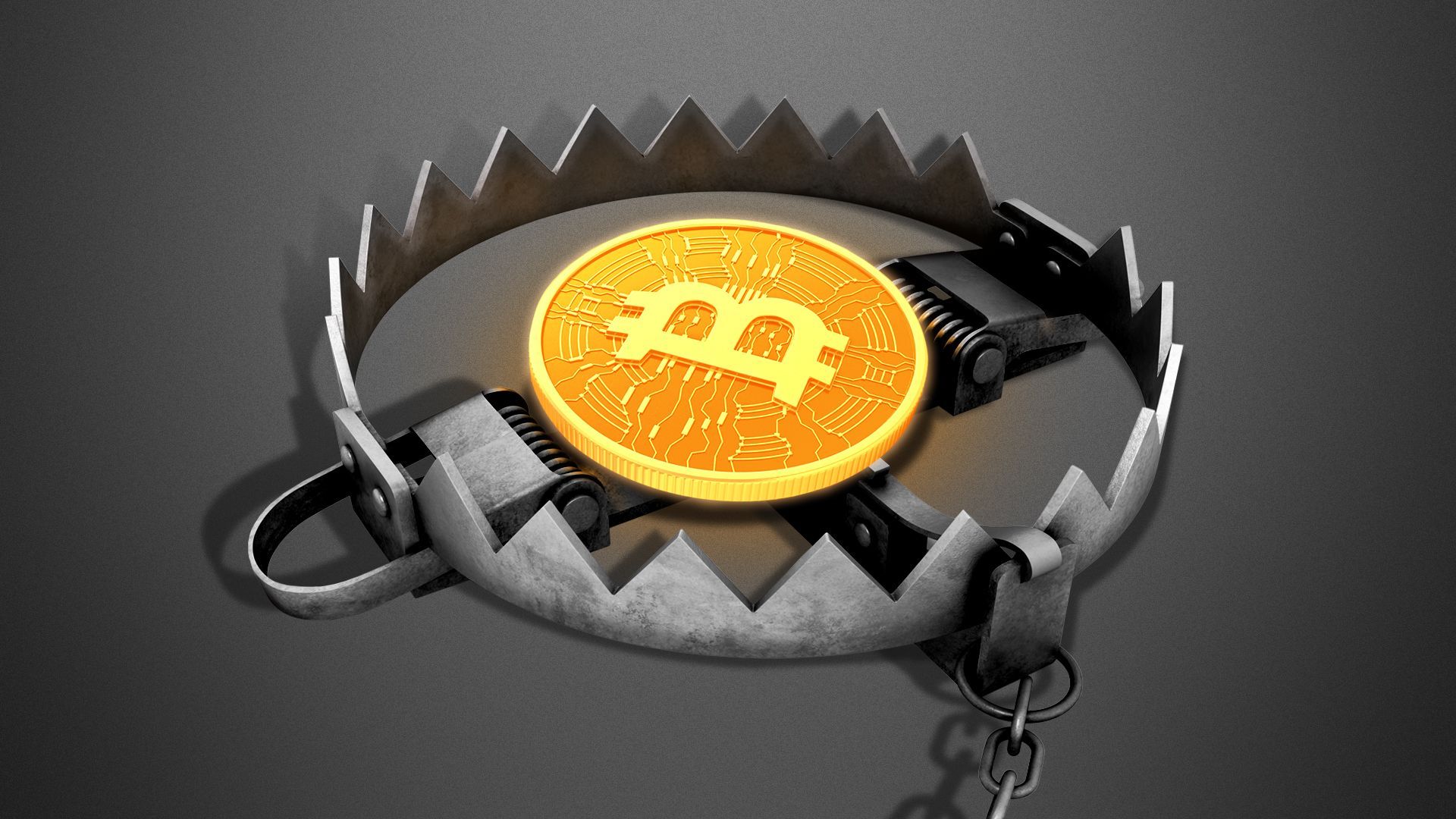
A little before Donald Trump spoke at Bitcoin 2024 in Nashville last month, with thousands of people sitting in the room waiting to see the former president, longtime Bitcoin developer Matt Corallo took the stage and told everyone that Bitcoin mining isn't meaningfully decentralized.
Why it matters: Decentralization is key to Bitcoin's trustless nature, the idea that it's very hard to censor or control, which is key to its value to many people around the world.
Between the lines: Corallo was describing a known problem with the system and imploring the audience to start demanding that Bitcoin's miners — its security system — start tinkering with a solution.
- The problem is this: Too many miners rely on too few companies to decide what goes into a Bitcoin block.
How it's supposed to work: People write bitcoin transactions with their crypto wallets, which sends them to the network, where a miner plucks the message out, and writes it onto a ledger with a bunch of other transactions.
- Then the miner tries encrypting that block of data using a known algorithm. If they can break that encryption before anyone else and show the network, they win that block and earn some bitcoin.
The reality, however, is that it's very hard to win a block anymore. It's a high-effort, very-occasional-reward approach.
How it really works: Miners turn to "pools" in order to even out their income. Pools guarantee participants a fixed income.
- The pools are companies. These companies pick transactions, encrypt them, and send them out to thousands of miners to break. If one of them does, the whole pool wins.
- There are only a few big pools out there, and one of them, in China, is getting close to 50% of the network.
The big picture: Each of those pooling companies is an attack surface for Bitcoin. They give powerful entities, such as governments, a way to step in and potentially censor transactions.
- In a way, it's similar to the issue of Tornado Cash, where the entities that compose blocks are the ones nation-states can leverage.
What we're watching: Some people who care about Bitcoin, like Corallo, have worked out a protocol called Stratum V2 that should mitigate this issue.
- With the software, a miner could compose their own blocks off the same publicly available list of transactions.
- But they could still do so in a way that allowed them to work collectively with a pool. So the blocks they write would guarantee payouts that went back to the pool.
That way, there would be thousands of entities composing blocks, making it very hard for a major actor to go after all of them.
What they're saying: "It's a fairly small technical lift on the mining side. It's a fairly large technical lift on the pool side," Corallo tells Axios.
- "Now we have software that people can run, and people should."
💭 Our thought bubble: From Bitcoin's perspective, this block centralization issue is like climate change.
- Everyone knows it's an issue, but not many people have a super strong reason to focus on fixing it.
What's next: Stratum V2 is ready for beta testing by pools, and it will be interesting to see if some of them start peeling off some hash power to see how it works under real conditions.
2. 🏃 Catch up quick
🏦 Customers Bancorp, a crypto-friendly bank in Pennsylvania, got hit by the Fed over deficiencies in its risk management. (Reuters)
🎢 Some bitcoin traders feel increasingly optimistic about prices late this year. (CoinDesk)
💰 The SEC finalized its plan to redistribute funds from Unikrn, an esports gambling startup, which it stopped in 2020. (SEC)
3. Farewell to Crystal
I just want to say, working with Crystal was really good for me, personally. don't always have a great time collaborating, but Crystal, who I usually called "CK," and I meshed from the start.
- She was able to take on a lot of topics that I would have struggled to wrap my head around. Plus, she had the sources that I would have had to build.
- And behind the scenes she kept my head on straight.
Zoom in: Here's some of the topics where Crystal led our coverage.
- The new BTC and ETH ETFs, because she was long familiar with the complexities of instruments sold through traditional markets.
- She pointed out the pivot Coinbase made in its strategy toward its main regulator, from conciliation to confrontation.
- She kept the miasma of Genesis-DCG-Gemini straight throughout their long unwinding.
- The sagas of crypto leaning banks, such as Custodia and Silvergate.
- New York's place on the world (regulatory) stage.
Among others.
- There truly was no leader, as we would regularly hand off topics, as needed. Like, in particular, on the SBF trial.
I wish her all the luck in the world. A great teammate, patient relationship builder and a talented reporter is now available. Hit her up or catch her at PubKey.
4. Culture hash: Special delivery, Crystal

Speaking of Crystal, as it happens, Grayscale is sending traders an excerpt from one of her recent stories today, along with an actual McDonald's Big Mac.
- It's a promotion for its new mini ether ETF.
These are on their way to various traders now (or they might already be there).
This newsletter was edited by Pete Gannon and copy edited by Anjelica Tan.
Were you forwarded this email? Subscribe here.
Sign up for Axios Crypto