Axios Communicators

December 12, 2024

πWelcome back! I don't know about you, but I'm in a mad dash for the holidays. First, though, we'll catch you up on last week's event.
- πΏ Axios is returning to Davos on Jan. 19-23. I'll be there alongside Axios' Dan Primack, Ina Fried, Sara Fischer and more. Get updates and ping me if you'll be there too.
- Today's newsletter is 1,938 words, a 7.5-minute read.
1 big thing: How Google communicates through scrutiny

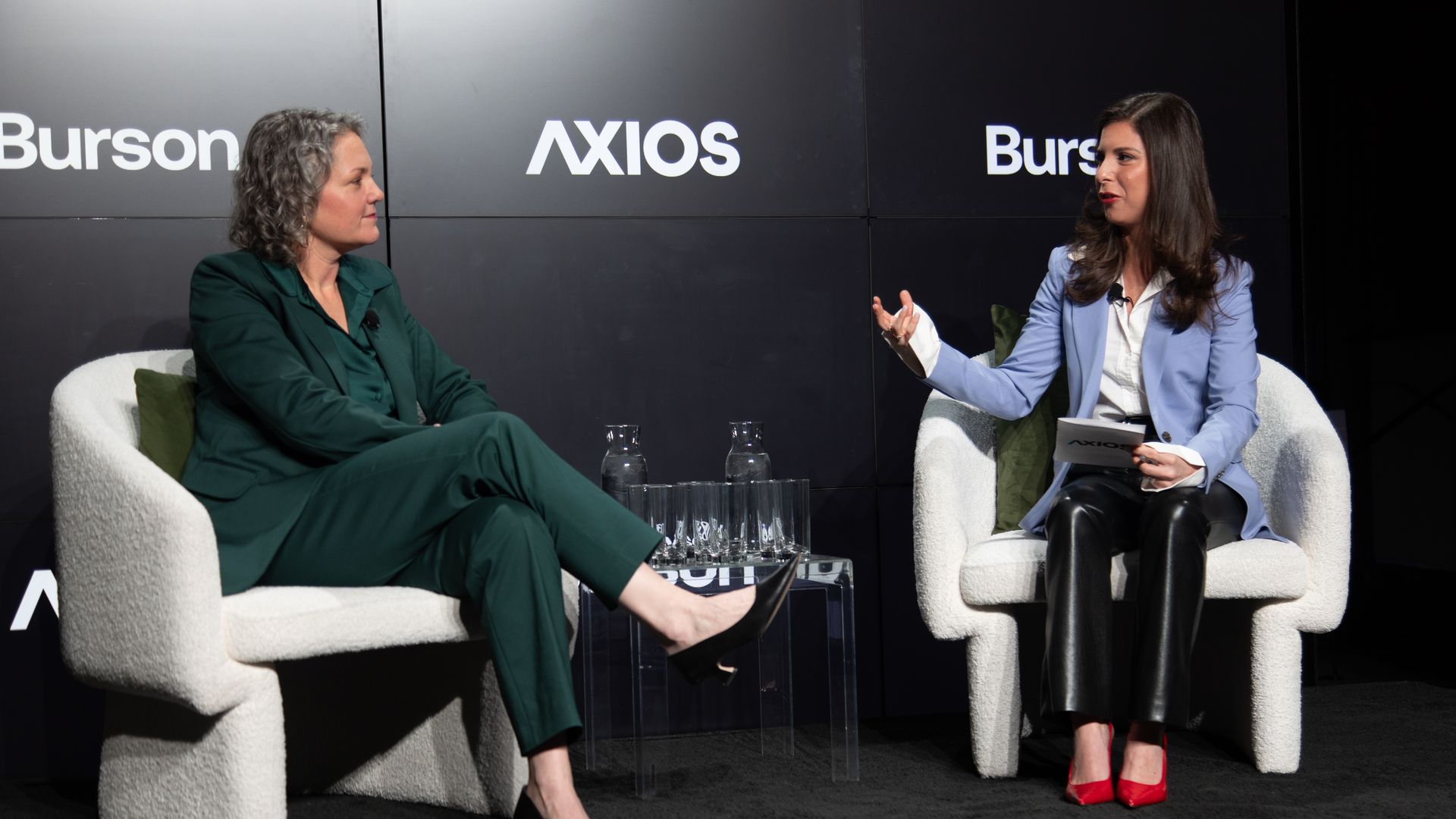
Being a part of the cultural zeitgeist is a blessing and a curse, Google's top communications executive Rob Shilkin told a crowd of about 350 professionals at Axios Communicators Live last week.
Why it matters: Google has no problem making headlines, so the team is focused on communicating in a stronger, punchier way, even amid heightened scrutiny.
State of play: Google's communications team fields 2,000 incoming issues per year β about seven a day, Shilkin, who rarely steps into the spotlight, told the crowd.
Driving the news: The tech giant is currently navigating an antitrust lawsuit regarding its search browser, and there's a tiger team dedicated to managing those communications.
- "We don't have any great, unique claim to this regulatory scrutiny," says Shilkin. "Literally every big tech company in America is facing their own lawsuit. Our focus is on trying to tell our positive story."
Yes, but: Reaching audiences in this fragmented media landscape is often challenging, and sharing good news can be even more difficult.
- Shilkin says the team is active across all social channels, with rapid response handled on X and creator partnerships across YouTube.
- And while Google's social media following is quite large β Shilkin estimates 100 million people across platforms β they haven't gone all in on the go-direct strategy.
- "Some of the discussion is a little bit either-or β [traditional] media or going direct. And they're completely symbiotic, completely interrelated. You have to be building relationships on both sides," he says.
Zoom in: The team is also rethinking how it communicates internally by experimenting heavily with AI.
- One way they use AI is by consolidating hot topics and questions from their vocal employee base for executives to address.
- "We actually created a new tool for the company, which uses AI to help summarize questions and group questions together for the purpose of getting to more topics," says Shilkin. "And that's actually resulted in more employees asking questions and more employee engagement."
What to watch: Google's comms team is incorporating these AI tools into its workflow while also promoting AI to the skeptical masses.
- "We're in a really lucky position in that we have so many of the tools in-house," he says. "And we're communicating about the tools. And so we have to learn about them. We have to understand them. We have to use them as part of our day-to-day work."
Go deeper ... Watch the interview and keep reading.
2. NFL's reputation rebound
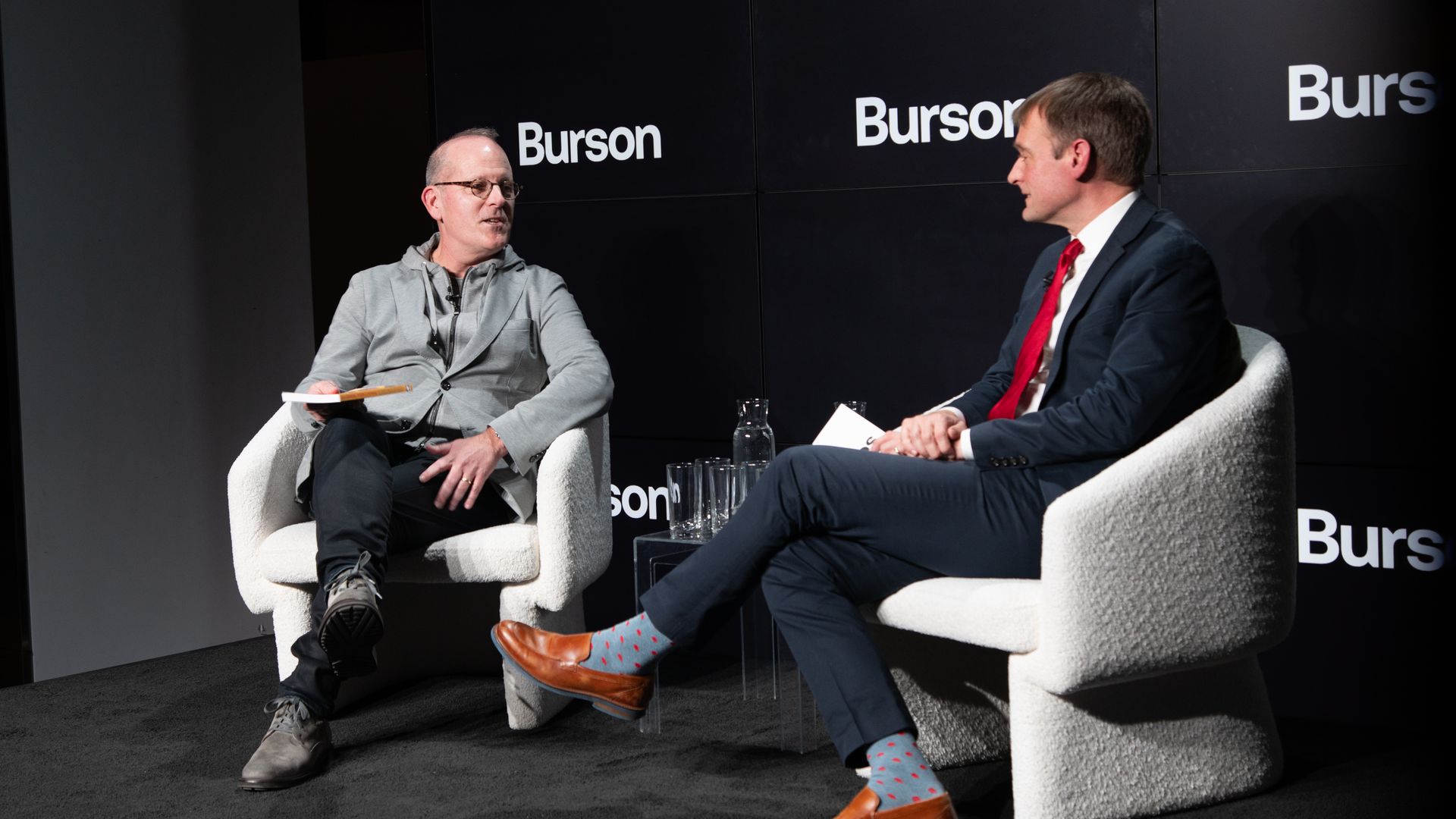
The NFL's reputational pivot from one of the most politicized brands in America to a uniting force was the focus of our discussion with Katie Hill, the league's senior vice president of communications.
Why it matters: A clear, concerted effort around one key message β Football is for everyone β was its North Star, she said.
- That message underpins how the NFL communicates about what's happening on and off the field, she told the audience.
Catch-up quick: The NFL witnessed a flurry of scandals surrounding player safety, domestic violence, race relations and sports gambling which created reputational challenges and polarized its millions of fans across the country.
- Now, it is experiencing record ratings, expanding into international markets and embracing younger, female fans.
What they're saying: "We have this platform, and with that comes incredible responsibility," says Hill. "We have used tough moments to think about how we can be part of the solution."
- For example, the NFL is now one of the largest corporate funders of domestic violence prevention programs in the country, according to Hill.
- The league has also prioritized player safety by addressing equipment and practice protocols.
Between the lines: To show the change, you can't shy away from communicating about these issues directly, she says.
- "If [we] say something, it makes news. If [we] don't say something, it makes news. We have a huge, embedded press corps that covers [the NFL's] every move that requires real strategic care and feeding, but it also presents incredible communications opportunities."
Zoom in: The league has focused on taking these messages to the audiences that matter most, which can be tricky given its "sprawling ecosystem of stakeholders."
- "It is about identifying the different messages that you're using to reach those communities and also making sure you know what they care about, that you're listening to them," she added.
And having one of the world's most beloved pop stars as a fan also helps.
- Yes, but: Even before the Taylor Swift effect, about 50% of the fan base was women, Hill said.
What to watch: The NFL is working to bring a new stakeholder group into the fold β foreign audiences.
- This year, the league hosted five international games and plans to increase it to 16 annually.
Go deeper ... Watch the full interview and read more.
3. The team tasked with demystifying generative AI
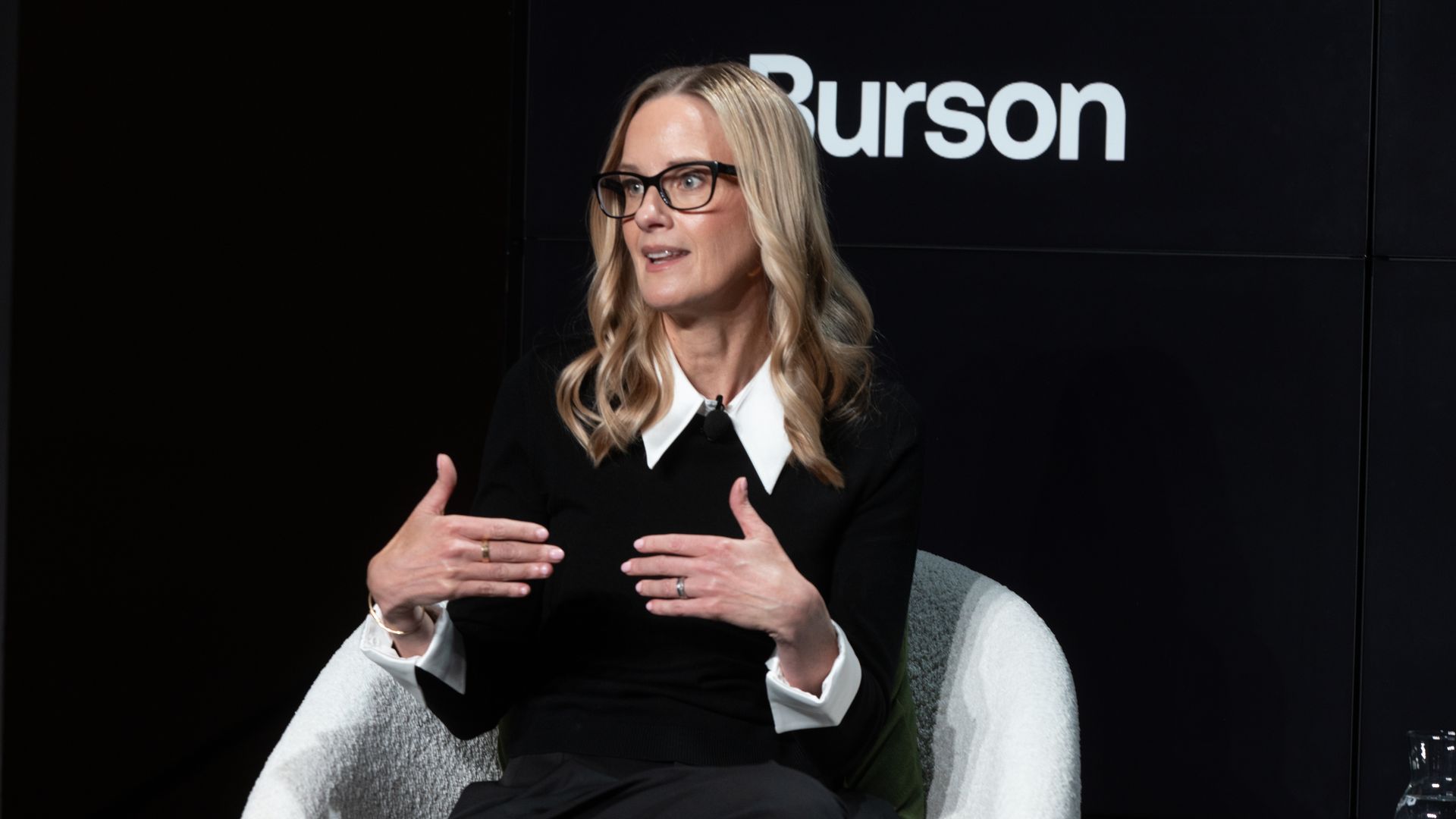
As OpenAI's head of public relations Lindsey Held Bolton says, her priority is demystifying AI tools.
Why it matters: Since launching ChatGPT just two years ago, OpenAI has changed the way we work, communicate, create and innovate. However, it has been met with a lot of criticism and pushback.
What they're saying: "[Our] focus is education. We really want to go out there and demystify AI," Bolton said.
- "Sometimes there's mistrust if you don't understand how the technology works. So we really are focused on education and going out and doing a lot behind the scenes with reporters, with third parties and constituencies we care about to make sure they understand."
- "We have to address the challenges and the criticisms, and that's fair. But we also are trying to balance more to the proactive and talking about the good-use cases."
Between the lines: It would be easy for the team to get bogged down by constantly addressing internal leaks, which are par for the course, says Bolton.
- "We want to build trust as well as just try to be very transparent, and if we are going to share things internally β which we want to do β we often try to share it externally as well and maybe give more context than you would normally get if it was just through a leak," she says. "It's not a perfect science. It's an ongoing kind of struggle. But we do the best we can."
Zoom out: One way OpenAI does this is by rolling out specific products for the audiences that might be most impacted β or most inclined to use them. For example, the company first deployed Sora β which generates video from text β to artists but has since introduced it to everyone.
- "This is what we call iterative deployment," Bolton says. "We want to go out very early in the process and show you all really what the research is so that we can get feedback, we can improve the experience and make it better as we go."
Zoom in: Communicators are some of the early adopters of AI, specifically ChatGPT.
- Burson global CEO Corey duBrowa told the crowd his firm uses AI for its predictive capabilities, while Shilkin says his team's favorite tool is Google Notebook LM, which generates audio summaries in a fun, podcast format.
Bolton says she thinks of AI as an assistant and nothing more than a tool. OpenAI's communications team recently held a hackathon in which best AI use cases were explored. One result:
- Uploading speeches, interviews and memos from specific executives and creating GPTs aligned to them can help quickly generate talking points, quotes and remarks in their voice.
What's next: Educating the masses on AI Agents, which can help users complete complex tasks.
Go deeper ... Watch the full interview and share this story.
4. Tapping the creator economy
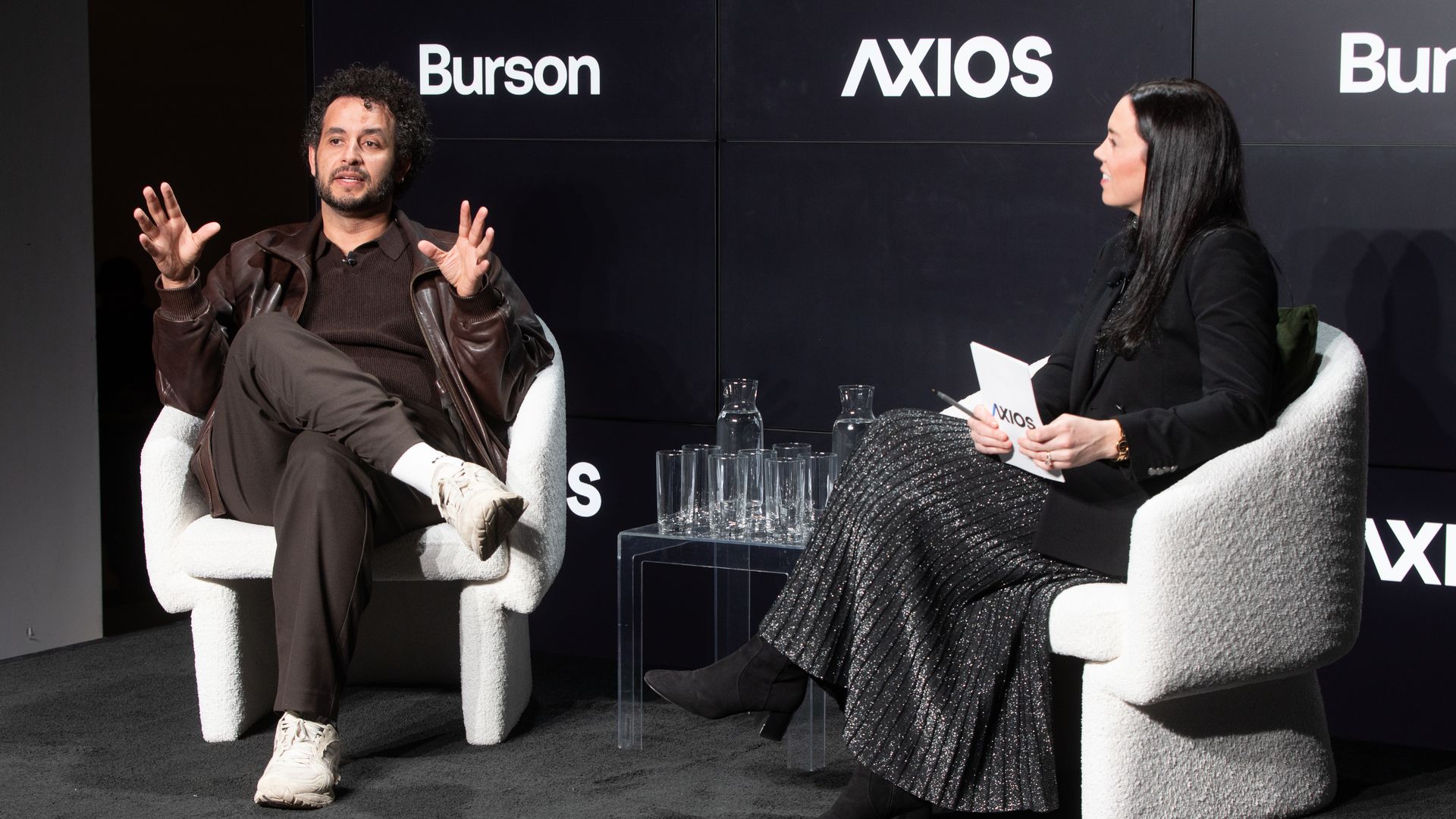
Brands, executives and public figures are flocking to creators like Kareem Rahma for help reaching younger, digitally native audiences.
Why it matters: Audiences are fragmented and increasingly rely on nontraditional journalists, creators and influencers for news and information.
Catch up quick: Rahma worked in newsrooms at Vice and The New York Times before launching his own media company, Some Friends, with Andrew Kuo.
- The content he is best known for is the "Subway Takes" series, which has attracted more than 1 million followers across Instagram and TikTok.
- He made headlines for interviewing Democratic candidates Kamala Harris and Tim Walz, and partnering with big brands like Meta, H&M and J.Crew.
What he's saying: The key to attracting brand partners and high-profile guests is the prescriptive format.
- "We're fortunate to have built a format that is really easy to understand. When we thought of it, we were like, let's make something that is scalable and is also really easy to understand from an advertising sponsorship partnership perspective," says Rahma.
- "Our branded content routinely gets the same amount of views as the organic contentβ sometimes more," he says.
Between the lines: Format is key, but it's also about meeting audiences where they are and serving them something entertaining, Rahma says.
- "It's the only way to deepen the conversation and the engagement with an audience that is bombarded with stuff all the time."
Reality check: With guests like Walz, Rahma acknowledges news and content are different things, but he says mainstream media is partly responsible for blurred lines through publishing listicles and gift guides.
What's next: Rahma recently joined LinkedIn and thinks there's a lot of opportunity for vertical videos on the professional networking platform.
Keep reading ... Watch the full interview and learn more.
5. ICYMI: Omnicom to buy IPG, creating world's largest ad agency


Omnicom Group agreed to acquire Interpublic Group on Monday in a $13.3 billion deal that combines two of the world's largest advertising groups.
- Why it matters: The merger, which would create the world's largest ad agency, comes as the industry faces challenges from generative AI and other technological shifts.
By the numbers: Omnicom is the third-largest advertising holding company globally by revenue, reporting $14.7 billion in 2023 and followed by IPG at $10.9 billion. WPP and Publicis Groupe are the two largest at $18.5 billion and $15.8 billion, respectively.
π Eleanor's thought bubble: It's unclear what this could mean for the communications firms within these two holding companies β which include Weber Shandwick, Golin, and Powell Tate within IPG and FleishmanHillard, Ketchum, Mercury and Porter Novelli within Omnicom.
- But it's fair to expect the deal to generate more consolidation within the PR agency space.
6. 1 fun thing: I'm Unwell
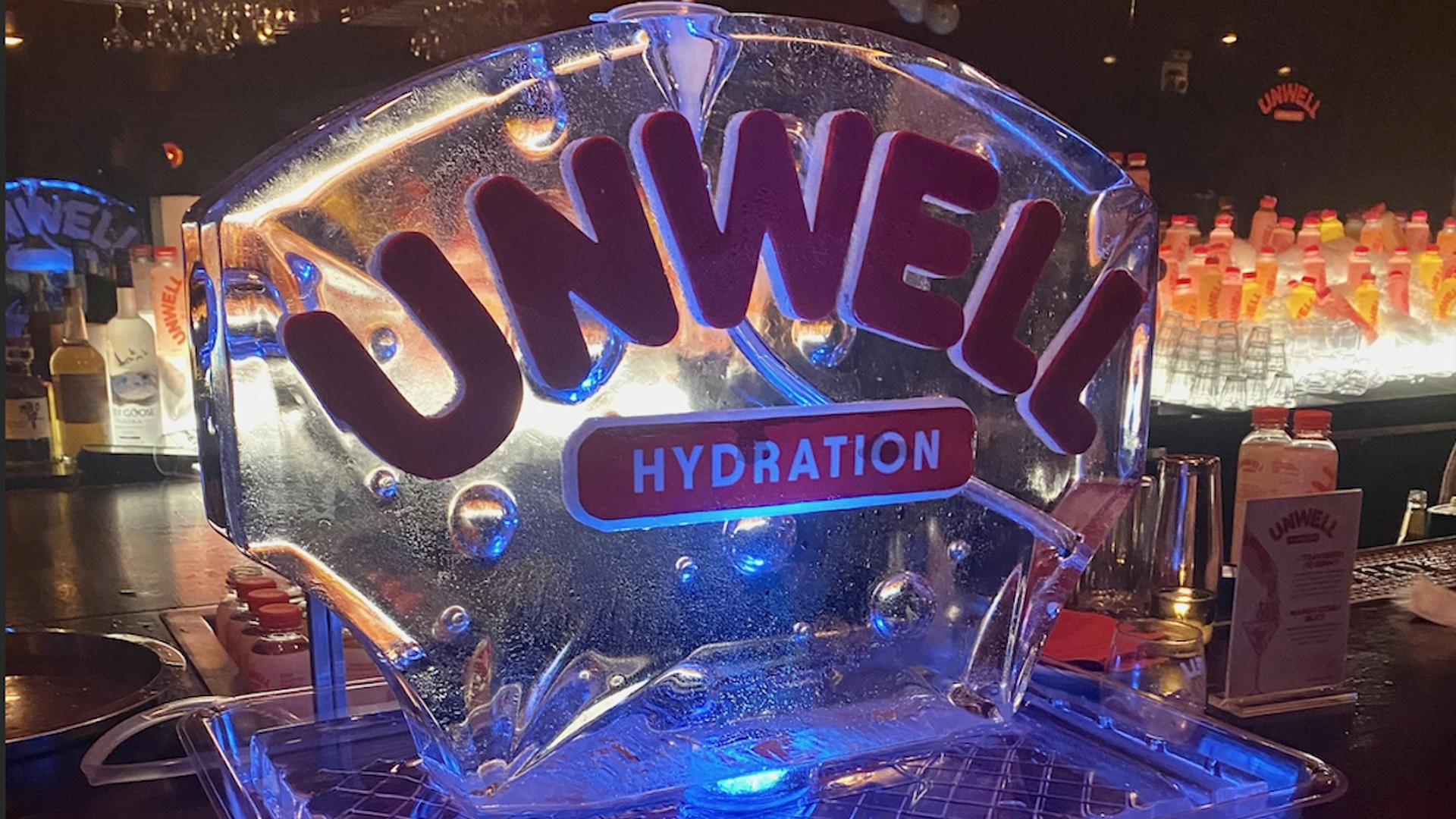
After Axios Communicators Live on Thursday, my colleague Kerry Flynn and I scooted over to NoHo for "Call Her Daddy" host Alex Cooper's Unwell party that celebrated the launch of her new hydration drink.
I went for two reasons ...
- It sounded fun (and it was!)
- To get a better sense of how Cooper engages with her listeners in person, in a more intimate setting.
ππ»What I heard: Several of the attendees I spoke to β mostly Gen Z women β said they were there to see Cooper and more closely tie themselves to the brand she's built.
- That was clear in the flurry of Unwell-themed posts that flooded social media after the event.
- The Unwell party has generated 40.2 million individual posts across TikTok since last week.
π What I'm watching: To break through, you can't just build an audience. You have to build a fanbase.
- How brands adjust to this reality in 2025 is something to watch.
- And if you have thoughts on this, shoot me a note.
7. π 1 quote to go
"If 2024 was the year of change, 2025 will be the year of navigation ... which is [to say] how does my company, my brand, my CEO or my employee base navigate the new world that we find ourselves in?"β Burson global CEO Corey duBrowa, said at Axios Communicators Live
ππ» Thanks to editors Nicholas Johnston and Kathie Bozanich. And extra thanks to you for reading each week!
If this was forwarded to you, subscribe here.
Sign up for Axios Communicators