The PR team tasked with demystifying generative AI

Add Axios as your preferred source to
see more of our stories on Google.
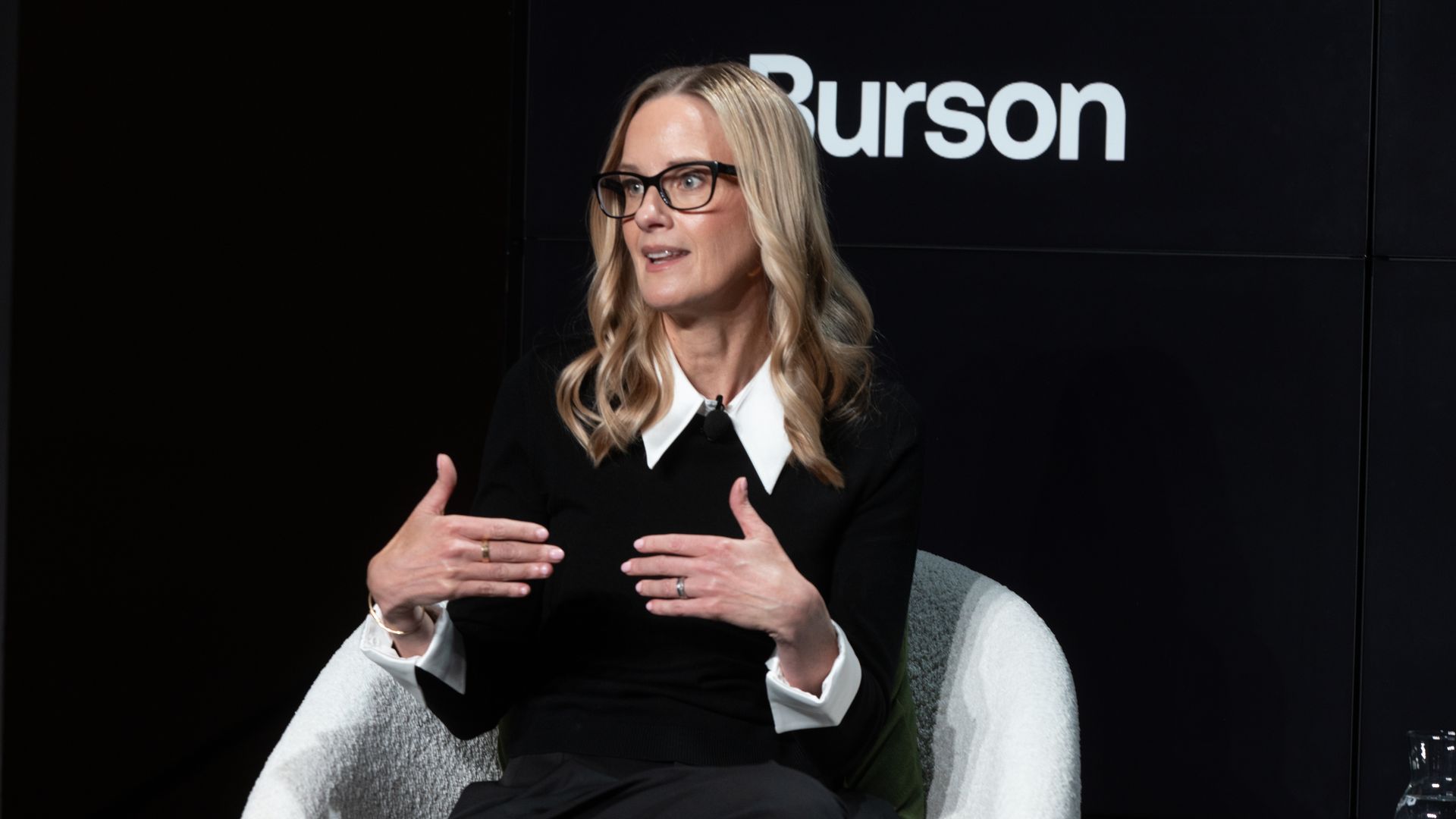
OpenAI's head of public relations Lindsey Held Bolton at Axios Communicators Live. Photo: Steven Duarte on behalf of Axios
As OpenAI's head of public relations Lindsey Held Bolton says her priority is demystifying AI tools.
Why it matters: Since launching ChatGPT just two years ago, OpenAI has changed the way we work, communicate, create and innovate. However, it has been met with a lot of criticism and pushback.
State of play: Bolton's relatively small team works to communicate through regulatory scrutiny, fight misleading narratives and help key audiences understand what the tools can and can't do.
- "[Our] focus is education. We really want to go out there and demystify AI," Bolton said. "Sometimes there's mistrust if you don't understand how the technology works. So we really are focused on education and going out and doing a lot behind the scenes with reporters, with third parties and constituencies we care about to make sure they understand."
- "We have to address the challenges and the criticisms, and that's fair. But we also are trying to balance more to the proactive and talking about the good-use cases."
Between the lines: It would be easy for the team to get bogged down by constantly addressing internal leaks, which are par for the course, says Bolton.
- "They're going to happen, and when you're a fast-growing company, they're especially going to happen," she says. "I think the challenge for us is just making sure they don't throw you off your game. You plan for it."
- "We want to build trust as well as just try to be very transparent, and if we are going to share things internally — which we want to do — we often try to share it externally as well and maybe give more context than you would normally get if it was just through a leak. It's not a perfect science. It's an ongoing kind of struggle. But we do the best we can."
Zoom out: One way OpenAI does this is by rolling out specific products for the audiences that might be most impacted — or most inclined to use them. For example, the company first deployed Sora — which generates video from text — to artists, but has since introduced it to everyone.
- "This is what we call iterative deployment," Bolton says. "We want to go out very early in the process and show you all really what the research is so that we can get feedback, we can improve the experience and make it better as we go."
Zoom in: Communicators are some of the early adopters of AI, specifically ChatGPT.
- Burson global CEO Corey duBrowa told the crowd his firm uses AI for its predictive capabilities, while Google's head of comms Rob Shilkin says his team's favorite tool is Google Notebook LM, which generates audio summaries in a fun, podcast format.
What they're saying: Bolton says she thinks of AI as an assistant and nothing more than a tool.
- "I use it for translation every day. ... I use it for coverage reports. I can take a lot of media coverage, put it in there, ask it what are the three top trends that you saw carry through in the coverage and it'll share that back with me. Or you can do something like take an op-ed and put it in and say, you know, poke holes through this op-ed, let me know what criticisms certain stakeholders might have and let me know how I can strengthen the language."
OpenAI's communications team recently held a hackathon in which best AI use cases were explored. One result:
- Uploading speeches, interviews and memos from specific executives and creating GPTs aligned to them can help quickly generate talking points, quotes and remarks in their voice.
What's next: Educating the masses on AI Agents, which can help users complete complex tasks.
- However, "I think the name is not great. I think we need a better name," Bolton added.
