Axios Closer

April 10, 2024

Wednesday ✅.
Today's newsletter is 699 words, a 2½-minute read.
🔔 The dashboard: The S&P 500 closed down 1.0%.
- Biggest gainer? GE Vernova (+4.7%), the energy equipment manufacturer, rose for the third straight session.
- Biggest decliner? Deckers Outdoor (-6.6%), the footwear company, following an analyst note signaling concerns of softening demand for its core products.
1 big thing: Smucker's plan for snacking

J.M. Smucker's $5.6 billion acquisition of Hostess closed in November, setting up the peanut-butter-and-jelly food giant to diversify its business into the snacking category.
Why it matters: Hostess — which makes Twinkies, Ho Hos, Ding Dongs, Zingers and other treats — operates in a space where Jif maker Smucker has historically not had much product.
The big picture: Smucker plans to invest heavily in digital advertising, distribution and new products, says Dan O'Leary, Hostess' former chief growth officer who now oversees Smucker's sweet baked snacks and pet products businesses.
- Smucker's smash-hit Uncrustables brand, for example, could be paired with Hostess for new product innovation.
The following interview has been condensed and lightly edited for clarity:
Nathan: My dad is a Twinkies fan. So, are Twinkies going to change?
O'Leary: No. We have generations of consumers who love these products. We will always innovate. We always find new twists on them.
Why did it make sense to bring these two companies together?
Consumers today eat fundamentally different than they did 20 years ago. It's more frequent, small eating occasions, eating throughout the day.
Pairing Smucker and a company like Hostess brings up the possibility of very interesting new product combinations. Will we see some of that?
Yeah, that is something we are working on now. There are places that you could do some mashups.
With all this conversation about weight loss drugs and the impact that could make on snacking, have you been able to assess how it might actually play out for you?
We're not seeing a material effect on sales to date. That being said, we're going to make sure that we're always meeting the needs of our consumer.
2. Charted: Some groceries are getting cheaper

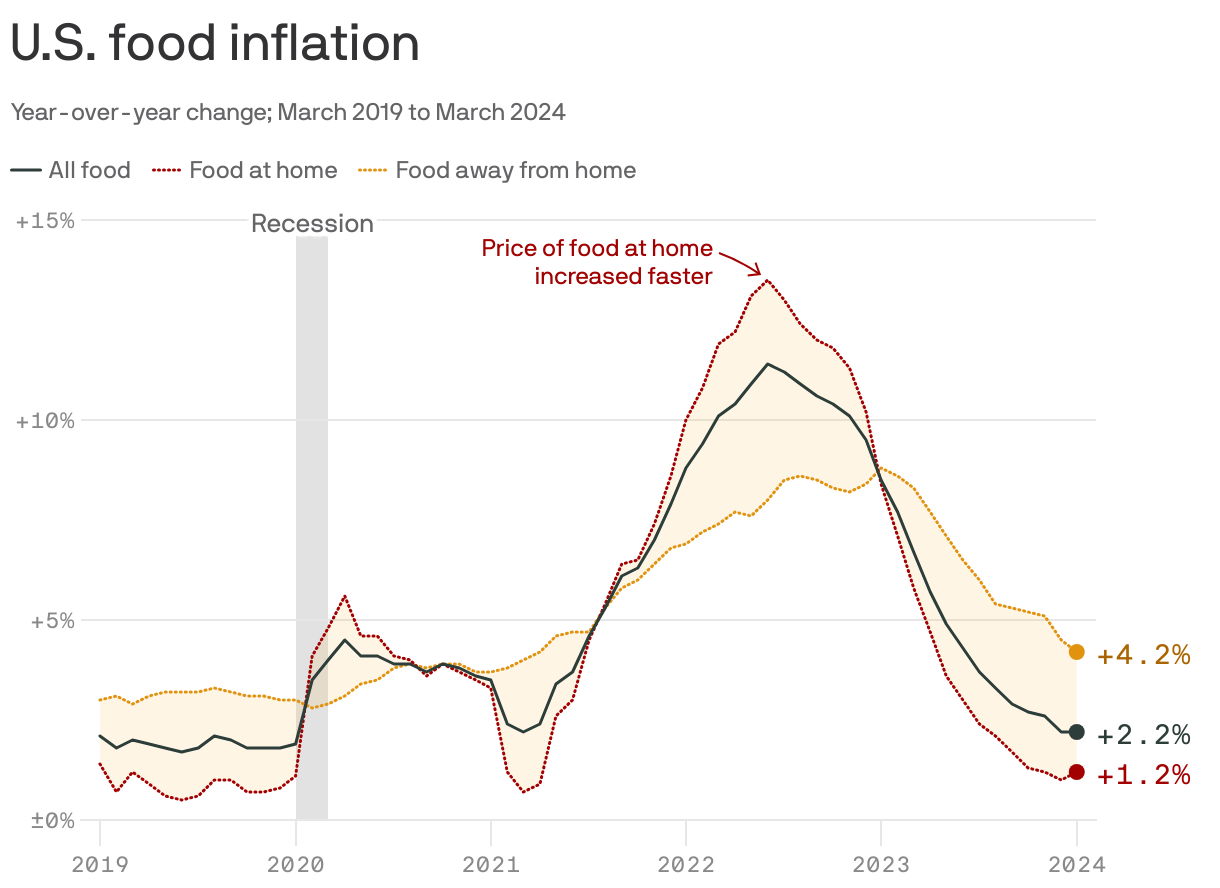
Food price increases are finally fading.
Driving the news: The consumer price index jumped a higher-than-expected 3.5% in March over last year, government data showed today. That was hotter than Wall Street expected and well above what Fed policymakers would like to see.
- Food prices, however, rose marginally, with the "at home" (i.e., groceries) category flat in March from the previous month.
By the numbers: Three of the six major grocery store food group indexes dipped over the month.
- Cereals and bakery products experienced the largest monthly drop, tumbling 0.9% in March.
Yes but: The dining out category rose 4.2% in March over last year, down slightly from the 4.5% rise in February.
4. Macy's settles with Arkhouse
Macy's reached an agreement with activist investor Arkhouse Capital Management, ending a contentious proxy fight.
Between the lines: Arkhouse had nominated a slate of directors for Macy's boards, with shareholders scheduled to vote on May 17.
- Per today's announcement, the department store chain will add two of the Arkhouse nominees to its board, while Arkhouse will withdraw the rest.
- Macy's is also implementing several previously announced board changes immediately and said it's continuing to engage with Arkhouse and partner Brigade Capital Management about the takeover offer.
The bottom line: A takeover still could happen, but it became less likely today.
Go deeper: Get Axios Pro: Retail Deals
5. Staying seated
Will you swap seats?
- Those are the "four most divisive words on a flight," the Wall Street Journal says.
The big picture: With airlines charging for preferred seats these days, some folks aren't reacting very kindly to the age-old request from fellow passengers.
- "99% of the time I'm going to say no," 35-year-old digital marketing director James Randolph tells WSJ. "I picked this seat. I want to have it. I paid extra for it."
💭 Nathan's thought bubble: We can feud with each other — or we can direct our discontent at the airlines for forcing us to pay to sit with our traveling mates.
6. What they're saying
"The broadband nutrition label is a tool that can help consumers make sure they have a clear, straightforward explanation of home and mobile services before signing up for anything."— Jon Donenberg, deputy director of the White House National Economic Council, to reporters on the FCC's new requirement that broadband providers are transparent about their pricing.
Today's newsletter was edited by Pete Gannon and copy edited by Sheryl Miller.
✏️ Was this email forwarded to you? Sign up here to get Axios Closer in your inbox.
Sign up for Axios Closer