
Axios Closer

June 12, 2023
Monday âś….
Today's newsletter is 697 words, a 2½-minute read.
đź”” The dashboard: The S&P 500 closed up 0.9%.
- Biggest gainer? Carnival Corp. (+12.5%), the cruise line operator, received a pair of stock upgrades as analysts cited demand momentum in the industry.
- Biggest decliner? Nasdaq (-11.8%), the exchange operator, agreed to a $10.5 billion deal to acquire software firm Adenza.
1 big thing: Tech’s health sprint
Illustration: Sarah Grillo/Axios
Health care’s labor shortage is adding new urgency to the need for new tech, Hope writes.
Why it matters: Americans 65 and older, those most in need of health care services, are expected to outnumber children in the U.S. for the first time by 2030 — just as the health care sector is expected to have a shortfall of more than 200,000 physicians and nurses.
State of play: Carbon Health, a primary care startup, is using AI to write notes during patient appointments, one of the most time-intensive tasks for physicians.
- Tempus, a precision medicine company, has rolled out its Tempus One voice and text assistant for clinicians that uses generative AI to retrieve and access patient data.
- Gig work apps dedicated to staffing nurses have attracted hundreds of millions of dollars in funding.
- Major retailers, including Walmart, Amazon, Best Buy and CVS, have pushed into digital and virtual health products and services.
Reality check: Technology cannot solve the major issues slowing down worker replacement, such as lack of residency slots and expensive training and education.
- And existing shortages were further strained by the COVID pandemic, which drove record levels of burnout and caused many to leave their roles.
- Trainees are now looking for “alternative career paths” and “a diversity of experiences” that can help them make impacts beyond hospitals and academic research, Vin Gupta, a pulmonologist and Amazon Pharmacy’s chief medical officer, told Axios recently in an interview.
What we're watching: Whether tech integration can win the favor of patients.
- Perception of digital experiences — scheduling, registration, payments — is getting worse, results from a late 2022 survey of patients and providers from Experian Health show.
2. Charted: Activists winning more board battles


Activist investors are having a relatively successful year when it comes to board battles, Axios' Kimberly Chin and Michael Flaherty write.
- One big difference this year is the SEC's Universal Proxy Card rule.
Be smart: Before the UPC, any shareholder voting by proxy in a contested board election had a limited choice — the company's nominees or the activists' nominees.
- The UPC created a single ballot, allowing proxy voters to choose individual nominees from either side of the contest.
The intrigue: The new policy, which went into effect last summer, had sparked concern from corporate executives who said it would lead to more activist wins.
- But proxy solicitors and other advisers interviewed by Axios still aren't so sure.
4. JPMorgan to settle Epstein class action

Photo: Michael M. Santiago/Getty Images
JPMorgan Chase today reached a tentative agreement to settle a class-action lawsuit brought by a survivor of Jeffrey Epstein, Axios' Ivana Saric writes.
- The bank is prepared to pay $290 million in the deal, according to a statement from the plaintiff's attorney.
Catch up fast: The suit accused the big bank of knowingly participating in and benefiting from Epstein's sex trafficking activities.
- Litigation is still pending between the U.S. Virgin Islands and JPMorgan, as well as claims the company has lodged against former executive Jes Staley.
What they're saying: "Any association with [Epstein] was a mistake and we regret it. We would never have continued to do business with him if we believed he was using our bank in any way to help commit heinous crimes," JPMorgan spokesperson Patricia Wexler said in a statement.
5. Elizabeth Gilbert pulls novel set in Russia
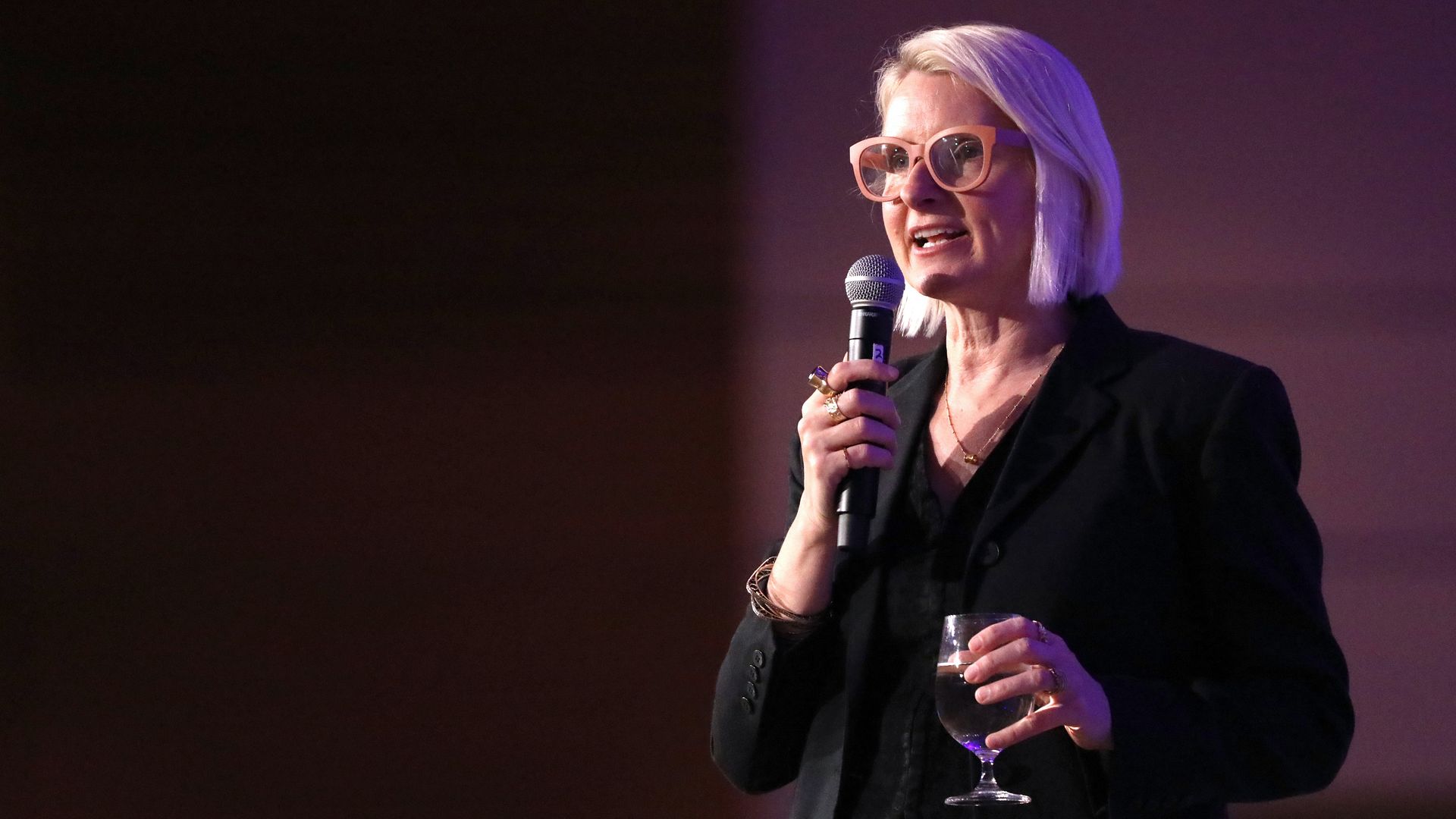
Elizabeth Gilbert at an April event in Toronto, Ontario. Photo: Jeremychanphotography/Getty Images
Elizabeth Gilbert, the best-selling author of “Eat, Pray, Love,” is pulling her upcoming novel from its February publication schedule following backlash.
Driving the news: The book, "The Snow Forest," is set in Russia in the 1930s.
- Gilbert said in a video statement that news of the book had sparked an outpouring of criticism from Ukrainian readers.
The big picture: The Washington Post reported that online reviewers have criticized the author for "romanticizing Russian culture" during the ongoing war in Ukraine.
- Yes, but: Others, including several authors, took issue with the backlash. Author and journalist Otegha Uwagba said the move to pull the book felt like "an absurd over correction."
6. What they're saying
"[The Fed] might get a number that gives them comfort that things are moving in the right direction."— Mark Zandi, chief economist at Moody’s Analytics, on tomorrow's inflation report.
Today's newsletter was edited by Pete Gannon and copy edited by Sheryl Miller.
💡 Join Axios’ Alexi McCammond and Courtenay Brown Wednesday at 8am ET in Washington, D.C., for a News Shapers event featuring interviews with key newsmakers around the top stories of the day.
- Guests include White House Office of Management and Budget director Shalanda D. Young and Sen. Raphael G. Warnock (D-Ga.). Register here to attend in person.
Sign up for Axios Closer

Catch up on the day's biggest business stories and look ahead to important trends. Led by Nathan Bomey.