Axios AM

July 13, 2026

1 big thing: Dems' payback panel

Axios CEO Jim VandeHei writes in his weekly C-Suite newsletter focusing on CEOs and their teams:
If Democrats win the House in November, they plan to keep hammering on the Epstein files because the issue divides Republicans and "makes Trump crazy," a top insider tells us.
- Why it matters: In the majority, Democratic committee chairs would hold subpoena power. We're told they plan to make President Trump's family finances one of their top targets, to contrast average Americans' finances with this term's gusher for Trump, his relatives and allies.
These are the chairs-in-waiting for six of the most powerful House committees, and the control they could exert over CEOs and other business leaders:
1. Oversight and Government Reform: Robert Garcia (Calif.)
- Garcia would go hard on corruption and self-dealing among Trump allies. He wants to make their lives hell. No committee matters more if Dems win.
- Why you should care: If you've done any business with the administration, this is your top reputational risk. The Oversight chair can drag you to Capitol Hill to make you answer for it. Trump can and will pardon his family but not you and your company.
2. Energy and Commerce: Frank Pallone (N.J.)
- Pallone would have jurisdiction over issues ranging from algorithmic pricing to children's safety online. He's out front on data centers, calling for a national moratorium.
- Why you should care: He'll grill you on the topics really pissing people off right now. Consider him the guy building the data center case for the Dems' nominee in '28. Anyone who made deals with Health Secretary Robert F. Kennedy Jr. and his agencies should lawyer up — and lobbyist up, too.
3. Ways and Means: Richard "Richie" Neal (Mass.)
- Neal's committee room will be the place in Washington most eager to discuss corporate tax rates and Trump's tariffs.
- Why you should care: Expect him to use his bully pulpit to push companies on paying their fair share to the IRS. This is where the '28 tax debate begins.
4. Appropriations: Rosa DeLauro (Conn.)
- DeLauro, 83, wants to make Trump answer for every penny he's spent and withheld.
- Why you should care: Organizations that rely on government funding — including contracts, grants, research dollars — could get pulled into a Hill hearing.
5. Financial Services: Maxine Waters (Calif.)
- Waters, who will turn 88 next month, would dig into who was in the loop when it came to pulling back enforcement on topics like crypto.
- Why you should care: If your industry benefited from the lax financial oversight of the past couple of years, you risk becoming tied to that narrative, especially if you talked to Trump officials about it.
6. Judiciary: Jamie Raskin (Md.)
- He's been a leading antitrust voice and has slammed the Trump administration's role in Paramount Skydance's takeover of Warner Bros. Discovery.
- Why you should care: If you're pursuing a big merger and the president feels like getting involved, Raskin's committee would become one big headache.
Axios' Andrew Solender contributed reporting. Share this story.
- 📈 If you're a CEO or on a CEO's team: Apply now to join Jim's new Axios C-Suite weekly newsletter.
2. 🏛️ Lindsey Graham's final hours: "I can't die now"

Sen. Lindsey Graham (R-S.C.) died at 71 after a tear in his aorta related to the hardening of his arteries, according to a preliminary medical examiner finding.
Axios' Barak Ravid reports on one of Graham's final acts, based on multiple conversations with the late senator over the past several weeks:
Graham spent his final weeks laying the groundwork for an ambitious new push to normalize relations between Saudi Arabia and Israel.
- Why it matters: Graham was one of Washington's most influential and energetic foreign policy figures. He spent decades trying to shape America's role in the world and was still pursuing some of his biggest diplomatic ambitions in the final hours of his life.
Graham saw Saudi–Israeli normalization as the defining prize of a broader postwar settlement in the Middle East — one that could outlast the military campaign against Iran and fundamentally reshape the region.
- He had worked on the issue for years, including with the Biden administration. He believed the opening created by Iran's weakening could give President Trump a rare chance to broker a historic agreement.
- Graham planned to begin an intensive diplomatic push after Israel's October elections and the U.S. midterms, with the goal of reaching a deal before the new Congress opens in January.
- But he believed the war with Iran had to be brought under control first, especially the ongoing crisis in the Strait of Hormuz.

The final hours: Graham spoke with Trump by phone Saturday night and briefed him on his recent trip to Ukraine and the Russia sanctions bill he wanted the Senate to vote on soon.
- A person who spoke with Graham shortly afterward said the senator complained he was feeling unwell. When the person urged him to seek medical attention immediately, Graham said he would do so Sunday morning after his scheduled appearance on NBC's "Meet the Press."
- Graham then joked: "I can't die now. I still need to do the Russia sanctions, get Iran sorted out and do Israeli–Saudi normalization."
- He died several hours later.
3. 👀 McConnell breaks silence

After weeks of silence, Sen. Mitch McConnell revealed yesterday that he was hospitalized for a fall four weeks ago and then developed "a mild case of pneumonia."
- He has since moved to a rehab facility, Axios' Rebecca Falconer writes.
Why it matters: The statement is McConnell's first public explanation of the hospitalization that fueled a month of speculation about his health ahead of his planned retirement.
McConnell said he didn't suffer a heart attack or a stroke, but was briefly unconscious before he was taken to the hospital.
- The physician's office in Congress said in a statement that the 84-year-old, seven-term senator had experienced several falls this year, which it attributed to complications from his childhood bout with polio.
- McConnell explained the four-week silence about his condition by saying that "folks of my generation often hesitate to share the vulnerability that comes with growing older."
Full statements from McConnell, physician … Share this story.
4. 🦾 Charted: Memory's earnings edge


The AI-driven price boom for memory chips and products is expected to keep Sandisk and Micron atop the sales leaderboard this earnings season, Axios' Matt Phillips writes from consensus Wall Street forecasts.
👀 What we're watching: Whether these giant forecasts (charted above) are achieved, and if they actually excite the market.
- Just last week, gobsmacking results from Korean chip giant Samsung were followed by a steep sell-off.
5. 🌿 Michael Cohen's olive branch
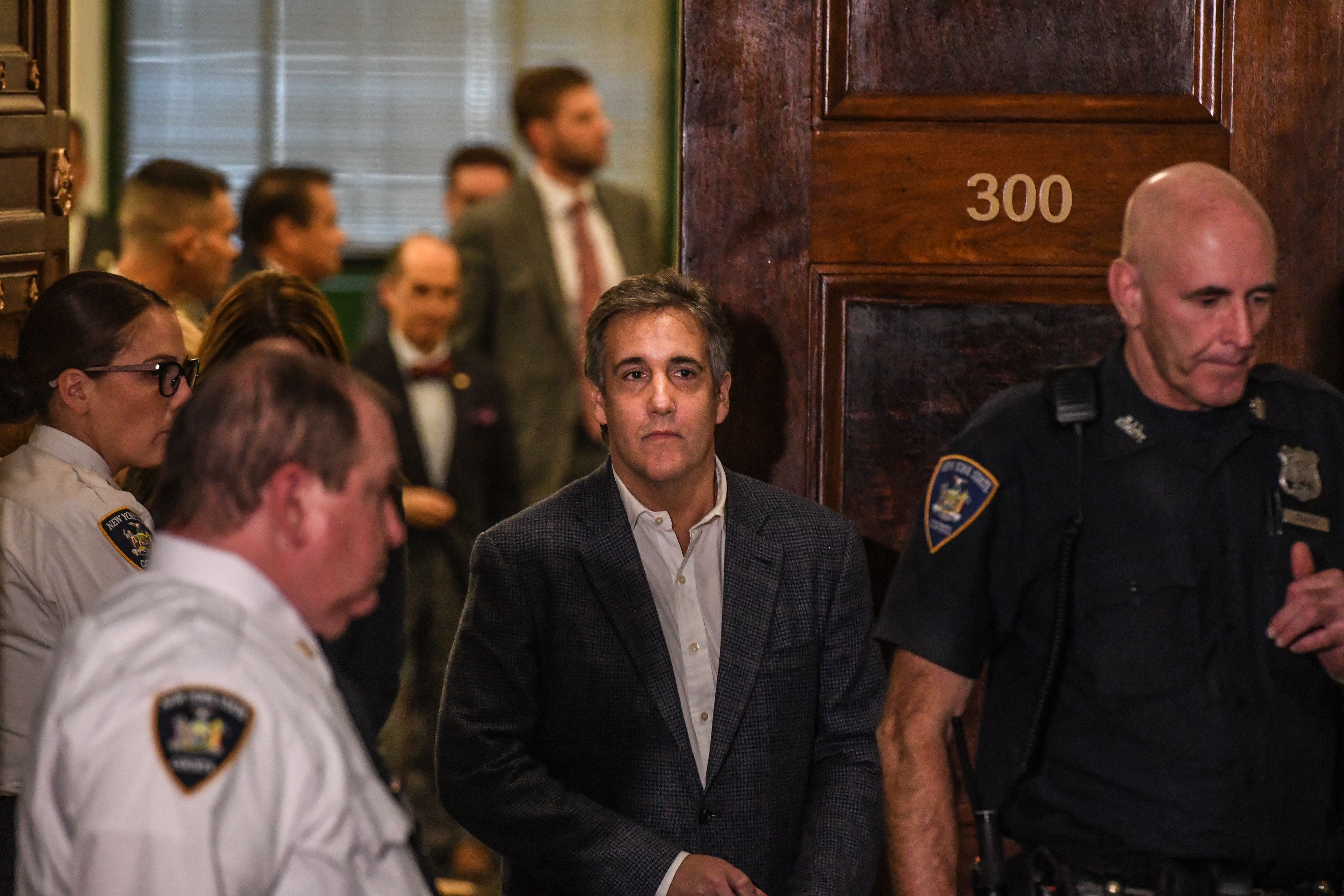
Michael Cohen, President Trump's former personal lawyer and fixer, is making peace with the man he once helped convict, the N.Y. Times' Maggie Haberman and Ben Protess report.
- A previously unreported meeting last summer at Trump's Bedminster golf club broke years of estrangement between the two men, setting off a second, longer sit-down this year and calls to some of Trump's closest allies.
Cohen's public reversal is a remarkable turn for the former star witness in Trump's Manhattan criminal trial.
- Cohen told The Times: "If Donald Trump and Michael Cohen can rekindle and reconcile their past relationship, then anyone should be able to."
Keep reading (gift link).
6. 🕯️ Transforming America's racist landmarks

7. ⚜️ Data center payout

8. ⛰️ 1 fun thing: Rare superbloom

The green gentian, or monument plant, is superblooming on Colorado's hillsides — a rare phenomenon during which dormant wildflowers blossom simultaneously, Axios Denver's John Frank writes.
- The plant lives 20–60 years, sending up a flower-covered stalk 5 feet or taller before it blooms once and dies.
Get Axios Local: Newsletters in 39 cities … soon to be 41.
Axios AM