Axios AM

October 18, 2026

1 big thing: Anti-party, anti-politician candidates surge

In red states and blue, unconventional candidates are downplaying — or even disowning — party labels to tap into voters' disdain for Washington, Axios' Hans Nichols writes.
Why it matters: They might not all win, but the sheer number of political outsiders connecting with voters tells us something about the electorate: It's angry and willing to take risks.
- The candidates — whether they come from the pulpit or the NFL sidelines — are making the same bet: Voters are tired of career politicians.
🗺️ Zoom in: Consider three unorthodox Democrats leading Senate contests in red states: a Presbyterian seminarian in Texas (state Rep. James Talarico), a megachurch pastor in Kansas (Adam Hamilton), and an Alaska Native in that state (former Rep. Mary Peltola, who once skipped a week of House votes to go fishing when Chinook salmon were running).
- Traditionally blue Minnesota's Senate race features Michele Tafoya — a former NFL sideline reporter who's endorsed by President Trump but calls herself an independent Republican. She's mounting a serious challenge to Democrat Peggy Flanagan, the lieutenant governor.
- In House races, Democrats are fielding a smokejumper in Montana (Sam Forstag), a 29-year-old barista in Colorado (Melat Kiros) and a Tejano singer in Texas (Bobby Pulido).
Four independent Senate candidates are courting Democratic voters without a (D) next to their names — and sometimes without a Democrat in the race.
- In Nebraska, Dan Osborn, a union steamfitter and former factory mechanic, is mounting a serious independent challenge to Sen. Pete Ricketts, a former two-term governor whose family owns the Chicago Cubs.
- In Montana, Seth Bodnar, a former Army Green Beret and University of Montana president, is running as an independent for an open Senate seat. Democrats tried to persuade their nominee to drop out, but she stayed in the race.
- In South Dakota, Brian Bengs, a one-time park ranger, is challenging Republican Sen. Mike Rounds as an independent. Four years ago, Bengs ran as a Democrat against Sen. John Thune.
- In Idaho, former Army tank commander and tech executive Todd Achilles is running as an independent against Republican Sen. Jim Risch. (Achilles previously served as a Democrat in the Idaho House.)
2. 🕰️ Decades-long GOP win streaks at risk
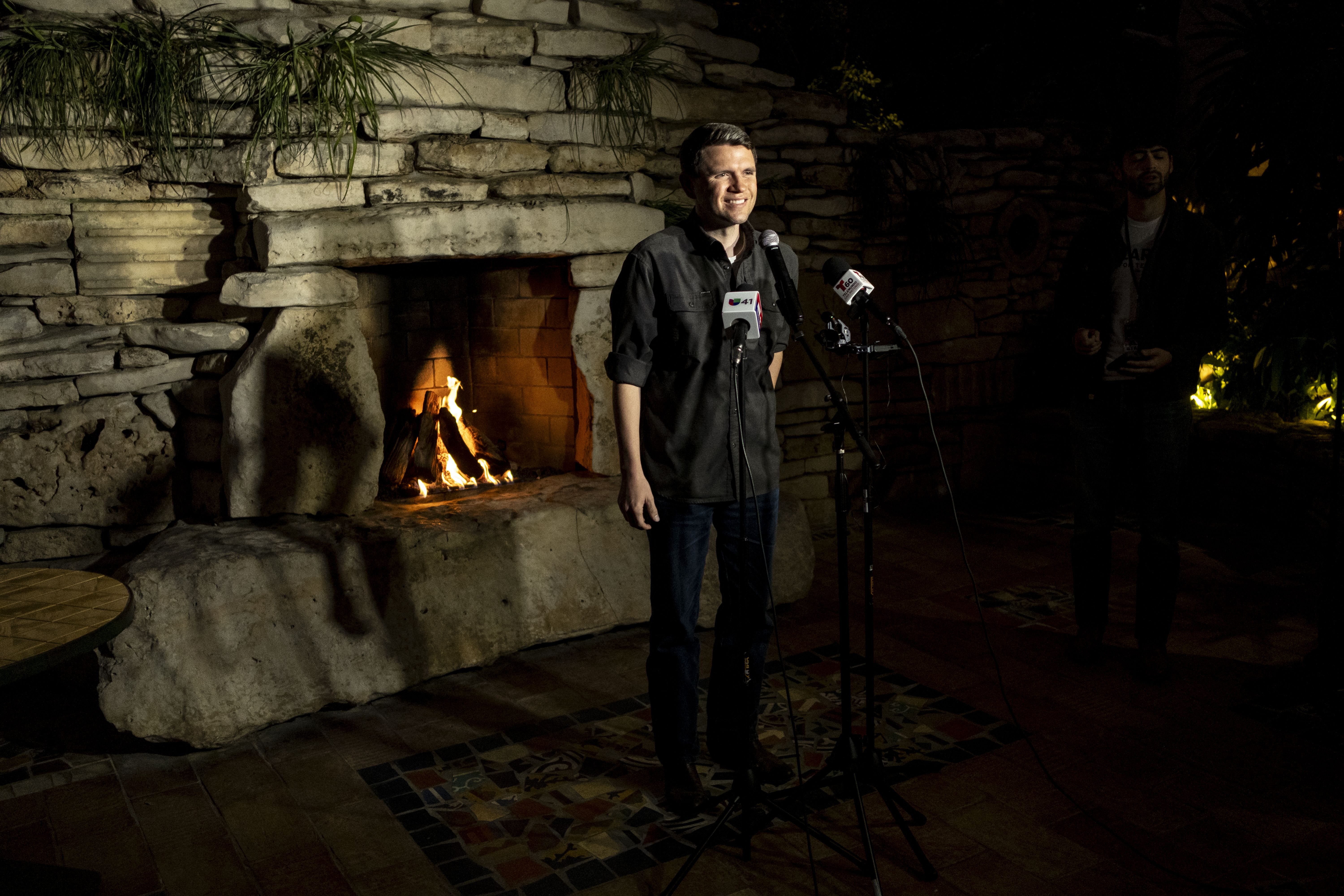
Democrats are running surprisingly competitive races in traditionally Republican territory, and it's putting GOP winning streaks at risk that stretch as far back as the 1930s, Axios' Andrew Solender writes.
- Kansas (1932): Sen. Roger Marshall (R-Kan.) faces a surprisingly tough challenge from Democrat Adam Hamilton, who has significantly outraised the incumbent GOP senator. A Democrat hasn't won a U.S. Senate seat in Kansas since 1932.
- Texas (1988): James Talarico is giving Texas Attorney General Ken Paxton a real run for his money in the Senate race. Talarico generally leads in polls by low single digits. Cook rates it a toss-up. Democrats last won a Senate seat in the state with Lloyd Bentsen in 1988.
- South Carolina (1998): Polls show Republican Sen. Darline Graham leading Democrat Annie Andrews by just a few points. The last South Carolina Democrat elected to the Senate was Fritz Hollings in 1998.
In gubernatorial elections, Democrats are looking to break losing streaks in Texas (1990), Florida (1994), Georgia (1998) and Alaska (1998).
- Republicans seeking to break Democratic win streaks include Mike Rogers in Michigan's Senate race (1994) and Christine Drazan in the Oregon governor's race (1982).
3. Internet loses human touch

The internet is undergoing a foundational shift as websites evolve from human destinations to information hubs for AI agents, Axios' Sara Fischer and Kerry Flynn write in an Axios Media Trends Executive briefing.
- Why it matters: Human discretion, a critical safeguard for establishing trust online, is rapidly disappearing.
The big picture: Bad actors are using AI to create new information sources designed to manipulate LLMs.
🔮 State of play: Premium publishers and brands are looking to get ahead of this problem in the short term by becoming reliable information warehouses for bots while serving premium experiences for humans.
- At TIME, a news publisher that has leaned heavily into agentic optimization, human visitors encounter articles with imagery and storytelling while AI agents receive structured information, COO Mark Howard told Axios.
- TIME's Agent Ads product extends that approach to advertising, providing machine-readable information about sponsors, including FAQs.
Reality check: Smaller companies may struggle to handle an influx of bot traffic or build the infrastructure needed to serve both humans and machines.
The bottom line: Few consumer websites will survive as direct destinations in the agentic era.
- Without a trust layer to vet information that machines retrieve and analyze, the internet risks becoming a breeding ground for content that's useless to humans.
Share this story ... Subscribe to Axios Media Trends Executive.
4. 📍 How cost of living affects poverty
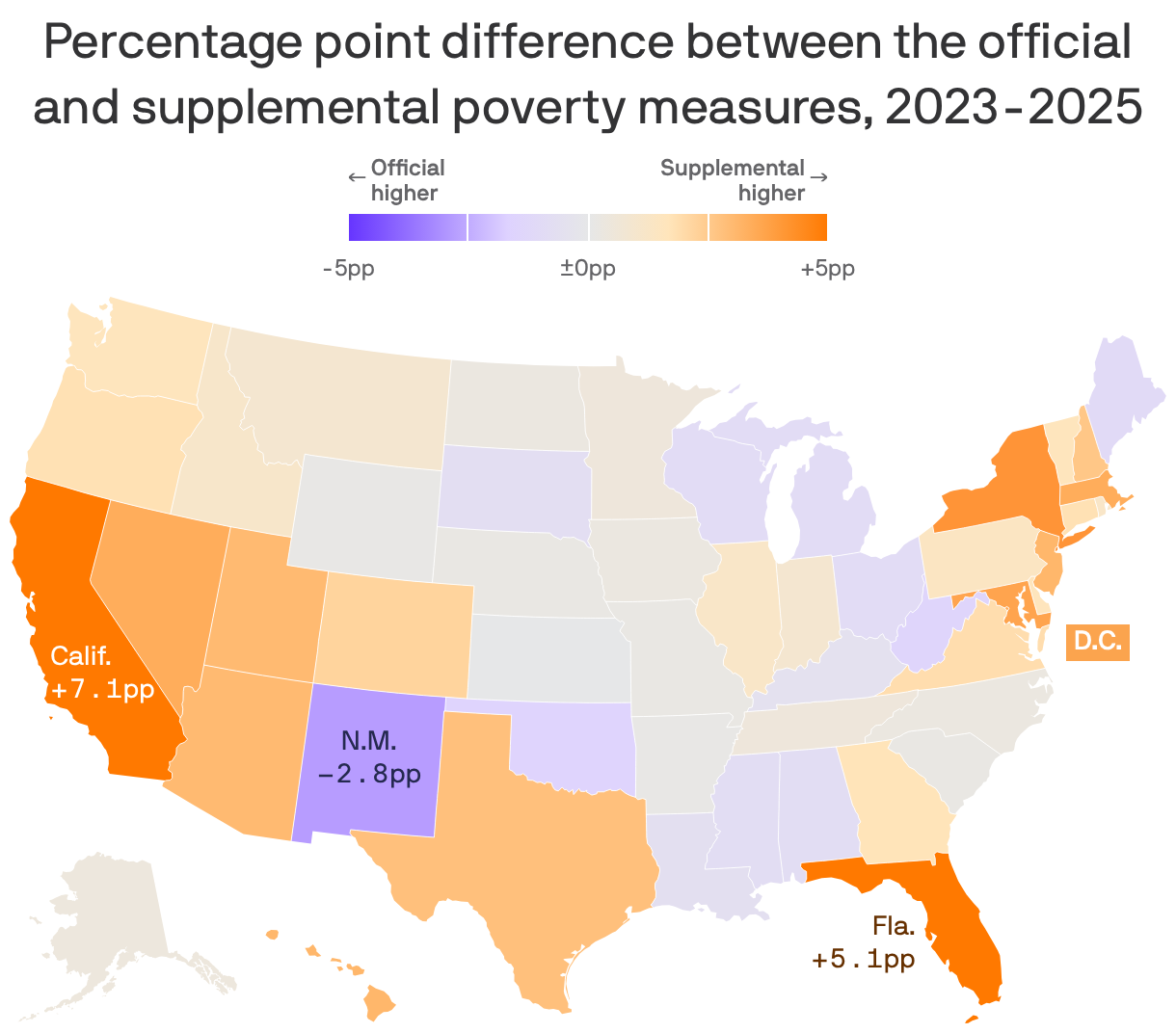
California and Louisiana have something surprising in common: Both have some of the nation's highest poverty rates when the cost of living is factored in, Axios' Russell Contreras writes from Census Bureau data.
The big picture: Southern states dominate America's traditional poverty rankings based on pretax income.
- That familiar geographic divide starts to disappear when you account for more of a family's financial realities. The Supplemental Poverty Measure includes factors like taxes, work and medical expenses, and geographic differences in housing costs.
5. 🛰️ Russian satellite approach raises alarms

A Russian satellite was tracked Friday closely stalking a U.S.-owned commercial satellite — part of a space-based network that has supported Ukraine's military, Axios space expert Thomas Novelly writes.
- Why it matters: Experts told Axios it's a rare maneuver that raises the possibility of Russian interference with U.S. space equipment.
Space intelligence company LeoLabs said Friday that the Russian satellite's movement "appears to be a deliberate approach toward" the U.S.-owned imaging satellite.
- As of Friday afternoon, Russia's Cosmos 2612 satellite was roughly three miles from the American satellite, LeoLabs said.
Between the lines: Aerospace analysts and legal experts said it's worrisome that Russia burned the satellite's fuel and changed its altitude, orbital plane and speed to approach the U.S. satellite.
- Clayton Swope, a CSIS senior space fellow, said on Friday the distance is essentially "bumper-to-bumper."
6. 🇫🇷 France rocked by worst riots in years

Police arrested at least 1,800 people across France after violent groups clashed with officers and looted shops during nationwide demonstrations that drew hundreds of thousands of people who denounced rising living costs and poor conditions in schools.
- Masked groups set fires and attacked public buildings, including city halls, in several cities. In Limoges, in central France, flames engulfed the neo-Renaissance city hall, which was built in the 19th century and survived two world wars. The building's iconic clock tower collapsed.
7. 🗣️ Wanted: Chief small talk officers

A communication-skills app is betting that a baptism by fire in small talk can help people — especially younger Americans — rebuild social confidence, Axios' Josephine Walker writes.
- It's hiring people to approach strangers to put that theory to the test.
RiseGuide is hiring Chief Small Talk Officers, recently rebranded from Head of Hanging Out to stress the seriousness of the assignment.
- The monthlong gig pays each of up to three hires $2,000, plus a budget for outings to parks, bookstores and fitness classes, where they'll strike up conversations with strangers.
8. 👰♀️ 1 for the road: Rise of the three-day wedding

Nearly 1 in 3 weddings now span at least three days, with couples devoting more time and money to making guests feel entertained and cared for, according to a new report from The Knot, Axios' Sami Sparber writes.
- Couples' top priority "is now the guest experience," The Knot editorial director Esther Lee tells Axios.
- Multiday weddings give couples more time to host guests who "are sacrificing their time and energy" to celebrate.
Axios AM