Axios AM

March 06, 2022

1 big thing: Blinken sees evidence of war crimes

Secretary of State Tony Blinken told CNN's Jake Tapper on "State of the Union" from Moldova this morning: "[W]e’ve seen very credible reports of deliberate attacks on civilians, which would constitute a war crime."
- "And what we’re doing right now is documenting all of this, putting it all together, looking at it, and making sure that as people and the appropriate organizations and institutions investigate whether war crimes have been or are being committed, that we can support whatever they’re doing," Blinken added.
- "They’re very credible. And we’re documenting everything."
- Video.
⚡ Breaking: The Ukraine exodus is the fastest-growing refugee crisis in Europe since World War II, topping 1.5 million in 10 days, the UN refugee agency said today.
- "In the coming days, millions more lives will be uprooted, unless there is an immediate end to this senseless conflict," the UNHCR said. Go deeper.
🕊️ Pope Francis said today in his weekly address to crowds gathered in St. Peter's Square: "In Ukraine, rivers of blood and tears are flowing. This is not just a military operation [as Putin described it], but a war which sows death, destruction and misery." (Reuters)
2. Ukraine coverage shows biases

Illustration: Shoshana Gordon/Axios
3. 🧠 Axios explains: How war reroutes air travel


The war is turning into a seismic event for aviation, just as the industry emerges from the COVID downturn, Axios' Andrew Freedman writes.
- Why it matters: The closure of vast stretches of airspace from North America to Russia has airlines scrambling to determine what routes are still feasible and which flights can be rerouted. Flight times are increasing — along with their carbon footprints.
What's happening: The prohibition of U.S. airlines from Russian airspace is blocking the most efficient flight paths between continents, including for flights between much of the U.S. and South Asia.
- The typical flight time between Europe and Asia is about 11.8 hours, and 13.5 hours flying the reverse leg, according to Umang Gupta, managing director at Alton Aviation Consultancy.
- "In a best-case scenario, more than two hours of flight time will be added in each direction," Gupta told Axios.
The roundtrip fuel burn would increase by more than 20%, Gupta said — and that's for the most fuel-efficient wide body aircraft flying today, including the Boeing 787-9 or Airbus A350-900.
- "At today's oil prices of around $100/[barrel], this will translate into nearly $25,000 of additional expenditure for the airline round trip."
- To cover costs, airlines would need to increase fares by more than $120 for a round trip ticket.
Keep reading ... Explore our new "Axios explains Ukraine" series.
4. 📷 1,000 words
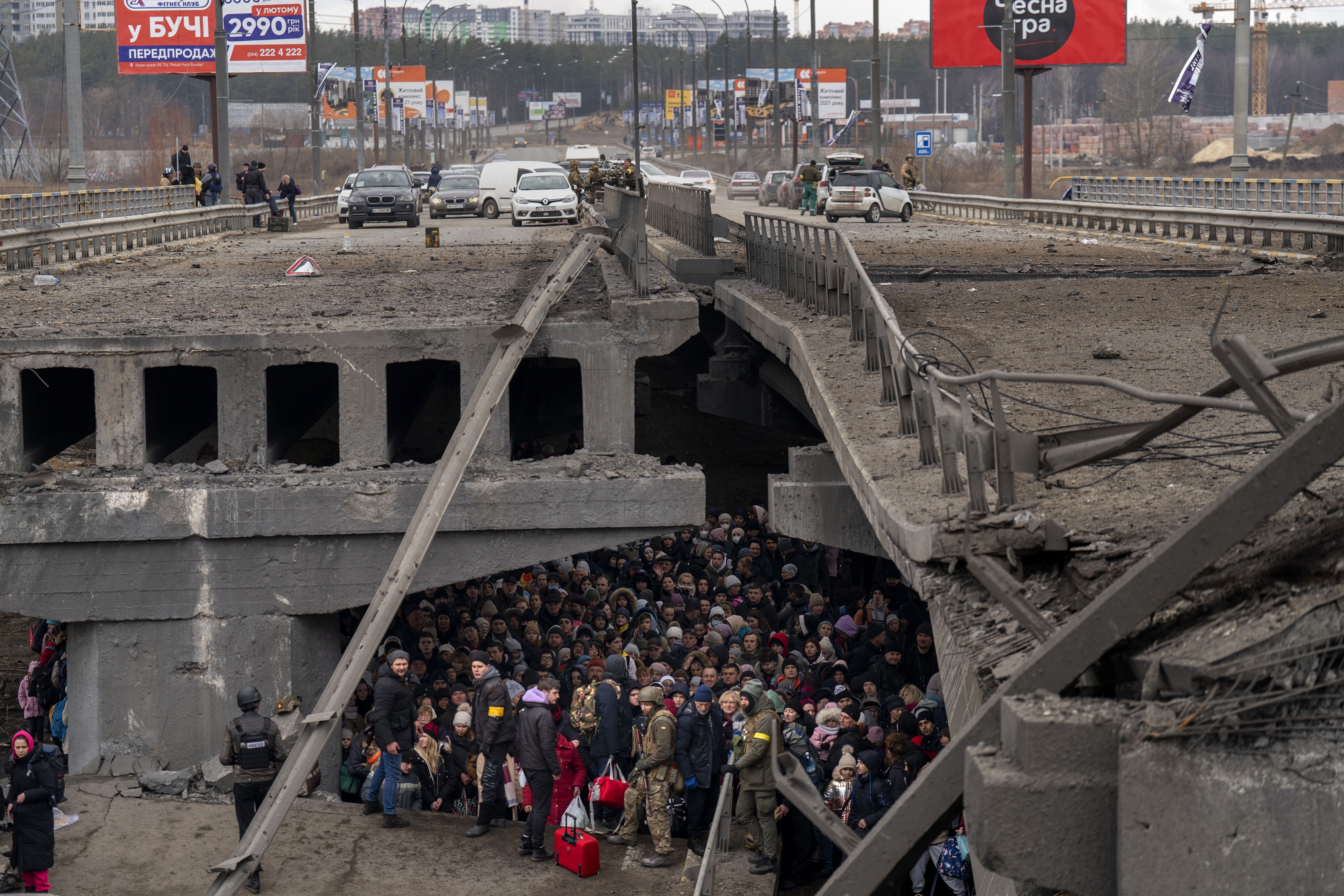
Ukrainians crowd under a bridge destroyed by a Russian airstrike, as they wait to flee across the Irpin River on the outskirts of Kyiv yesterday.
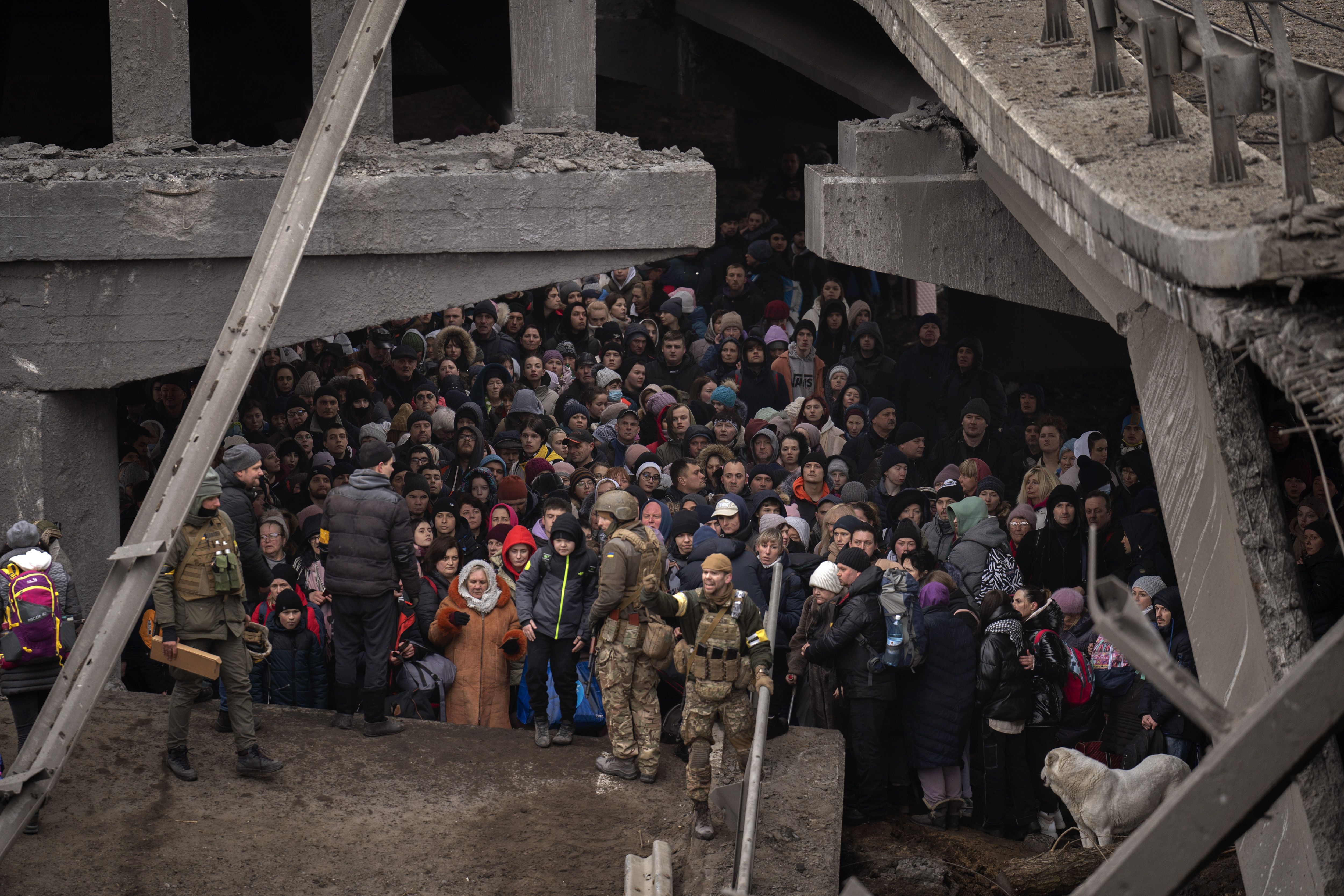
Assisted by Ukrainian soldiers, they lugged pets, infants, purses and flimsy bags stuffed with minimal possessions, AP reports.
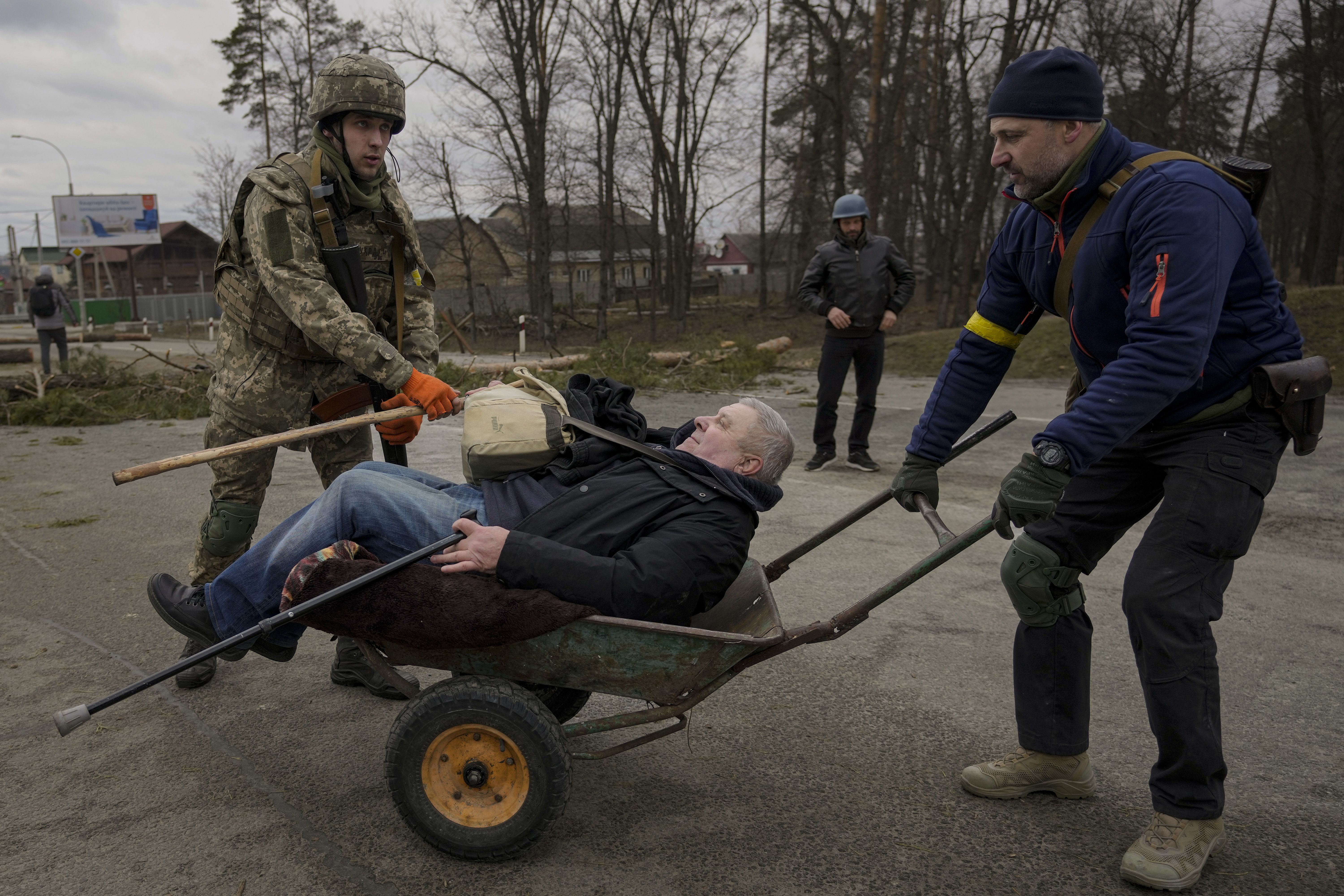
Some of the weak and elderly were carried along the makeshift path in blankets, carts — and even a wheelbarrow.
5. Charted: Organic price gap shrinks


Organic food — historically harder to afford and largely out of reach of many lower-income shoppers — is getting more affordable, Axios Closer co-author Nathan Bomey writes.
What's happening: Big-box grocers like Walmart and Kroger are making organic options more accessible with private-label goods.
Private-label organic items were 14.7% more expensive than regular food in January, down from 22.7% in April, according to an analysis of 1,500 organic products conducted for Axios by DataWeave.
- The shrinking price gap is particularly noticeable in produce. Organic apples cost 33¢ more per pound in January, down from 43¢ a year earlier. Organic tomatoes cost 10¢ more, down from 23¢ more.
Reality check: The price gap between brand-name organic items and regular food increased month-over-month in December and January, according to DataWeave.
- But inflation is hitting conventional foods harder, with DataWeave finding price increases of 2% to 4% for organic food — and 11% for regular items — over the past year.
6. 🏀 Coach K's sour sendoff

Mike Krzyzewski's final home game at Duke ended yesterday in a stunning defeat to UNC, the Blue Devils' fiercest rival. The time had come for a postgame on-court ceremony in Coach K's honor.
- Jerry Seinfeld and NBA commissioner Adam Silver were among the celebrities at Cameron Indoor Stadium in Durham, N.C.
The retiring Hall of Famer — age 75 ... 1,196 career victories ... five NCAA championships — was still thinking about the Blue Devils' 94-81 loss to Chapel Hill, AP reports.
- "I’m sorry about this afternoon," Coach K began, waving off cheers. "It was unacceptable. Today was unacceptable, but the season has been very acceptable. And I’ll tell you: this season isn’t over, all right?"

Coach K's home finale "Spawned a $20 Million Real Estate Bubble," The Wall Street Journal reports (subscription):
- "Every year, Duke students pitch tents and spend months sleeping outside for the chance to [get free tickets to] the annual game against rival North Carolina ... This year, ... tickets for the last regular-season stop on his farewell tour [were] fetching Super Bowl prices."
Here's The Journal's math for the Krzyzewskiville boom: "a dozen students per tent, and hundreds of tents next to Cameron Indoor Stadium ... The closest proxy for student-section prices is $17,000, the most expensive ticket resold for this game, according to SeatGeek."
- Go deeper: ESPN cover story, "The Final March of Coach K."
Axios AM

Catch up with the most important news of the day