Axios AM

March 15, 2024

1 big thing: Pentagon's new fear

Photo illustration: Aïda Amer/Axios. Photos: Bettmann and Interim Archives via Getty Images
2. 🚨 Breaking: Biden claims impeachment over

The White House sent a letter to House Speaker Mike Johnson (R-La.) early this morning with a clear message: Your impeachment inquiry of President Biden is over, Axios' Stephen Neukam writes.
- Why it matters: The letter signals the White House's increasingly aggressive offense on impeachment, as Democrats see the GOP inquiry fizzling out.
The letter to Johnson from White House Counsel Edward Siskel comes as a growing number of Republicans acknowledge that impeaching Biden is unlikely. Johnson hasn't committed to holding a vote on any impeachment articles.
- "It is obviously time to move on, Mr. Speaker. This impeachment is over," Siskel wrote, calling the effort a "charade."
3. 💬 Biden's raw reaction to Oct. 7

The day after the Oct. 7 terrorist attack on Israel by Hamas, President Biden was already talking about it as a world-altering event that could reverberate through the 21st century, Axios' Barak Ravid and Alex Thompson write.
- Why it matters: The president's raw reaction to the attack is captured in the transcript from his five hours of interviews with special counsel Robert Hur on Oct. 8 and 9.
At several moments during the interviews, Biden references the events in Israel.
- "I think the world goes through these major inflection points where what's happening at that moment — and the two, four years around either side of it — and the outcome of those discussions determine what the next six, seven decades look like," Biden said.
- "I think that's where we are right now. For example, I think the Israeli thing has changed it all."
4. 🌡️ Spring gets hotter
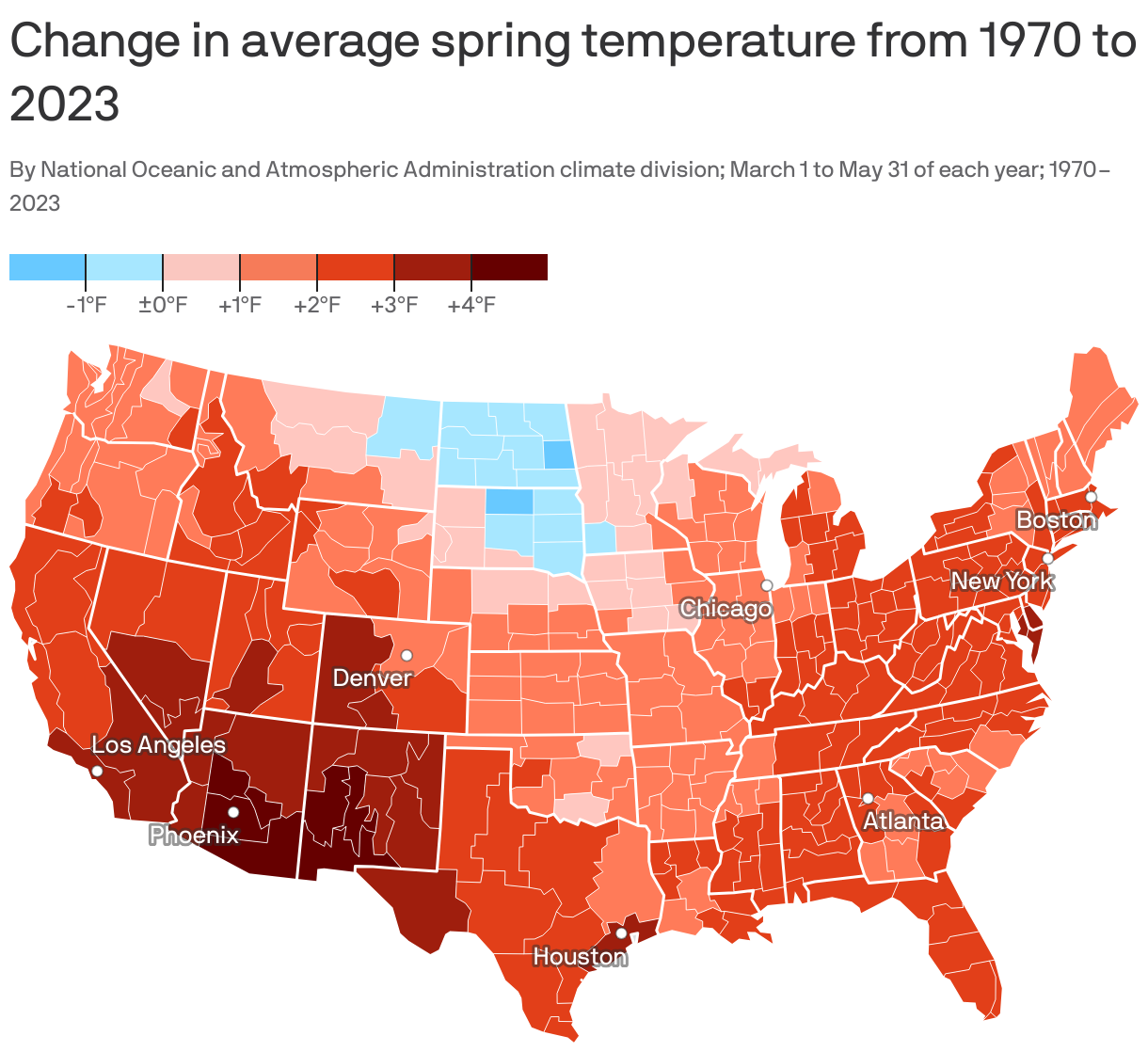
Spring is getting warmer on average nationwide — a trend that reflects human-caused warming, Axios' Alex Fitzpatrick and Alice Feng write from a Climate Central analysis.
- Why it matters: Much of the climate change discussion is focused on summer and winter. But the "between seasons" are affected too.
Average spring temperatures warmed by 2.2°F from 1970 to 2023 across nearly 230 U.S. cities.
- The highest average springtime temperature increases were seen in Reno (+6.8°F), El Paso (+6.3°F), and Las Vegas (+6.2°F).
- A hotter spring could mean longer allergy seasons, changes for farming and an earlier snowmelt (which in turn affects drinking water supplies).
Stunning stat: Spring has gotten notably hotter in the American Southwest, where average seasonal temperatures have risen by more than 6°F in some places.
5. 📈 "America's pumped-up economy"
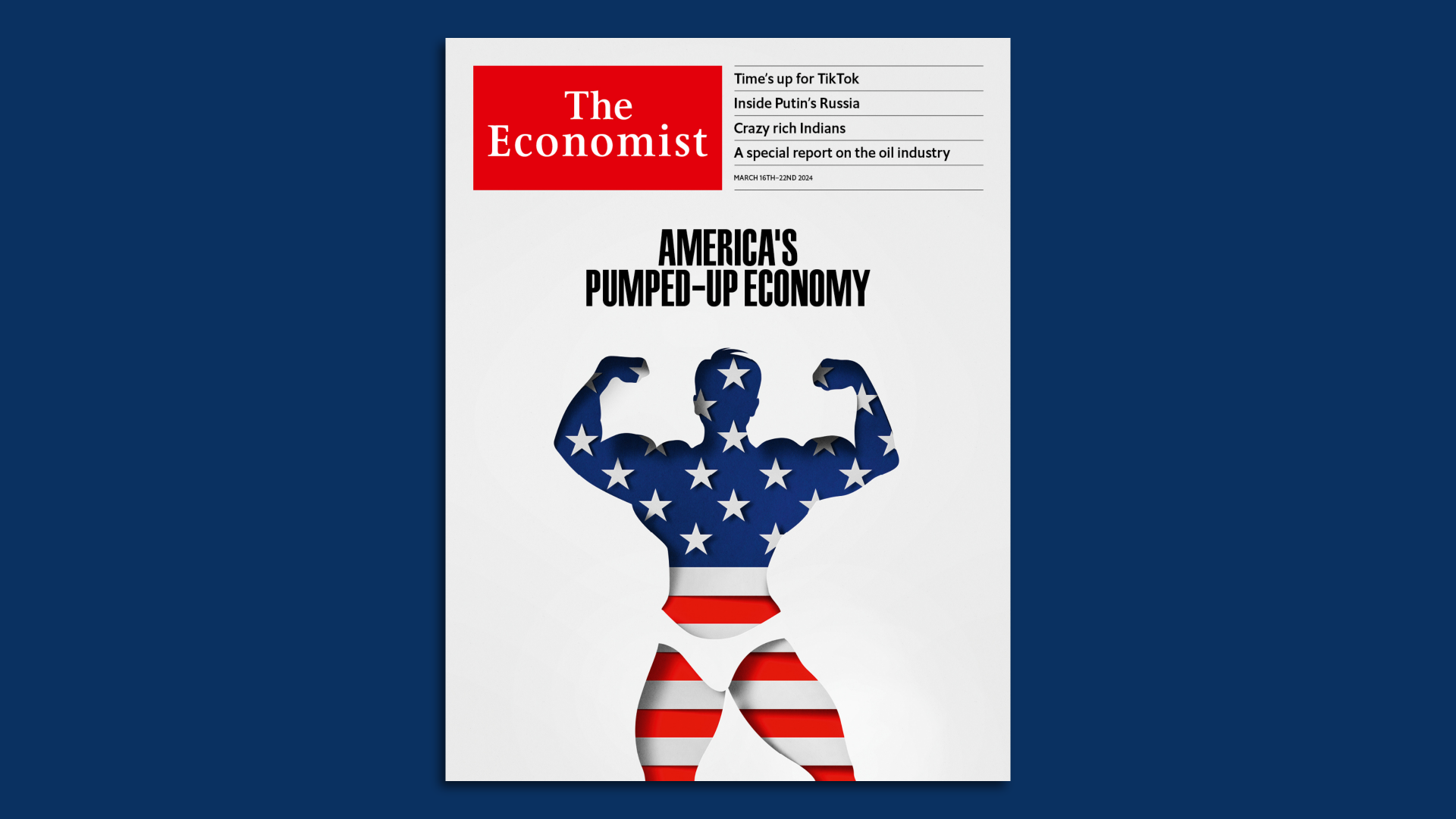
"America's extraordinary economy keeps defying the pessimists," The Economist writes in a new cover story.
- Why it matters: "America has thrived as its companies and workers have innovated and adapted to a rapidly changing world," the magazine concludes.
Between the lines: "America has 4% more workers than it did at the end of 2019, thanks in part to rising workforce participation, but mainly owing to higher immigration," The Economist notes. "The foreign-born population is up by 4.4m, a figure which may undercount those who arrived illegally. "
- "Other long-standing strengths have made America enviably placed to cope with geopolitical tumult. Its vast internal market encourages innovation and means it depends less on foreign trade than smaller rich economies do."
- "Because the shale boom of the 2010s made America a net energy exporter, it has in aggregate benefited rather than suffered from the high energy prices that hit the wallets of Europeans."
Reality check: "Official forecasts show that America will this year spend more on debt interest than national defense. More borrowing risks building up financial perils in the future."
6. 🚘 Uber, Lyft threaten to quit Minneapolis

Illustration: Brendan Lynch/Axios
7. 🏆 Axios experts honored

Illustration: Brendan Lynch/Axios
8. 🎃 1 spooky thing: Halloween in March

Easter is two weeks away. Halloween is more than seven months away. But Home Depot is promoting a 5-foot skeleton dog, a 12-foot skeleton and a 7-foot animated Frankenstein.
- Why it matters: There's an arms race among retailers to move holiday merchandise earlier and earlier, Axios' Kelly Tyko writes.
"This is the earliest we have ever announced any of our Halloween products," The Home Depot told Axios in a statement. "We wanted to share what is coming for our Halloween superfans."
Axios AM

Catch up with the most important news of the day