Axios AM

April 24, 2023

🦾 1 big thing: How AI tapped our brains

Illustration: Annelise Capossela/Axios
2. 🤖 AI drives top stock in S&P 500


Nvidia, a chipmaking giant that helped ignite PC gaming, is this year's highest-flying stock in the S&P 500, Matt Phillips writes for Axios Markets.
- Why it matters: Soaring semiconductor share prices reflect the promise — and hype — surrounding artificial intelligence.
Nvidia — which transformed the industry in 1999 by inventing the graphics processing unit (GPU) — now says it's "The Engine of AI."
🧮 By the numbers: Nvidia — based in Santa Clara, Calif. — has seen its stock rocket 85% this year.
The bottom line: The surge shows that, as Axios' Felix Salmon notes, "there's real money in selling picks and shovels to the folks getting into AI."
3. 🗳️ Tracking power: Biden's campaign manager
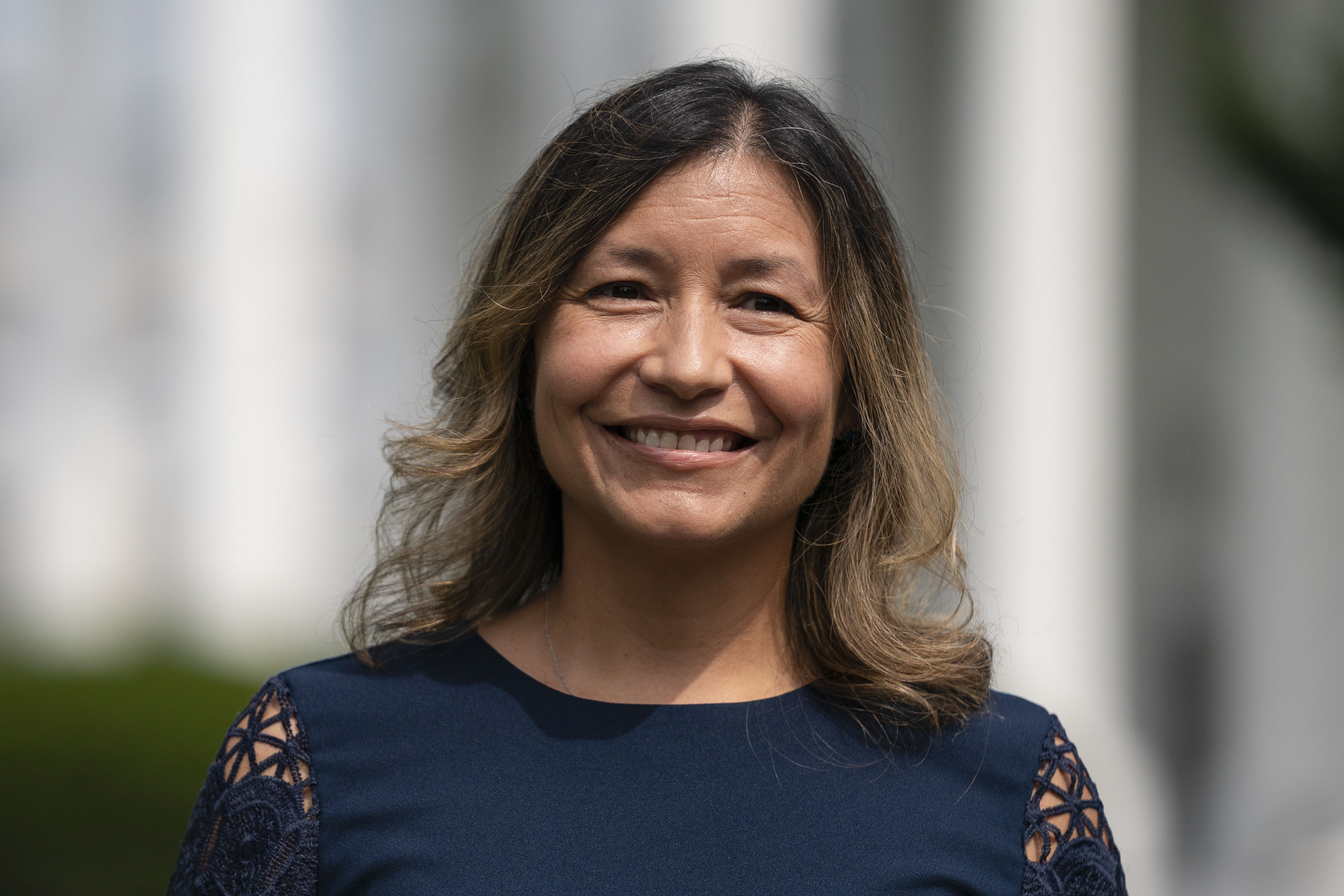
Julie Chavez Rodriguez — White House senior adviser, and director of the White House Office of Intergovernmental Affairs — is expected to be named manager of President Biden's 2024 campaign, AP and Reuters report.
- Rodriguez, a longtime Democratic activist, also worked in former President Obama's White House. She's the granddaughter of labor leader Cesar Chavez and labor activist Helen Fabela Chávez.
🔎 Between the lines: Rodriguez is a West Wing ally of Vice President Harris.
- She served on Harris' Senate staff, and on her 2020 presidential campaign as national political director and traveling chief of staff.
Growing up in California, Rodriguez — a U.C. Berkeley grad — was active in campaigns, picket lines, boycotts, marches and union meetings.
- She was hired by Biden's 2020 presidential campaign as a deputy campaign manager and senior adviser for Latino outreach.
🔮 What's next: Biden is expected to formally announce his campaign with a video tomorrow. He'll also speak tomorrow to leaders of North America's Building Trades Unions (NABTU).
4. 🪖 U.S. spends more on military than next 10 nations combined
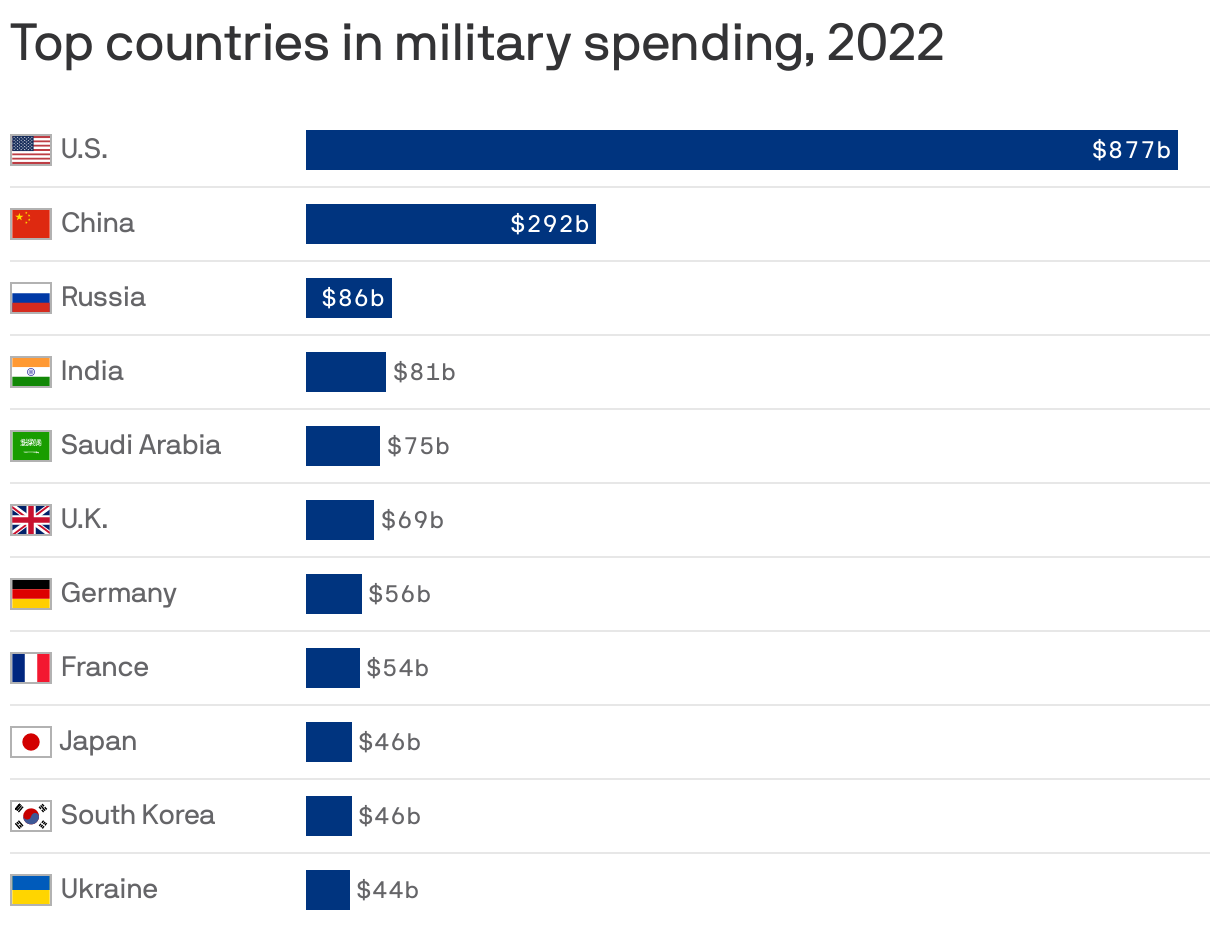
Countries around the world spent a combined $2.24 trillion on their militaries last year — a 3.7% increase on last year's previous record high when adjusted for inflation, Axios World author Dave Lawler writes from an annual report from the Stockholm International Peace Research Institute (SIPRI).
- Many of the biggest increases came in Europe as countries responded to Russia's invasion of Ukraine.
5. ✔️ Twitter sours on checkmarks

Twitter users are pushing back against Elon Musk's new pay-for-verification policy, with many journalists and celebrities refusing to pay to keep their once-coveted blue checks, Axios' Sara Fischer and Rebecca Falconer report.
- Why it matters: Internet verification used to be a badge of honor. Now it's achievable to anyone who is willing to buy it.
What's happening: Twitter on Thursday began removing blue check marks from hundreds of thousands of accounts belonging to celebrities, journalists and other public figures who were verified by the platform before Musk changed the rules.
- The Twitter CEO later announced he's personally paying for some high-profile users to remain verified on Twitter, even when they'd indicated they didn't want this status under his new subscription system.
- Blue checks have returned to the Twitter profiles of many accounts with more than 1 million followers.
🧐The checkmarks returned to accounts of several famous Twitter users who are no longer alive, with the message: "This account is verified because they are subscribed to Twitter Blue and verified their phone number."
- This includes journalist Jamal Khashoggi, killed in 2018; chef Anthony Bourdain, who died the same year; Kobe Bryant and actor Chadwick Boseman, who both died in 2020; and Barbara Walters, who died last year.
6. 🐦 Tweets fueled SVB run

Illustration: Shoshana Gordon/Axios
7. NBCU boss Jeff Shell out over inappropriate relationship

Comcast announced it was "mutually agreed" that NBCUniversal CEO Jeff Shell would depart immediately following an "investigation led by outside counsel into a complaint of inappropriate conduct."
- "I had an inappropriate relationship with a woman in the company, which I deeply regret," Shell said in the statement.
🖼️ The big picture: The media industry has seen many top-level executives ousted over inappropriate workplace relationships, Axios Media Trends expert Sara Fischer writes.
- Shell, 57, had been CEO of NBCU since 2020. He had been with the company since 2013, and worked for its parent Comcast since 2009.
8. 📷 Parting shot: When Disney goes wrong

The fire-breathing animatronic dragon burst into flames during Disneyland's popular "Fantasmic!" show on Saturday night.
- The show, near Tom Sawyer Island, climaxes with Mickey Mouse battling a giant dragon, Maleficent.
Mickey vanished from the stage as soon as the dragon's head became engulfed. No injuries were reported.
Axios AM

Catch up with the most important news of the day