Axios AM

July 29, 2026

🐫 Happy Wednesday! Smart Brevity™ count: 1,436 words ... 5½ mins. Thanks to Noah Bressner for orchestrating. Edited by Andrew Pantazi and Bill Kole.
🏛️ The Senate confirmed Jay Clayton as director of national intelligence, taking over from Bill Pulte, in a 51–47 party-line vote. Clayton, a Trump ally and former SEC chair, has been U.S. attorney in Manhattan. Keep reading.
1 big thing: Thune's next nightmare
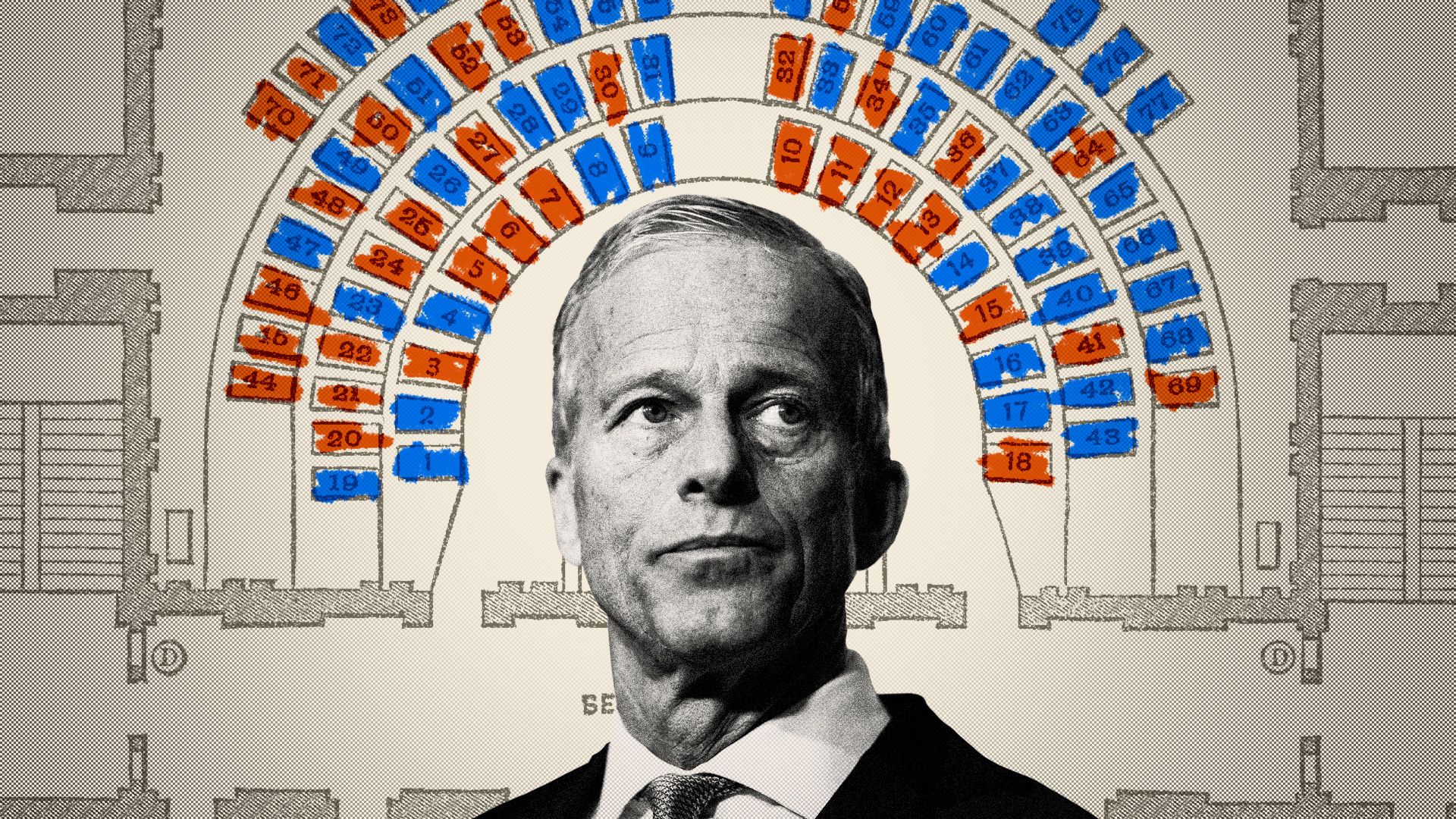
Senate Majority Leader John Thune has one of Washington's toughest jobs. It could get even harder next year, Axios' Stef W. Kight writes.
- Why it matters: Thune is one of the few Republicans who's managed to say "no" to President Trump and keep his job.
But the Senate leader could enter the next Congress with diminished power, leading a conference increasingly loyal to Trump.
- Republican control of Congress could weaken, or disappear.
- The Senate's MAGA flank is poised to grow.
- Trump — who has been relatively restrained in criticizing Thune despite his unmet demands to pass the SAVE America Act and kill the filibuster — will have nothing to lose in the last two years of his presidency.
🔎 Zoom in: The Senate Republican Conference itself is poised for a drastic power shift away from Thune's institutionalist wing.
- The moderate voices of Sens. John Cornyn (Texas), Thom Tillis (N.C.) and Bill Cassidy (La.) will be gone after Trump undercut them. Sen. Susan Collins (Maine) faces a tough reelection fight.
🔮 What's next: Hardline conservatives and MAGA voices are gaining power.
- Longtime thorns in leadership's side have ascended to committee chairmanships, including Sens. Rick Scott (Fla.), Ron Johnson (Wis.) and Rand Paul (Ky.).
- Sen. Mike Lee (Utah) is positioned to lead the powerful Judiciary Committee next year, putting the online MAGA favorite in charge of judicial nominations — including any to the Supreme Court.
- A surge of House-bred MAGA energy is also coming. Conservative members — including Reps. Barry Moore (Ala.), Kevin Hern (Okla.) and Harriet Hageman (Wyo.) — are all but certain to join the upper chamber.
Get Axios Hill Leaders, our weeknight newsletter from Capitol Hill ... Share this story.
2. 🎤 Trump's new war pressure

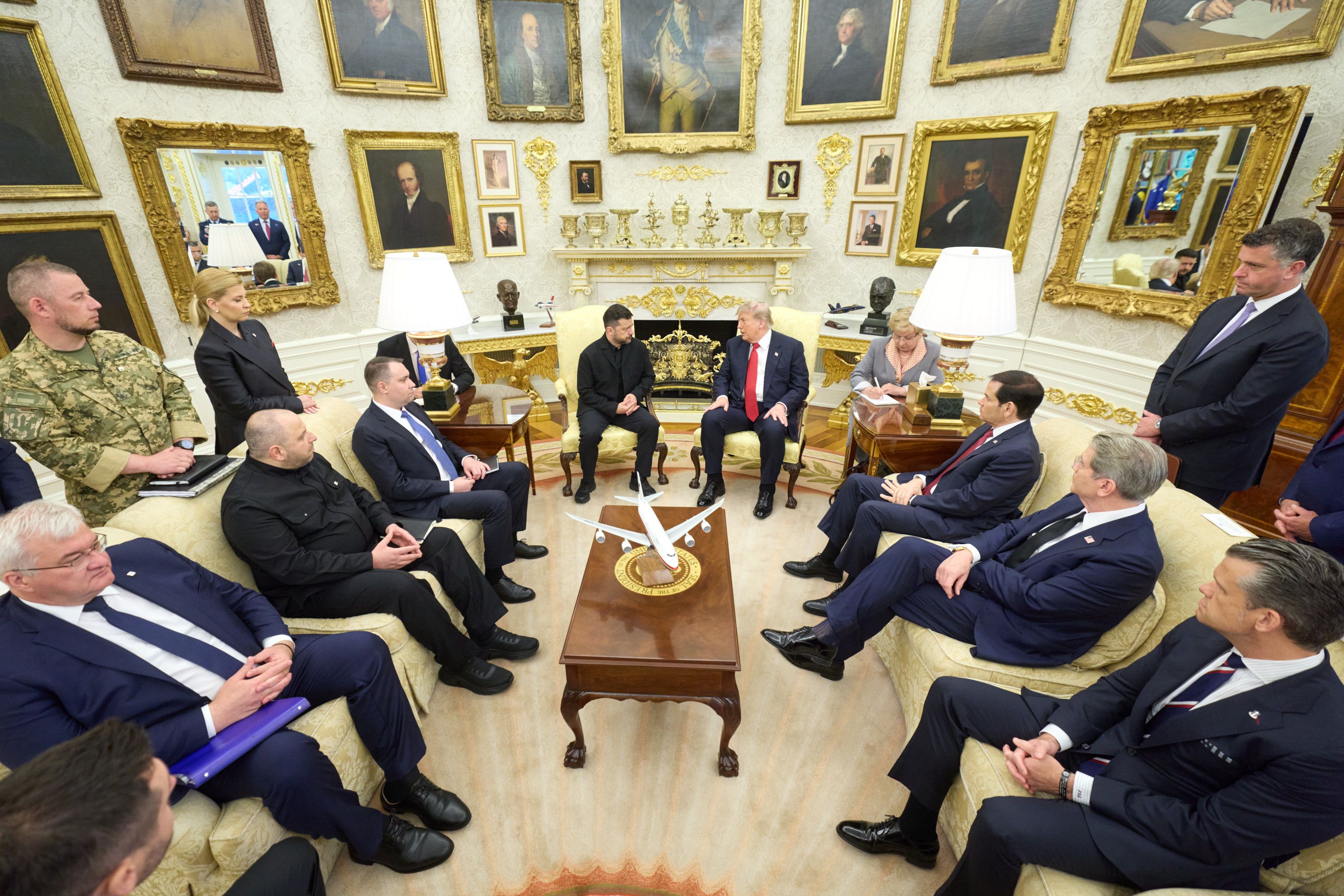
Ukrainian President Volodymyr Zelensky told Axios' Barak Ravid last night that he asked President Trump for an emergency "winter package" of Patriot interceptors to help thwart Russian attacks on energy infrastructure.
- Why it matters: Ukraine's stockpile of the interceptors is almost depleted, and without them, the country can't defend against ballistic missiles.
While the front line remains at a stalemate, Ukraine has gained momentum with drone and missile strikes deep inside Russia, hitting oil facilities and other critical infrastructure.
- Zelensky said the changing war dynamic has helped his standing with Trump: "Our relations are much better and more constructive. Not so emotional like it was. And I think that it's good that it's better."

👀 What to watch: The Ukrainian president said he thinks Putin is moving toward further escalation and could try to provoke other countries in the region to have "a more simple victory to sell to his audience."
- Zelensky claimed Russia still receives weapons from Iran and is building infrastructure for 30,000 more North Korean troops to fight in Ukraine.
3. Anthropic's lonely island

Anthropic spent this winter and spring as the darling of America's AI boom, conquering the frontier while casting itself as the industry's moral conscience.
- By summer, the Claude maker found itself alone on an island of its own principles, Axios' Zachary Basu and Madison Mills write.
Why it matters: Anthropic is simultaneously the world's most valuable startup and its most isolated AI leader. The company's idiosyncrasies have strained its relationship with developers, policymakers and partners as it barrels toward a potential trillion-dollar IPO.
Driving the news: Anthropic is the only frontier AI lab that didn't sign an open letter led by Nvidia CEO Jensen Huang urging Washington not to restrict open-weight models, a category currently dominated by China.
- Open-weight models are downloadable systems users can run, modify and build on without paying for a company-controlled interface — making them cheaper and more flexible, but harder to control once released.
- Google and OpenAI, Anthropic's two biggest closed-model rivals, joined dozens of other signatories over the weekend, leaving Anthropic alone in defending the business model all three still depend on.
Zoom out: Anthropic, founded by OpenAI defectors with safety as its organizing principle, is used to playing the contrarian. But as the AI race accelerates, it is growing isolated across nearly every major policy fight:
- 🪖 Military use: The Pentagon blacklisted Anthropic in February after a bitter fight over whether Claude could be used for mass surveillance or autonomous weapons. With litigation ongoing, top Pentagon official Emil Michael lashed out at Anthropic on Friday, saying in an X post there is "no AI company more hostile to the warfighter."
- ⚠️ Guardrails: No lab has pushed harder for AI regulation than Anthropic, which has backed state AI laws and proposed an FAA-style regulator to screen advanced models before release. But when the White House flagged a security vulnerability this summer, Anthropic disputed its severity — triggering export controls that forced its Fable and Mythos models offline for nearly three weeks.
- 🧑🔬 Distillation: Anthropic has accused Chinese labs of training lower-cost models on Claude's outputs via "industrial-scale distillation campaigns." Critics counter that distillation is standard in AI development — and that Anthropic is an awkward messenger after settling a $1.5 billion copyright lawsuit over pirated books.
For the record: In response to a request for comment, Anthropic pointed to a blog post by CEO Dario Amodei, "Our position on open-weights models."
Reality check: Anthropic remains in an extraordinarily strong position — arguably the strongest of any AI lab in the world. The same qualities driving its isolation — caution, refusal to bend, insistence on being right rather than liked — helped establish its lead in the first place.
👉 Go deeper: Meta CEO Mark Zuckerberg, in an op-ed in today's Wall Street Journal, "The AI Future Is for Everyone," proposes a "philosophy based on individual empowerment as the source of prosperity, invention as the primary purpose of superintelligence, and balance of power as the foundation of safety." Gift link.
4. 📉 Supreme Court ratings collapse


The Supreme Court's approval rating — long the highest among the three branches — has sunk to a record low (33%), Axios' Josephine Walker writes from new Gallup polling.
- Republicans drove much of this year's slide. Just 58% approve of the court this year, down from a near-record 79% in 2025.
🛰️ The big picture: The collapsing trust in U.S. institutions is persistent, and often spreading.
- Go deeper: Supreme Court joins Trump, Congress in job approval slump.
5. 💥 Iran's surprise attack

Iran launched multiple ballistic missiles toward a U.S. military base in Jordan yesterday in what U.S. Central Command called an "attempted surprise attack," Axios' Barak Ravid writes.
- All of the missiles were intercepted, CENTCOM said.
Why it matters: This marks Iran's first ballistic missile attack against a U.S. base in the region since President Trump paused strikes Friday to give diplomacy another chance.
6. 🤖 AI spending slams chip stocks


Investors are rethinking their fondness for the chipmakers that make up the backbone of the new tech buildout, Axios' Emily Peck writes.
- The tech-heavy Nasdaq 100 briefly flirted with correction territory yesterday — a drop of 10% or more — before finishing 9.5% below its June 2 record closing high.
The pullback follows renewed concerns about heavy AI spending and rising Chinese competition.
7. ⚡ Power moves
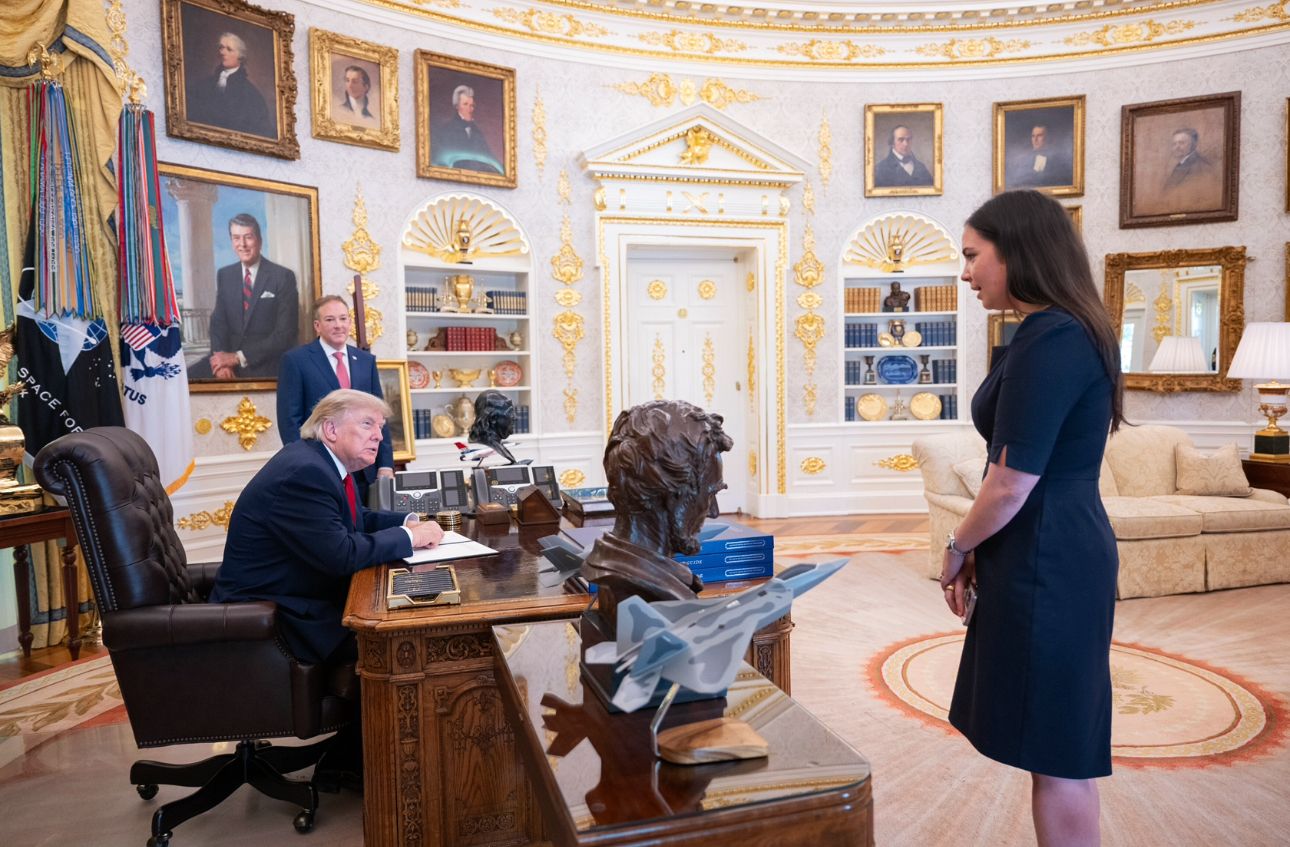
Abigail Jackson — deputy White House press secretary and a regular on Fox News and conservative media — will leave her post for OnMessage Public Strategies on Aug. 7, Axios' Marc Caputo reports.
- Jackson has the high-profile role of White House press liaison for the Justice Department, the Department of Homeland Security and the U.S. Capitol. White House Deputy Chief of Staff Stephen Miller called Jackson "a communications powerhouse." Share this story.
🗞️ Ross Douthat — a conservative New York Times columnist for 17 years and host of a popular video podcast for the past year — is leaving to join "60 Minutes" as a correspondent. Read the memo.
⏱️ Other announcements by "60 Minutes," which returns Sept. 13 for Season 59: Norah O'Donnell is named a correspondent, joining Douthat, Lesley Stahl, Bill Whitaker and Jon Wertheim. Joining as contributors: Sebastian Junger (author of "The Perfect Storm"), Gianna Toboni (a documentary filmmaker formerly with VICE) and Trevor Phillips (based in London). Read the memo.
8. 🍿 1 fun thing: Bigger than "Hamilton"


"Hadestown: The Musical" — a filmed version of the stage show — opened to a whopping $10.2 million domestically over the weekend, surpassing "Hamilton" to become the highest-grossing debut for a filmed stage production, Axios' Sara Fischer, Danielle Alberti and Kerry Flynn write.
- Why it matters: Successful box-office and streaming runs are delivering new revenue streams that can drive investment in new shows.
📬 Thanks for reading! Please invite your friends to join AM.
Sign up for Axios AM