Axios AM

March 05, 2022

1 big thing: Zelensky's Zoom plea

Illustration: Sarah Grillo/Axios
Ukraine leaders appreciate the worldwide solidarity, but are frustrated by how far the talk exceeds the action, Axios' Sophia Cai writes.
- Why it matters: The survival of some cities could come down to hours or days. While missiles are arriving in Ukraine and crushing sanctions are being felt in Moscow, neither is stopping the invasion.
⚡ This morning, Senate Majority Leader Chuck Schumer said after senators held a Zoom call with President Volodymyr Zelensky that the Ukrainian leader "made a desperate plea for Eastern European countries to provide Russian-made planes to Ukraine."
- "These planes are very much needed," Schumer said. "I will do all I can to help the administration to facilitate their transfer."
Andriy Yermak, a longtime top aide to Zelensky, wrote in a New York Times op-ed under the headline, "I’m Writing From a Bunker With President Zelensky Beside Me. We Will Fight to the Last Breath":
We need more — and, please, stop telling us military aid is on the way. ... We need antitank and antiaircraft weapons and other ammunition delivered to our brave soldiers right now.
Many countries promised aid to Ukraine to help repel the invasion. But the strongest declarations from the West and elsewhere haven't fully materialized.
- The UN General Assembly voted 141-5 to demand Vladimir Putin withdraw forces, but there's no mechanism for enforcement.
- The European Union promised to send fighter jets. But that never happened, after three nations with Russian-made aircraft refused.
- About 20 countries — mostly NATO and EU members — pledged to send weapons. But the arms have been slow to reach Ukraine, and it's unclear whether they'll arrive in time to make a difference.
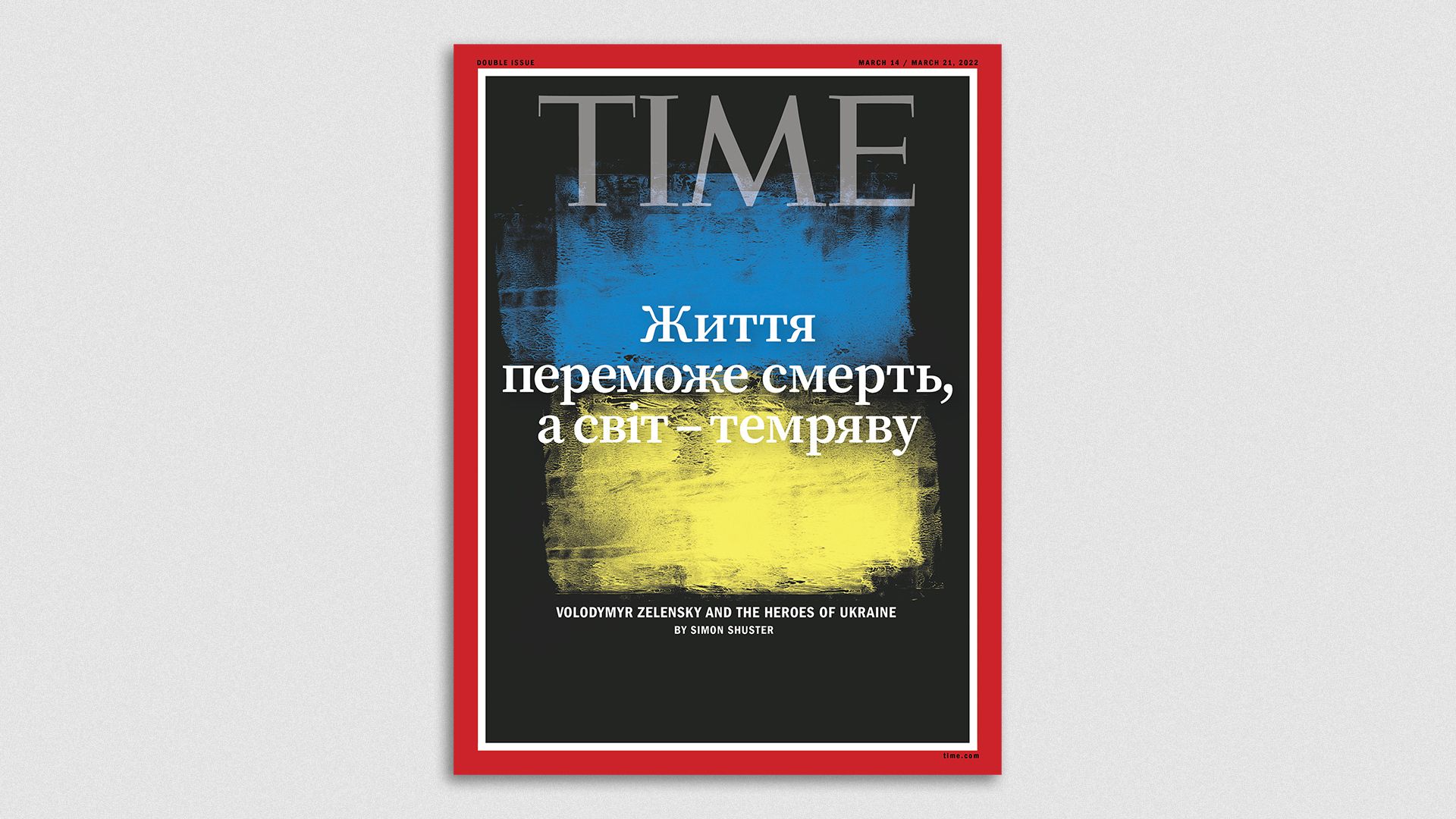
The U.S. has also been heavy on symbolism over substance:
- First lady Jill Biden hosted Ukraine's ambassador to the U.S. at the State of the Union address. Many senators and representatives wore Ukrainian blue and yellow.
- Congress left for the weekend, though, without passing a multibillion-dollar aid package.
- Schumer told Zelensky today, according to a source on the call: "Senator McConnell and I — along with the other members on this Zoom — are working very hard in a bipartisan fashion to get all the assistance the administration has requested for the Ukrainian people. Together we will get that assistance of over $10 billion in economic, humanitarian, and security assistance to the Ukrainian people quickly."
Alexander Vindman, the Ukraine-born, retired Army officer and former National Security Council director for Europe, called for $35 billion in reconstruction aid — what's been dubbed a "Marshall Plan for Ukraine."
🧠 Go deeper ... Axios explains: Why Ukraine isn't getting a no-fly zone.
2. White House open to cutting Russian oil
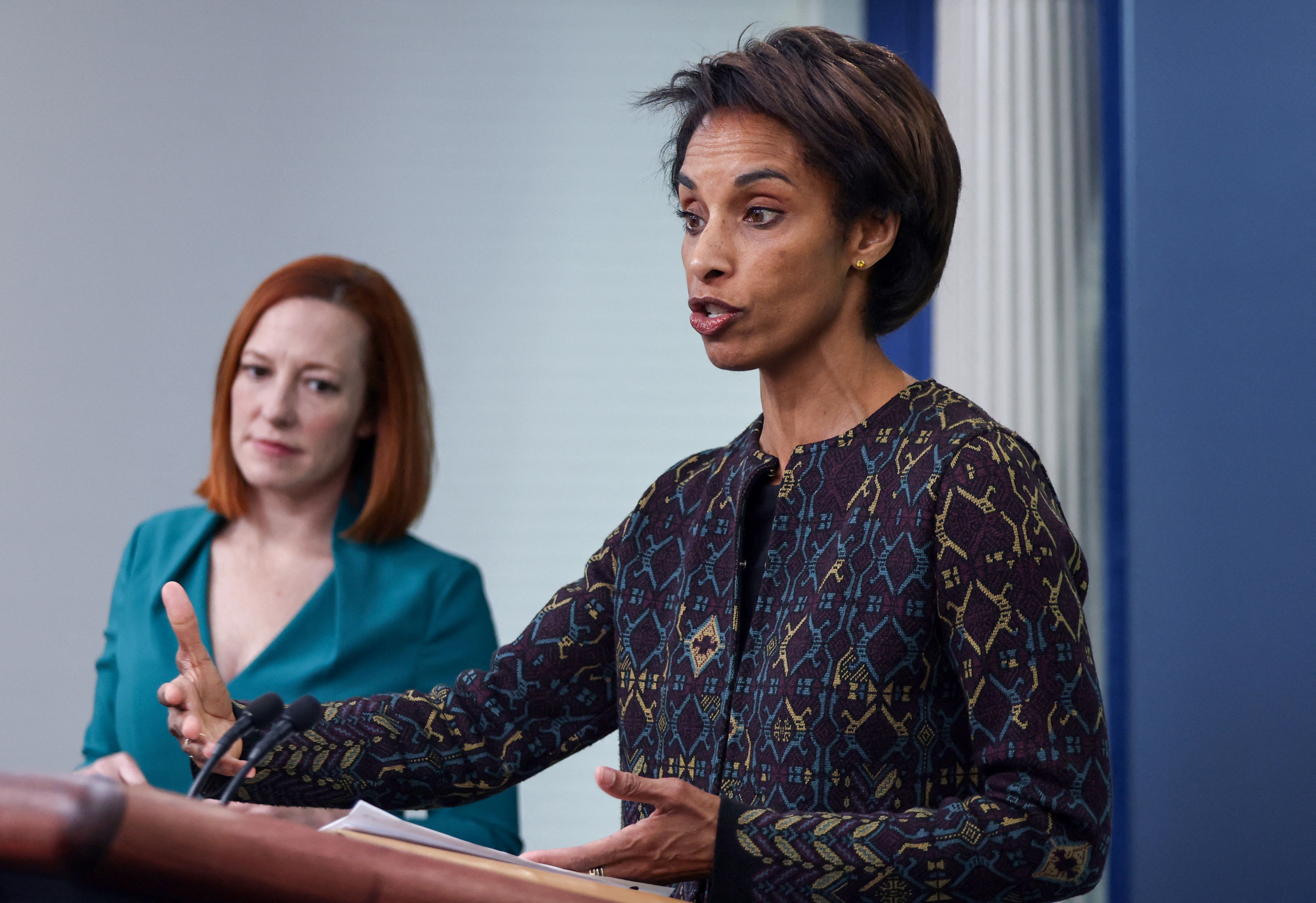
The White House signaled openness yesterday to reducing imports of Russian oil — without saying exactly how, Axios' Hans Nichols reports.
- Why it matters: A ban could translate to higher prices at the pump in parts of the U.S. and increase inflation, a key concern for Biden.
Michael McFaul, U.S. ambassador to Russia under President Barack Obama, said yesterday that he expects the practice of importing Russian oil to "change soon."
- "The United States should not be importing Russian oil. Period," McFaul said during an online panel discussion about the Russian invasion of Ukraine moderated by Axios' Jonathan Swan.
- "I understand inflation. I understand the arguments. But there's no ethical or moral reason that we should be doing that, and I expect that to change soon."
The context: Oil from Russia accounted for roughly 3% of U.S. crude imports in 2021.
- It's mostly imported in Hawaii and the coasts, where refiners don’t have access to the pipelines connecting the big domestic oil fields in places like the Southwest's Permian Basin.
- Energy analysts and economists disagree about how much of a price spike an import ban would generate.
State of play: Cecilia Rouse, chair of the White House Council of Economic Advisers, told reporters yesterday: "[W]e are looking at options that we can take right now if we were to cut the U.S. consumption of Russian energy. But what’s really most important is we — that we maintain a steady supply of global energy."
Between the lines: That appears to be a shift from the White House's initial dismissal of the congressional effort to effectively impose an embargo on Russian oil for U.S. refiners.
- Speaker Pelosi told reporters on Thursday about a ban: "I'm all for that. Ban it. ... Ban the oil coming from Russia. Yeah."
Drill deeper: Hans' behind-the-scenes reporting.
3. Russia's war on information
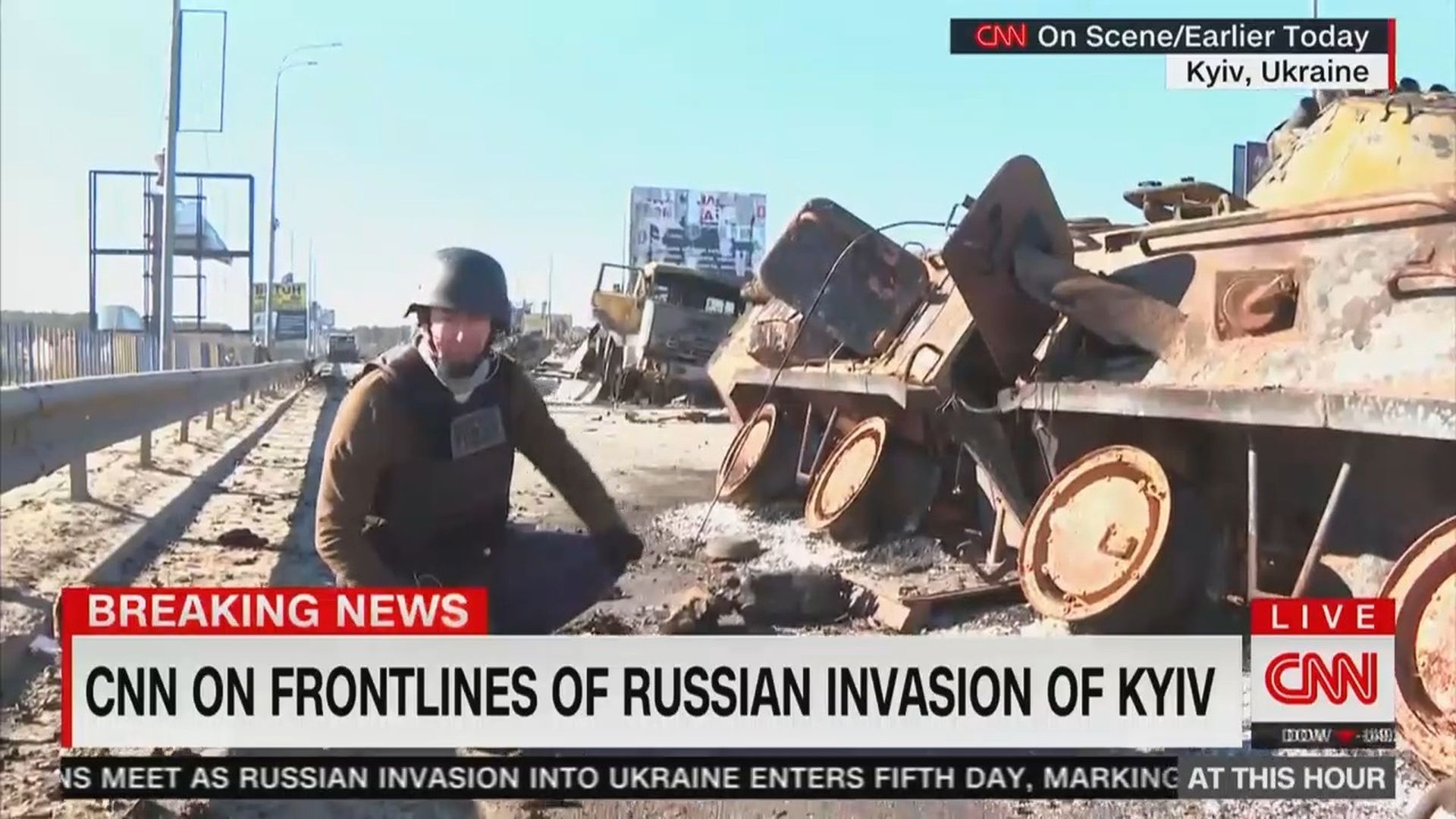
CNN's Matthew Chance on Monday. Screenshot: CNN
4. 📷 1,000 words

A traumatic farewell at an evacuation train at Kyiv's central train station yesterday.
- Ukrainian women and children by the hundreds of thousands are saying goodbye to men staying to fight.
5. Truck convoy on D.C. doorstep
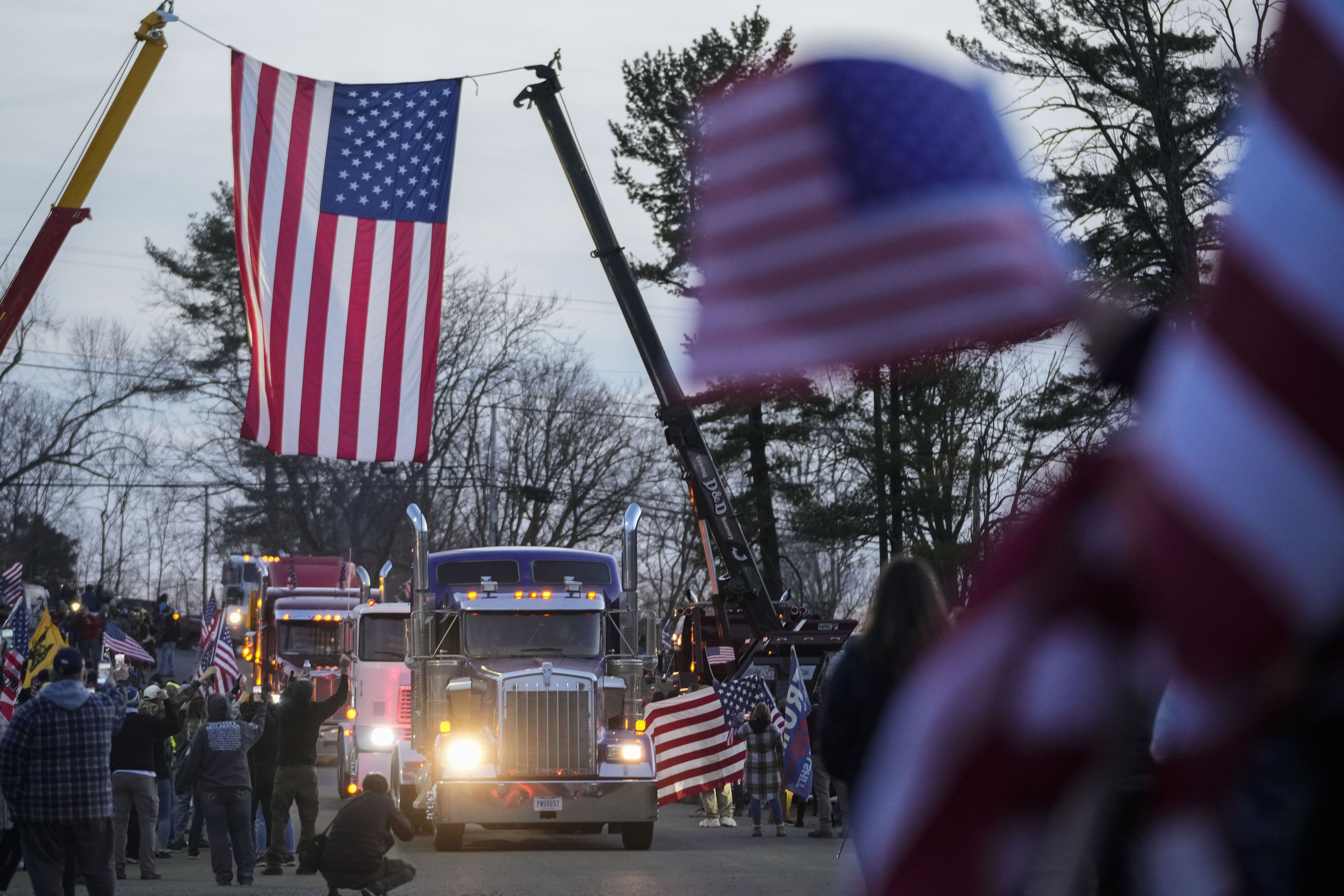
A "People's Convoy" of 1,000 vehicles converged on the speedway in Hagerstown, Md., yesterday, in homage to the Canadian protests eventually broken up by police.
- They ranged from 18-wheelers to minivans — some with pro-Trump, anti-Biden and anti-media slogans.

The convoy is 80 miles from the Capitol, with plans for other demonstrations around the Beltway.
- People's Convoy organizer Mike Landis told The Washington Post: "We’re going to keep annoying D.C. … Just make them wonder a little bit."
6. 📝 History in 10 words

Walter R. Mears, who died yesterday at 87, was the legendary presidential campaign chronicler for The Associated Press.
- Why he mattered: The lore about Walter's speed, clarity and credibility had been passed down among reporters to the time I started covering campaigns a quarter century after his heyday.
A note on style: He had such an aura that generations of reporters called him "Walter" even though they've never met him — or read him, frankly.
Walter would be proud of the taut, jazzy lead of his obit, written by his colleagues Mike Feinsilber and Cal Woodward:
WASHINGTON (AP) — Walter R. Mears, who for 45 years fluidly and speedily wrote the news about presidential campaigns for The Associated Press and won a Pulitzer Prize doing it, has died. He was 87.
Here's the tale that still gets told on campaign buses decades later, from Timothy Crouse's "The Boy on the Bus," about the press pack on the 1972 campaign:
Two ... reporters, one from New York, another from Chicago, headed toward Mears shouting, "Lead? Lead?" Marty Nolan [of the Boston Globe] came at him from another direction. "Walter, Walter, what's our lead?" he said.
Translation, from the AP obit: "Mears had to bang out stories about campaign debates while they were still underway. Newspaper editors would see his lead [first sentence] on the wire before their own reporters filed their stories. So it was defensive for others on the press bus to wonder what Mears was leading with, and to ask him."
- To this day, after some mishmash of a speech, one reporter will say to another: "What's the lead, Walter?"
The obit points out that in his openers, Walter "captured the essence of events, not just the words but the music":
- 20 words, 1968: "Robert F. Kennedy died of gunshot wounds early today, prey like his president brother to the savagery of an assassin."
- 18 words, 1968: "Hubert H. Humphrey, apostle of the politics of joy, won the Democratic presidential nomination tonight under armed guard."
- 10 words, 1976: "In the end, the improbable Democrat beat the unelected Republican."
Now that's Smart Brevity.
- Go deeper: Read the 6 Walter Mears stories that won the Pulitzer.
Axios AM

Catch up with the most important news of the day