Axios AM

March 15, 2026

🎥 🏀 Good morning! It's both Oscar night, hosted by Conan O'Brien (7 p.m. ET), and Selection Sunday, the 68-team bracket reveals for men's (6 p.m.) and women's March Madness (8 p.m.).
- Smart Brevity™ count: 1,897 words ... 7 mins. Thanks to Zachary Basu for orchestrating. Edited by Andrew Pantazi.
1 big thing: Drones change warfare's balance of power
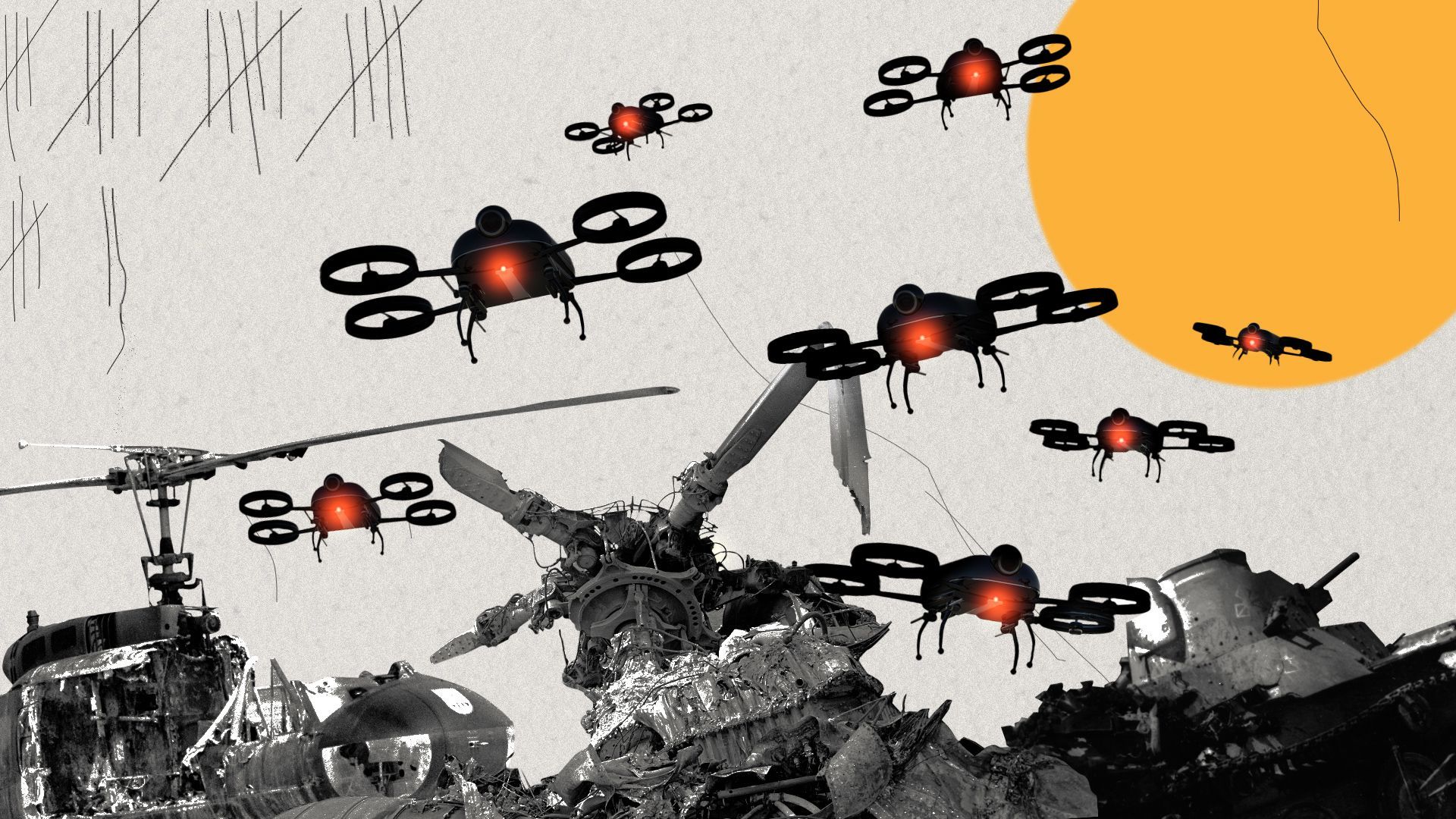
Cheap, mass-produced drones have permanently changed the face of warfare, Axios' Zachary Basu and Colin Demarest report.
- Without them, Russia's overwhelming manpower and firepower advantage would grind Ukraine into dust.
- Without them, the Houthis are a ragtag militia in Yemen — not a force that brought global shipping to its knees.
- Without them, a sanctioned, isolated Iran couldn't inflict nearly as much damage to the most powerful military in world history.
Why it matters: Size no longer guarantees victory. Any nation, any proxy, any rebel group with access to cash and commercial components can now bleed a superpower slowly, expensively and without a clean answer.
Iran's Shahed drone — said to cost between $20,000 and $50,000 — has been the regime's great equalizer, forcing the U.S. and allies to respond in some cases with interceptor missiles costing millions of dollars each.
- In the first week of the war alone, Tehran fired nearly 2,000 drones at U.S. bases and allied targets across 12 countries — slamming into airports, five-star hotels and oil infrastructure across the Gulf.
- Six U.S. service members were killed March 1 when an Iranian drone evaded air defenses and struck an operations center in Kuwait.
🇺🇦 Zoom out: Ukraine, fighting for its life against Russian Shaheds for the past four years, is now the world's foremost authority on stopping them.
- As Axios first reported, Ukrainian officials offered Washington their anti-drone technology eight months before the Iran war started. The Trump administration turned them down.
- After the war started, the U.S. reversed course. Ukrainian specialists are now deployed to the Gulf to train U.S. and allied forces.
The U.S. has rushed 10,000 Merops interceptor drones to the Middle East, according to Army Secretary Dan Driscoll.
- The AI-enabled systems, stress-tested in Ukraine, cost roughly $14,000 each — cheaper than the Shahed it's designed to kill.
- The Pentagon says Iranian drone attacks are now down 95% from their peak.
The bottom line: "We're getting into phase zero of Terminator, where autonomous systems are starting to win against humans en masse," Oleg Rogynskyy, CEO of defense-tech company UForce, tells Axios.
2. 💡 War tests America's economic superpower
If panicky headlines caused you to predict the U.S. would fall into recession, the last few years have made you look dumb. Through interest rate increases, armed conflict in Europe and a trade war, America's economic engine has proven stunningly resilient, Axios' Neil Irwin writes.
- America's economic superpower has been its scale, diversity and adaptability, which have allowed the world's largest economy to keep chugging whenever crises arise.
- Now, the Iran war will test again how much the U.S. economy can absorb.
State of play: With Iran threatening attacks on ships that pass through the Strait of Hormuz, the price of oil is up 43% this month.
- Middle East exports of other key commodities, including the raw ingredients for fertilizer, are also being throttled.
🔭 Zoom out: Based on all the historic measures, all the hand-wringing, all the chaos, the economy should be tanking or tormented. Yet it keeps snapping back, even growing.
- In Trump 2.0, the global trade order has been upended, the independence of America's central bank has been put in doubt, and an AI boom has erupted that threatens millions of jobs.
- Yet the economy has kept growing throughout, with the unemployment rate a manageable 4.4% last month. It was higher than that in 72% of months dating back to the 1940s.
☝️ This all reflects the inherent strength and adaptability of the U.S. economy, which becomes most evident at moments of strain.
- The U.S. is now a net oil exporter, which wasn't true during major Middle East wars of the past.
- Last April, there were widespread predictions of a recession and high inflation due to new tariffs. But President Trump backed off on some of the most extreme levies, and importers have proven creative about rerouting supply chains and absorbing costs, limiting the negative effects.
Between the lines: So what could go wrong? The likeliest contenders include two-sided risks from the AI surge and from geopolitics.
- A rapid displacement of millions of workers by generative AI would create mass unemployment, at least temporarily.
- If the Iran war chokes off the shipment of oil and natural gas through the Persian Gulf for a sustained period, that could create a global recession and much higher energy prices.
The bottom line: The natural state of the $30 trillion U.S. economy is forward momentum. It'll take more than a bunch of adverse headlines to stop it.
3. 🎬 Exclusive: Palmer Luckey on Anthropic

Anduril Industries founder Palmer Luckey says on the upcoming episode of "The Axios Show" that he backs the Pentagon's decision to blacklist Anthropic — and says he "may have been even more forceful in this rejection."
- "The department is saying: 'We are not gonna let you slippery-slope this,'" Luckey told Axios Future of Defense author Colin Demarest. "'We're not gonna let one company get their special provisions, and then we're gonna have a different debate with a different company.'"
- "What you end up with very quickly is a patchwork of different regulations across all these different companies," Luckey added. "And the department now has to ask: Is this operation, is this planning element, is this tool, compliant with these five different companies' versions?"
Why it matters: The Pentagon's designation of Anthropic as a supply chain risk, a move historically reserved for foreign adversaries, means that other companies doing business with the Pentagon may have to cut ties with the AI giant, Axios' Maria Curi writes.
- That puts hundreds of companies that do business with Anthropic and the department in limbo. Microsoft, for one, asked for a pause to avoid potentially hampering soldiers.
4. ⚡ Milestone: U.S. flag rises in Venezuela

The American flag was raised yesterday over the U.S. Embassy in Caracas, Venezuela, for the first time in seven years, highlighting the shift in relations since President Nicolás Maduro was captured in January.
5. 👢 Trump's MAGA jam
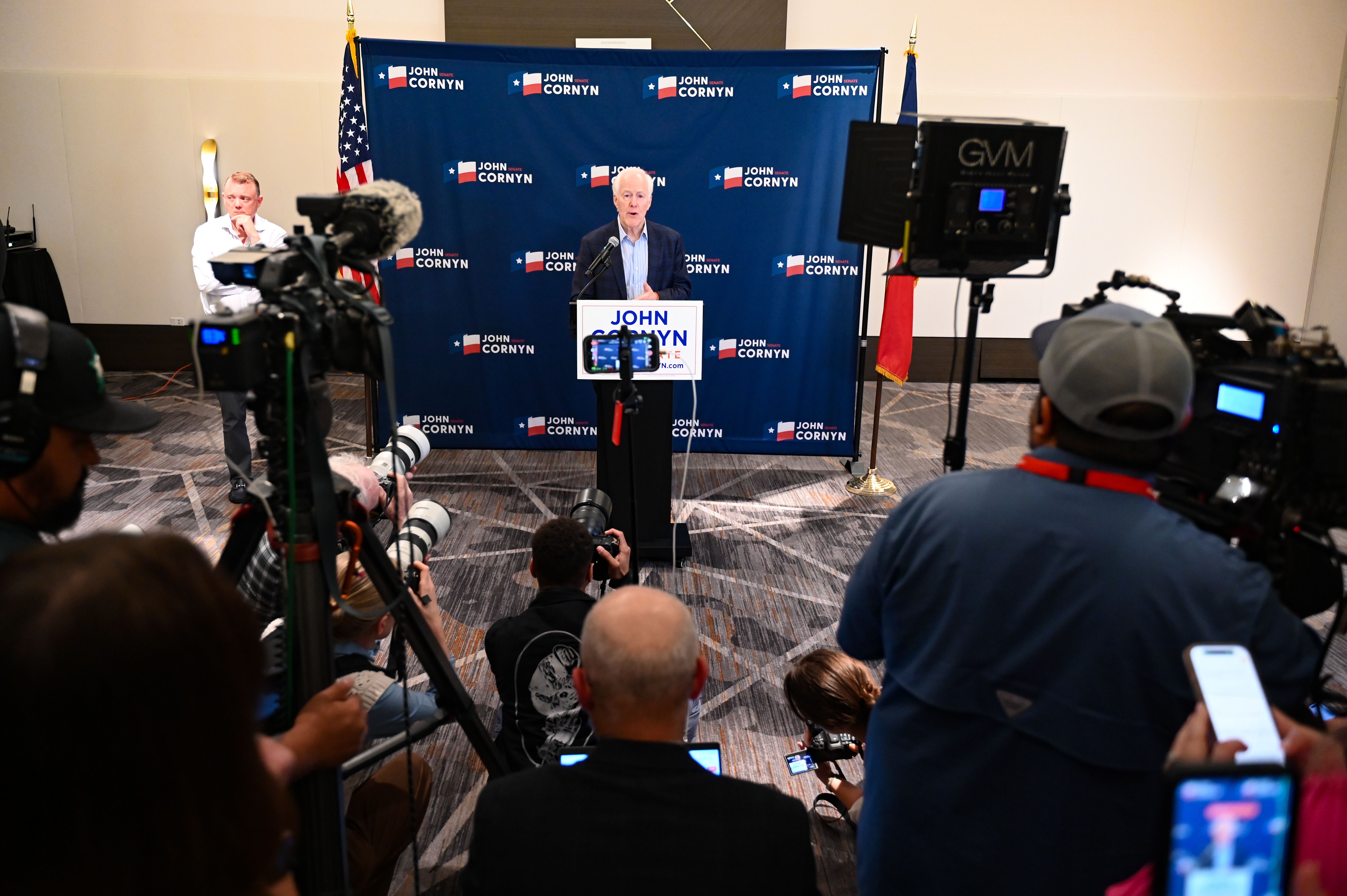
President Trump, already at odds with many MAGA leaders over Iran, is getting pressured hard by MAGA activists not to endorse Sen. John Cornyn (R-Texas) for reelection, Axios' Alex Isenstadt reports.
- Why it matters: This is the most unified, intense, in-his-face MAGA campaign yet to push Trump into picking sides in a pivotal fight — the GOP establishment or his base. Trump was leaning toward backing Cornyn before MAGA went ballistic, officials tell Axios.
🗳️ Republican leaders see Cornyn as way more electable than his scandal-stained GOP challenger, state Attorney General Ken Paxton. A loss in November could jeopardize Republicans' Senate majority.
- Cornyn and Paxton finished atop the field in this month's Republican primary and are headed for a May 26 runoff. Trump has said he plans to endorse in the race, and his choice will be viewed as the favorite.
📱 Dozens of pro-Trump influencers have taken to X to slam Cornyn, including Laura Loomer, Mike Cernovich and Jack Posobiec.
- Steve Bannon, an outspoken Paxton supporter who hosts the "War Room" podcast, said the race is "MAGA versus everything they hate, everything that has screwed their country, every wrong they believe needs to be righted — and righted now."
🔎 The intrigue: As MAGA is pressuring Trump, the president is using a potential Cornyn endorsement as leverage to push top Senate Republicans to approve stringent voter ID and anti-transgender policies.
- Top Republicans fear that if Paxton winds up the GOP nominee, he could lose in November to state Rep. James Talarico, who's trying to become the first Texas Democrat to win statewide in 32 years.
6. 🚢 Trump: International armada will reopen strait
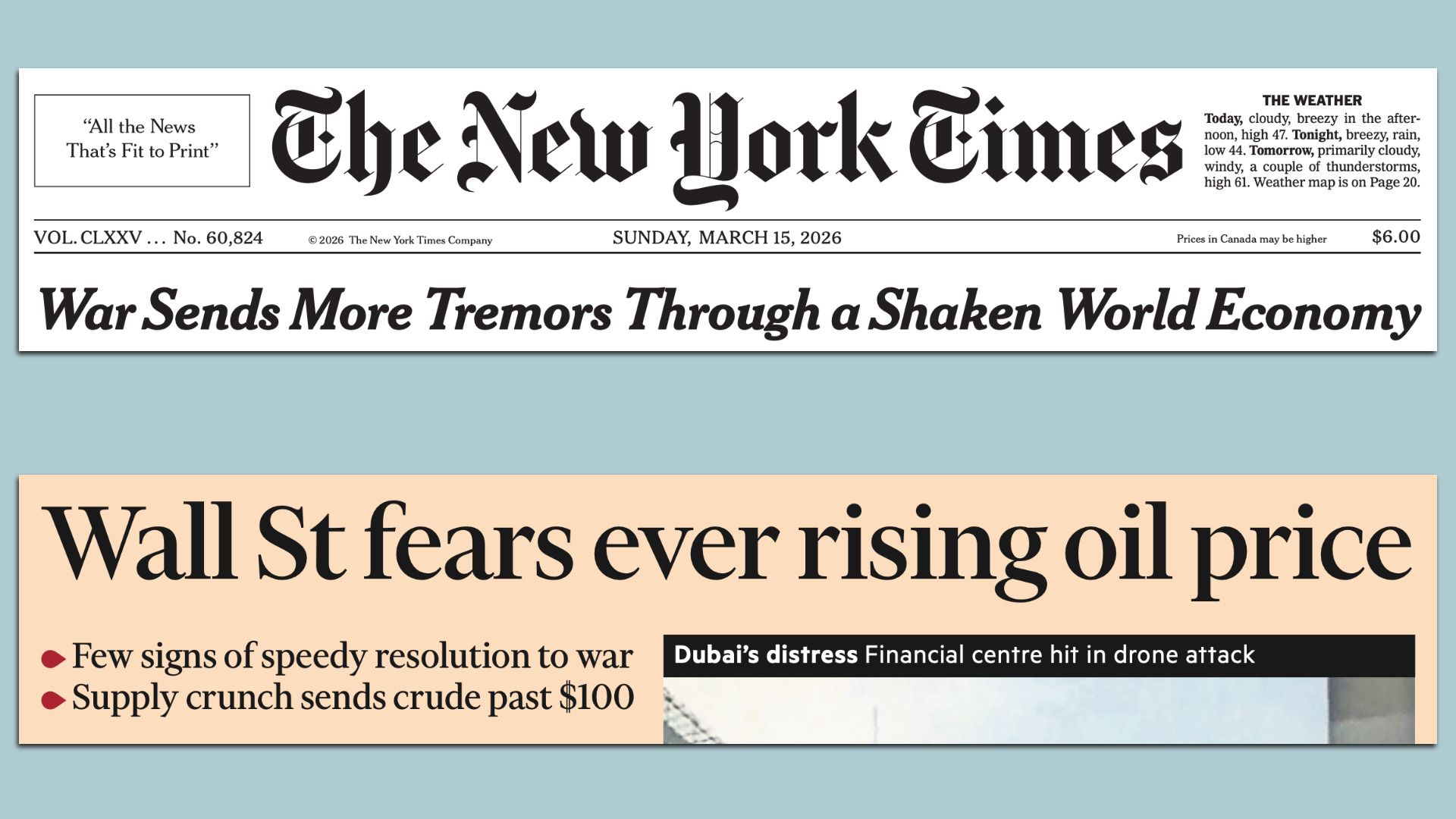
President Trump said yesterday that the U.S. and several other countries will send warships to the Gulf to reopen commercial shipping in the Strait of Hormuz, Axios' Barak Ravid reports.
- Why it matters: The attacks in the strait have brought commercial shipping to and from the Gulf to an almost complete halt, dramatically disrupting the region's oil exports and destabilizing global energy markets.
U.S., Israeli and Western officials say the situation at the strait has been the key concern for the Trump administration in recent days.
- Trump wrote on Truth Social: "Many Countries, especially those who are affected by Iran's attempted closure of the Hormuz Strait, will be sending War Ships, in conjunction with the United States of America, to keep the Strait open and safe."
While claiming the U.S. has "destroyed 100% of Iran's Military capability," Trump acknowledged the Iranians are still sending drones, dropping mines and launching anti-ship missiles against vessels in the strait.
- "Hopefully China, France, Japan, South Korea, the UK, and others, that are affected by this artificial constraint, will send Ships to the area so that the Hormuz Strait will no longer be a threat by a Nation that has been totally decapitated," he added.
The president later said on Truth Social that "the Countries of the World that receive Oil through the Hormuz Strait must take care of that passage, and we will help — A LOT!"
7. 🇺🇸 Honoring our fallen
A pilot from Alabama had just been promoted to major in January and had been deployed less than a week when the refueling aircraft he was aboard crashed in Iraq on Thursday, killing him and five others.
- Air Force Maj. Alex Klinner, 33, leaves behind three small children: 7-month-old twins and a 2-year-old son, AP reports.
Klinner was one of three service members killed in the crash who were assigned to the 6th Air Refueling Wing at MacDill Air Force Base in Florida. The other two were identified as Capt. Ariana Savino, 31, of Covington, Wash., and Tech. Sgt. Ashley Pruitt, 34, of Bardstown, Ky.
- Three deceased service members on the aircraft were assigned to the 121st Air Refueling Wing at Rickenbacker Air National Guard Base in Columbus, Ohio. They were identified as Capt. Seth Koval, 38, Capt. Curtis Angst, 30, and Tech. Sgt. Tyler Simmons, 28.
8. 🎤 1 for the road: Comeback tours


Major artists are returning to headline tours in the U.S. after long breaks from the road, Axios media reporter Kerry Flynn writes.
- Why it matters: The trend underscores the power of the nostalgia economy, as fans revisit artists from their youth while younger listeners connect with them through streaming and social media.
At least 10 artists or bands will headline tours in the U.S. this year after hiatuses of five years or longer:
- Sugar will tour starting May 2. They haven't performed since 1995.
- Hilary Duff begins The Lucky Me Tour on June 21, following a set of intimate shows earlier this year. This is her first headlining run since Dignity Tour, where the last U.S. date was 2007.
- The Pussycat Dolls are celebrating the 20th anniversary of their debut album with PCD Forever, their first tour since 2009.
- Chapterhouse announced their first U.S. tour since 2010, celebrating the 35th anniversary of their debut album.
- The Cab launched the Back From The Dead Tour, their first headlining tour in more than a decade.
- Times New Viking just played their first show in nearly a decade.
- Rush announced a reunion tour starting June 7, their first since 2015.
- Lily Allen, Robyn and Ariana Grande all kick off tours this year after last touring the U.S. in 2019.
📬 Thanks for sharing your weekend with us! Please invite your friends to join AM.
Sign up for Axios AM