The Iran war is a new test of America's economic superpower

Add Axios as your preferred source to
see more of our stories on Google.
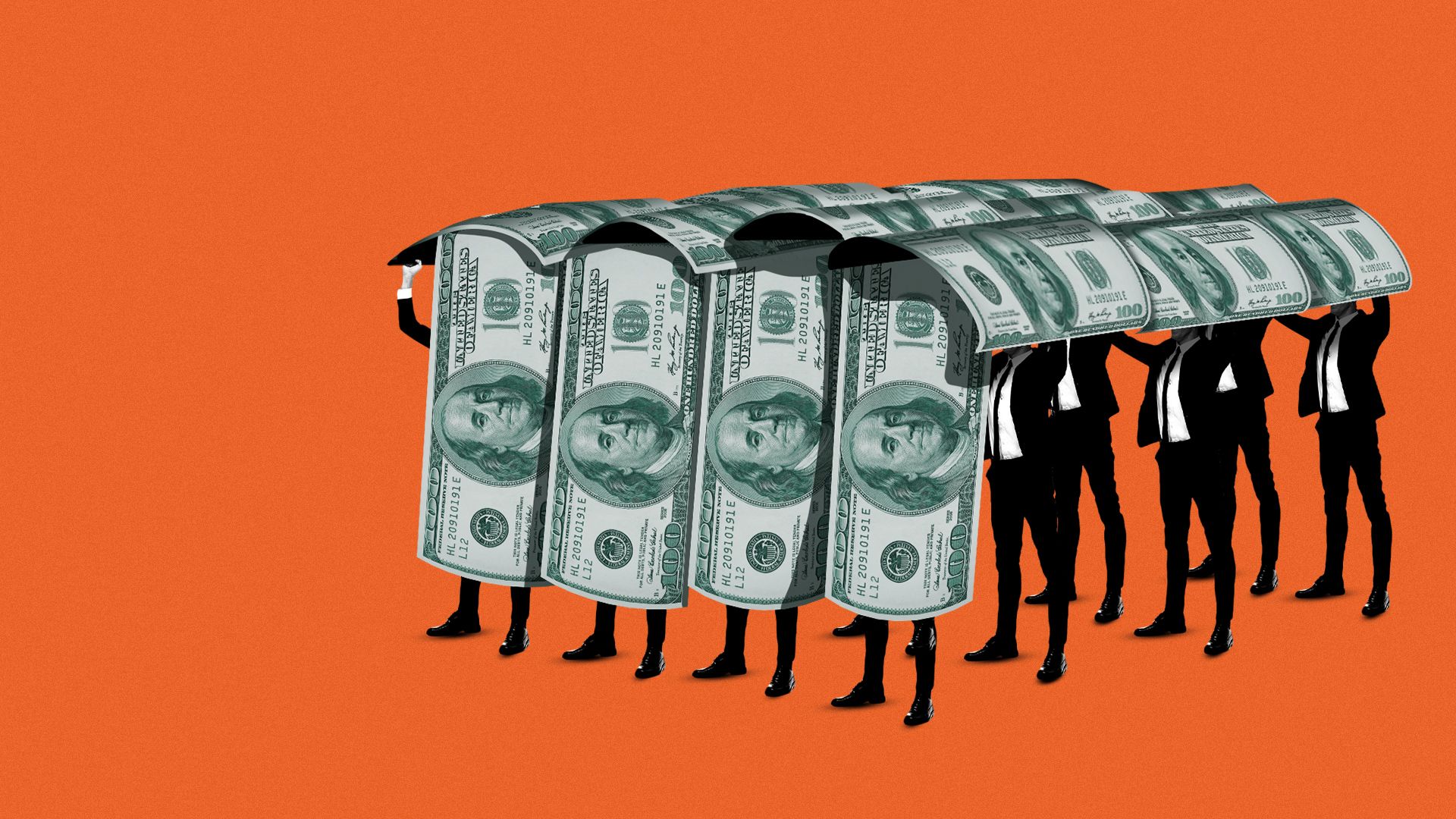
Illustration: Aïda Amer/Axios
If you predicted the U.S. would fall into recession due to the latest headlines, the last few years have made you look dumb. Through interest rate increases, armed conflict in Europe and a trade war, it has proven stunningly resilient.
The big picture: America's economic superpower has been its scale, diversity and adaptability that have allowed it to continue chugging along whenever crises arise.
- Now, the Iran war will test again how much the U.S. economy can absorb without a meaningful downturn.
State of play: With Iran threatening attacks on ships that pass through the Strait of Hormuz, the price of oil is up 43% this month, at over $103 a barrel at Friday's close.
- Middle East exports of other key commodities, including the raw ingredients for fertilizer, are also being throttled, threatening future food inflation.
Zoom out: Based on all the historic measures, all the hand-wringing, all the chaos, the economy should be tanking or tormented. Yet it keeps snapping back, even growing.
- In Trump 2.0, the global trade order has been upended, the independence of America's central bank has been put in doubt and an AI boom has erupted that threatens millions of jobs.
- Yet the economy has kept growing throughout, with the unemployment rate a manageable 4.4% last month. It was higher than that in 72% of months dating back to the 1940s.
- New revisions released Friday showed soft GDP growth at the end of 2025, but it is on track to rise at a 2.7% rate in Q1, per the Atlanta Fed.
Flashback: Earlier this decade, the Federal Reserve raised interest rates repeatedly, which had many analysts predicting recession. The war in Ukraine created deep stress in global commodity markets.
- Before that, the 2010s were full of warnings that this or that — fear of a fiscal crisis or the Eurozone debt crisis or feckless policy — might create a downturn.
- The exception proves the rule: It took a global pandemic to generate the only recession of the last 17 years, and that was the shortest one on record.
This all reflects the inherent strength and adaptability of the U.S. economy that becomes most evident at moments of strain.
- The U.S. is now a net oil exporter, which wasn't true during major Middle East wars of the past. So while the surge in energy prices is bad news for Americans buying gasoline or paying electric bills, it may actually raise GDP growth.
- Last April, there were widespread predictions of a recession and high inflation due to new tariffs. But President Trump backed off on some of the most extreme levies, and importers have proven creative about rerouting supply chains and absorbing costs, limiting the negative effects.
- Even as the president has tried to command the Federal Reserve to slash interest rates, its leaders and the courts have so far stood in the way — including with a decisive federal judge's ruling in favor of Fed chair Jerome Powell on Friday.
- The bond market continues to reward the U.S. with low borrowing costs: 4.28% for 10-year Treasury notes as of Friday. That wouldn't happen if investors believed a banana republic-style economic regime was on the way.
Zoom in: There are more subtle ways that the U.S. role in the global economy and financial system has contributed to its resilience.
- Global investors who want to bet on the AI revolution have little choice but to buy shares of U.S. companies — and those hundreds of billions of dollars are being deployed in the construction of data centers.
- Growth is being propelled in part by the Trump administration's tax cut legislation enacted last year. It widened fiscal deficits, yet interest rates have fallen since it was passed.
- That reflects deep global demand for Treasury securities, in turn tied to the centrality of the dollar as the global reserve currency.
What they're saying: "If there is one lesson from the past few years, this past week especially, [it] is that true energy independence means freedom from the vacillations from global markets," Ben Harris, head of economic studies at the Brookings Institution and a former Treasury Department official, tells Axios.
- "When you have a massive economy, with so much wealth, so much diversification, it's hard to disrupt it."
Reality check: None of this means that Americans are thrilled with the state of the economy. Consumer sentiment surveys point to the kind of pessimism usually seen during recessions or inflationary spikes.
Between the lines: So what could go wrong? The likeliest contenders include two-sided risks from the AI surge and from geopolitics.
- A rapid displacement of millions of workers by generative AI would create mass unemployment, at least temporarily.
- If the Iran war chokes off the shipment of oil and natural gas through the Persian Gulf for a sustained period, that could create a global recession and much higher energy prices.
Yes, but: The natural state of the $30 trillion U.S. economy is to maintain forward momentum.
- It will take more than a bunch of adverse headlines to stop it.
