Axios AM

June 19, 2026

1 big thing: Trump's all-powerful "Great Man" theory
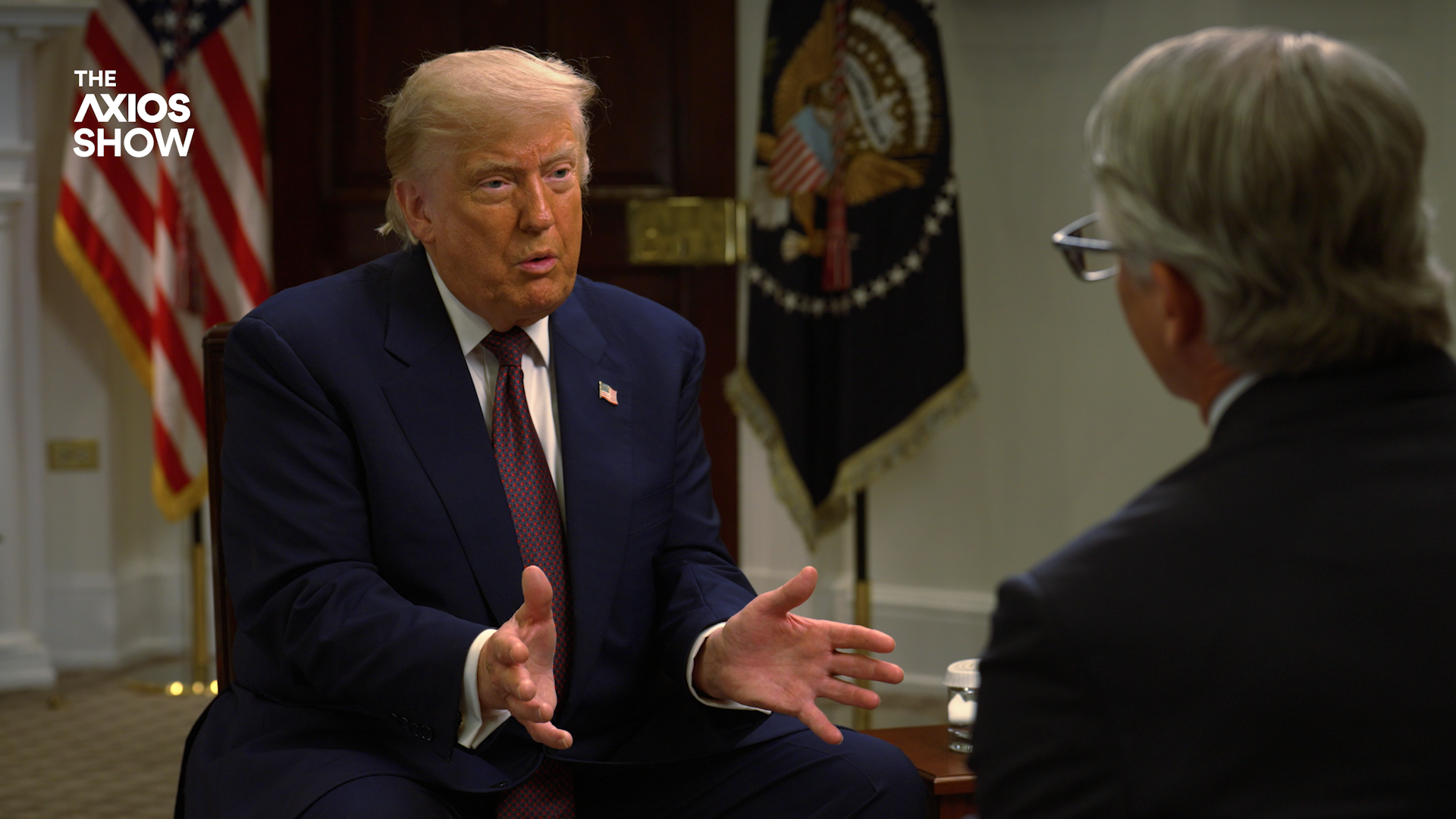
President Trump declared on "The Axios Show" yesterday that he's discovered "no limits" to his power since going to war with Iran.
- A new book reveals he's been entertaining an even grander idea: that he may be the most powerful man in history, Axios' Zachary Basu and Marc Caputo report.
Why it matters: Trump is no longer merely testing the limits of the presidency. He's describing power in world-historical terms — placing himself in the lineage of conquerors, dictators and strongmen who bent nations to their will.
- In a wide-ranging, 45-minute interview yesterday with Axios' Marc Caputo, Trump repeatedly measured power by submission: G7 leaders believed him when he joked "I'm the boss," he said, while Israel has "a lot of respect for me" and will "do as I say."
👀 Zoom in: In "Regime Change," the forthcoming book by Maggie Haberman and Jonathan Swan, Trump proudly shows off a document arguing he's more powerful than Attila the Hun, Genghis Khan, Napoleon, Stalin, Mao and Hitler.
- Trump "began reading from it," the authors write, "reciting the names of some of history's most powerful figures" and explaining how each "fell short of his own power as U.S. president."
- "They didn't have airplanes, right? You couldn't travel around," Trump said of Alexander the Great, the Caesars and William the Conqueror. "Napoleon," he added "with relish," according to the authors.
- Haberman and Swan write that the revealing part was "the evident pleasure he took in the company of Mao, Hitler, and Stalin" — and "the untroubled ease with which he accepted a place among men who had reshaped the world through conquest and fear."
🌐 Zoom out: Hints of that grandiose theory of power surfaced throughout Trump's interview with Axios, hours after returning from what he called a "very dominant" G7 summit in France.
- Trump named China's Xi Jinping and India's Narendra Modi as the world leaders he most admires, praising Xi as "all business" and Modi as "a very tough cookie."
- He declined to identify the leaders he considers the weakest — then pivoted to lamenting Vladimir Putin's absence from the G7, which was the G8 prior to Russia's expulsion after its 2014 annexation of Crimea.
- Trump lingered on French President Emmanuel Macron's decision to honor him with a dinner at Versailles, the kind of imperial stage Trump called "my weakness."
Between the lines: Allies, in Trump's telling, are only relevant when they recognize who holds the real power.
- "If it weren't for me, Israel would not exist today," Trump told Axios, adding that his relationship with Prime Minister Benjamin Netanyahu is "good, but we have to keep him a little bit sane." (Watch a clip about Israel and Netanyahu from the interview.)
- Trump struck a similar tone toward Republican hawks furious over his Iran deal: "Some guys that I used to respect, I don't respect anymore. They're hardliners," he said.
- Pressed on why the deal falls short of his original demands, a defiant Trump opted for his own reality — insisting the outcome does, in fact, amount to "unconditional surrender" by Iran as well as "regime change."
📉 Reality check: For all of Trump's claims of limitless power, he acknowledged one force still constrains him — the economy.
- He argued that extending the war to satisfy hawks could have triggered a "worldwide depression." He pointed to falling oil prices and a surging stock market as proof he made the right decision to back a deal that could end the Iran war.
- "I have one primary wish as president ... I never want to be the late, great Herbert Hoover," Trump said, referring to the 31st president, who's forever associated with the Great Depression.
The bottom line: Trump posted the "Great Men" document on Truth Social yesterday, calling its author a "presidential historian." Haberman and Swan report the author was actually the longtime caddy and personal confidant to golfer Gary Player.
- The document's conclusion: Trump's willingness to use his power on a global scale "makes him by far the most powerful person that has EVER walked this planet."
📱 Watch a clip from the interview.
2. ⏳ Vance postpones Iran talks trip
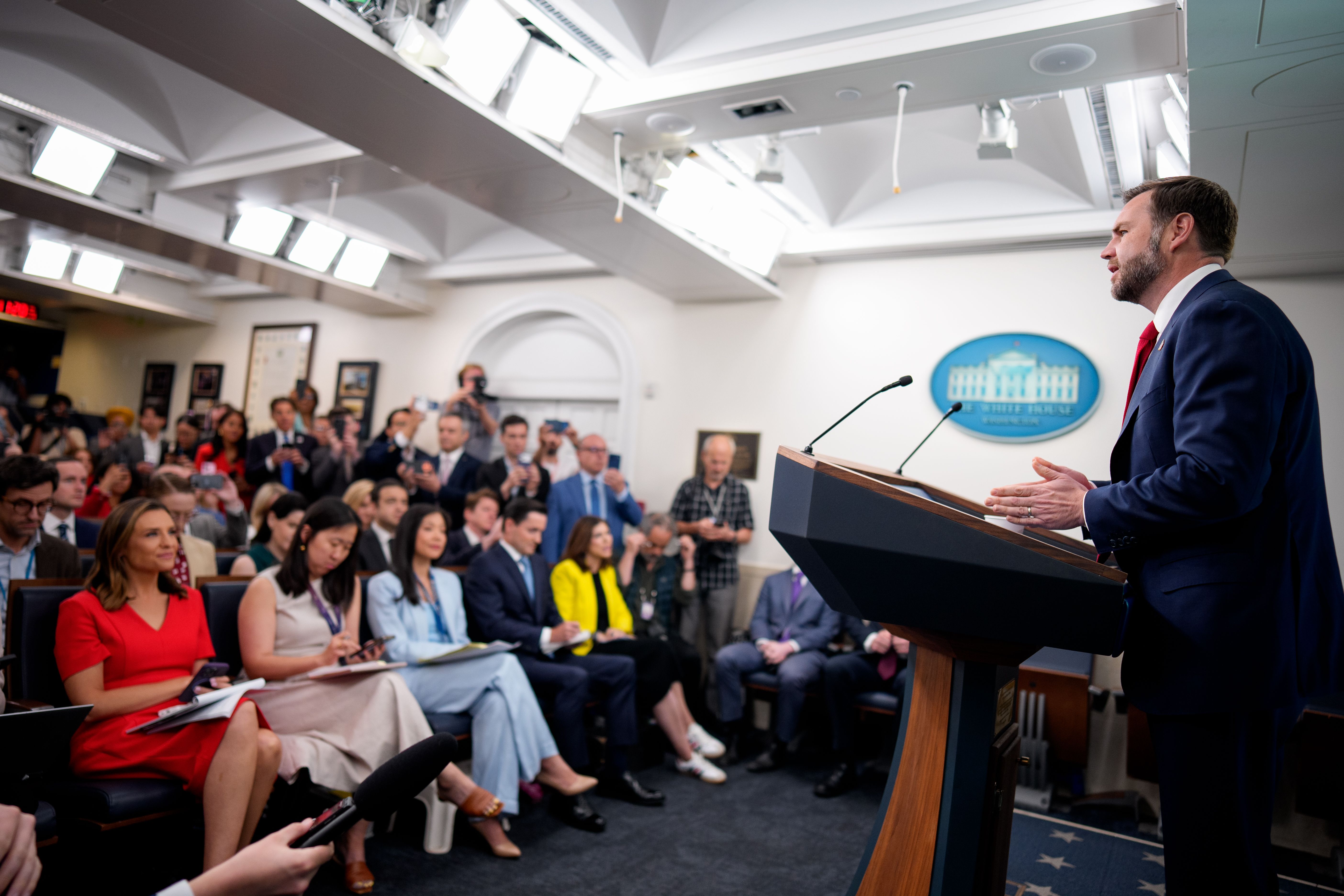
Vice President JD Vance postponed a planned trip to Switzerland for U.S.-Iran talks expected to begin today.
- The White House said the reason for the change of plans was "logistics." But there were some indications that the background for the decision is connected to the shaky ceasefire in Lebanon, Axios' Barak Ravid reports.
At a press conference yesterday, Vance said the plans for the talks hadn't been finalized and mentioned that Iranian officials might have technical challenges with their travel arrangements.
- The White House said in a statement: "The U.S. delegation has been prepared to depart at the first available opportunity. But the logistics of these negotiations have never been simple or predictable."
Between the lines: A U.S. official said Tehran's claims about alleged Israeli violations of the ceasefire in Lebanon could be the reason for the talks not happening.
- Israel's military conducted a strike in southern Lebanon on Thursday, killing four people.
- Last night, before Vance announced he wasn't going, intense fighting between the Israeli military and Hezbollah erupted in southern Lebanon.
President Trump wrote on Truth Social that the U.S. "is committed to PEACE" and called on all parties in the region to allow the negotiations "to beautifully unfold."
- "We expect a complete Ceasefire on all fronts, including Lebanon, Hezbollah, and Israel," he wrote.
Go deeper: Trump sees "no limits" to his power.
3. 🗳️ How a democratic socialist swept D.C.
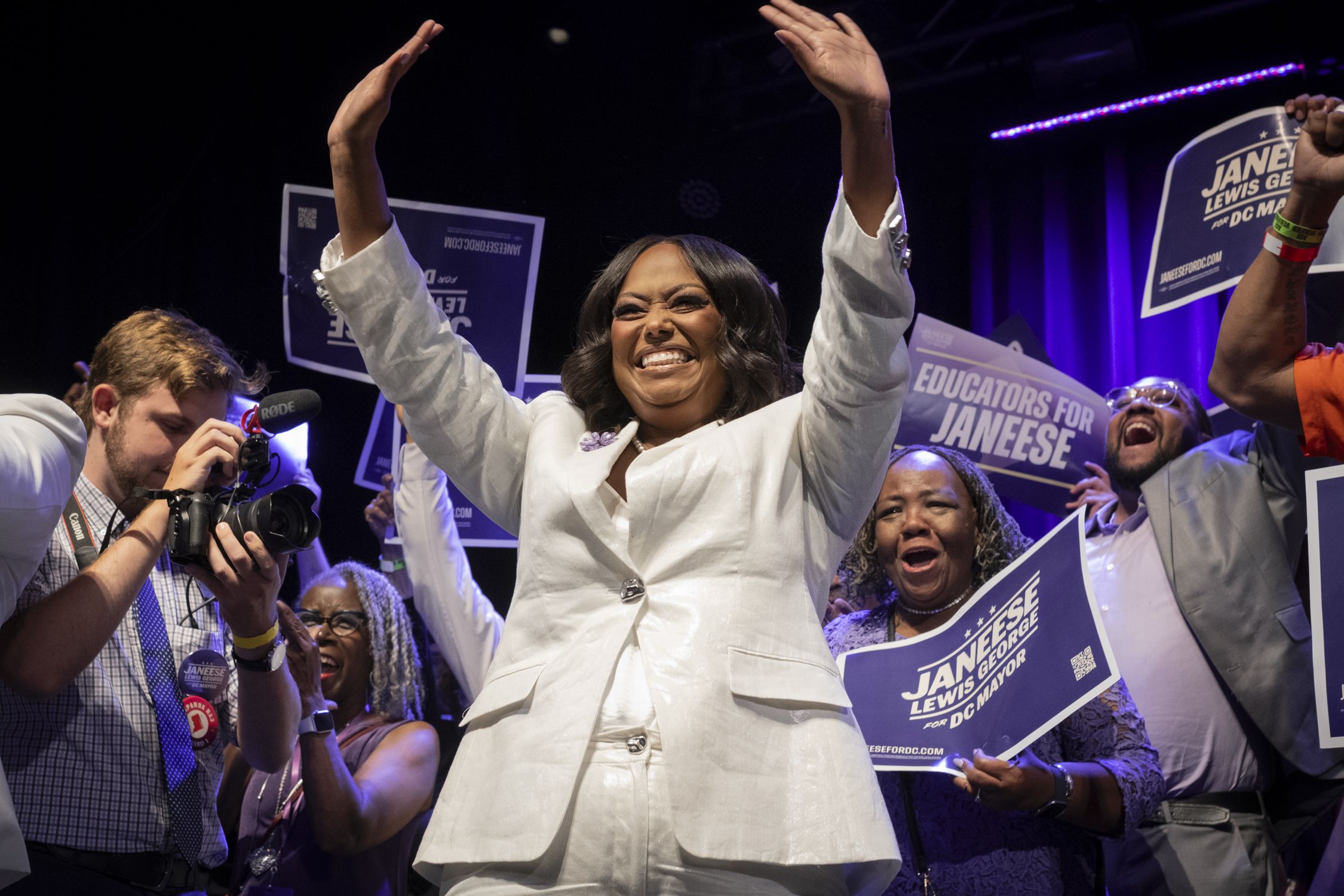
The triumph of a democratic socialist in the D.C. mayoral race is a new sign that younger urban voters are turbocharging candidates who promise to go big on affordability and take on President Trump, Axios D.C.'s Cuneyt Dil writes.
- Janeese Lewis George, who handily defeated a moderate in the Democratic primary, marks a break from decades of business-friendly politicians running the nation's capital.
🔎 Three trends explain her rise:
- Unhappiness with the city's direction stood at the highest level (55%) since Marion Barry's reign 28 years ago, per a Washington Post-Schar School poll. A lot of that disaffection was driven by Trump, but there was also a shout for change after three terms of Mayor Muriel Bowser.
- Washington's influx of white residents, who tend to be younger and more progressive, made winning that vote even more important. Lewis George ran up the score in neighborhoods where they've settled.
- Nearly half of D.C.'s registered Democrats have a favorable view of socialism, per the poll — so it's not a turnoff.
What's next: With D.C.'s deep-blue electorate, winning the Democratic nomination is tantamount to victory. But a November general election will officially decide the next mayor.
4. 🏡 Priced out


Americans are being thwarted by homeownership costs that are near record highs, Axios' Emily Peck writes from a new report out of the Joint Center for Housing Studies at Harvard.
- Why it matters: Homeownership is a cornerstone of the American Dream, but it is increasingly out of reach — particularly for young adults.
📈 The monthly cost of a median-priced home was $3,120 in the fourth quarter of 2025, per the Harvard report. That includes a mortgage payment, insurance and property tax.
- It's a roughly 46% increase from the same time in 2019.
Stunning stat: In a growing number of cities, a so-called starter home can now run $1 million, a recent Zillow report noted.
- The homeownership rate in the U.S. fell in 2025 for a second consecutive year. The largest decrease was among those under age 35.
5. Longevity medicine's do-or-die moment

6. 🎰 Stat du jour

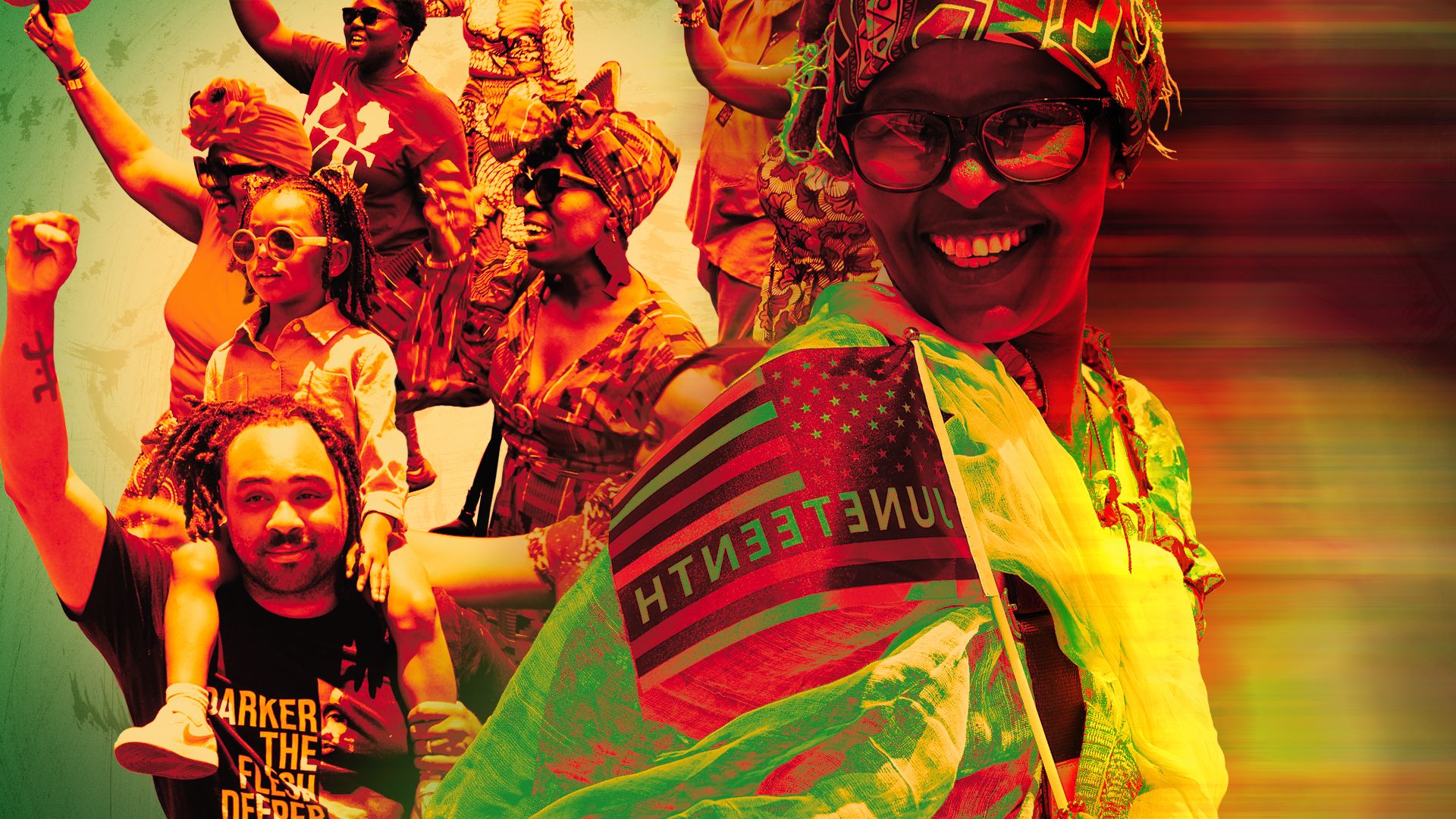
7. Juneteenth's resilience
8. 📸 1 pic for the ages
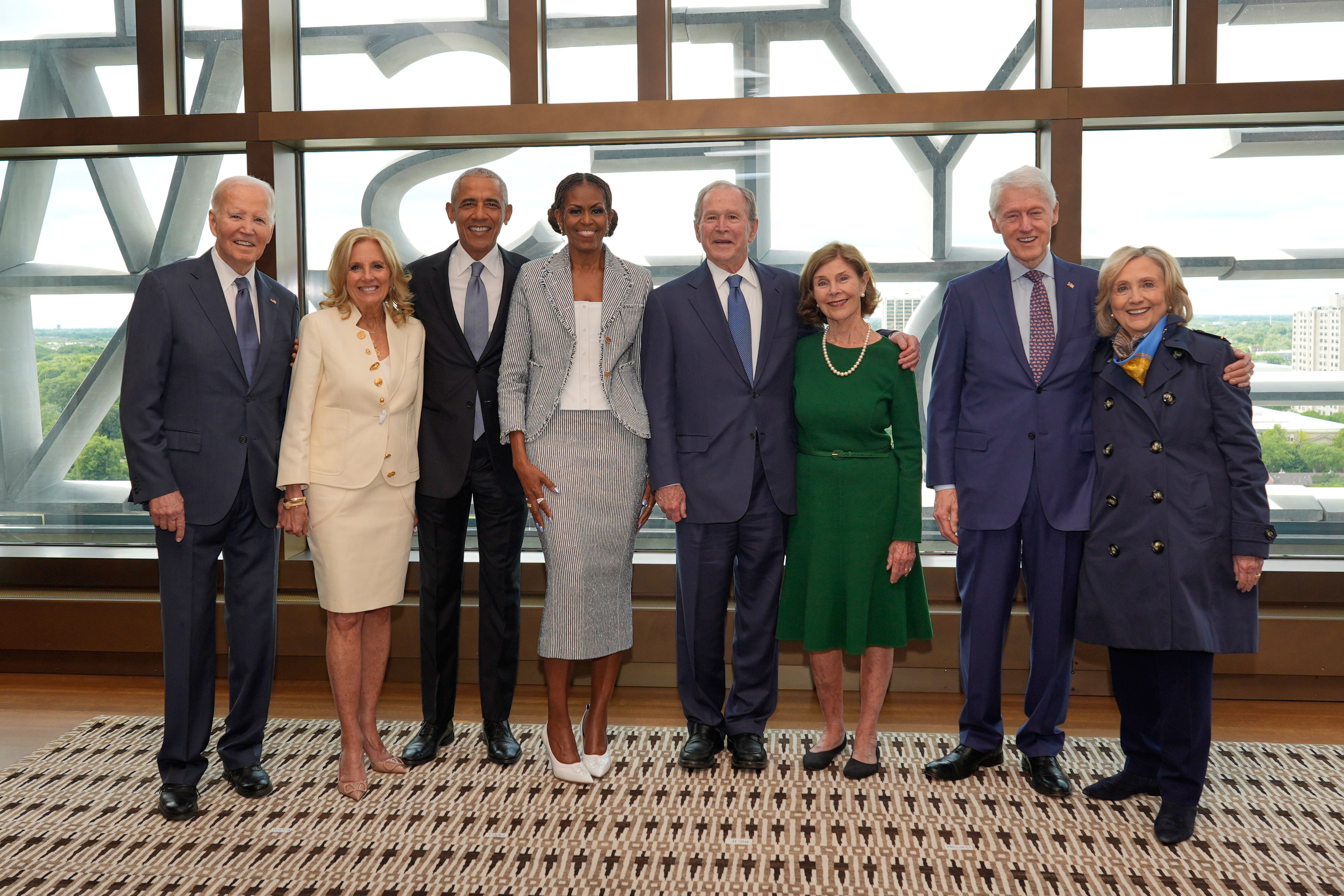
The Bidens, the Obamas, the Bushes and the Clintons pose at the opening of the Barack Obama Presidential Center on Chicago's South Side yesterday.
Axios AM