Axios AM

December 12, 2025

😎 Happy Friday! Smart Brevity™ count: 1,690 words ... 6½ mins. Thanks to Erica Pandey for orchestrating. Edited by Mark Robinson. Copy edited by Bill Kole.
1 big thing: Trump's great power cooperation
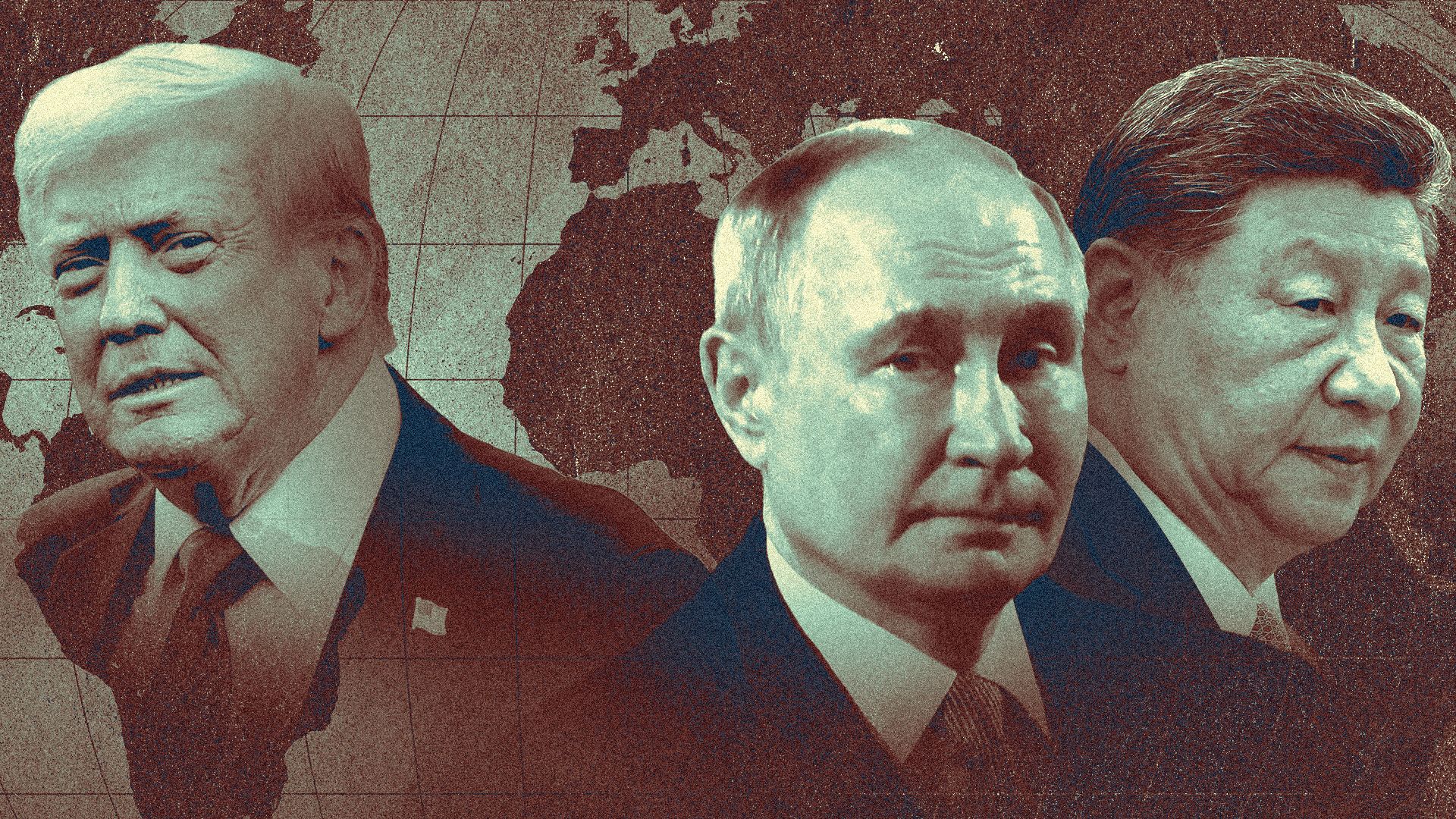
President Trump's first term opened the age of "Great Power Competition" with China and Russia.
- His second is working to end it, Axios' Dave Lawler and Zachary Basu report.
Why it matters: For the past decade, Washington has operated on the bipartisan consensus that China seeks to overtake the U.S., Russia seeks to undermine it, and reinforcing alliances in Europe and Asia is key to winning the 21st century.
- Trump is challenging that entire foundation, envisioning a new world order where great powers cut deals — and look the other way when needed, rather than restrain each other's ambitions.
⚡ Catch up quick: The first Trump administration declared a genocide in Xinjiang, blacklisted Huawei, and moved to ban TikTok.
- After returning to office, Trump kicked off a spiral of U.S.-China tariffs, threats and export bans, before striking a truce with President Xi Jinping in October.
- Lately, Trump has been sounding like the biggest China dove in Washington.
🇨🇳 Trump recently announced he'll be visiting Beijing in April. Xi will make a return trip later in 2026.
- A U.S. official said that under the October trade truce, China had "agreed to crack down on fentanyl precursors, purchase U.S. agricultural products, and keep rare earths flowing."
This week, Trump stunned D.C.'s China hawks by lifting a ban on exports of Nvidia's H200 chips to China.
- The administration's bet is that selling to China will help reinforce U.S. dominance in designing the chips that power AI globally. The U.S. official noted that export controls on Nvidia's most advanced Blackwell chip remain in place.
- But it's a remarkable reversal, given that Trump 1.0 started construction on the high-tech firewall that Trump 2.0 is now lowering.
🇷🇺 Trump's emerging Russia strategy mirrors his shift on China — a move away from confrontation and toward accommodation, deal-making, and a willingness to accept territorial conquest.
- Trump's envoys are pressuring Ukraine to cede the entire Donbas region to Russia and envisioning a new era of "strategic stability" with Moscow that could unlock vast commercial opportunities.
- An early 28-point peace plan produced by U.S. and Russian officials calls for a "long-term economic cooperation agreement" in the areas of energy, natural resources, infrastructure, AI, data centers, rare earths and more.
Trump's National Security Strategy is notably far less hostile to Russia than to the European Union, which Trump has cast as a "decaying" project of the old liberal order.
2. 🦾 Trump tries to neuter state AI laws

President Trump signed an executive order last night to override state AI laws, setting up high-stakes clashes nationwide and inside his own party.
- Why it matters: The president and David Sacks, his AI and crypto czar, are moving aggressively in favor of industry to rein in state regulation of the technology, Axios' Mackenzie Weinger and Maria Curi report.
The order aims to gut state AI laws by launching legal challenges and conditioning federal grants on compliance.
- MAGA populists made a failed last-minute bid to try to shape the executive order, pitching two draft proposals to the White House this week.
🔎 Zoom in: The executive order calls on government agencies to "check the most onerous and excessive" state laws in favor of a "minimally burdensome, uniform national policy framework."
- It directs the attorney general to set up an AI Litigation Task Force within 30 days to challenge state laws.
⚖️ Reality check: The order is likely to be challenged in court by states and consumer groups on the grounds that only Congress has the authority to override state laws, legal experts told the N.Y. Times.
Between the lines: Sacks, the AI czar, posted on X that the order doesn't mean the administration will challenge every state AI law.
- "Far from it," he said. "The focus is on excessive and onerous State laws. We look forward to working with Congress to enact a stable and enduring framework that reduces unnecessary regulation, enables innovation, protects core values, and helps America win the AI race."
3. 🌿 Trump leans toward reclassifying pot

President Trump is likely to loosen still-tough federal restrictions on marijuana use early next year, Axios' Alex Isenstadt reports.
- Why it matters: While conservatives have long expressed a degree of discomfort with pot, Trump has shown an openness to it.
🔎 Under the plan, Trump would reclassify marijuana — which under federal law is banned and faces the same restrictions as heroin — as a less-dangerous drug.
- That would ease regulations, make it easier to conduct marijuana-related medicinal research and create tax breaks for cannabis companies. It would not make marijuana federally legal for recreational use.
Between the lines: Trump's team has been reviewing survey numbers showing growing support for reclassification.
- Public sentiment on pot use has been shifting for the past half-century, with Americans increasingly in favor of it. According to a recent Gallup poll, 64% support legalization, up from 36% in 2005.
- A White House official said no final decision had been made on the expected move, which was first reported by The Washington Post.
💰 Behind the scenes: Cannabis companies have been courting Trump.
- The pro-cannabis American Rights and Reform PAC has donated $1 million to a Trump-aligned super PAC. Several cannabis companies donated to his inaugural fund.
4. 🤖 Where AI race stands

Winning the AI race is no longer just about the hottest models.
- It's just as much about which company has the best path to making money soonest, Axios' Ina Fried reports.
💪 Google has been showing signs of a comeback for months, even before the release of its Nano Banana image generator and Gemini 3 language models.
- But generative AI still threatens to upend the search business that has funded the bulk of Google's empire.
🏆 OpenAI defined the category with ChatGPT, but is locked in competition with the latest Gemini model.
- Without a separate business to fund its operation, OpenAI must borrow heavily and quickly build products that generate revenue now.
🕶️ Meta is in the midst of a massive reboot after seeing its open-source Llama models fall behind the pack.
- The company went on a pricey hiring spree to bring in new leadership and is reportedly pinning its hopes on a new model, code-named Avocado, expected early next year.
💻 Anthropic flies somewhat under the radar due to its low presence in the consumer space, but Claude is still the go-to choice for many coders and enterprise customers.
- Like OpenAI, it has to fund its massive ambitions by rapidly growing its business and/or raising vast amounts of money.
🔭 Apple, Microsoft and Amazon are all in the game, as are a variety of Chinese brands and domestic startups.
5. 🗳️ Charted: Redistricting war
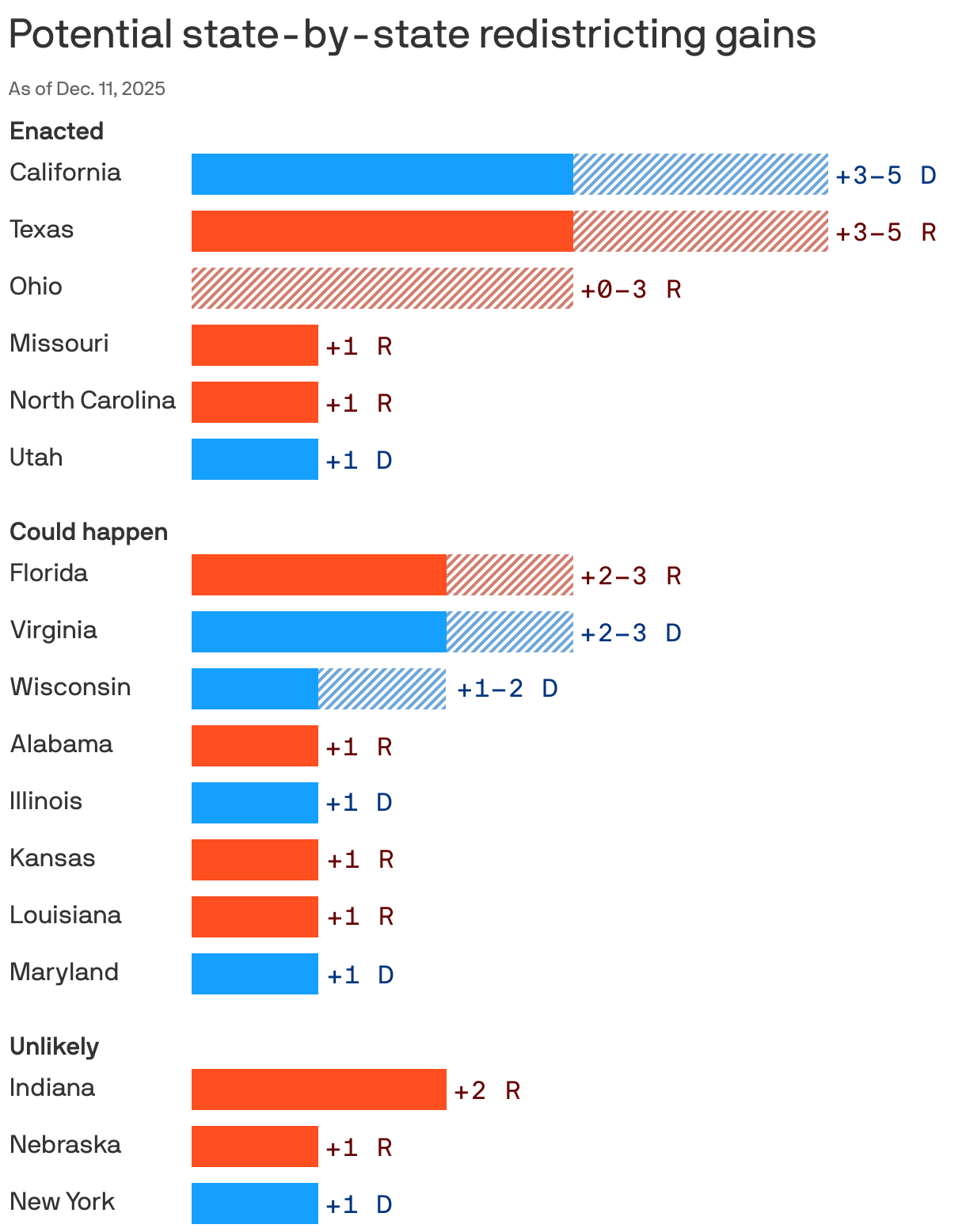
Indiana lawmakers' rejection of a plan to create two more Republican congressional seats yesterday brought more clarity to how the nationwide redistricting war could affect the midterms.
- Why it matters: Despite their setback in Indiana, Republicans still stand to pick up a few more seats than Democrats in mid-decade redistricting, Axios' Kate Santaliz reports.
By the numbers: In the six states where redistricting efforts are essentially locked in — Texas, California, Ohio, Missouri, North Carolina and Utah — Republicans are likely to have a net gain of just one to four seats.
- That could make a difference come November '26. But it's a much smaller cushion than the White House envisioned when Trump kicked off the redistricting push.
📍 Gerrymandering efforts sweep nation ... Click here for capsules on redistricting in 17 states: Texas ... California ... Missouri ... North Carolina ... Ohio ... Utah ... Indiana ... Florida ... Virginia ... Louisiana ... Maryland ... Illinois ... Kansas ... New York ... Colorado ... Nebraska ... and Wisconsin.
6. 🫘 Bean boom

Grocery prices continue to squeeze budgets. But one New Orleans company is seeing sales growth: Camellia Beans.
- As American consumers look for affordable options, Camellia is creating one-and-done bean seasonings and even experimenting with Depression-era recipes, Axios New Orleans' Chelsea Brasted writes.
📈 Zoom in: The price of beef hit a historic high of $6.32 per pound in September. A pound of dried beans was just $1.63.
- "As the economy goes down, bean consumption goes up," says Camellia Beans CEO Vince Hayward. "You eat more beans when you have less money. That's a life imperative."
The company recently introduced its new "Infusions" line, a single seasoning packet to make "a great pot of beans," Hayward says. His team developed new recipes inspired by cooking strategies from the Depression.
7. 🏟️ Naming Commanders' stadium
When the new Commanders' stadium opens in 2030, its naming-rights deal could crack $1 billion — smashing the current record-holder, $700 million for LA's Crypto.com Arena, Axios D.C.'s Cuneyt Dil reports.
- You can see why: Imagine an Axios Stadium. It'll be filled with Beltway insiders. Every time a broadcaster shows a beauty shot of Axios Stadium, powerful U.S. landmarks would be the backdrop.
K Street is already trying all angles to get a foot in. Corporations are hiring premium sports consultants to engage team owner Josh Harris, and President Trump wants "Trump Stadium."
👀 Zoom in: You don't see many stadiums named for politicians. And it's hard to imagine the Commanders spurning a lucrative sponsorship — which would go a long way toward paying down the $4 billion stadium — just to please the president.
- But there are other ways the president could get his name up in D.C. lights.
He's found megadonors to fund his new ballroom and the "Trump accounts" for kids. He could potentially do it again.
- Or he could land something else — like a Trump Hotel at RFK.
8. 💰 1 for the road: $800,000 penny
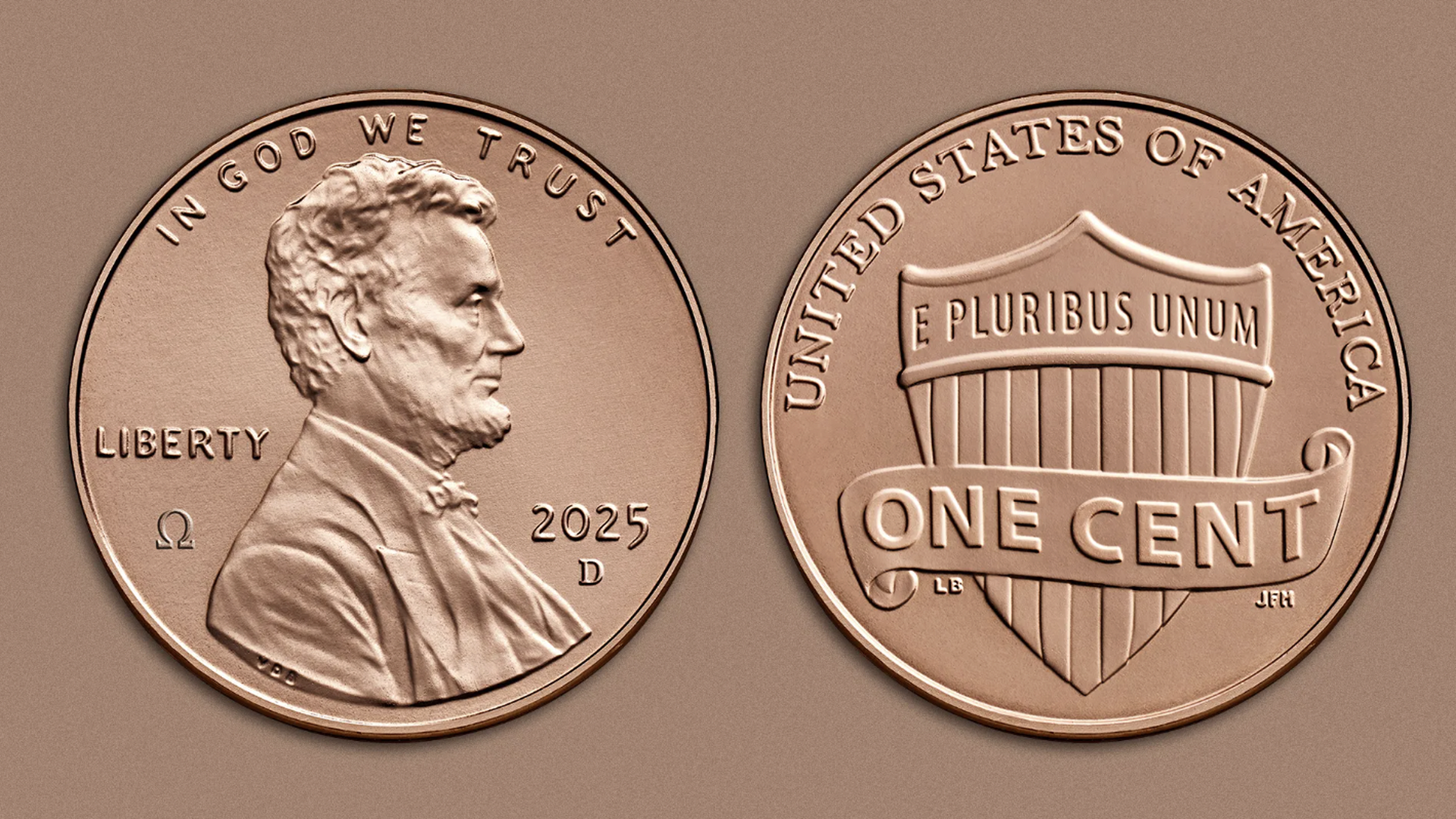
Bidders doled out top dollar to get their hands on some of the final circulating pennies during yesterday's auction, held by California-based Stack's Bowers Galleries.
- One of the 232 three-coin penny sets sold for $800,000. Another set fetched $200,000, Axios Philadelphia's Mike D'Onofrio reports.
Zoom in: Each set included two circulating pennies — one each from the Mint's facilities in Philadelphia and Denver — and a 24-karat gold uncirculated penny minted in Philly.
- The Philadelphia mint struck the final circulating one-cent coins in November.
📬 Thanks for reading! Please invite your friends to join AM.
Sign up for Axios AM