Google aims to be top banana in AI image editing

Add Axios as your preferred source to
see more of our stories on Google.
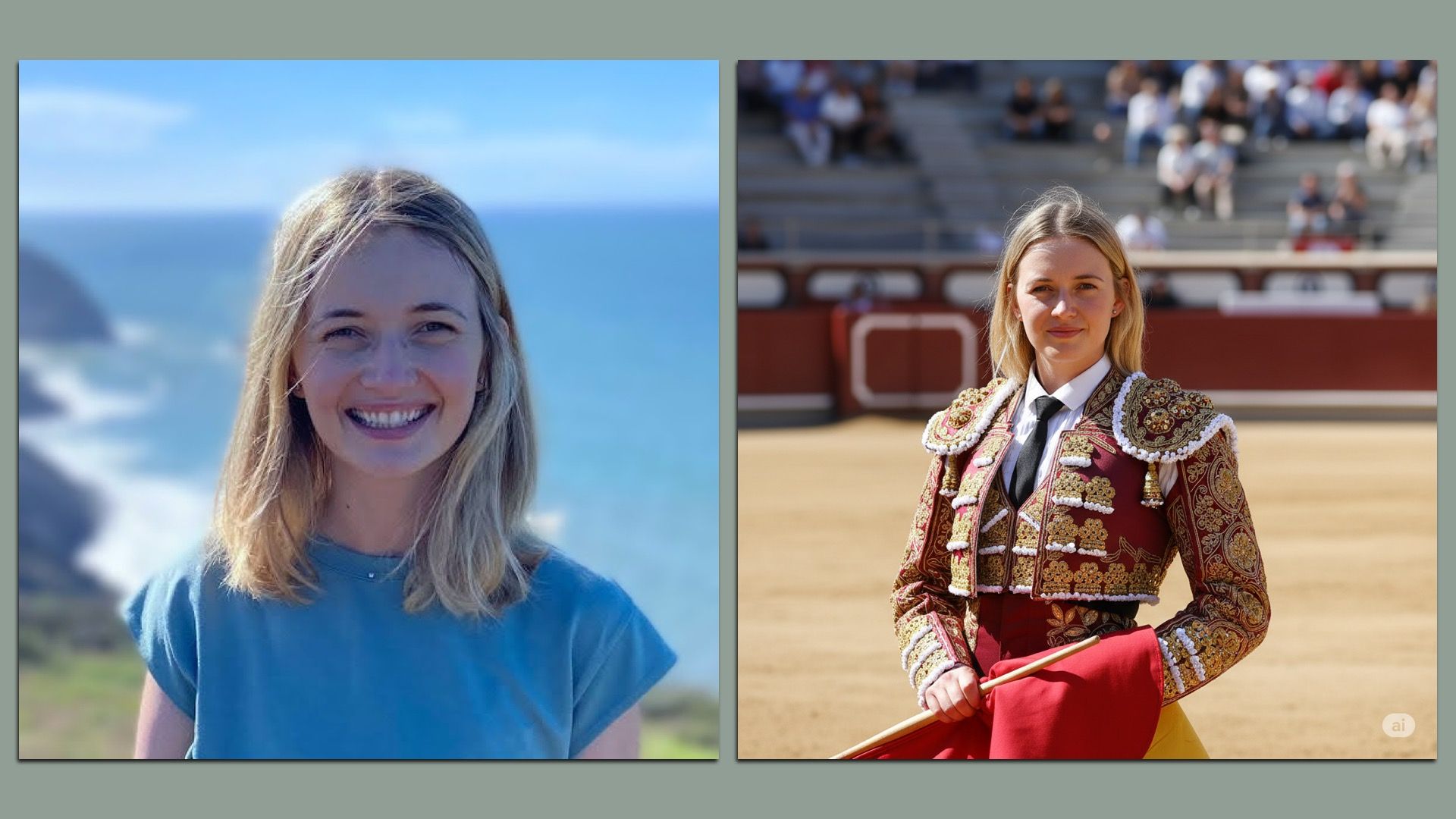
A woman depicted in a photo (left) is reimagined as a matador in the AI-created image on the right, which uses a new tool from Google. Images: Google
An image-editing tool known as Nano Banana that went viral in recent days is indeed — as many users had guessed — a Google project, the company confirmed Tuesday, and is being added to the Gemini app.
Why it matters: Nano Banana is the latest in a series of image-editing tools that have captured the internet's public eye, impressing users with its ability not only to generate new images but to refine them — a skill that has proven elusive to AI makers.
Driving the news: Google said the model that had been making waves under its code name will be available starting Tuesday to free and paid Gemini users on the web and in its mobile apps.
- For now, free users can create up to 100 image edits per day, while paid users can make ten times as many edits with the tool, officially dubbed Gemini 2.5 Flash Image.
- Under the Nano Banana name, the model had already been outperforming other models on the LMArena charts for image editing and generating significant buzz on social media.
How it works: The new tool lets people create a photo from text or based on an existing image.
- Google provided a reference photo of a young woman which the tool then transformed by putting her in matador garb.
Google says the model is also better than prior models at multi-step edits.
- In one example, Google shows a variety of stages of a room renovation being imagined, first with a fresh coat of paint and later with the addition of various pieces of furniture.
The tool can also combine two images.
- Google showed an example of one image getting transformed into a pattern that was then applied onto boots in another photo.
- The model's creations are labeled as AI-generated using Google's SynthID watermarking system.
Between the lines: While AI has proved helpful at generating images, it has tended to falter in the editing stage, particularly when asked to make changes to photos of real people.
- Google says its new tool is better than its and others' previous models at making sure the subject of a photo doesn't start to look like someone else, especially as edits pile up.
- "We know that when editing pictures of yourself or people you know well, subtle flaws matter — a depiction that's 'close but not quite the same' doesn't feel right," Google said in a blog post.
- "That's why our latest update is designed to make photos of your friends, family and even your pets look consistently like themselves, whether you're trying out a '60s beehive haircut or putting a tutu on your chihuahua."
Flashback: OpenAI saw a surge of ChatGPT downloads and usage after it released a highly capable image generator in March.
Yes, but: The more Google and its rivals refine their AI tools' ability to combine images or display people in new settings, the greater the threat of users creating deepfakes and misinformation.
