Axios AM

February 08, 2024
👋 Happy Thursday! Smart Brevity™ count: 1,578 words ... 6 mins. Thanks to Noah Bressner for orchestrating. Copy edited by Bryan McBournie.
🎧 Listen up: Today's episode of "1 Big Thing" — Axios' weekly podcast hosted by Niala Boodhoo — digs deep into evangelical influence in the MAGA movement.
- Apple Podcasts ... Spotify ... Google.
1 big thing: Court's high stakes
Photo illustration: Sarah Grillo/Axios. Photos: Mandel Ngan/AFP and David Becker/Getty Images
Legal experts agree about what the Supreme Court probably wants to do today:
- Find the narrowest, most boring way to let former President Trump back on the ballot in Colorado, Axios court watcher Sam Baker writes.
Why it matters: There aren't any great options to do that.
- The stakes in Trump v. Anderson — for the court, the outcome of a presidential election and the public's trust in the democratic process — are as high as they've been since Bush v. Gore in 2000.
💥 What's happening: The court hears oral arguments at 10 a.m. ET over whether Trump can appear on the Colorado GOP primary ballot. A handful of other states have also taken steps to remove him.
- Colorado's Supreme Court ruled in December that Trump is ineligible to be president and cannot be on the ballot because he engaged in an insurrection on Jan. 6.
- It cited the 14th Amendment, which bars former "officers of the United States" who "engaged in insurrection or rebellion" against the U.S. from holding "any office."
Trump's lawyers have pinned their hopes mainly on semantics. Their case can be summed up with three main arguments:
- That the insurrection clause of the 14th Amendment doesn't apply to the president.
- That Jan. 6 wasn't an insurrection.
- And even if it was, Trump did not "engage" in that insurrection.
🖼️ The big picture: Persuading the justices of any one of those points would be enough to win.
- But appearing to exonerate Trump for Jan. 6 — or ruling that the 14th Amendment allows for an insurrectionist president — would open the court to a firestorm of criticism.
🎧 How to listen to the arguments live at 10 a.m. ET.
2. 🗞️ Exclusive — Dow Jones CEO: "Not going to be a lifestyle company"
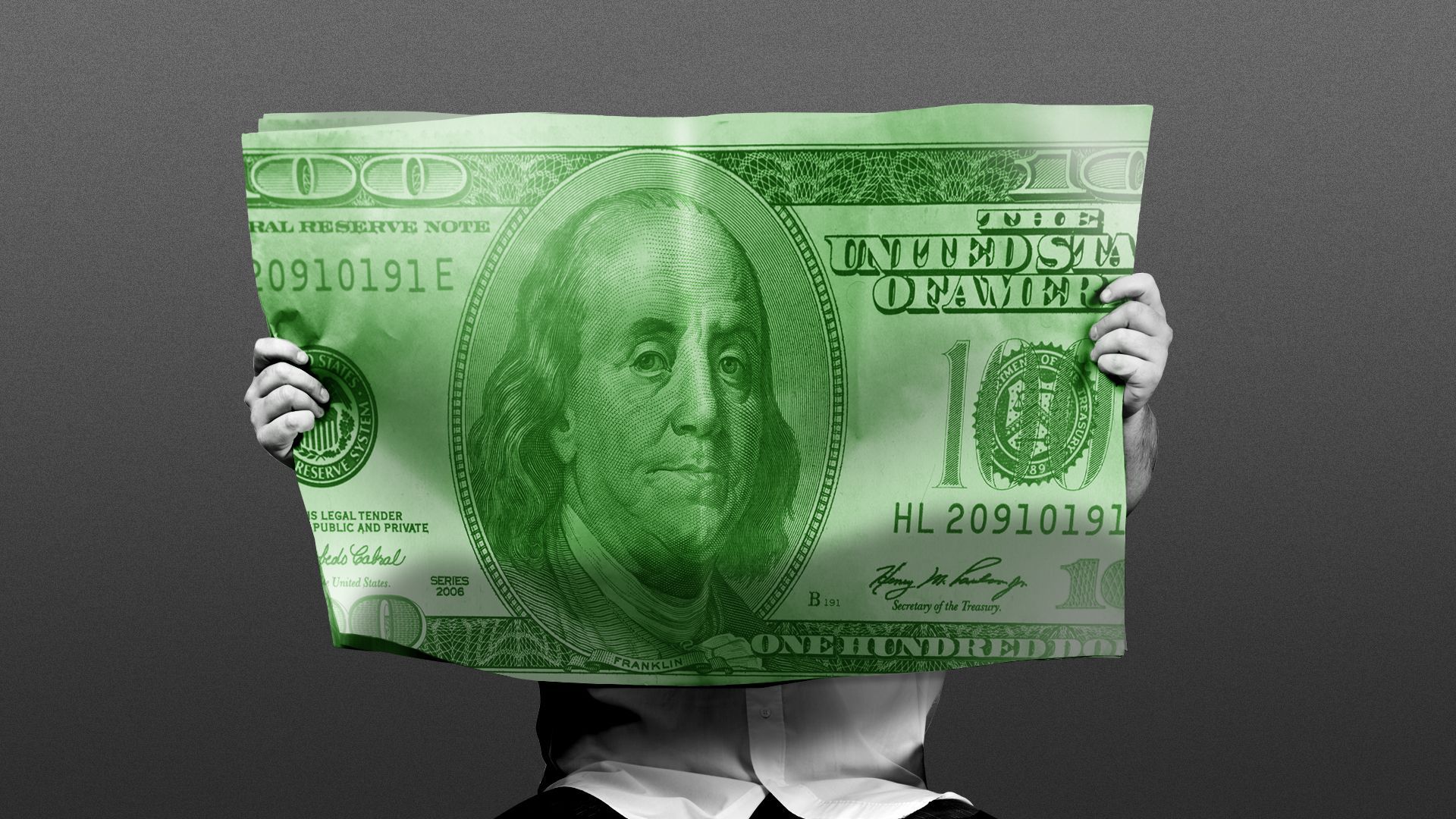
Illustration: Sarah Grillo/Axios
Dow Jones — the parent company to The Wall Street Journal, Barron's, MarketWatch and Investor's Business Daily — has doubled its digital subscription base from 2.43 million during the last three months of 2019 to 4.86 million during the same time period in 2023, Axios' Sara Fischer reports.
- Why it matters: Several major news companies are starting to reverse course on hard subscriptions, or are leaning into lifestyle products to grow. Dow Jones remains committed to its subscription strategy focused on business professionals, CEO Almar Latour told Axios in an interview.
"It's about knowing your identity and knowing the area in which you play," Latour said. "For us, that is business and we're not confused about that."
- "We're not going to be a lifestyle company. We're not going to be a gaming company. We're not going to be a cooking company," he said, referring to the N.Y. Times' business strategy. "We are going to shed focus on how we can help people make decisions."
🧮 By the numbers: Latour, who also is publisher of WSJ, was named CEO of Dow Jones in May 2020.
- Under his purview, The Journal has increased its digital-only subscription base 60% from 1.93 million in the last three quarters of 2019 to 3.17 million last quarter.
- Roughly 80% of Dow Jones' overall revenue is generated by subscriptions, both to consumers and to enterprises, a spokesperson told Axios.
"We really can, and will, be more globally active even than we are today," Latour said. The company will also double down on offering niche trade news and services, such as energy transition and financial risk analysis.
- Dow Jones, Latour said, has spent "well in excess of a billion dollars" on different data sets and companies related to coverage of energy transition in the past few years, including information services company OPIS and energy pricing and analysis firm Base Chemicals,
3. 🔍 Meadows called "least trusted man in Washington"

Cover: The New York Times Magazine
Robert Draper interviewed dozens of people for his 6,800-word, nine-page New York Times Magazine cover story, "How Mark Meadows Became the Least Trusted Man in Washington," about the former Trump chief of staff who could play a key role in prosecutions of his former boss.
- Why it matters: "The possibility that the former president's closest White House aide — a man with unsurpassed access to Trump during the final months of his presidency — might be seeking to wriggle out of further trouble by supplying damning information to prosecutors, and perhaps even testifying against Trump at trial, suggested a seemingly inescapable choice for Meadows: prison time or career suicide," Draper writes.
"Two close associates of the former president acknowledged to me that opinions in [Trumpworld] were sharply divided on the matter of Meadows's fidelity," Draper reports:
"Another Trump confidant conveyed to me the suspicion that Meadows was wearing a wire. In addressing the possibility that his former chief of staff had cut a deal to avoid a prison sentence, Trump confessed uncertainty about the matter on his social media platform, Truth Social, in a way that was most unlike him, posting on Oct. 24: 'Some people would make that deal, but they are weaklings and cowards, and so bad for the future our Failing Nation. I don't think that Mark Meadows is one of them, but who really knows?'"
Keep reading (gift link — no paywall).
4. 🗳️ Biden's Michigan peril

Senior White House officials are rushing to meet with Arab American leaders in Michigan today in an attempt to avert electoral disaster over President Biden's policies on Israel, Axios Detroit's Samuel Robinson writes.
- Why it matters: Michigan is home to the country's largest Arab American population. Biden's narrow win there in 2020 means he has little room for error in the key battleground state
Between the lines: Arab leaders rejected an attempt by Biden campaign manager Julie Chávez Rodríguez to meet last month.
5. 🏈 Super Bowl ads: $7m for 30 seconds

Illustration: Eniola Odetunde/Axios
A quarter of all Americans who plan to watch the Super Bowl say they're more interested in the ads than the game itself, Axios' Eleanor Hawkins writes.
- Why it matters: Brands increasingly rely on sports events — especially football games — to advertise on TV as traditional spots become less effective.
The Super Bowl is expected to attract more than 110 million viewers, making it one of the last remaining spectacles that pretty much all Americans watch together.
- National ads are selling for $7 million on a 30-second spot.
Marcus Collins, marketing professor at the University of Michigan and author of "For the Culture," told us: "People saw the Bud Light debacle and said: I don't want any of that smoke. ... Expect a very humor-driven Super Bowl."
- Get Axios Communicators ... Go deeper: Buzziest ads so far.
6. 💰 Mexico takes China's crown


For the first time in 20 years, "made in Mexico" is outpacing "made in China."
- Mexico is now the top producer of goods shipped to the U.S., according to U.S. Census Bureau data released yesterday.
Why it matters: The U.S.-Mexico relationship is often viewed through the far more contentious lens of immigration politics, Axios managing editor Javier E. David writes.
- But the new numbers show the two countries have hundreds of billions of reasons to remain on friendly terms.
🔎 Between the lines: Increasingly unpredictable geopolitics — including increased tensions between Washington and Beijing — are making Mexico preferable to China for American companies.
- "When U.S. companies are looking for new suppliers in Latin America they are looking for resiliency and can't be affected by geopolitics or weather," Alfonso de los Ríos, CEO of Nowports, a digital freight forwarding startup, told Axios.
🧮 By the numbers: Together, American consumers buy from three major foreign sources: Mexico, China and Canada.
- The U.S. absorbs more than $3 trillion worth of international goods a year. Those three countries account for more than a third of that total.
7. 📚 Fauci memoir coming in June

Cover: Viking
Anthony Fauci, arguably the world's most famous living doctor, will be out June 18 with a memoir called "On Call."
Why it matters: Fauci, 83 — as chief medical adviser President Biden, and longtime director of the National Institute of Allergy and Infectious Diseases — helped steer the U.S. through peak COVID with calm, relentless media appearances.
- He since has become polarizing online — an attack line for Republicans, who accuse him of tamping down the lab-leak theory of COVID's origins.
"I hope that this memoir will serve as a personalized document for the reader to understand better the daunting challenges that we have faced in public health over the past forty years," Fauci says in the announcement.
- "I would also like to inspire younger individuals in particular to consider careers in public health and public service."
Fauci is currently a distinguished professor at Georgetown's School of Medicine.
- Fauci was represented by Robert Barnett and Emily Alden at Williams & Connolly.
8. 🥤 1 food thing: Spicy Coca-Cola

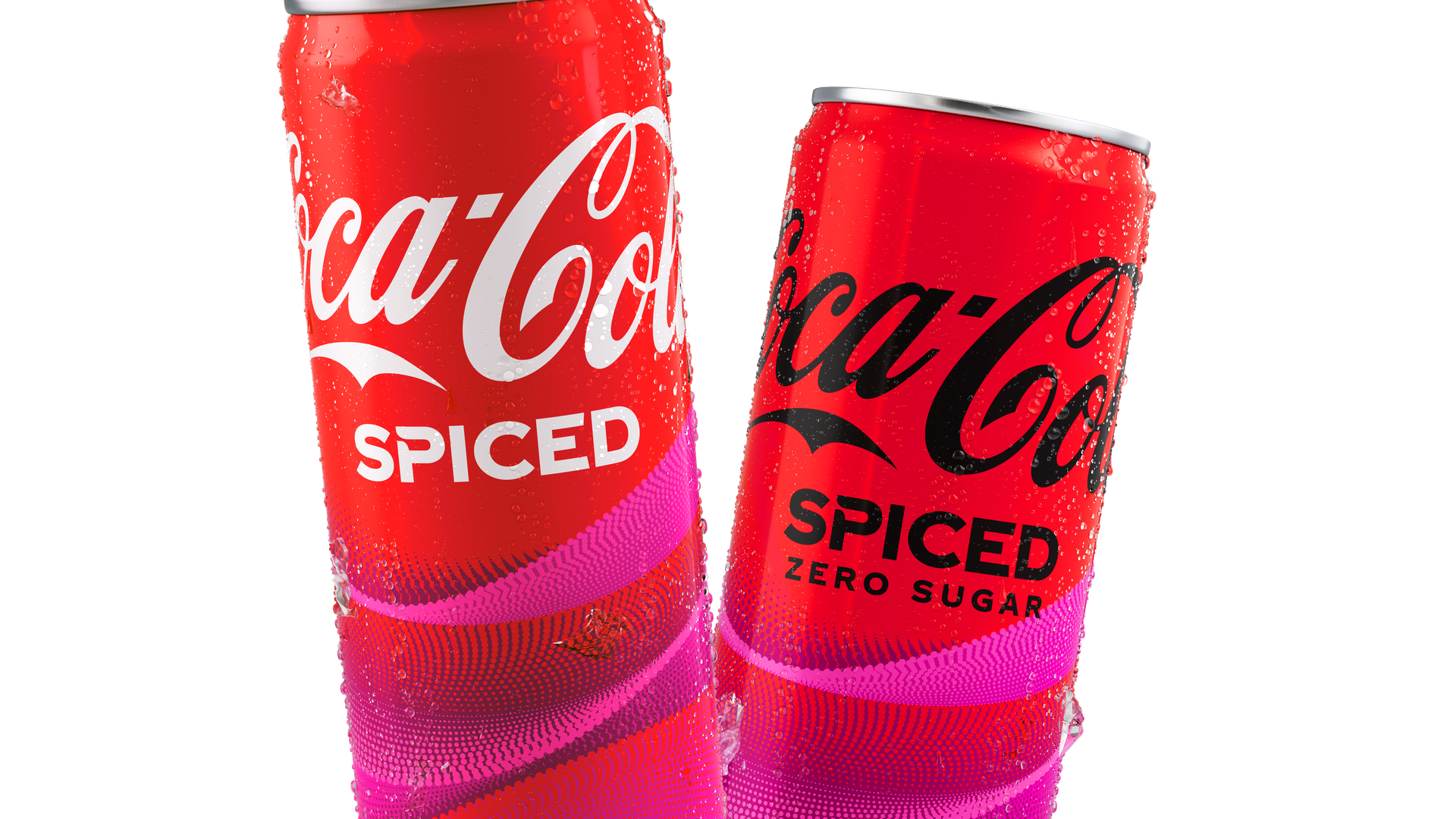
Coca-Cola is spicing up the soda aisle by adding its first permanent soda flavor in three years, Axios' Kelly Tyko writes.
- The new soda — Coca-Cola Spiced — blends the "iconic taste of Coca-Cola with a burst of refreshing notes from raspberry and spiced flavors," the company said.
- Coca-Cola will also offer a zero-sugar version. Both go on sale Feb. 19.
🌶️ The big picture: "If you go to the aisles, you'll see the amount of spiciness has gone up because consumers' taste palettes have evolved," Coca-Cola's North American marketing chief Shakir Moin told AP.
📬 Thanks for starting your morning with us. Please invite your friends to sign up.
Sign up for Axios AM

Catch up with the most important news of the day