Axios AM

July 02, 2024

Hello, Tuesday!Β Smart Brevityβ’ count: 1,642 words ... 6 mins. Edited by Bryan McBournie.
1 big thing: Imperial presidency in waiting
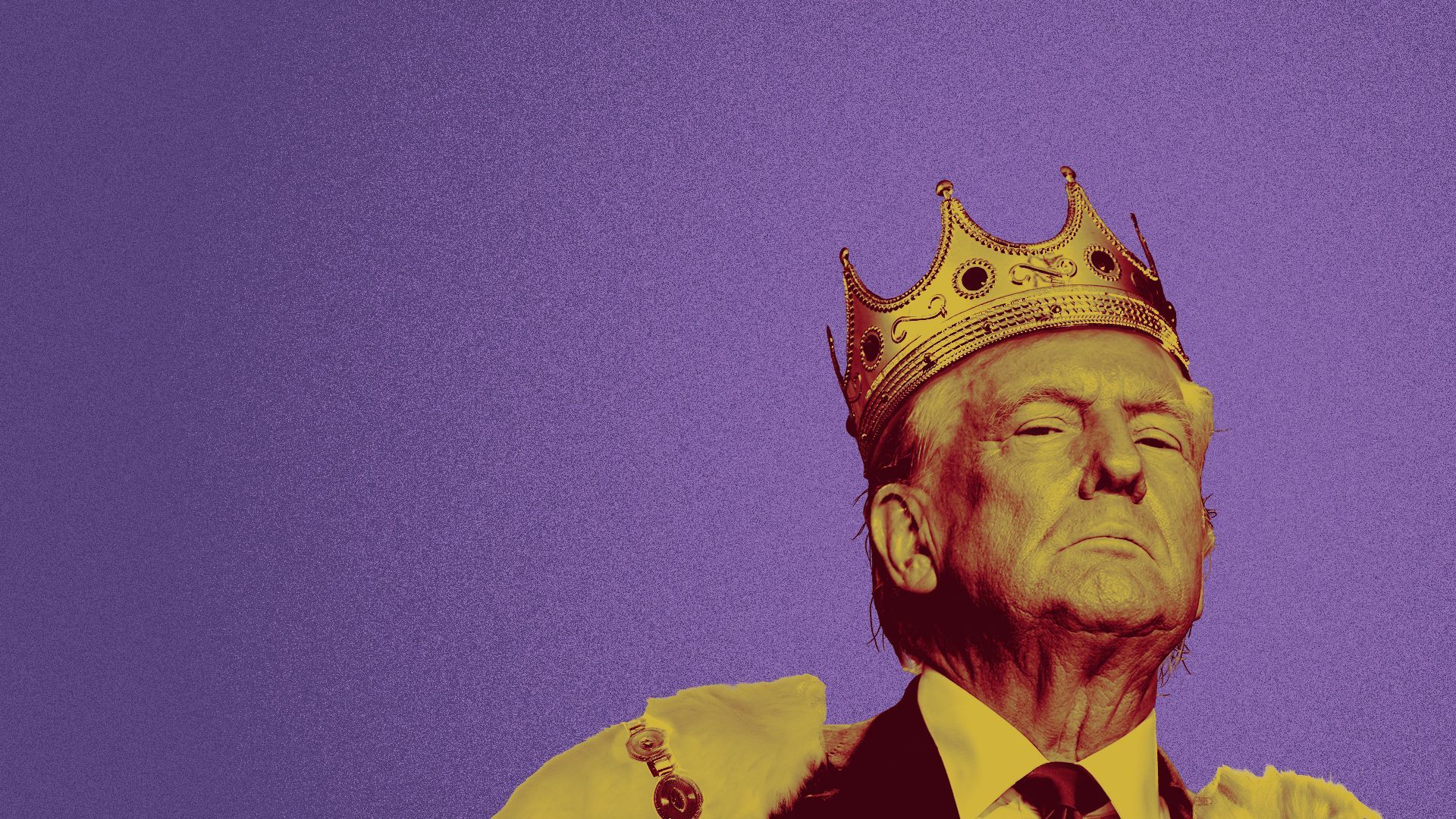
Former President Trump, if re-elected, plans to immediately test the boundaries of presidential and governing power, knowing the restraints of Congress and the courts are dramatically looser than during his first term, his advisers tell Jim VandeHei and Mike Allen for a Behind the Curtain column.
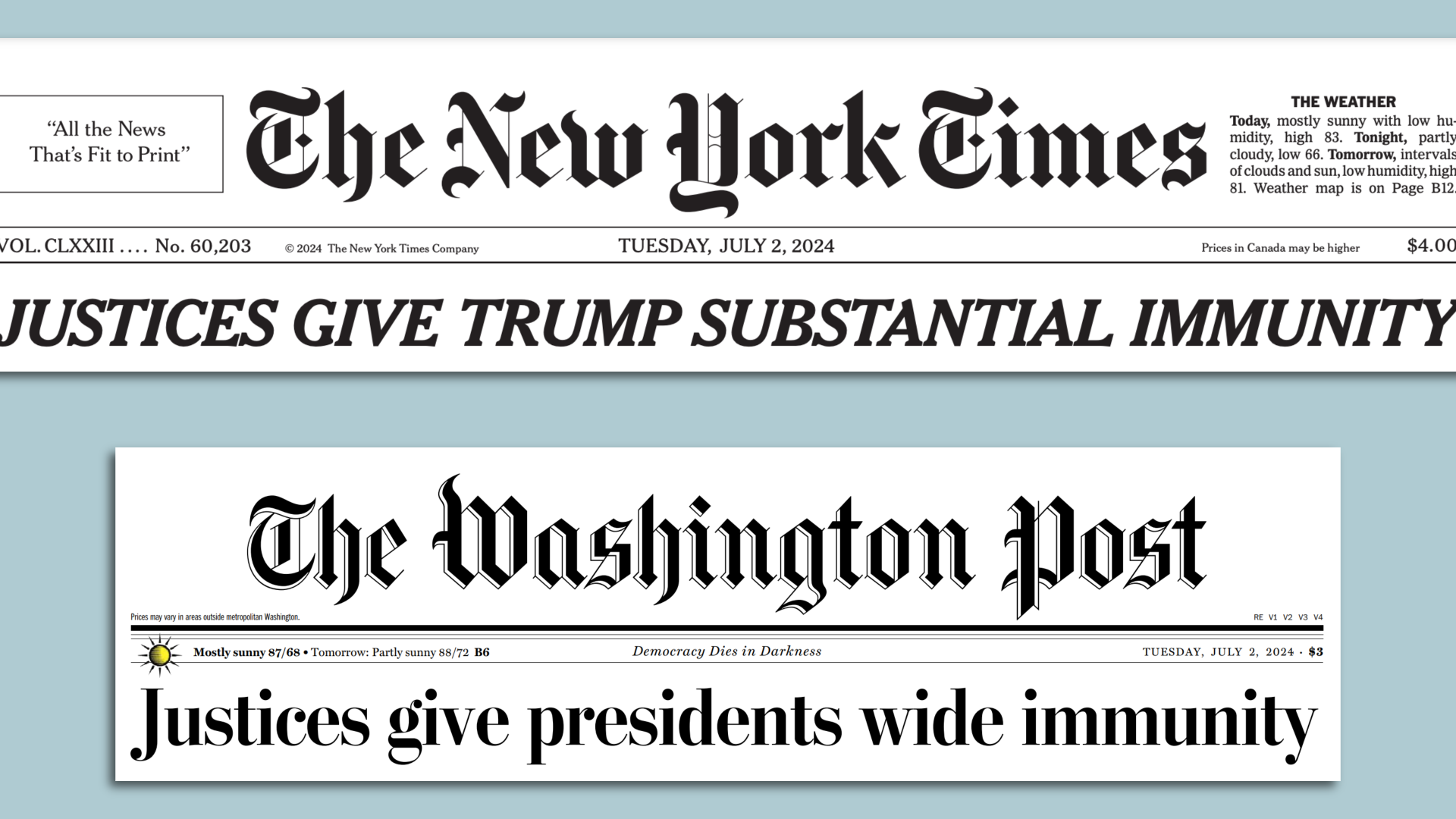
Why it matters: It's not just the Supreme Court ruling on Monday that presidents enjoy substantial legal immunity for actions in office. Trump would come to office with a cabinet and staff pre-vetted for loyalty, and a fully compliant Republican coalition in Congress β devoid of critics in positions of real power.
- That's a big reason many Democrats worry President Biden is making one of the biggest gambles in U.S. history by staying in the race amid acute concerns about his age.
πΌοΈ The big picture:Β Trump promises an unabashedly imperial presidency β one that would turn the Justice Department against critics, deport millions of people in the U.S. illegally, slap 10% tariffs on thousands of products, and fire perhaps tens of thousands of government staff deemed insufficiently loyal.
- He'd stretch the powers of the presidency in ways not seen in our lifetime. He says this consistently and clearly β so it's not conjecture. You might like this or loathe this. But it's coming, fast and furious, if he's elected.
- Thanks to yesterday's Supreme Court ruling, Trump could pursue his plans without fear of punishment or restraint.
π What to watch:Β To hear Trump and his allies tell it, this is how early 2025 would unfold if he wins:
- A re-elected Trump would set up vast camps and deport millions of people in the U.S. illegally. He could invoke the Insurrection Act and use troops to lock down the southern border.
- In Washington, Trump would move to fire potentially tens of thousands of civil servants using a controversial interpretation of law and procedure. He'd replace many of them withΒ pre-vetted loyalists.
- He'd centralize power over the Justice Department, historically an independent check on presidential power. He plans to nominate a trusted loyalist for attorney general, and has threatened to target and even imprison critics. He could demand the federal cases against him cease immediately.
- Many of the Jan. 6 convicts could be pardoned β a promise Trump has made at campaign rallies, where he hails them as patriots, not criminals. Investigations of the Bidens would begin.
- Trump says he'd slap 10% tariffs on most imported goods, igniting a possible trade war and risking short-term inflation. He argues this would give him leverage to create better trade terms to benefit consumers.
- Conversation would intensify about when Justices Clarence Thomas, 76, and Sam Alito, 74, would retire. Lists of potential successors are already drawn up. President Biden said last month that "the next president is likely to have two new Supreme Court nominees." If Trump were to win and the two oldest justices retired, five of the nine justices would have been handpicked by Trump.
Column continues below.
2. π³οΈ Trump 2025: better prepared, more powerful

Top Democrats privately predict Republican majorities in the House and Senate if Biden loses.
- Most of Trump's most prominent critics β Mitt Romney, Liz Cheney, et al. β will be gone. Even the few who remain, including Sen. Mitch McConnell (R-Ky.), will be substantially less powerful. Trump would be backed by an overwhelmingly Trump-friendly Senate and House β loaded with loyalists, top to bottom. Many were elected since his 2016 win, and many thanks to his endorsement.
ποΈ Sen. J.D. Vance (R-Ohio), a top prospect as Trump's VP, told us Trump would have more allies β and more loyal allies β in Congress this time.
- "You have to ask yourself: How many true allies of the agenda existed in the United States Capitol in January 2017, and how many will exist in January of 2025?" Vance told us.
"You have a Republican Party that, in some ways, was divided against itself in January of 2017," Vance added. "I think now it recognizes that Trump is effectively leader of the party. And you'll see that in governing style and certainly in agenda," with "much less infighting between Republicans, which will make us much more effective as a governing coalition."
- The freshman senator said that while Trump was "very much a newcomer to politics" when he ran the first time, he now "understands how to pull the levers of power much better, because he's coming at this as a subject matter expert."
The media would investigate, report, and illuminate all of it β but probably with less impact. A second Trump term would start with TV ratings in the tank, mainstream media shrinking, and public attention shattering into dozens of information ecosystems, many built around popular and often partisan celebrities.
- So the ability to do more with fewer real restraints is real β and hard to change.
The bottom line: Think of Trump 2025 as a better prepared, much better organized, much more powerful version of Trump 2017 β minus Republican brakes and any mystery about immunity.
- Go deeper: Agenda47 (Trump's official plans) ... "If Trump Wins" (N.Y. Times takeaways).
3. π± Biden damage control

Anxious Democratic donors grilled Biden campaign officials on a Zoom call yesterday, pressing Biden's team on how it will deal with new concerns about his fitness for office, Axios' Hans Nichols and Alex Thompson report.
- Why it matters: There wasn't much panic during the special call for wealthy donors β but there was a fair degree of skepticism.
Donors didn't find the campaign's answers totally satisfying.
- "I don't know what the pathway forward is, and I think they are trying to figure that out, too," one donor told Axios.
Officials were asked what the campaign would do if polling showed a significant drop in support for Biden.
- They told donors they expect Biden's polling to take a slight hit after the debate. But they pointed to internal polling they said indicates the race is largely unchanged, with Trump holding a slight lead in swing states.
4. βοΈ 60 years ago today

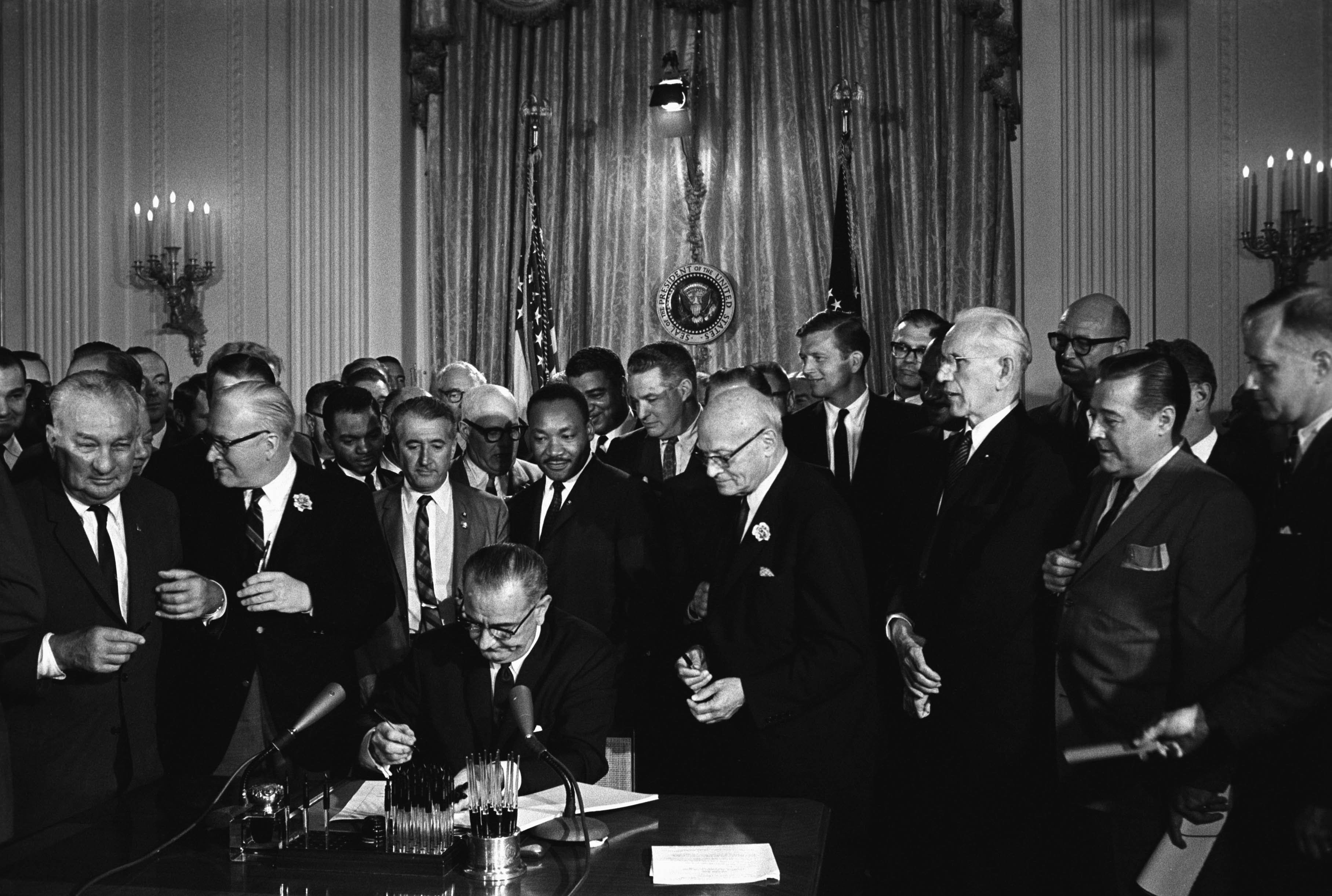
Sixty years ago today, President Biden says in a proclamation, "President Lyndon B. Johnson signed into law one of the most significant pieces of civil rights legislation in history β the Civil Rights Act of 1964."
- "It prohibited discrimination on the basis of race, color, religion, sex, or national origin.Β That day, our Nation moved closer to our North Star, the founding ideal of America:Β We are all created equal and deserve to be treated equally throughout our lives."
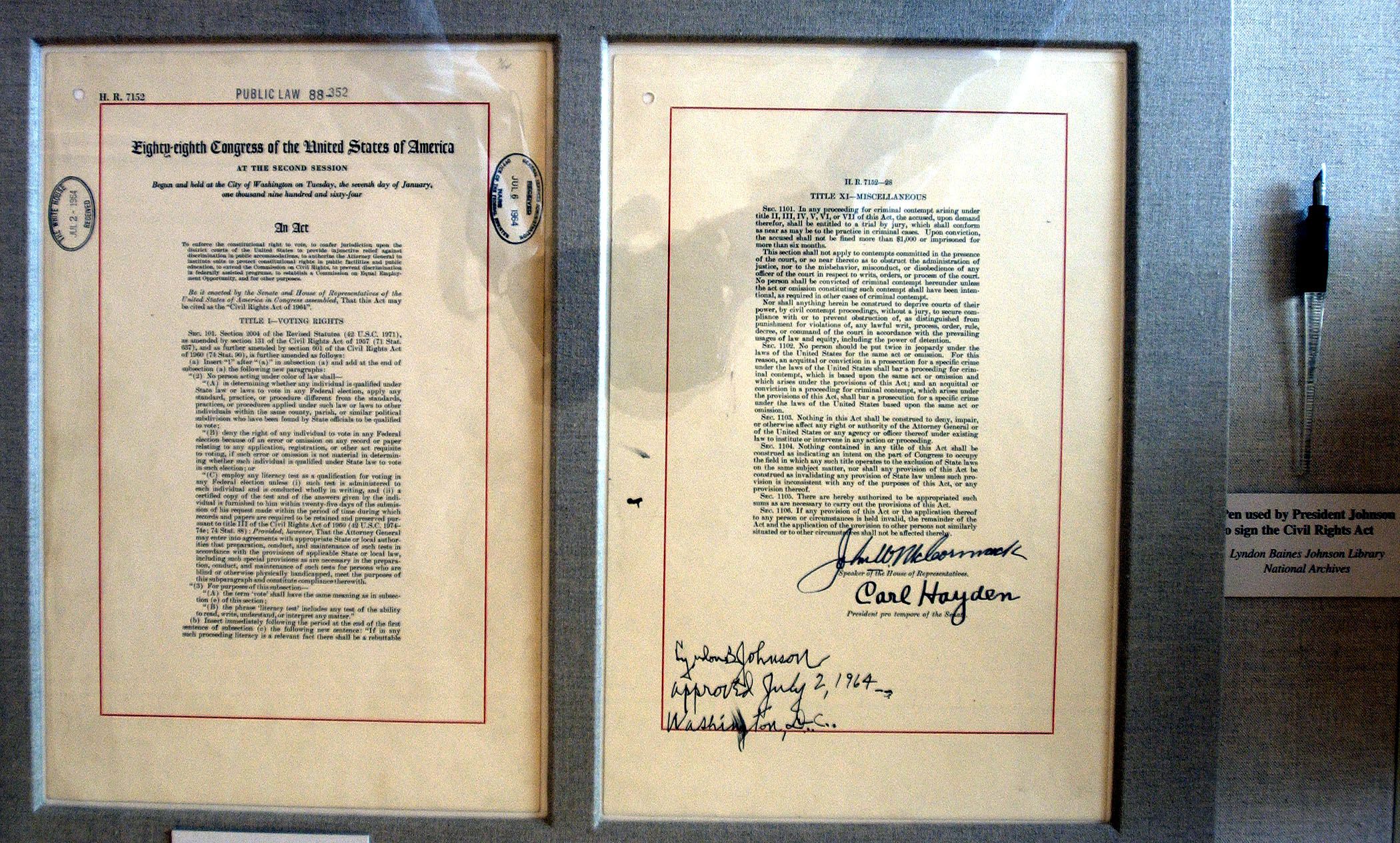
"We have never fully lived up to that idea," Biden adds. But "we have never walked away from it, either. On this anniversary, we promise we will not walk away from it now."
5. π€ Court kneecaps tech regulation
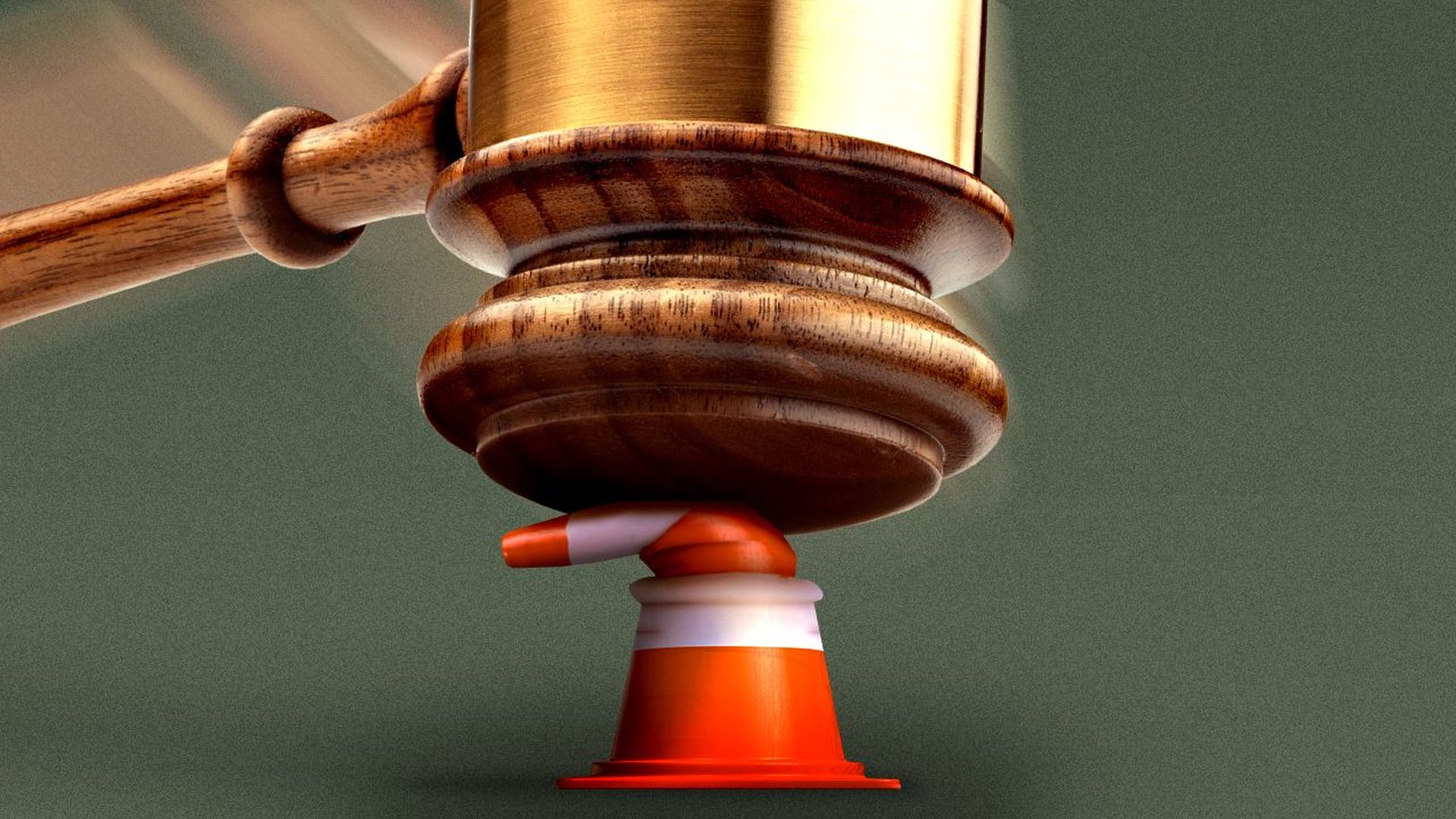
The Supreme Court's decision Friday limiting executive branch power also further hobbled U.S. government efforts to roll back Big Tech's power, Axios managing editor for tech Scott Rosenberg writes.
- Why it matters: Tech giants have long fueled efforts to pass new federal laws limiting the companies' influence. But now, and for a long time to come, advocates will need to find other ways to achieve that goal.
Friday's decision essentially scuttles the regulatory strategy Congress has long used to establish rules for complex technical realms like healthcare, the environment and telecommunications.
- For 40 years, under a Supreme Court principle known as "Chevron deference," Congress has assumed it can draft broad principles establishing its goals and plans β and leave the complex implementation details to experts at executive-branch agencies.
π Zoom out: The court has struck at the heart of the Progressive Era ideal that experts in government with specialized knowledge can represent the public interest in conflicts with corporate power.
Winners: No one has deeper pockets than Microsoft, Apple, Google, Meta and Amazon. They can keep expanding their legal budgets, defending themselves in court and doing whatever they want in the meantime.
- Whole generations of hardware and software can be born and die in the years it takes for a complex case to be tried, appealed and resolved.
Losers: The activists and organizations that support stricter tech regulation just saw the goalposts move into the far distance.
6. π Mary Meeker: How AI can disrupt higher ed

Mary Meeker has written her first report in over four years, focused on the relationship between artificial intelligence and U.S. higher education, Axios' Dan Primack writes.
- Why it matters: Meeker's annual "Internet Trends" reports were among Silicon Valley's most cited and consumed documents.
Each one dug deep into the new tech economy, with hundreds of pages of slides. The last one was published in 2019.
- Meeker's new effort is a shorter attempt (17 pages!) at reconciling tech's brave new world and America's economic vitality, with higher ed as the connective tissue.
π¬ Zoom in: Meeker argues that the U.S. has wrested the AI lead from China β and that key to staying ahead is for tech and universities to treat each other as partners, rather than obstacles.
- For higher ed, it means a "mindset change" whereby teachers act more like coaches and students are viewed as customers.
See the 17-page deck, "AI & Universities" ... Keep reading.
7. π° Stock concentration, in one chart


The stock market has never been as concentrated as it is now, Axios' Felix Salmon writes.
- Why it matters: The performance of the stock market as a whole is increasingly a function of how just a few megacap tech stocks are faring.
8. π¬π§ Parting shot: Stumping across the pond

American politicians have been known to flip pancakes, grill steaks and ride motorcycles as they try to show their humanity.
- But ahead of the U.K.'s national election on Thursday, Sir Ed Davey, leader of the Liberal Democrats, took a water aerobics class while campaigning in Cheltenham, in the Cotswolds.

Davey, 58, also was towed on an inflatable during a visit to a water park.

Davey bungee-jumped in East Sussex.
π¬ Please invite your friends to join AM.
Sign up for Axios AM