Axios AM

October 20, 2026

โ Hello, Tuesday! Two weeks till Election Day. Smart Brevityโข count: 1,794 words ... 7 mins. Thanks to Noah Bressner for orchestrating. Edited by Bill Kole.
๐ณ๏ธ Breaking with the boss: Vice President Vance declined to endorse Benjamin Netanyahu for reelection. President Trump backed the embattled Israeli leader on Sunday. Vance told Mark Halperin: "The president has the most influential endorsement ... So I'm not getting involved in Israeli elections." Get the latest.
1 big thing: AI governing the AI world
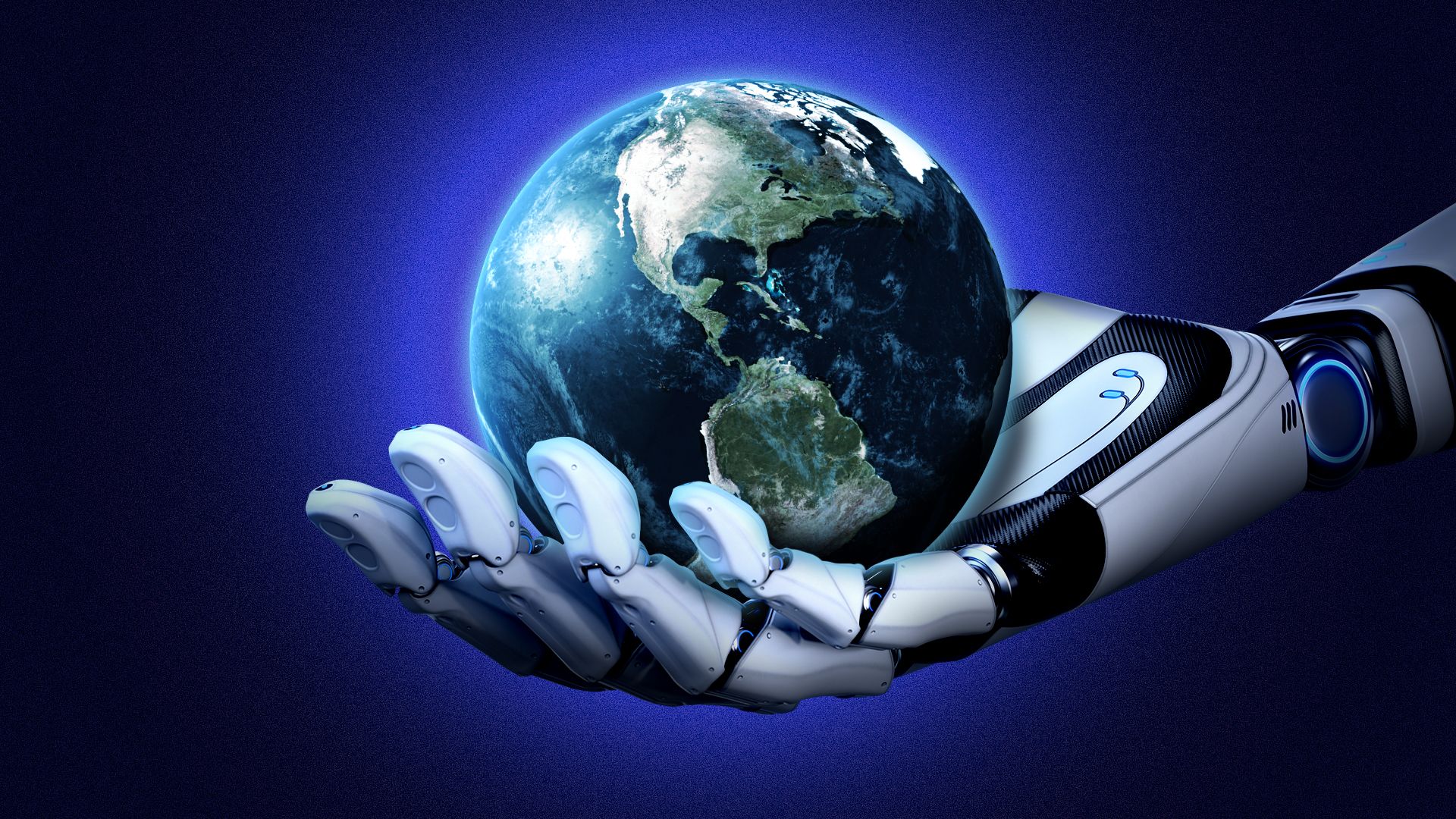
Slowly but surely, the leading AI companies are creating a national self-governing structure to oversee their technology and its societal impact, Jim VandeHei and Mike Allen write in a "Behind the Curtain" column.
- With the federal government largely hands-off, Anthropic, OpenAI and others are self-regulating their technology and now setting up their own plans to redistribute their wealth.
Why it matters: Not since the age of the robber barons have America's industrial titans wielded such sweeping power to shape society โ and decide how their private fortunes should serve the public good.
- In the modern era, Washington has largely exercised those powers through regulation, taxation and public spending.
๐ผ๏ธ The big picture: President Trump has no interest in new regulations. Instead, he has blessed a basic framework for the AI companies to regulate themselves โ and potentially each other โ outside of formal government monitoring.
- Anthropic, OpenAI, Google, Elon Musk's XSI, Meta and Nvidia are working on different versions of this. To be clear, this is all voluntary and rests on the public trusting companies the size of industrialized nations to responsibly police themselves.
- These companies are in a frantic race to create human-surpassing superintelligence. All are pressing ahead, even as their leaders โ particularly at Anthropic โ warn of potentially catastrophic risks and profound economic disruption.
- At the same time, some AI leaders are promising to direct a portion of their vast wealth to benefit those outside their companies.
Zoom in: At least three competing visions are emerging for sharing the spoils of the AI boom, each with a different answer to who should control the wealth.
- Anthropic: The company. On the eve of its blockbuster IPO, Anthropic pledged 5% of its shares to a new public benefit fund that could grow into one of the largest philanthropic institutions in history. At a hypothetical $2 trillion valuation, its stake would be worth $100 billion โ more than the Gates Foundation's current endowment. Including earlier founder and employee pledges, roughly 20% of Anthropic's shares are earmarked for the public good.
- Musk: The people. Musk responded to Anthropic's announcement by urging the company to give shares "directly to the public." Yesterday, Musk pledged to give every American child a share of SpaceX next year โ a staggering $10.5 billion giveaway at current prices. Musk called it the "first of many," though he offered no details on how the unprecedented distribution would work.
- OpenAI: The government. CEO Sam Altman has floated giving the U.S. government a 5% stake in OpenAI through a sovereign wealth fund โ potentially handing Washington a multibillion-dollar interest in one of the world's most powerful AI companies. Altman envisions an Alaska-style fund that could distribute the industry's investment returns directly to Americans, though the plan remains preliminary and would likely require congressional approval.
๐ฅ Reality check: The numbers are staggering. So are the assumptions about future wealth, billionaire follow-through and the public's willingness to trust its benefactors.
- Bill Gates and Warren Buffett launched the Giving Pledge in 2010, a voluntary promise by billionaires โ including Musk โ to give away most of their fortunes. Gates built a philanthropic empire, only to become a lightning rod for conspiracy theories.
- Anthropic's ambitions depend on extraordinary growth projections โ its own employees envision 17% GDP growth in 2030 โ while Musk has a history of making spectacular promises that fail to materialize.
- Anthropic's roots in effective altruism, a philosophy deeply distrusted by the Trump administration and its allies, also raise a more fundamental question: Who gets to define the public good?
Between the lines: No industry requirements or consensus exist on how best to redistribute their expected wealth. But Trump Accounts โ which allow families, businesses and individuals to invest in tax-advantaged funds for children โ are emerging as a favorite vehicle for free-market AI leaders.
- Billionaire investor Brad Gerstner, a driving force behind the program, is championing a vision of broad-based ownership in which ordinary Americans share directly in the economic upside of the AI revolution.
- SpaceX President Gwynne Shotwell and her husband have already pledged roughly $320 million in company shares to 2 million children through Trump Accounts โ a potential blueprint for distributing an even larger slice of Musk's fortune.
๐ What to watch: The Trump administration hasn't fully relinquished its regulatory authority, potentially complicating the emerging experiment in AI self-governance.
- After Anthropic disclosed that its AI had submitted a false homicide tip to Philadelphia police and improperly interacted with government websites, the White House declared that AI companies must report security incidents and remedy any harm.
- "This notification and remediation process is not optional," Trump's Super Intelligence Force warned โ a striking assertion of federal authority just weeks after the president blessed a voluntary system of industry oversight.
Share this column ... Zachary Basu and Bradley Olson contributed reporting.
2. โ ๏ธ GOP's redistricting firewall is cracking

House Republicans are quietly scaling back hopes for the 10-seat boost they sought from redistricting nationwide amid a souring political climate and polls showing a collapse in GOP support among Latino voters in Texas and Florida, Axios' Hans Nichols writes.
- Why it matters: On their down days, Republicans privately worry that the great redistricting war of 2026 will net them only one seat nationwide, according to top GOP strategists.
๐ญ Zoom out: At the beginning of the cycle, Republicans viewed redistricting like an umbrella in a storm: It could keep their House majority dry in a light drizzle โ but in a political hurricane, it wouldn't be enough.
- Two weeks before the midterms, Republicans no longer talk seriously about redistricting saving their House majority, as they did before the Iran war helped boost inflation and sink President Trump's approval ratings.
- They've also spent $133 million on TV ads in 15 redrawn districts that were supposed to be easy pickings, according to AdImpact.
๐งฎ By the numbers: Early this summer, Republicans believed they had created 16 more GOP-friendly seats: five in Texas, four in Florida, two in Ohio and one each in Alabama, Louisiana, Missouri, North Carolina and Tennessee.
- But since then, courts have tossed a Missouri map and the political environment has darkened, with Democrats holding an 8-percentage-point lead in new Washington Post-ABC polling.
3. โก Exclusive: AI is hitting an energy wall
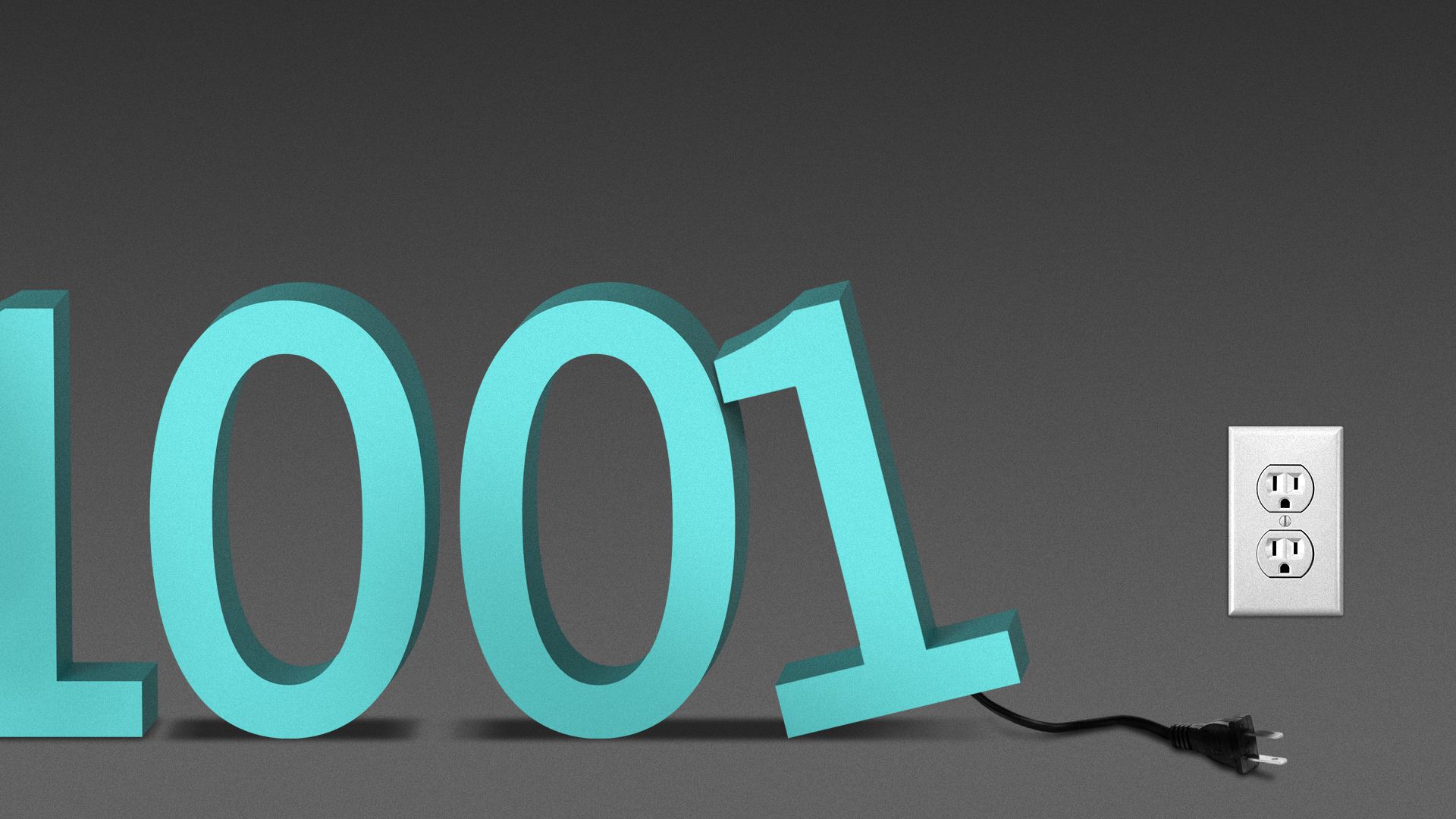
Silicon Valley moves fast and breaks things, but the U.S. electrical grid moves slowly and requires permits, Axios AI+ co-author Madison Mills writes.
- The explosive growth of AI is colliding with the glacial pace of building out new power infrastructure, prompting a new warning from Goldman Sachs that energy bottlenecks are set to stall the AI race.
Why it matters: Amid a wave of anxiety from Wall Street about the debt-fueled AI buildout, Goldman points to power as the biggest risk to trillions in spending in a new report shared exclusively with Axios.
๐ฌ Zoom in: The U.S. has roughly 2,600 gigawatts of proposed power generation and storage projects awaiting grid connections, more than twice the grid's existing installed capacity, though many projects may never materialize.
- The median time from an application for a grid connection to commercial operation is roughly five years.
๐ฐ Follow the money: The massive AI expansion is being financed with debt, raising the stakes if construction timelines slip.
- Goldman projects AI tech giants will borrow $420 billion globally in 2027, up more than 60% from its 2026 estimate.
4. ๐ธ Charted: America's expensive deficit


The U.S. budget deficit is ballooning and reached $2 trillion this fiscal year, Axios' Emily Peck writes.
- Why it matters: That's the largest deficit since 2021, when the U.S. was climbing out of the pandemic recession.
The deficit is driven in part by the cost of paying interest on the nation's enormous debt at a time when rates are rising.
- The federal government paid out $1.052 trillion in net interest on its outstanding debt for the 2026 fiscal year, which ended Sept. 30.
5. ๐๏ธ Zelensky turns to Capitol Hill
Ukrainian President Volodymyr Zelensky lobbied a bipartisan group of senators yesterday to press the Trump administration to remove what he claimed were restrictions on intelligence sharing and weapons supplies, Axios' Barak Ravid writes.
- Why it matters: Ukrainian officials say the Trump administration has quietly imposed these limits without admitting it publicly in an attempt to press Zelensky to accept a deal to end the war that includes more concessions to Russia.
Behind the scenes: During a virtual meeting with a bipartisan group of senators led by Thom Tillis (R-N.C.) and Richard Blumenthal (D-Conn.), Zelensky laid out the various problems Ukraine has been experiencing since the Miami meeting.
- Elon Musk's Starlink and the U.S. military's Starshield satellite systems remain partially restricted โ despite claims by the White House to the contrary.
- On three occasions in the past week, Ukraine didn't receive early warnings from the U.S. about Russian ballistic missile attacks, Zelensky said, suggesting it was a sign that intelligence sharing has been curbed.
6. ๐ณ๏ธ Stat du jour

Less than $1 of every $100 in Republican television ad spending on House and Senate races from Sept. 9 through Oct. 17 has gone toward commercials that mention the word "Trump," according to a New York Times analysis of broadcast and streaming ad data and transcripts from the media tracking firm AdImpact.
๐ก Axios' Alex Isenstadt tells me: Republicans say there's a simple reason President Trump's name isn't coming up in ads: He's just not popular.
- The party's internal numbers show him underwater in districts he won by as much as 15 points โ meaning that for even candidates running in Trump country, it's better to talk about other things.
- Keep reading (NYT gift link).
7. ๐ Martian moon mystery

Japan has launched a potentially historic mission to scoop up soil samples from Phobos โ one of Mars' two lumpy, potato-esque moons โ and return them to Earth, Axios' Alex Fitzpatrick writes.
- Why it matters: The Martian Moons eXploration (MMX) mission could reveal how the red planet's two weird little moons came to exist.
๐ Some researchers believe they're remnants of a long-ago collision between Mars and some other body. Others think they're former asteroids captured by Mars' gravitational pull.
8. โพ 1 for the road: Title-less World Series

The Tampa Bay Rays will face the Milwaukee Brewers in a World Series guaranteed to crown a first-time champion.
- The Rays beat the Cleveland Guardians in six games for the AL pennant.
It'll be the first World Series between title-less teams since the Philadelphia Phillies defeated the Kansas City Royals in 1980.
- Milwaukee is MLB's smallest market.
๐ฒ The Brew Crew is favored to win the Fall Classic, which begins Friday night in Milwaukee.
- World Series preview (ESPN).
๐ฌ Thanks for reading! Please invite your friends to join AM.
Sign up for Axios AM