Axios AI+
May 09, 2024


It's Ryan here. Today's AI+ is 1,137 words, a 4-minute read.
In today's Axios "1 Big Thing" podcast, Niala Boodhoo interviews "godmother of AI" Fei-Fei Li, and takes you on a tour of what the two of us discovered in Stanford's labs last week.
1 big thing: Don't fear "biosurveillance," experts say
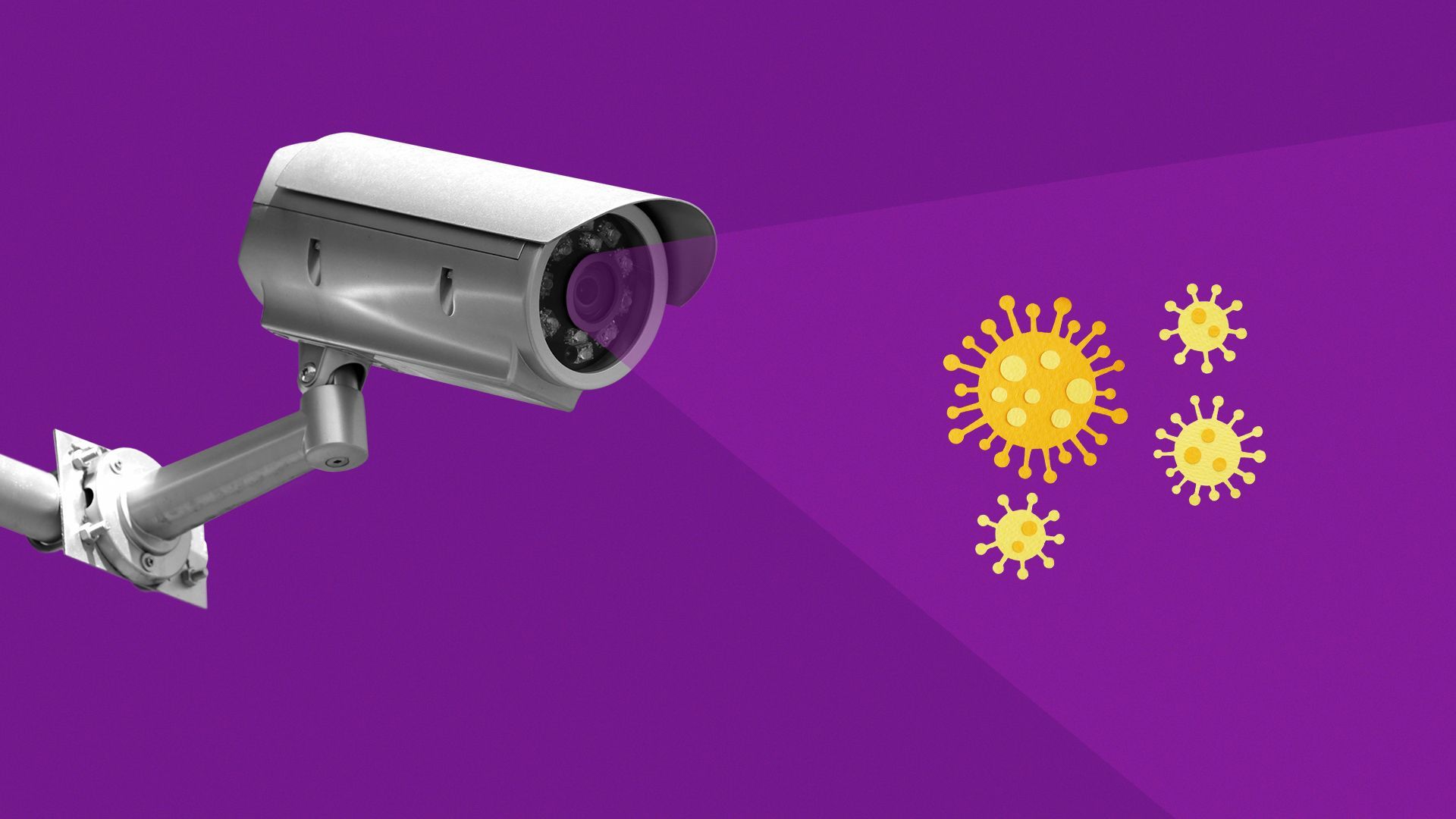
Biosecurity experts say AI-driven "biosurveillance" could help spot the next pandemic or biological attack.
The big picture: An initial surge of concern over the threat from AI-generated superbugs and bioweapons has begun to ebb as AI's advantages in biodefense emerge.
Yes, but: The experts Axios spoke to at the AI Expo for National Competitiveness agreed that "biosurveillance" is a label that will repel people. They hope to reframe it as "biosafety" or "bio transparency."
How it works: Collecting better biological data, and running it through AI, "might be the difference between managing a really small outbreak" and "letting it spread and become a much bigger problem," Stephanie Batalis, a Georgetown Center for Security and Emerging Technology fellow, told Axios.
- "The challenge is to set up a system that is clear, transparent," Hirsh Jain, head of public health and SVP at Palantir Technologies, told Axios.
- Since biosurveillance "may be happening already" — covertly by adversarial governments — "we want to make sure it's happening above board" and in a way that benefits society, Jain said.
Catch up quick: Biotechnology has rapidly evolved in recent decades, and today researchers are racing to develop AI models for biology to speed up drug discovery.
China's urgent efforts to catch up to the U.S. on AI and biotechnology are a particular cause for concern. "All of the most severe risks, as far as man-made biological agents are concerned, are related to China," Bill Drexel, a Sino-American specialist at the Center for a New American Security, told Axios.
- "There's a very long history of China having top-down pushes to leapfrog other countries' technologies that end in tragedy," Drexel said.
COVID-19 responses taught us how to take globally coordinated decisions in response to bio threats.
- "CDC, DoD, HHS, the states, the pharma industry, and a whole host of private operators and [foreign] partners all needed to be able to operate off of the same data and make decisions extremely quickly," Jain said.
- But as concern about the pandemic eventually faded, so did funding and motivation to install permanent global systems for monitoring biological threats.
Reality check: AI can find patterns in large data sets, but collecting good biological data is a challenge, in part because of lack of trust in the governments and large companies that typically handle such biological samples and personal data.
- Some governments may also be reluctant to share data about bio threats, fearing reactions like the plummeting tourism South Africa experienced after it declared a new COVID-19 variant had been identified in the country in November 2021.
What we're watching: The Department of Defense has well-established systems for sharing sensitive intelligence with partner nations, but "there's nothing similar for biological data," Jain said.
2. New AlphaFold AI broadens its bio smarts

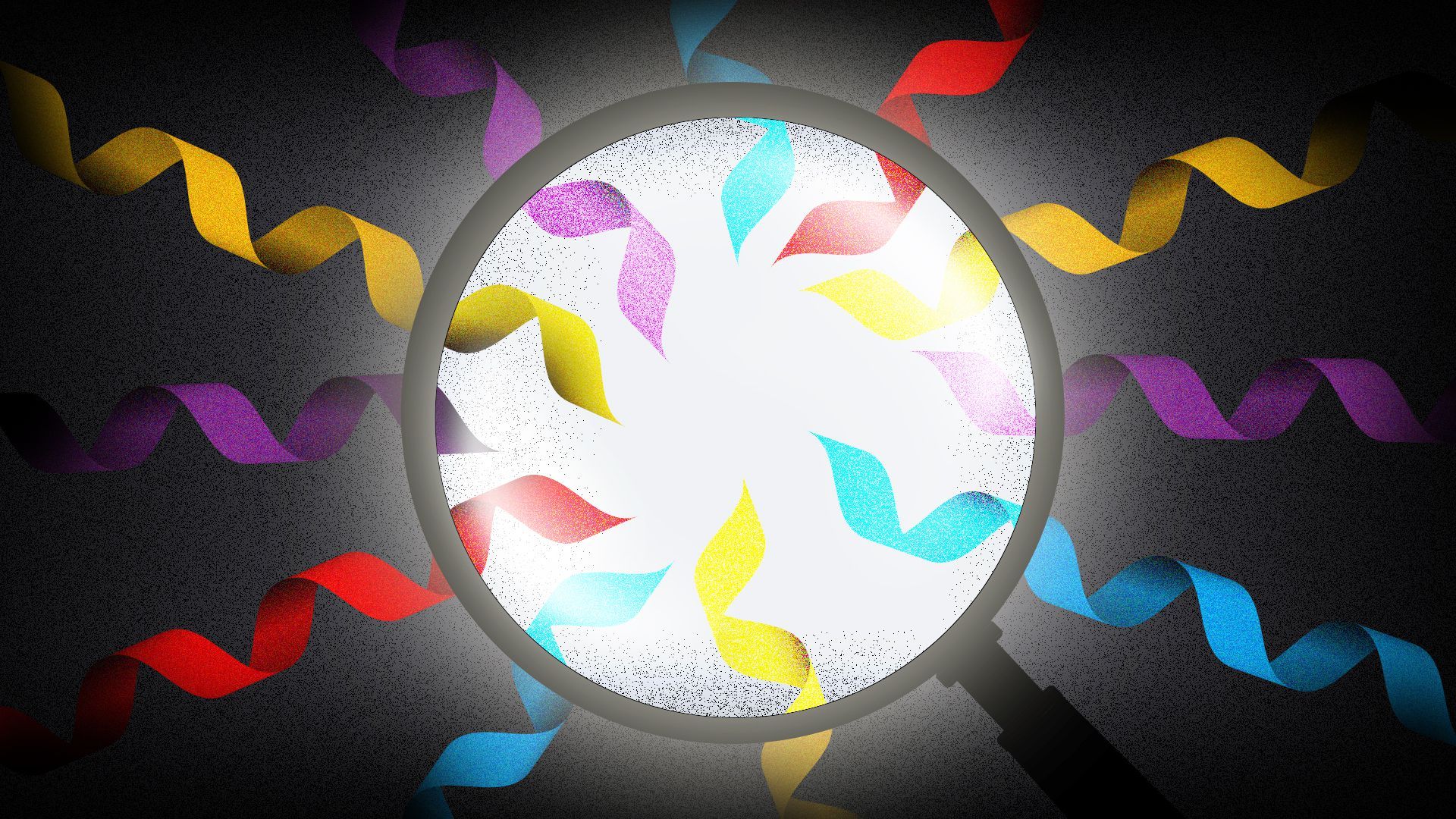
Google DeepMind's AlphaFold AI model, which has already revolutionized scientists' understanding of proteins, has expanded capabilities in a new version released yesterday.
The big picture: The new AlphaFold 3 can predict what interactions between nearly all of the molecules that form the basis of life look like — and that could open roads to new drugs or more resilient crops.
- The interactions AlphaFold 3 predicts are key for many crucial processes in cells. The interplay between and changes to proteins, DNA, RNA, ions and other small molecules dictate their function — and dysfunction from disease.
"Biology clearly is a dynamic system, so we need to understand interactions between different structures, proteins and other things to really understand what they do," Google DeepMind CEO Demis Hassabis tells Axios.
- "AlphaFold 3 is a big step in that direction."
Driving the news: AlphaFold 3 is the next iteration of AlphaFold models that took on and solved one of biology's toughest problems: predicting the structure of proteins from their amino acid sequence.
- The new AI model handles a larger number of chemicals using a different approach.
- It leverages a generative AI technique called diffusion, which is similar to those that drive image and video generators, like DALL-E.
How it works: AlphaFold 3 takes a cloud of atoms and then refines it, step by step, until the model converges on the most accurate molecular structure it can predict.
Between the lines: The diffusion technique comes with a risk.
- In what's known as disordered regions, or flexible parts of a protein that can take on many shapes, the model will produce a plausible-looking structure but one that couldn't exist — a biological form of the hallucinations that plague other AI models.
The big picture: "My dream is to build a model of a virtual cell," Hassabis told Axios, but "the challenges become almost sort of exponentially more difficult."
3. Apple's iPad ad ticks off creators

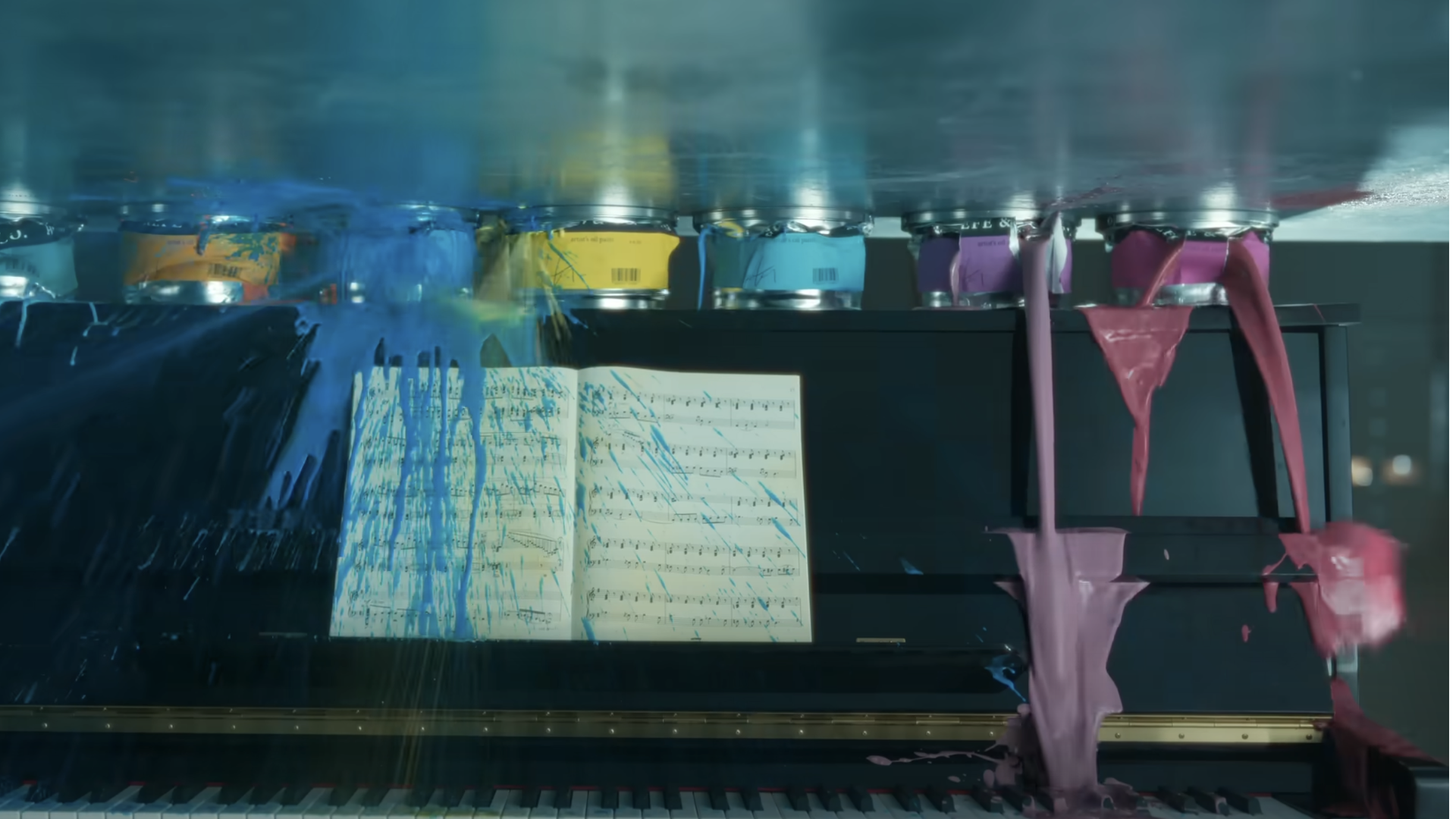
An ad for Apple's new iPad lineup that shows a massive hydraulic press crushing the artifacts of human and digital culture — from beautiful musical instruments to arcade video games — has triggered an online outcry.
The big picture: Creative professionals and artists — one of Apple's key constituencies — already fear AI's impact on their jobs and our culture. The ad, many felt, made the company look both callous and brutal.
Driving the news: The ad — named "Crush!" — shows cans of paint, cameras, phonographs, sculptures and many other cultural products and tools getting squashed.
- When the room-sized press lifts at the end, the mess is gone — and in its place sits a gleaming iPad.
Reality check: The ad is a riff on a long-popular genre of "oddly satisfying" memes and TikTok videos showing things getting pulverized.
- Apple's message was that one little device could take the place of a mountain of presumably outdated stuff.
Yes, but: People saw beloved objects being flattened by a faceless, unstoppable machine. When Tim Cook posted the ad to X, formerly known as Twitter, he received thousands of outraged complaints.
- "I'm definitely the target audience for the new iPad Pro but this ad is tone-deaf and insulting to artists of every kind," wrote cartoonist James Kochalka.
- "I don't think I've ever seen a single commercial offend and turn off a core customer base as much as this iPad spot," Michael Miraflor, chief brand officer at Hannah Grey VC, wrote on X. "Achieves the opposite of their legendary 1984 spot."
The other side: The company has not addressed the criticism and did not respond to a request for comment.
4. Training data
- OpenAI is setting some ground rules for how its models should behave, in what it calls The Model Spec — with significant wriggle room, for example, around NSFW content. (The Verge, OpenAI)
- From 2022 to 2032, the U.S. is on course to jump from 0% to 28% of the global advanced chips market, according to new data commissioned by the Semiconductor Industry Association. (Bloomberg)
- AdVon, the AI writing contractor whose content led to a scandal at Sports Illustrated, is now linked to a series of other publications. (Futurism)
5. + This
Trending: AI-generated narrations to videos with nonsense recipes are a thing now.
Thanks to Megan Morrone and Scott Rosenberg for editing this newsletter and to Caitlin Wolper for copy editing it.
Sign up for Axios AI+
