Axios AI+
October 17, 2023

Hi, it's Ryan. Today's AI+ is 1,232 words, a 4.5-minute read.
1 big thing: Civilization depends on AI — Andreessen manifesto

Illustration: Aïda Amer/Axios
Marc Andreessen — browser developer turned blogger turned billionaire venture capitalist — posted a "Techno-Optimist Manifesto" Monday that denounces efforts to regulate technology in bolder, brasher strokes than Silicon Valley has heard for years.
The big picture: After a decade in which his industry has been widely held responsible for rising inequality, reckless "disruption" and rampant misinformation, Andreessen praises tech as "the engine of perpetual material creation, growth, and abundance."
Why it matters: Andreessen, who often says out loud what other technologists and investors think, has the ear of Senate Majority Leader Chuck Schumer (D-N.Y.) and is a star guest at Schumer's next AI expert forum on Oct. 24.
- He writes that because AI might be used to save lives, any pause on development that limits preventable deaths "is a form of murder."
Zoom out: Debates about AI safety often cleave into two sides — those who want AI development paused or significantly restricted and optimists opposed to limits on innovation.
- Both groups believe AI is vastly powerful and will determine civilization's fate.
- A separate camp of AI critics, many in academia, dismissed both perspectives as "AI hype" and urged efforts to combat the tech's present, practical dangers — including bias, misinformation and economic dislocation.
Zoom in: Andreessen concocts a heady, sometimes over-the-top brew of fundamentalist free-market economics, Darwinism and Ayn Randism to make his case for "accelerationism — the conscious and deliberate propulsion of technological development."
- AI is "our alchemy, our Philosopher's Stone," he writes. "We are literally making sand think," a reference to the silicon in computer chips.
- By focusing on regulating or highlighting negative consequences of new technologies, he argues, we risk missing out on breakthroughs at the scale of fertilizers and pesticides, electricity and vaccines.
- Among Andreessen's stated enemies: "Tech ethics," people who work on "stakeholder capitalism" and the U.N. Sustainable Development Goals.
The other side: Andreessen's arguments start off as techno-optimist but veer into techno-supremacy, ignoring or belittling evidence of social and economic harms linked to various technologies.
- The manifesto builds on claims Andreessen made in a June essay titled "Why AI Will Save the World" — such as "every child will have an AI tutor" that is "infinitely helpful" — without explaining why that should be a priority over getting clean water and food to the millions of children who lack it.
- Andreessen's view of markets — that they "naturally" correct themselves and that "falling prices" is the key metric of abundance — overlooks nonfinancial harms and the effects of unchecked markets.
- Economic inequalities and environmental degradation disproportionately hurt people who don't have a net worth of around $1.8 billion, as Andreessen does (per Forbes).
Of note: The words "unintended consequences" do not appear anywhere in Andreessen's manifesto. Neither do "global warming" or "climate change."
Be smart: Early investors in AI like Andreessen stand to be among those who gain most from the technologies he promotes.
2. Web Summit becomes Israel-Hamas litmus test
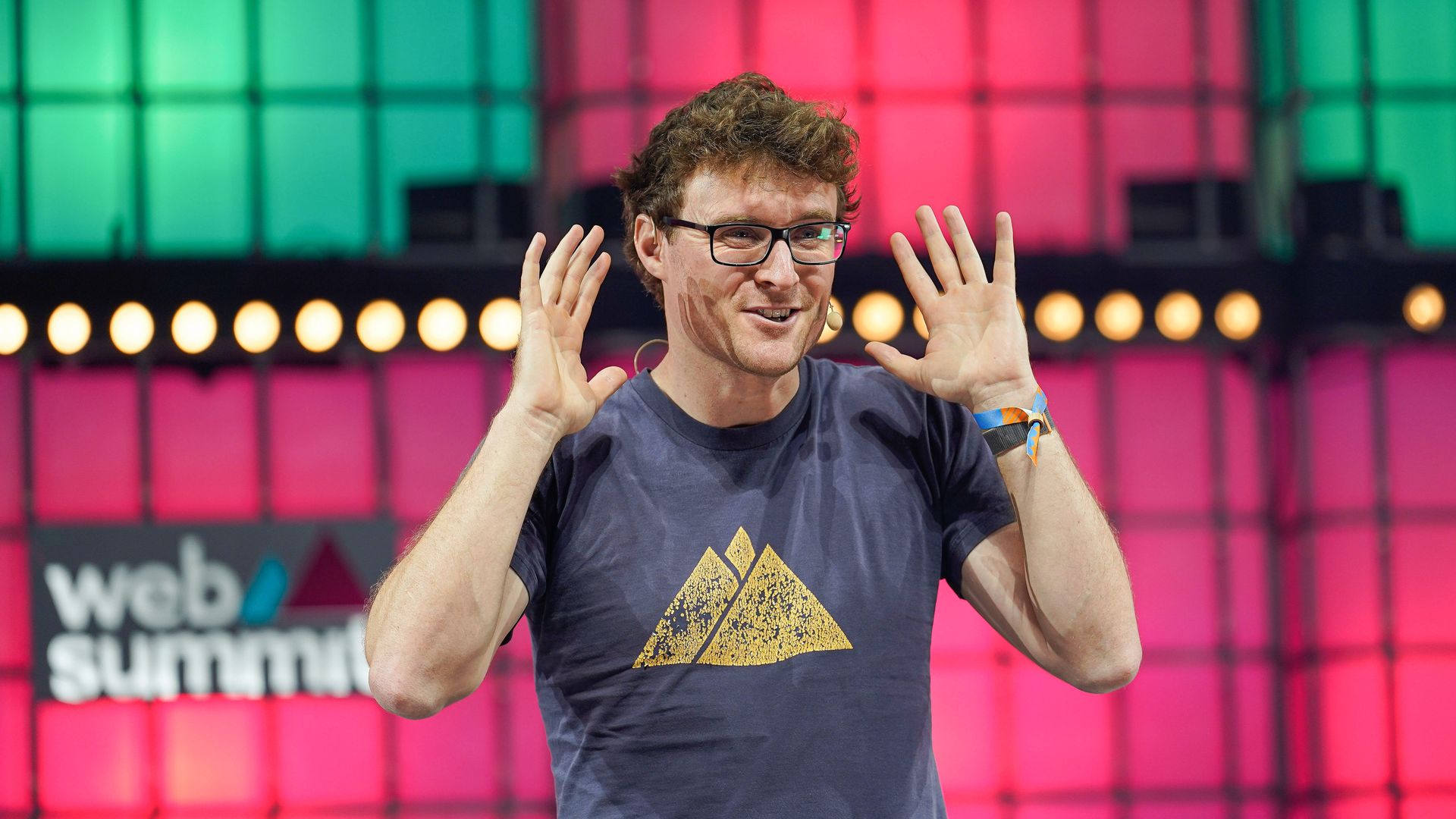
Photo: Bruno de Carvalho/SOPA Images/LightRocket via Getty Images
Major tech companies are weighing their involvement in Europe's biggest tech conference after Web Summit's co-founder suggested Israel was guilty of war crimes in its response to Hamas' terrorist attacks.
What's happening: The Israeli government and several speakers withdrew their participation on Monday.
Catch up quick: Paddy Cosgrave, co-founder and CEO of Web Summit, which attracts 70,000 people to Lisbon, Portugal each November, posted on X (formerly Twitter) on Oct. 13, "I'm shocked at the rhetoric and actions of so many Western leaders" in response to Israel's bombing of the Gaza Strip.
- "War crimes are war crimes even when committed by allies, and should be called out for what they are," he wrote, referencing Israel's decision to cut water and electricity supplies to Gaza and its warning to 1 million residents of northern Gaza to evacuate their homes.
- Cosgrave clarified two days later that "what Hamas did is outrageous and disgusting," but reiterated that Israel does not "have a right to break international law," further posting "I will not relent."
Why it matters: The furious reaction to Cosgrave's comments is turning Web Summit into a litmus test for how tech companies handle the Israel-Hamas conflict.
- More than 300 sponsors and 1,000 speakers — including Anthropic CEO Dario Amodei and Meta president of global affairs Nick Clegg — will likely be pressured in coming days to clarify their own views on the war.
- The withdrawal of AI companies and startup accelerator figures such as Y Combinator CEO Garry Tan strikes at the heart of Web Summit's $40 million annual business centered on connecting startups and investors.
What they're saying: Dor Shapira, Israel's ambassador to Portugal, labeled Cosgrave's statements as "outrageous."
- Adam Singolda, a longtime Web Summit attendee and CEO of Taboola, the largest Israeli-founded firm based in America, posted, "I'll send you all the light that I can, because I believe you made a mistake," but "we'll never work together again."
The context: Cosgrave was reacting in part to a statement by Irish Prime Minister Leo Varadkar expressing concern that Israel was applying an illegal collective punishment against all Palestinians in Gaza.
- The White House declined to criticize Israel, but called for the restoration of water supplies. Israel says it is acting in self-defense.
3. Israel-Hamas war gives social media new content woes
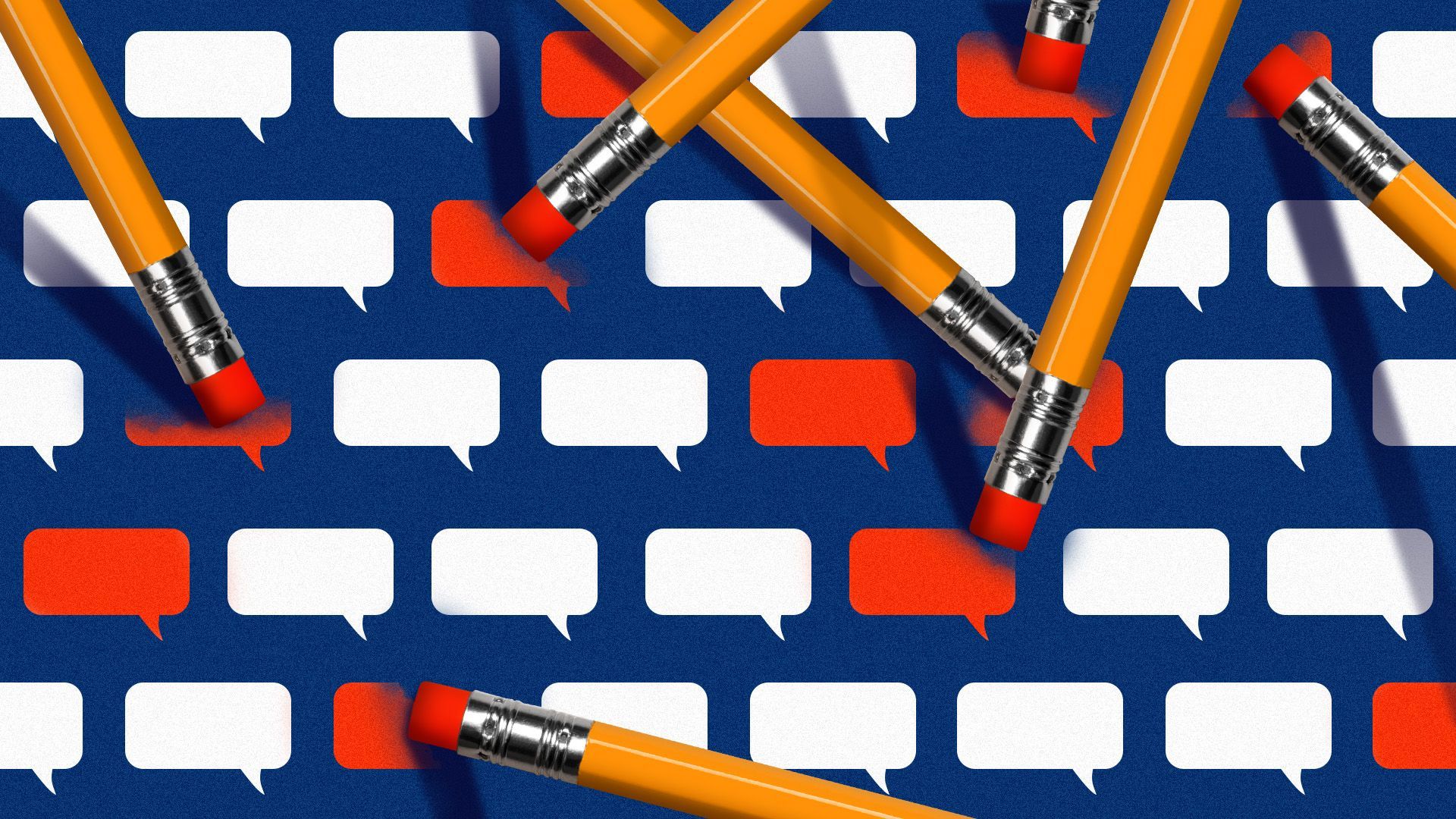
Illustration: Sarah Grillo/Axios
Big Tech companies that began to walk back content moderation ahead of the 2024 election are now implementing new rules in the wake of the Israel-Hamas war, Axios' Sara Fischer reports.
Why it matters: The level of mis- and disinformation flooding the internet is forcing tech firms to take tougher positions at a time when they are trying to prove they don't kowtow to political pressure.
- Flashback: Social media firms cut back on the size of their safety and security teams in the wake of mass layoffs across the sector earlier this year, further complicating content moderation efforts.
Driving the news: Meta said on Friday it's developed a "special operations center" staffed with experts, including fluent Hebrew and Arabic speakers, "to closely monitor and respond to this rapidly evolving situation in real time."
Between the lines: Meta and its rival, Google-owned YouTube, have long banned Hamas content, citing the U.S. government's classification of the group as a terrorist organization. Now other firms are starting to take a harder stance on Hamas specifically.
- A TikTok spokesperson confirmed to Axios that Hamas is banned from its platform. As the Washington Post notes, the company has historically declined to specify which groups it classifies as terrorist organizations.
Be smart: European regulators are putting more pressure on tech firms to address mis- and disinformation in the wake of the conflict.
- The European Commission last week said it is investigating X over allegations that the platform spread disinformation about the war between Hamas and Israel.
Yes, but: In the U.S., it's nearly impossible for tech firms to be held legally liable for content they host on their platforms.
4. Training data
- LinkedIn is laying off 3% of its workforce as part of broader efforts at the company to deploy artificial intelligence. (Axios)
- International Data Corporation predicts that generative AI investment will be 13 times the rate of other IT spending in coming years, and reach $143 billion in 2027.
- The U.K. announced a program for its AI safety summit (Nov. 1–2).
- How war impacts the Palestinian tech community. (Axios)
- Trading places: Angela Dunning will join law firm Cleary Gottlieb as a Bay Area partner to litigate generative AI, copyright, trademark and competition cases.
5. + This
Finding the light: Showcasing human photography in an age of AI images.
Thanks to Megan Morrone and Scott Rosenberg for editing and Nicole Ortiz for copy editing this newsletter.
Sign up for Axios AI+

Scoops on the AI revolution and transformative tech, from Ina Fried, Madison Mills, Ashley Gold and Maria Curi.