Axios AI+
February 04, 2025

I'm playing around with OpenAI's new Deep Research feature for an upcoming Prompt review. If you have a recommendation for a report I should commission, drop me a note at [email protected]. Today's AI+ is 1,021 words, a 4-minute read.
1 big thing: Oura's AI plan — keep health data local and private
Oura is planning to deliver health insights to its customers using AI that runs locally on the smartphones of owners of its smart rings.
Why it matters: By running its models on the phone rather than relying on a cloud-based service, Oura CEO Tom Hale tells Axios it can better protect customers' privacy.
Driving the news: Oura is working with Austin-based WebAI to power the new AI features.
- Oura's AI services will roll out slowly over the coming weeks and months, Hale said, starting with a cloud-based adviser that had already been in testing. That will be followed by the locally run algorithms, which will work on both iOS and Android devices.
- Hale said the company doesn't have a specific timeline for the new AI features but added that Oura may start with women's health features, given sensitivity over that data.
Zoom in: In a demo for Axios, Oura and WebAI showed a chatbot offering advice to various hypothetical customers, including a marathon runner looking to improve their recovery and a shift worker struggling to understand their circadian rhythms.
- Hale said that Oura's vision is that everyone will use a device like its ring to collect personal health data. Then, some form of machine intelligence can look over that data, make recommendations and — someday — even offer diagnoses and suggest care options.
But personal health data is especially sensitive, he said — hence the importance of keeping both the data and the analyzing algorithms running on a customer's own device.
- "All that knowledge you have of someone's life needs to be secure, needs to be private, needs to be under the control and agency of the person about whom that data is being collected," Hale said. "We think really the only way to do that is on the edge."
The big picture: Running AI on-device (in this case, Oura's phone app, not the tiny ring itself) as opposed to remotely on cloud-based computers can have a number of benefits beyond privacy: It's also often cheaper and faster.
This year is expected to see a flurry of activity in the area.
- Apple already runs some of its Apple Intelligence algorithms on-device, as does Microsoft in its Copilot+ PCs.
- Qualcomm has also promised more AI algorithms will soon run on smartphones using its chips.
- Microsoft recently enabled algorithms developed by China's DeepSeek to run locally on Copilot+ PCs.
2. Scoop: Scale AI CEO courts D.C. officials


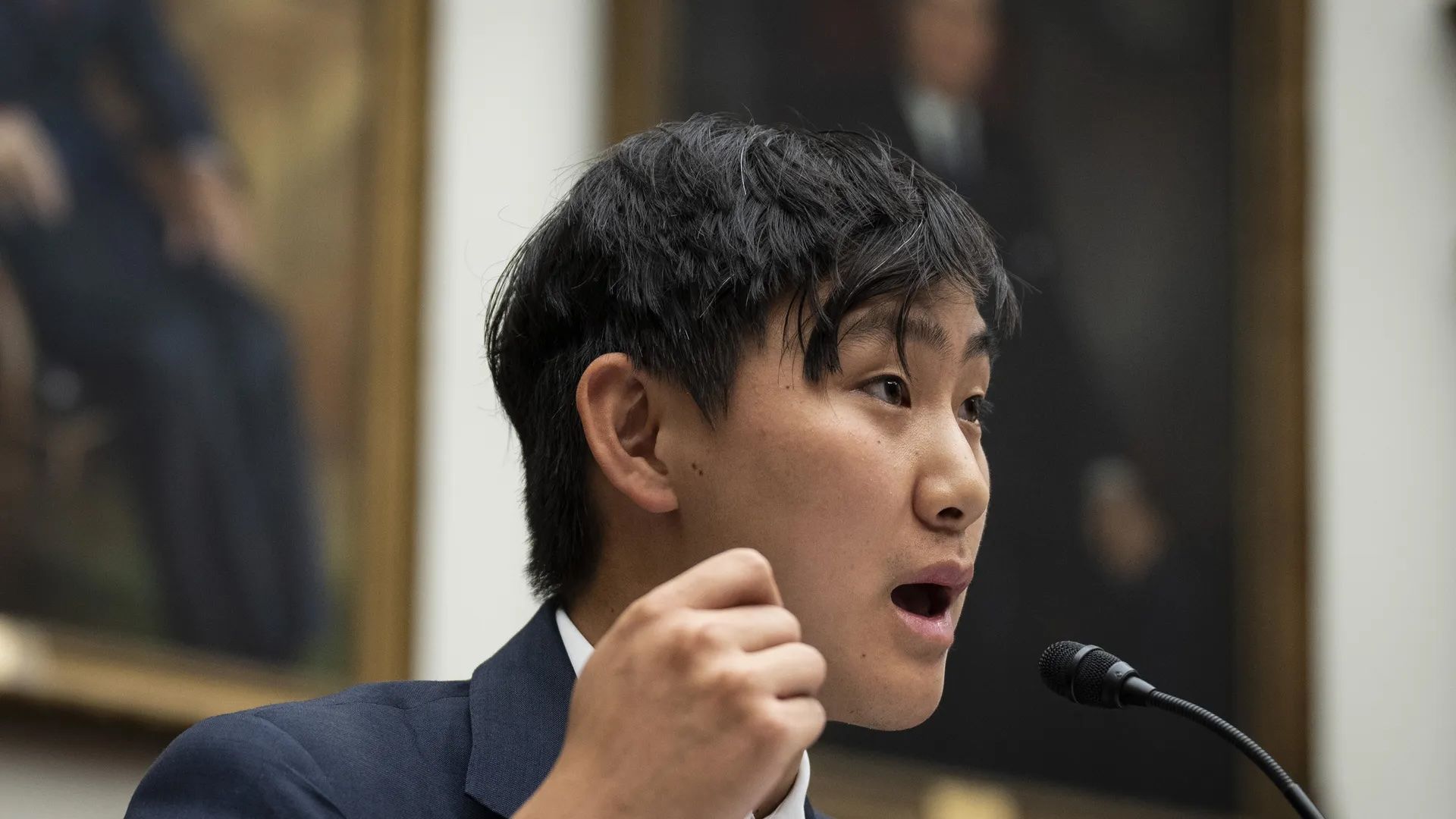
Scale AI CEO and founder Alexandr Wang is heading to Washington today and tomorrow for meetings with lawmakers and Trump administration officials to discuss China's AI threat to America, sources confirmed to Axios.
Why it matters: Wang made global headlines last month when he said DeepSeek, an open-source AI model that was built with barely any capital, showed that China has caught up with the U.S. in AI.
- Scale AI rose to prominence by helping AI makers label the large amounts of data needed to train AI models and now provides enterprise AI products for private companies and the government.
- The company recently took out an ad in the Washington Post that featured an open letter to President Trump saying "America must win the AI War."
- Scale AI did not respond to a request for comment.
Zoom in: Wang is in town to discuss AI's contributions to American job growth and how the U.S. can win the AI competition against China.
The big picture: Wang is the latest in a string of CEOs from major tech companies to pay court to the new administration.
- OpenAI CEO Sam Altman was in D.C. last week to unveil new technology to a crowd of lawmakers and administration officials.
3. OpenAI and SoftBank ink agents deal

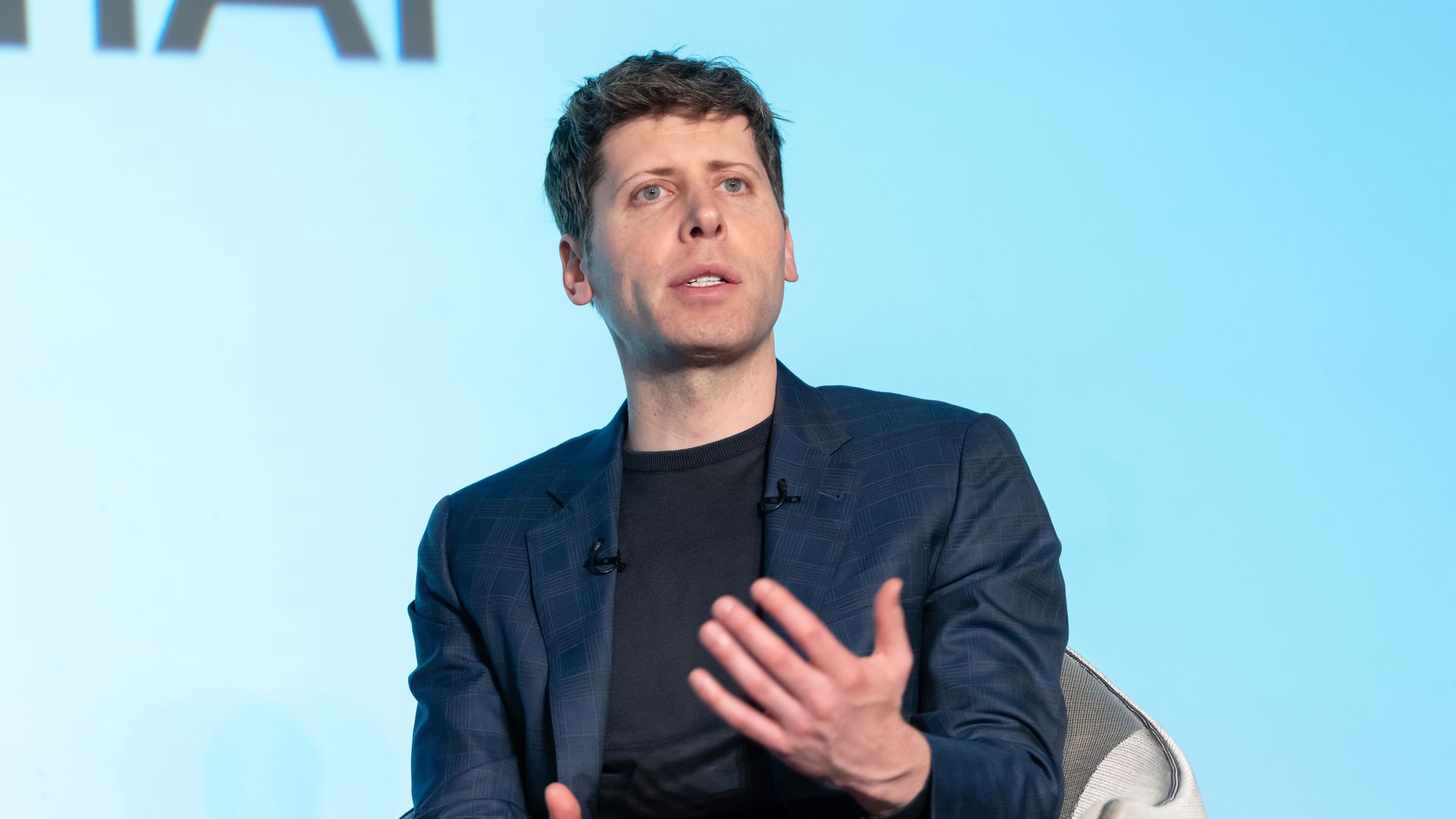
OpenAI and SoftBank are teaming up to sell an enterprise AI system in Japan called "Cristal intelligence," powered by agents that help businesses securely use AI in a way that fits their unique needs.
Why it matters: The announcement further strengthens OpenAI's partnership with SoftBank as the ChatGPT maker lessens its reliance on Microsoft's support.
What they're saying: OpenAI CEO Sam Altman said at a conference Monday that AI agents are the "next evolution beyond ChatGPT."
- SoftBank CEO Masayoshi Son said that AGI will arrive much sooner than two years and will be deployed first in large corporations in Japan. Son later added that he believes AGI will be able to understand human emotions.
- SoftBank says Cristal will act as a smart assistant, learning and adapting to each company's operations.
- "This partnership with SoftBank will accelerate our vision for bringing transformative AI to some of the world's most influential companies, starting with Japan," Altman said.
Between the lines: To speed up its rollout in Japan, the two companies are launching a joint venture called SB OpenAI Japan. As part of the deal, SoftBank Group companies will get first access to OpenAI's most advanced AI models in Japan.
- The announcement comes two weeks after Trump announced the Stargate project to advance AI, a venture that also includes SoftBank.
Altman noted on stage at the conference that the rate of AI progress is going to be rapid from here on.
- On Monday, OpenAI released Deep Research, an agent — powered by a version of the upcoming o3 model — that can compile cited research reports based on available internet sources.
- Less than a week ago, OpenAI announced o3-mini, a model that focuses on improved reasoning capabilities.
- "Reasoning paves the way for AI agents, AI systems that can do work for you independently," Altman said. "We're going to look back in a few years at o3 and be like 'Man, can you believe how bad that was?'"
4. Training data
- Elon Musk ally, former Tesla engineer and newly minted Technology Transformation Services director Thomas Shedd outlined his vision for an "AI-first strategy" at the General Services Administration, per sources. (Wired)
- Anthropic says it has developed the tools to filter out most of its users' attempts to jailbreak the model and is inviting the public to help test it. (Ars Technica)
5. + This
Bostonians have a chance to see Frederick Douglass up close and ask him questions for the first time in more than a century, thanks to a hologram that is part of a museum installation there.
Thanks to Scott Rosenberg and Megan Morrone for editing this newsletter and Matt Piper for copy editing it.
Sign up for Axios AI+
