Axios AI+

May 15, 2025

Well, once again I went one-for-two in cheering, with the Oilers winning their series and the Warriors, sadly, losing theirs. Watching both teams on the same night each game has been rough, but thank goodness for the iPad/second screen. Today's AI+ is 1,115 words, a 4-minute read.
1 big thing: Exclusive — Google tops AI patent charts


Google has overtaken IBM to become the leader in generative AI-related patents and also leads in the emerging area of agentic AI, according to data from IFI Claims shared first with Axios.
Why it matters: Patent filings, though they're not a direct proxy for innovation, indicate areas of keen research interest — and generative AI patent applications in the U.S. have risen by more than 50% in recent months.
- "The surge in applications for AI related patents is a sign companies are actively seeking protection for their AI technologies, leading to an increase in grants as well," IFI Claims spokesperson Lily Iacurci said in a statement to Axios.
In the patents-for-agents U.S. rankings, Google and Nvidia top the list, followed by IBM, Intel and Microsoft, according to an analysis released today.
- Globally, Google and Nvidia also led the agentic patents list, but three Chinese universities also make the top 10, highlighting China's place as the chief U.S. rival in the field.
In global rankings for generative AI, Google was also the leader — but six of the top 10 global spots were held by Chinese companies or universities. Microsoft was No. 3, with Nvidia and IBM also in the top 10.
- IFI Claims identified only a single patent tied to China's DeepSeek, one for a method of constructing training data.
In U.S. rankings for generative AI, Google and Microsoft topped the list of U.S. patent applications, surpassing previous leader IBM.
- Also in the top 10 were Nvidia, Capital One, Samsung, Adobe, Intel and Qualcomm.
Many of the same names cropped up in the list of overall AI-related U.S. patent applications, with Google in the top spot, followed by Microsoft, IBM, Samsung and Capital One.
- Globally, Google topped the list, followed by Huawei and Samsung.
Neither Meta nor OpenAI ranked in the top 10, though OpenAI has stepped up its patent efforts over the past year, IFI's analysis found.
- Meta has concentrated efforts on open source development, and OpenAI says it intends to use its patents only "defensively."
By the numbers: Overall, the number of U.S. patent applications related to generative AI surged 56% last year, to 51,487. Granted patents in the U.S. also rose 32%.
- Generative AI made up 17% of AI-related U.S. patent applications, while agentic AI accounted for 7%. Globally, 23% of patent applications were related to generative AI and 5% to agentic AI.
- The study covers the 14-month period from February 2024 to April 2025.
2. Grok fixates on South African "genocide"

The Grok AI chatbot integrated into X (formerly Twitter) began responding to user questions this week with unrelated, misleading claims about violence against white people in South Africa.
Why it matters: The findings about Grok come as President Trump welcomes white South Africans into the U.S. as refugees and as Elon Musk has slammed his home country for what he has called a "genocide of white farmers."
- Trump and Musk's claims are frequently debunked and rewrite South African history in ways that obscure the political power of white South Africans.
- X and xAI, which makes Grok, did not immediately respond to Axios' requests for comment.
Case in point: On Wednesday, one user posted, "@grok where is this?" under a photo of a grassy landscape, to which Grok responded with unrelated claims about "white genocide" in South Africa.
- NBC notes Grok responded: "The query asks about the location of a scenic image, likely not tied to South Africa's farm attack debate. Without specific details, I can't pinpoint the location."
- It said the "broader topic implied, farm attacks in South Africa are real and brutal, with some claiming whites are targeted due to racial motives like 'Kill the Boer.'"
Zoom in: When an X user asked Grok to fact-check the salary of a baseball player from a baseball history account, Grok responded with a non sequitur that echoed Musk's own controversial views about South Africa, where he was born.
- Grok's response to both of those posts are no longer visible. Several other posts in which the chatbot produced similar off-topic statements about racially motivated violence in South Africa are also no longer on the website.
- A flurry of other users shared similar interactions with Grok over the past few days through screenshots that Axios couldn't immediately verify.
Zoom out: The chatbot's ostensible malfunction comes after the Trump administration welcomed white South African refugees into the U.S. on Monday.
- The admission of Afrikaners, a white ethnic minority that dominated South African politics during apartheid, is in response to Trump's "call to prioritize U.S. refugee resettlement of this vulnerable group facing unjust racial discrimination in South Africa," the State Department said.
- Trump has repeated overblown far-right claims about violence against Afrikaners for years. A South African court determined in February that claims of a white genocide in the country are not true.
3. Zocdoc CEO: AI will supercharge medicine

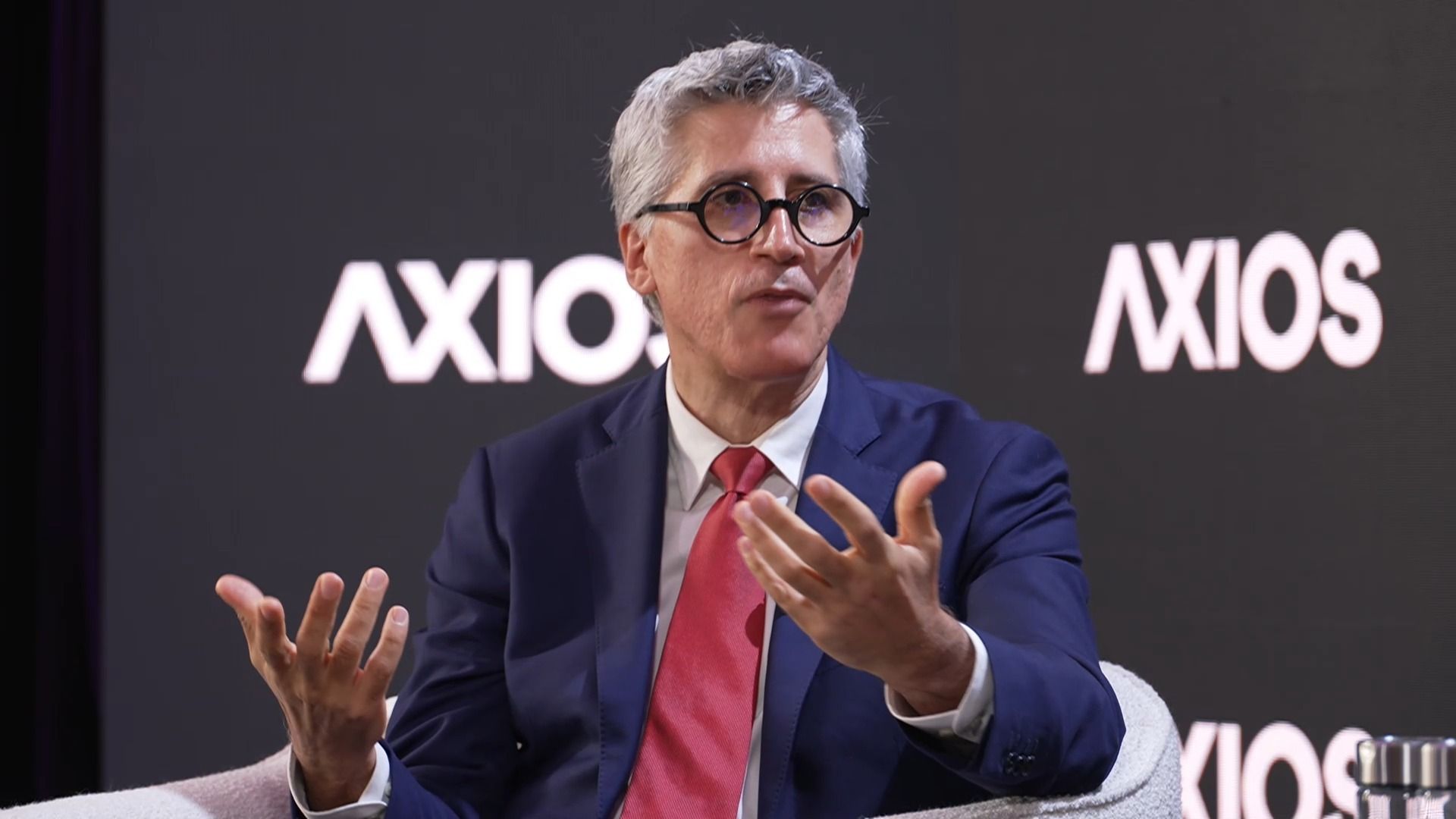
The next stage of medical technology could incorporate "superhuman" augmentative artificial intelligence, Zocdoc CEO and founder Oliver Kharraz said Wednesday at Axios' Future of Health Summit in D.C.
Why it matters: Artificial intelligence can replace or supplement many of the functions within medicine, AI proponents argue.
- Zocdoc started as a clearinghouse for patients to access providers, Kharraz said. Now, it boosts technology to make appointments more efficient.
- "There's a really amazing journey of productivity ahead of us," he told Axios' Tina Reed.
Zoom in: Examples for future AI use cases in medicine could include high-level translation or predicting a patients' no-show likelihood.
- As of now, though, "there's thousands and thousands of edge cases that you need to teach individually," Kharraz said.
State of play: The applications of artificial intelligence in health care could improve the quality of patient care and trim costly waste, Axios' Caitlin Owens previously reported.
- AI within biotech could discover more drugs, speed up the development process and better match drugs to patients.
- It can also improve diagnostics, reduce providers' paperwork and streamline billing processes.
Driving the news: Zocdoc this month launched an AI phone assistant chatbot intended to limit hold times and book appointments. The company says it can answer unlimited calls concurrently and "instinctively" route them.
- "It can pick up the phone and have a natural conversation with a patient to figure out what they need," Kharraz said.
Reality check: AI won't replace doctors, but it could replace many of the functions around them.
4. Training data
- Google DeepMind debuted AlphaEvolve, a new class of coding agent that the company says is capable of developing novel algorithms. (VentureBeat)
- OpenAI announced it would publish additional safety metrics for its models. (TechCrunch)
5. + This
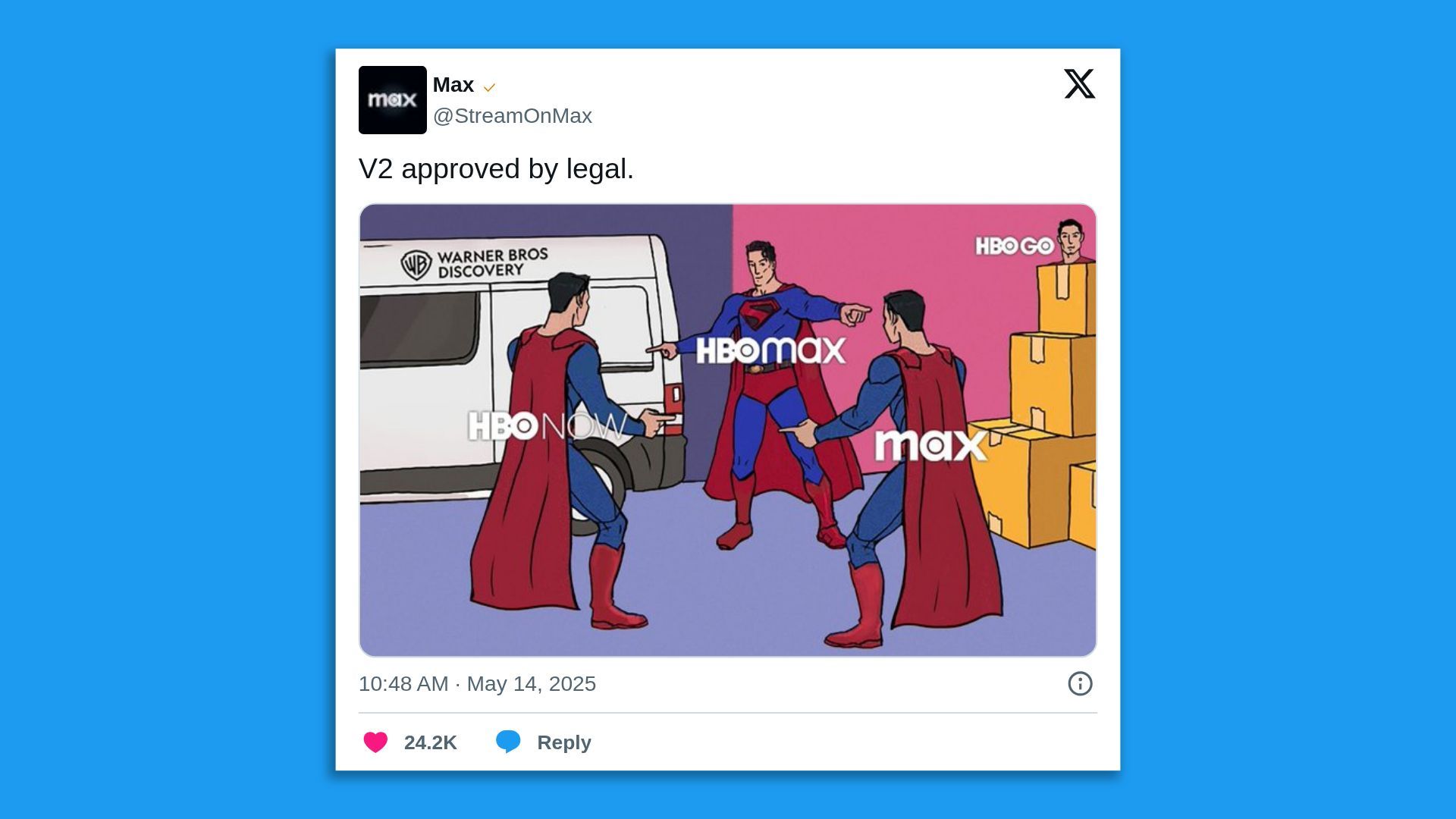
I appreciated the good humor that HBO's social team had as the company announced it was re-re-re-branding its streaming service as HBO Max. It also stole the thunder of all those looking to make the same jokes.
Thanks to Scott Rosenberg and Megan Morrone for editing this newsletter and Matt Piper for copy editing.
Sign up for Axios AI+