Pelosi unveils $2.5 trillion counterproposal to GOP coronavirus stimulus

Add Axios as your preferred source to
see more of our stories on Google.
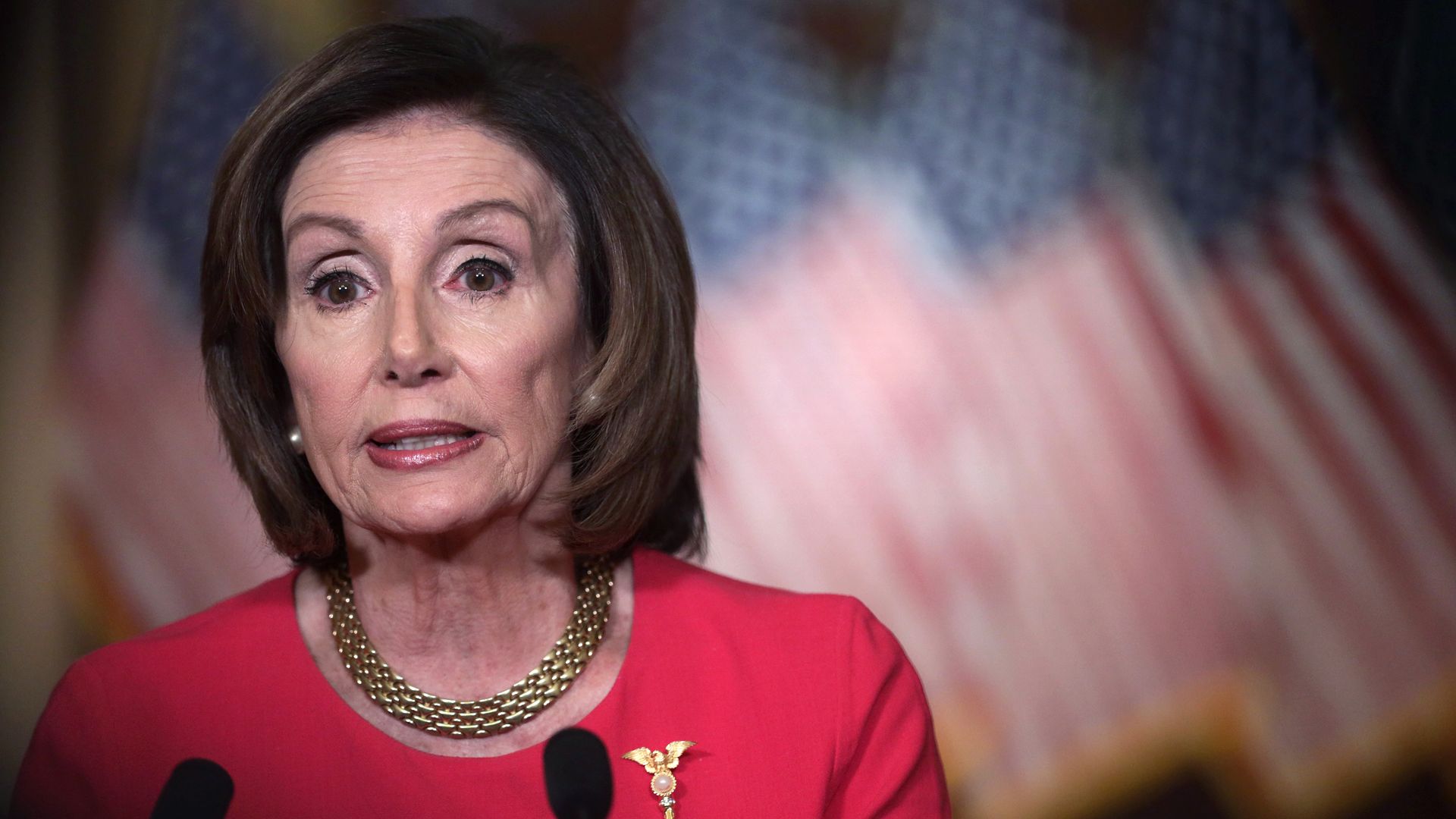
Photo: Alex Wong/Getty Images
House Speaker Nancy Pelosi unveiled on Monday a sweeping counterproposal to Senate Republicans' $1.8 trillion coronavirus stimulus package.
Why it matters: House Democrats' legislation — which comes with a $2.5 trillion price tag — comes after negotiations between Capitol Hill leaders and the White House broke down over the weekend, culminating in two failed procedural votes that have left the Senate Republicans' bill in limbo.
The state of play: Democrats, who have asserted that the Senate GOP bill is a corporate slush fund that doesn't do enough to help American workers, are hoping that the release of this bill will give them more leverage in negotiations with Republicans.
- But Republicans have accused Democrats of playing politics during a national crisis by stalling action on their bill, calling this latest measure a "Democratic wish list" — as Senate Majority Leader Mitch McConnell characterized it.
The "Take Responsibility for Workers and Families Act":
- Increases the amount of money being offered to individuals to $1,500, and up to $7,500 for a family of five. The same GOP income thresholds in the GOP bill would apply — $75,000 for individuals and $150,000 for couples, but the benefit would be available to anyone with an individual taxpayer identification number, retirees and unemployed individuals.
- Waives $10,000 in federal student loan payments.
- Dedicate $4 billion in grant funding to help states with upcoming elections and nationally mandates 15 days of early voting and no-excuse absentee vote-by-mail, including mailing a ballot to all registered voters in an emergency.
- Includes a section that would cancel several executive orders and presidential memorandums that Democrats argue have weakened public sector unions' ability to engage in collective bargaining.
- Creates new carbon offset guidelines for airlines, with a long-term goal of reducing jet fuel emissions by 50% by 2050.
- Allocates $150 billion to support hospitals, local health centers and government-funded medical programs, with an additional $80 billion in low-interest loans to hospitals.
- Eliminates cost-sharing for coronavirus treatments and vaccines for all patients, including the uninsured.
- Addresses broader health care concerns that Democrats have pushed for months, including increasing subsidies on the individual market and creating new incentives for states to expand Medicaid.
- Provides child care assistance to health care workers and emergency personnel.
- Would temporarily provide $600 per week to unemployed workers affected by the coronavirus. Self-employed workers, Americans whose contracts were canceled, and new entrants to the job market would also be eligible.
- Expands paid sick leave and family medical leave, as well as gives more money to food-safety benefits.
- Provides $500 billion in grants and interest-free loans to small businesses.
- Creates a $200 billion stabilization fund for states and $15 billion for local governments through the Community Development Block Grant program. The legislation also authorizes the Federal Reserve to purchase state and local government bonds.
- Pumps nearly $60 billion into schools and universities, with $50 billion directly provided to states for school funding and nearly $10 billion to higher education institutions.
- Dedicates $20 billion to reimbursing the U.S. Postal Service for lost revenue, and forgives USPS debt.
- Requires companies receiving federal assistance during coronavirus to institute a $15 minimum wage.
What's next: Discussions between McConnell, Pelosi, Senate Minority Leader Chuck Schumer and Treasury Secretary Steven Mnuchin will continue over the next few days. Both sides are confident they will ultimately reach an agreement given the dire need to deliver this aid as soon as possible.
Read the bill ... and compare it to McConnell's.
Go deeper: Procedural vote on coronavirus stimulus fails for 2nd time in 24 hours
Editor's note: This story has been updated to include additional details from the 1,119-page bill.
