Metro's Randy Clarke on why he's the "OG DOGE"

Add Axios as your preferred source to
see more of our stories on Google.
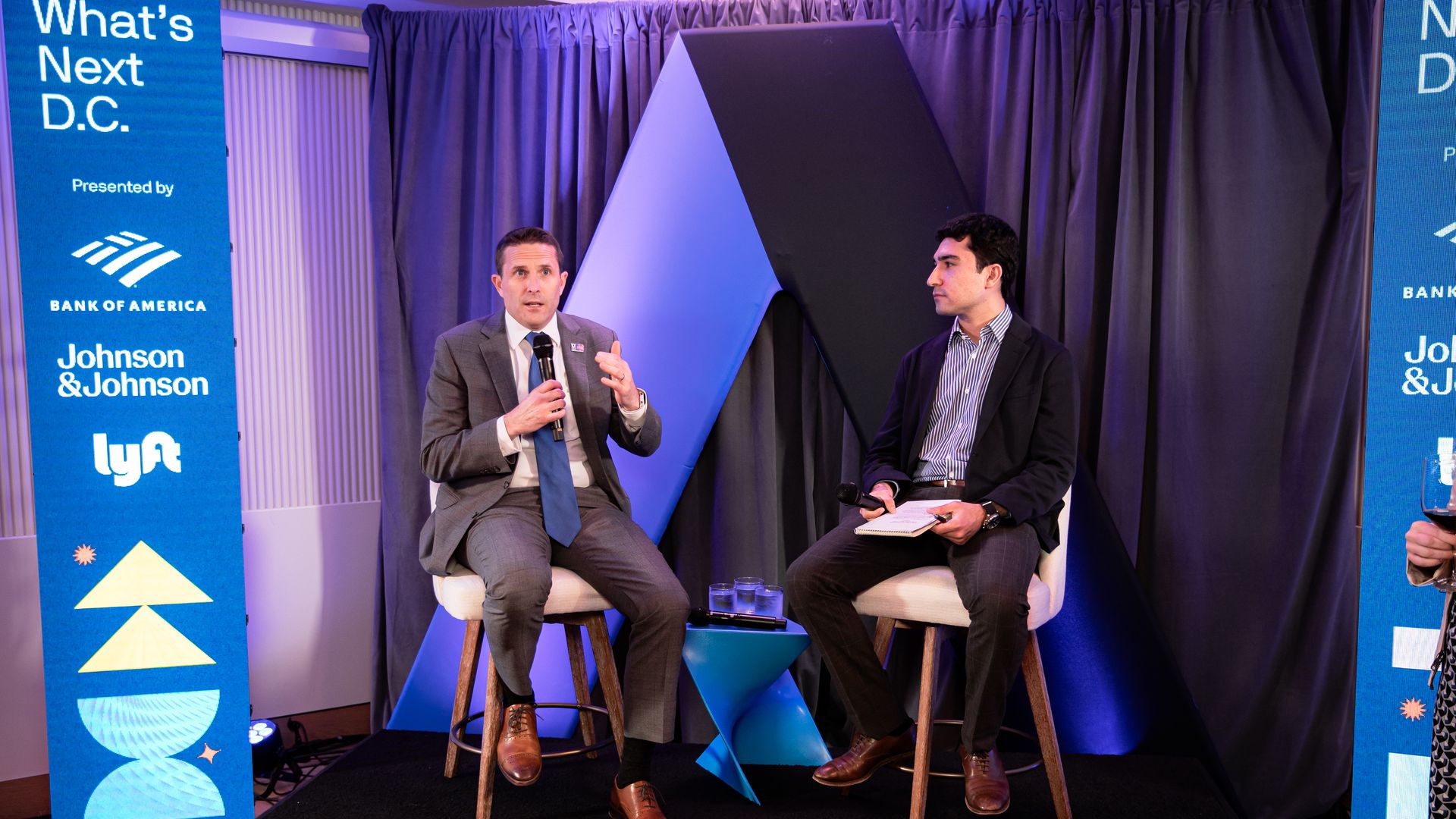
Randy Clarke is interviewed by Axios D.C. reporter Cuneyt Dil at the What's Next D.C. Local Reception. Photo: Gabriel Espinal for Axios
Too many environmental reviews and the "consultant industrial complex" are impeding transit projects, Metro general manager Randy Clarke said at this week's Axios What's Next D.C. event.
Why it matters: Clarke is an energetic reformer at Metro — leading a post-pandemic turnaround, touching up decades-old station designs and focusing on train modernization.
Yes, but: Some things are out of his hands, like permitting and high construction costs plaguing projects in the U.S. Some experts cite expensive consultants.
"I'm the OG of DOGE. I'm 100% into effective government. I might do it a little differently than others," Clarke said in an interview.
- "We got in our own way in America about building good things. We could not build the Metro system today," he said. "It would take like 50 years and it'd cost like a trillion dollars."
"Massive change," he said, is needed for the National Environmental Policy Act. The landmark 1970 law requires the study of environmental impacts on federally funded projects.
- Building a 10-lane highway, sure, that should get reviewed, he said — but not when moving a bus stop on Georgia Avenue. "That's insane."
He invoked controversial New York City urban planner Robert Moses, who, despite muscling through many "horribly destructive" projects, "absolutely knew how to get something done."
- "We can't build housing in America fast enough," he said. "We can't build transit fast enough. We can't do energy projects fast enough."
Case in point: A Georgetown Metro station.
- Metro needs to alleviate a tunnel bottleneck at Rosslyn. That calls for building a new second tunnel going through Georgetown.
- One concept called the Blue Line loop would add a Georgetown station plus 15 others, including in Buzzard Point, St. Elizabeths and National Harbor.
"That might be the hardest environmental one to pull off," says Clarke about a Georgetown station.
- The cost estimates range from $25 billion to $40 billion.
- "I'm not sure anyone in their right mind should build a $30 billion new rail line," he said. "So if we can figure out how to build stuff cheaper again, maybe [then] we should start looking at infill stations, extensions."
The big picture: Clarke is hailed for modernizing Metro. His efforts include bringing back systemwide automatic train operation this year and debuting tap-to-pay for passengers.
- Clarke tweaked the Metro stations — once considered sacrosanct‚ revising maps and installing wayfinding signs to make them more practical.
- Untouched: the iconic concrete Brutalist station interiors.
What's ahead: Clarke says "we need to move to a much higher level of automation — because it's the safest, it's the most cost-efficient, and it's the most reliable."
- Look no further than the Dulles Airport AeroTrain (not to be mistaken for the retro "people movers").
- "The train drives itself. They have employees that do customer service. No one could ever get in front of a train" trespassing on the tracks, Clarke says.
- "That is where our focus is going to be leaning," he says.