Which federal workers could lose protections under Trump order


Add Axios as your preferred source to
see more of our stories on Google.
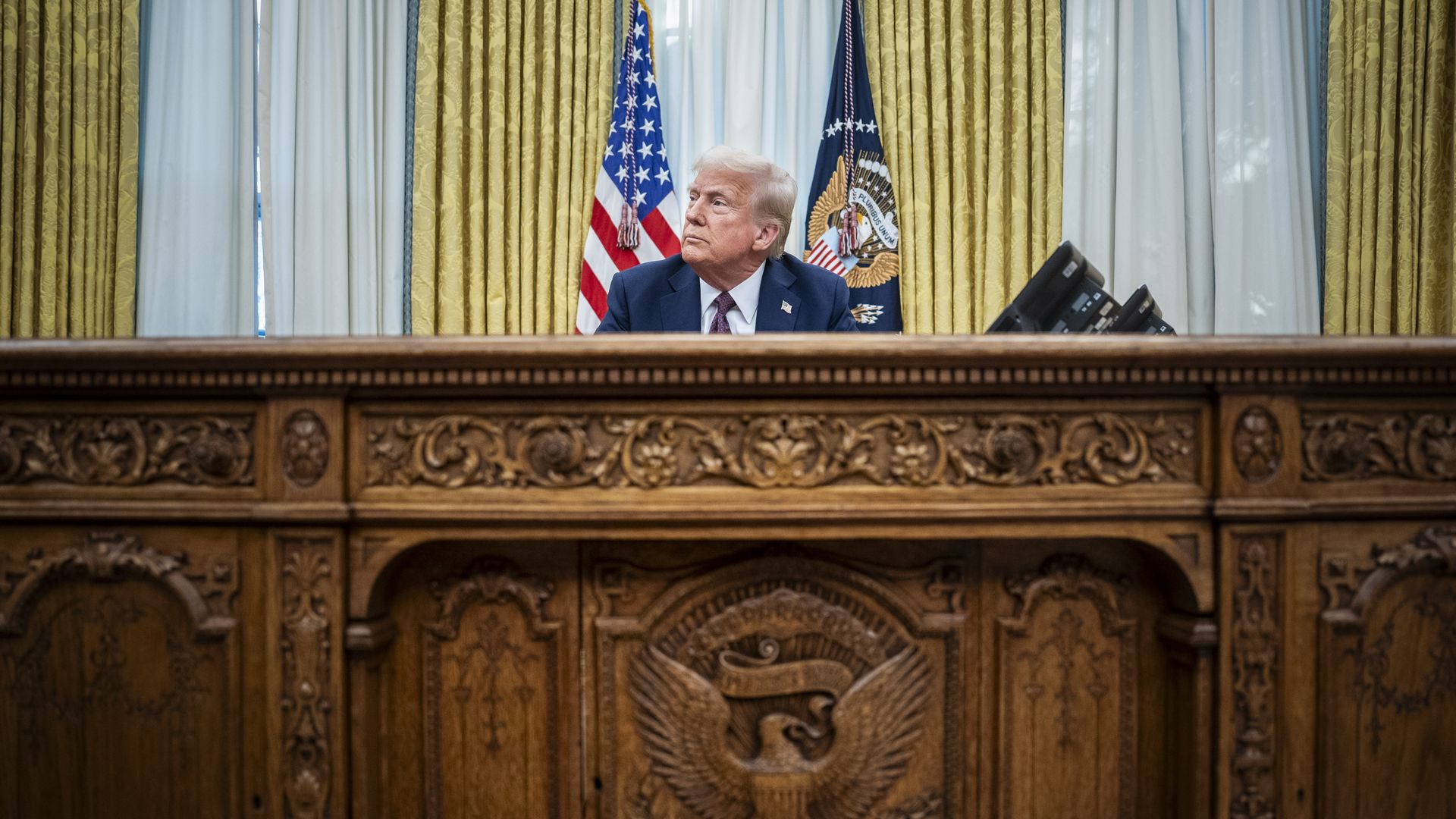
President Trump signing executive orders in the Oval Office last week. Photo: Jabin Botsford/The Washington Post via Getty Images
Newly released guidelines suggest a wide range of federal employees could lose employment protections under President Trump's new Schedule F.
Why it matters: The memo, released Monday by the Office of Personnel and Management (OPM), indicates that the Trump team is looking to reclassify thousands of federal employees and strip them of legal protections from political firings, legal experts say.
- It's "broadly worded; just about anyone in the civil service could be swept up into this category," Alan Lescht, a D.C.-based employment lawyer who represents federal workers, tells Axios.
State of play: OPM's memo sets deadlines for agencies to determine which workers might be subjected to Trump's executive order. And it offers recommendations for who should be considered, including those who:
- Are involved in "important policy-making or policy-determining functions," like directing "an organizational unit," overseeing the success of "specific programs or projects" or "monitoring progress toward organizational goals";
- Have the authority "to bind the agency to a position, policy or course of action" or "to make decisions committed by law to the discretion of the agency head";
- Are involved in agency grant-making, "such as the substantive exercise of discretion in the drafting of funding opportunity announcements, evaluation of grant applications or recommending or selecting grant recipients";
- Advocate for agency or administration policies "before different governmental entities";
- Advocate publicly for agency or administration policies, "including before the news media or on social media";
- Have position descriptions "entailing policy-making, policy-determining or policy-advocating duties."
The fine print: The expanded employee categories are "guideposts," per the memo.
- Positions outside the categories explicitly described can be recommended for reclassification "so long as the agency demonstrates that the position is of a confidential, policy-determining, policy-making or policy-advocating character."
Agencies have 90 days to conduct a preliminary review of their employees, determine which should be reclassified as "Schedule Policy/Career," per the descriptions above, and send the information to OPM, according to the memo.
- Agencies will have another 120 days to finalize and submit their information.
Catch up quick: Trump last week resurrected parts of his Schedule F executive order from October 2020, rescinded by former President Biden when he took office months later.
- It comes on the heels of Trump's campaign promises to slash the size of the "deep state" federal government and fire "rogue bureaucrats and career politicians."
What they're saying: The executive order and the guidance is a way to make it easier to fire civil servants and turn what had been career jobs into patronage jobs, said Sharon Parrott, head of the Center on Budget and Policy Priorities and a former Office of Management and Budget appointee under Obama.
- The moves "will almost surely lead many expert knowledgeable career civil servants to withhold their best advice," Parrott tells Axios.
Lescht says the OPM memo appears to directly contradict the thrust of the longstanding law governing civil servants.
- The lawmakers who passed the Civil Service Act of 1978, he says, likely "never expected that this rule was going to be expanded to obliterate the due process protections of hundreds of thousands of people who have zero to do with making policy."
The memo also directs agency heads to ignore a regulation issued by the Biden administration that created more protections for civil servants facing reclassification — but that's not the way the law works, says Lescht.
The intrigue: The memo prohibits patronage when filling reclassified roles, saying agencies must "hire the candidates with the knowledge, skills, abilities and experience that make them best equipped," and says applicants and career employees don't have to personally support Trump or his policies.
- But workers must "faithfully implement administration policies to the best of their ability. Failure to do so will be grounds for dismissal."
- The fact that the memo explicitly spells out that "patronage remains prohibited" is telling, says Lescht. Of course, patronage is illegal, he says. "I'd say they're protesting a little bit too much."
What we're watching: There's going to be numerous challenges on this, says Lescht.
- The National Treasury Employees Union already filed suit last week over the initial executive order.