Unpacking D.C.'s huge restaurant relief bill: Service charges, I-82 changes

Add Axios as your preferred source to
see more of our stories on Google.
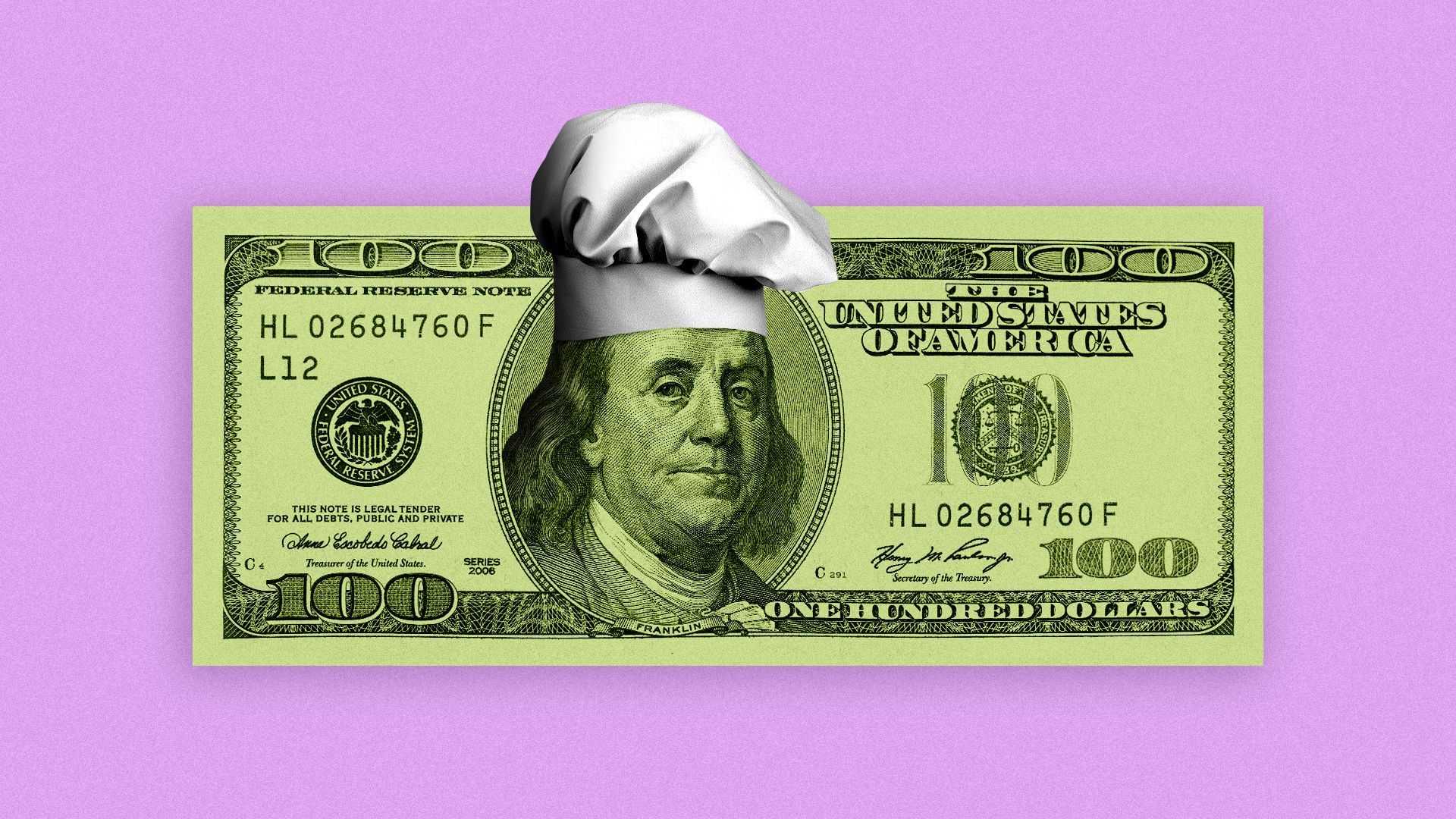
Illustration: Aïda Amer/Axios
Changes to service fees, food delivery practices, and Initiative 82's timeline are all up for a final vote in the D.C. Council on Tuesday.
Why it matters: If passed, the sweeping Restaurant Revitalization bill —which received a unanimous pro-vote last month — could provide relief for struggling restaurants, strengthen the local industry, and have broader implications for diners.
State of play: The bill, introduced by Council member Kenyan McDuffie, is months in the works and combines several pieces of legislation that would further regulate food delivery services and tackle other issues related to D.C.'s dining scene.
- Much of what's included is expected to pass and head to a final reading before mayoral and congressional review.
Driving the news: Legislation surrounding two hot-button topics, service fees, and Initiative 82.
- Chair Phil Mendelson plans to support a restaurant association-backed amendment that would speed up I-82's timeline by two years and eliminate the tipped minimum wage by July 2025 — a Band-Aid-ripping measure designed to mitigate diner confusion and financial stress caused by incremental wage increases. It would also benefit tipped workers, who are estimated to receive over $12,000 in additional base wages over the next three years.
What's new: Another amendment by Mendelson would create a "safe harbor" for restaurants that charge lawful service fees — disclosing information in advance, per the attorney general's guidelines — from lawsuits filed by private groups.
- It's designed to prevent lawsuits like recent ones charged against Clyde's Restaurant Group and Knead Hospitality. Advocacy group Traveler's United sued both for deceptive "junk fees," and the group vowed to keep the lawsuits coming.
The intrigue: The bill could offer rent adjustments for restaurants whose service fees go directly to employees — a potential boon for workers.
- Also for business owners whose rent escalates depending on gross annual sales. Service charges are legally included in that calculation as property of the business, whereas tips are not.
Friction point: Service fee opponents, including One Fair Wage — the national advocacy group that brought I-82 to the table — argue that such charges are inherently problematic and deceptive and that any incentives will only multiply the practice.
- A rally went down Monday at the Wilson Building, led by the Restaurant Opportunities Center of DC, with cries to stop "sneaky service charges" and maintain the set timeline for I-82.
What they're saying: "Service charges create an uneven playing field because restaurants use them to deceive customers into believing that their prices look lower than other restaurants without service charges," says Busboys and Poets owner Andy Shallal, a One Fair Wage advocate.
- "I also know that tipped workers hate service charges because customers frequently tip less when they see a service charge."
Zoom in: The bill also includes regulations on food delivery services like DoorDash and Uber Eats. One provision would make emergency legislation permanent that blocks the companies from penalizing restaurants that don't pay big bucks for premium services — including limiting their delivery areas and number of drivers available.
- The bill would also require restaurants to allow delivery workers to use restrooms, and instigate a publicly funded study on their working conditions (similar to a controversial one in NYC).
Between the lines: For businesses, one of the biggest line items — and one expected to pass — is the clarification of liquor liability laws, which would eventually lead to lower cost insurance premiums. D.C. has some of the highest rates in the country, and in some cases, they're 100 times more expensive here than Maryland and Virginia.
- The sky-high insurance costs can be a barrier to entry for small and minority-owned businesses.