Why D.C. millennials are still living with their parents


Add Axios as your preferred source to
see more of our stories on Google.
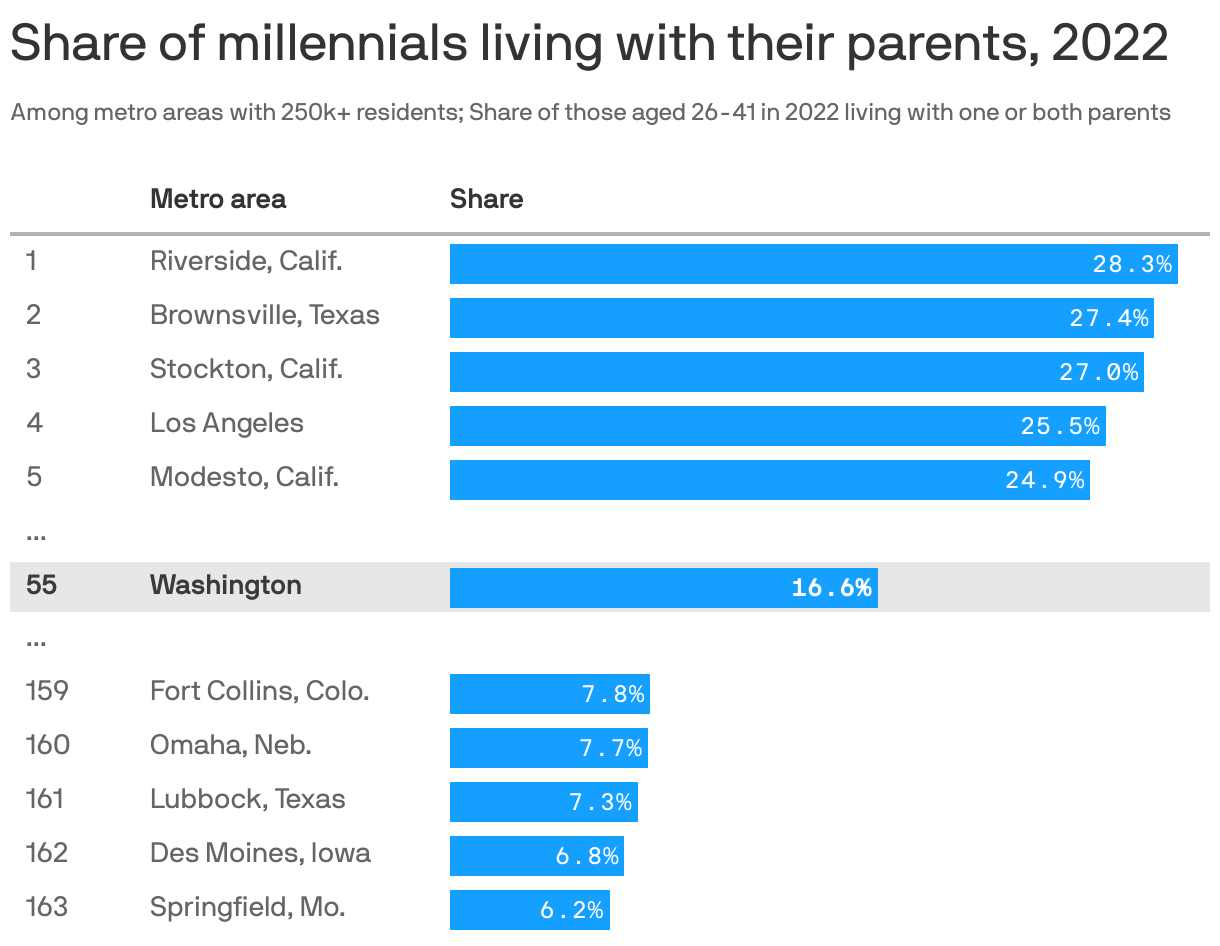
Nearly 17% of D.C.'s millennials lived with their parents in 2022, Axios' Erin Davis reports from the latest census figures.
- That's compared with the national average share of 15.8%.
Why it matters: Younger people are increasingly struggling to swing high housing costs.
Zoom in: Alexandria parent Tom Goslin's daughter is among the 57% of D.C.-area Gen Zers who lived with their parents in 2022, per the census data. (Of note: Gen Z ranges from adults to children. So, not all of those kids are ready to fly the nest yet.)
- Goslin's daughter moved home after graduating last spring without a job. She'll be staying with Goslin until the fall, when she'll move abroad for a position teaching English.
The big picture: The number of Americans aged 25–34 living at home has jumped over 87% in the past two decades, according to census data.
What's happening: Younger generations may be returning to their childhood bedrooms to save on expenses like rent or a future down payment, says Adina Dragos, research analyst at RentCafe, an apartment search website.
- More young adults could also be choosing to care for family members, Dragos tells Axios.
- 47% of millennials and 41% of Gen Zers expect to share a home with someone else for at least another two years, per a recent survey by RentCafe.
Reality check: Plunging affordability hasn't stopped some millennials from buying homes, often with family help.
- Nearly 55% of millennials owned a home in 2023, up from 52% in 2022, according to a new Redfin report.
- Meanwhile, Gen Z's homeownership rate stagnated at slightly over 26%.
What we're watching: Those who move out might find rent is a lot more expensive than it was a few years ago, even as price increases slowed last year.
- It's one big reason why renters are feeling badly about their finances, according to the Axios Vibes survey by The Harris Poll.
Go deeper: Multigenerational living is up 1M households in last decade, here's which states