Newer food halls think small and suburban

Add Axios as your preferred source to
see more of our stories on Google.
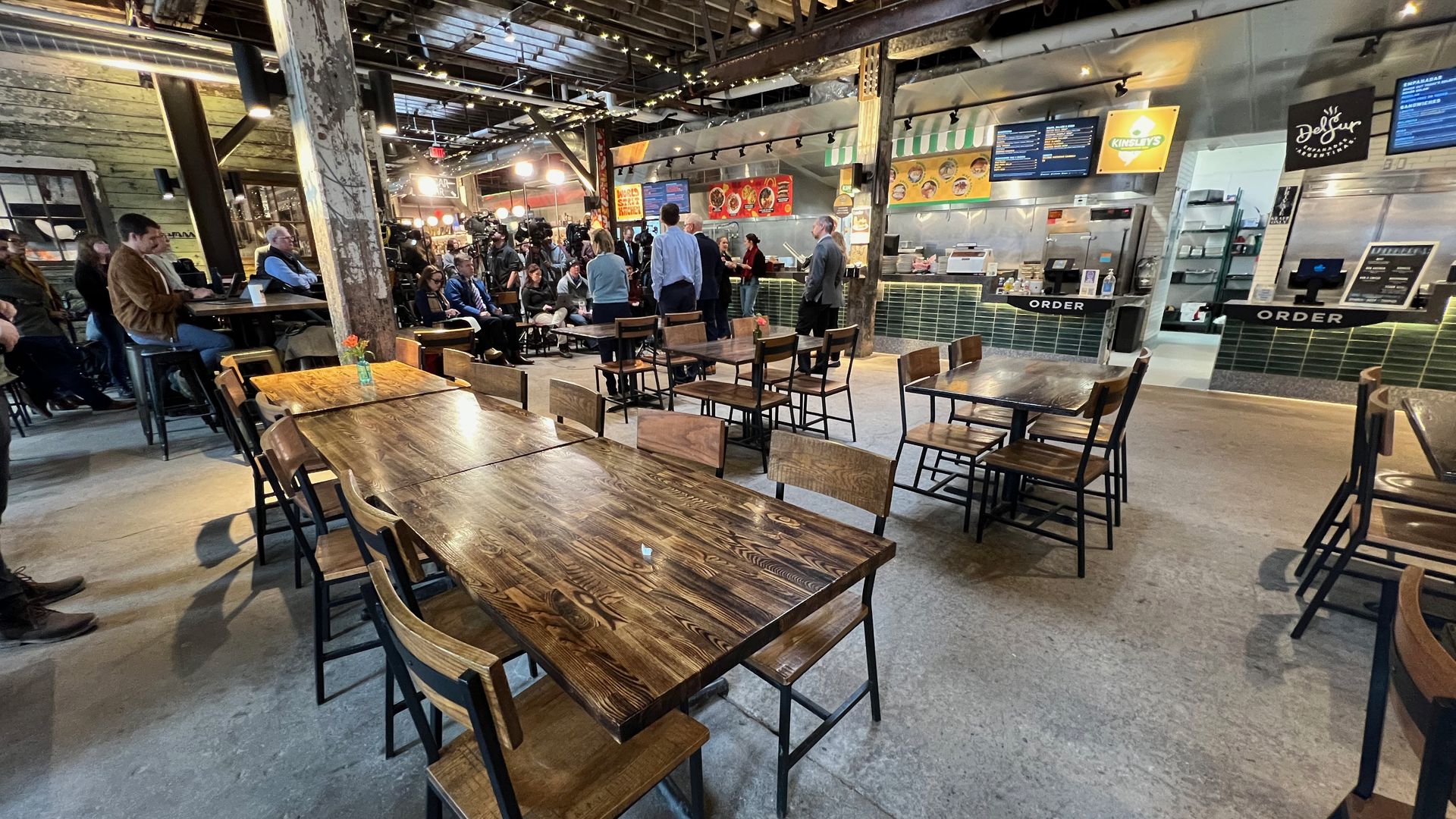
Gov. Tim Walz held a press conference at Minneapolis' Market at Malcolm Yards in February. Photo: Kyle Stokes/Axios
Big cities may have built the food hall industry's brand, but the nation's next wave of food hall projects will be built in suburbs and smaller spaces.
Why it matters: That takeaway from the State of Food Halls report — recently presented to a gathering of industry insiders in Minneapolis — is another sign of how remote work has changed where we spend our happy hours and our weekends.
- Nationwide, 14 of the 20 newest food halls opened in suburbs or small towns.
What they're saying: Before COVID, urban food halls did their biggest business serving cubicle warriors at lunch hour.
- Now, "a lot of people are saying, 'I want to be where the people are; the people are in the suburbs,'" said report co-author Trip Schneck of Colicchio Consulting, which tracks the food hall industry.
Plus: A suburban food hall can attract lunchtime and nighttime crowds.
- In communities dominated by chain restaurants, food halls have an easier time sticking out, Schneck told attendees.
Case in point: Eden Prairie's Asia Mall and Rosedale Mall's Potluck were early adopters of this trend, and Blaine's Asia Village is estimated to open at Northtown Mall by May or June.
- The long-awaited Ate Ate Ate at Burnsville Center is also in the pipeline.
What we're watching: The team behind the Market at Malcolm Yards is planning a second location in St. Louis Park's West End and another food hall project in downtown Minneapolis' LaSalle Plaza.
- In a liquor bill sent to Gov. Tim Walz's desk last week, state lawmakers authorized both projects to receive liquor licenses — a necessary step under Minnesota's quirky alcohol laws.
What they're saying: "We weren't going to go spend $15 million building something out if, legally, we were to not be able to sell liquor," Malcolm Yards owner Patricia Wall told Axios.
- The bill's passage would mean design work on the West End and LaSalle Plaza projects can begin.
Zoom in: Nationally, the move to suburban and tertiary markets has fueled a shift into smaller spaces.
- In 2012, Colicchio Consulting pegged the average food hall at nearly 25,000 square feet. (Malcolm Yards is roughly 19,000 square feet.)
- New food halls average around 14,000 square feet — or roughly the size of Eat Street Crossing, which opened on Nicollet Avenue in 2023.
😉 Our thought bubble: This trend is only new if you think the suburban mall food court never counted as a "food hall."
- Kids these days don't appreciate the combo of Sbarro, Cinnabon and some sort of potato-themed stall!